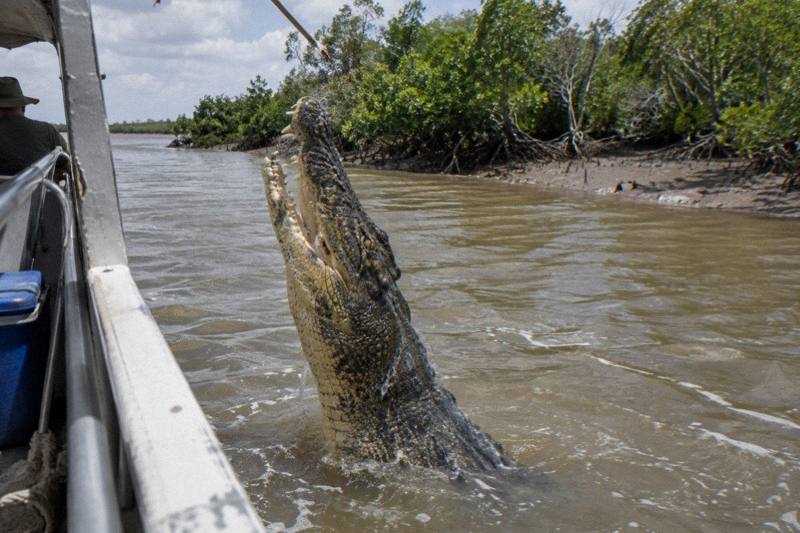
Saltwater Crocodile Facts To Know Before A Jumping Crocodile Cruise
The crocodiles that leap beside the jumping cruise boats are saltwater crocodiles, the largest living reptile on earth. Here is what the NT Government actually says about them, and what that means for your hour on the Adelaide River.
Short answer
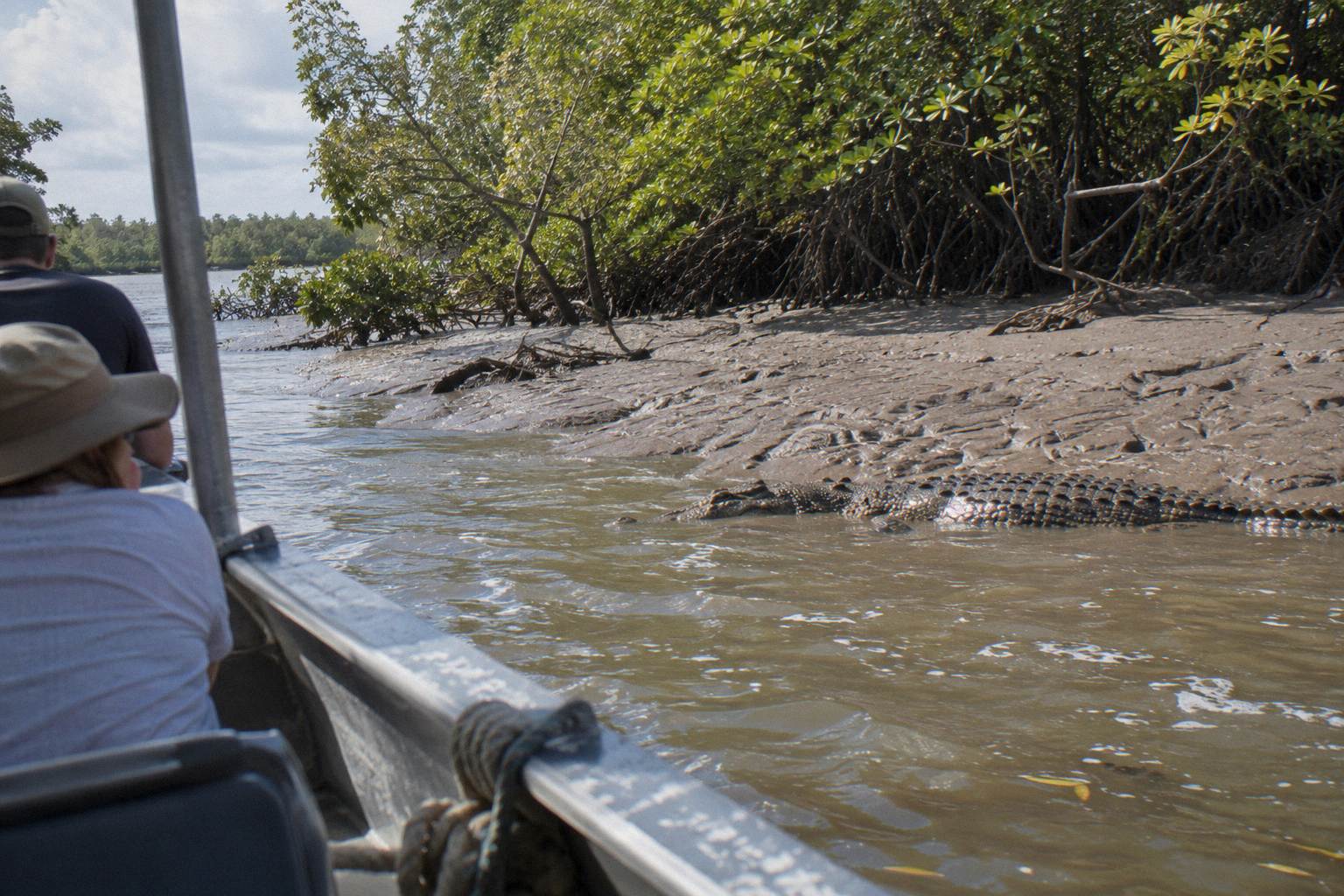
The jumping-cruise crocodiles are saltwater crocodiles, Crocodylus porosus, the largest living reptile, growing up to 6 m. About 100,000 lived in the NT wild in 2017. They can stay underwater up to one hour, nest November to May, and are protected by law after nearly going extinct in the 1970s.
The crocodile that launches itself out of the water beside a jumping cruise boat on the Adelaide River is a saltwater crocodile, Crocodylus porosus, and it is the largest living reptile on the planet. That single fact does a lot of work when you are standing on a jetty waiting to board. Everything on this page comes from the Northern Territory Government's own crocodile pages and from what the cruise operators state publicly, because crocodile folklore is loud and crocodile data is quiet.
This page gathers the saltwater crocodile facts that actually change how you experience a cruise: how big these animals get, how long they can hold their breath, why they jump, when they nest, and why the species that was nearly extinct in the 1970s now numbers around 100,000 in the NT wild. Where a number is not published, such as how high an individual crocodile can jump, this page says so plainly rather than guessing.
Why Does The Adelaide River Have So Many Saltwater Crocodiles?
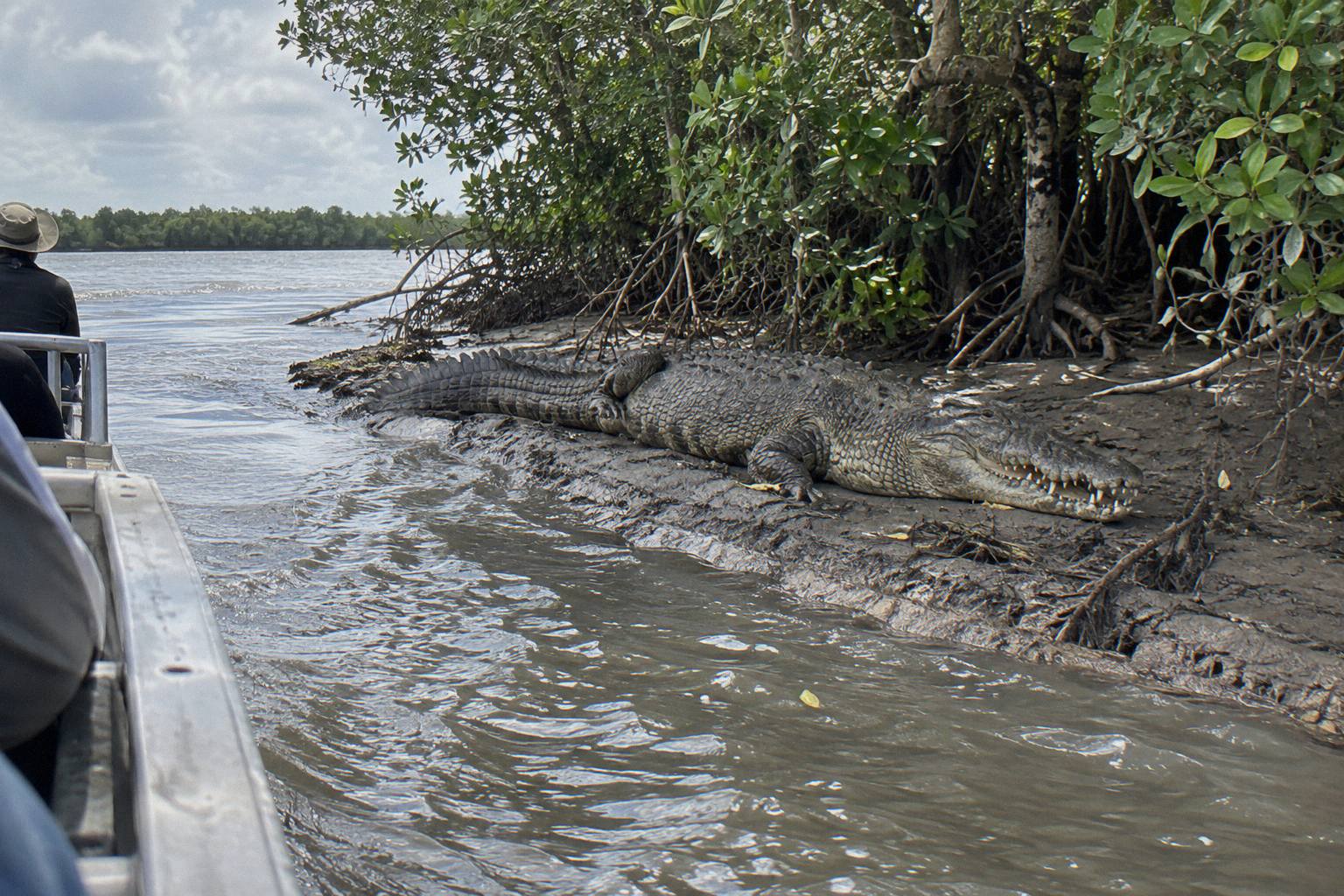
The NT Government counted about 100,000 saltwater crocodiles in the NT wild in 2017, a population thought to be at or approaching pre-hunting levels, and states there are more saltwater crocodiles in the NT than in Queensland and Western Australia. No river-by-river population count for the Adelaide River is published in these sources. That last point matters, because you will read plenty of confident claims about how many crocodiles live in this one river. The NT Government page, which is the source used here, gives territory-wide numbers only, not a count for any individual river, so any figure attached to the Adelaide River specifically is coming from somewhere other than the official record.
The reason the population is worth knowing is the recovery it represents. Unregulated hunting drove the saltwater crocodile almost to extinction in the NT by the 1970s. Protection since then has worked so thoroughly that the NT Government now describes the species as widespread and no longer considered threatened. The animals you watch from a cruise boat are the visible result of five decades of legal protection, which is also why the law is strict about interfering with them.
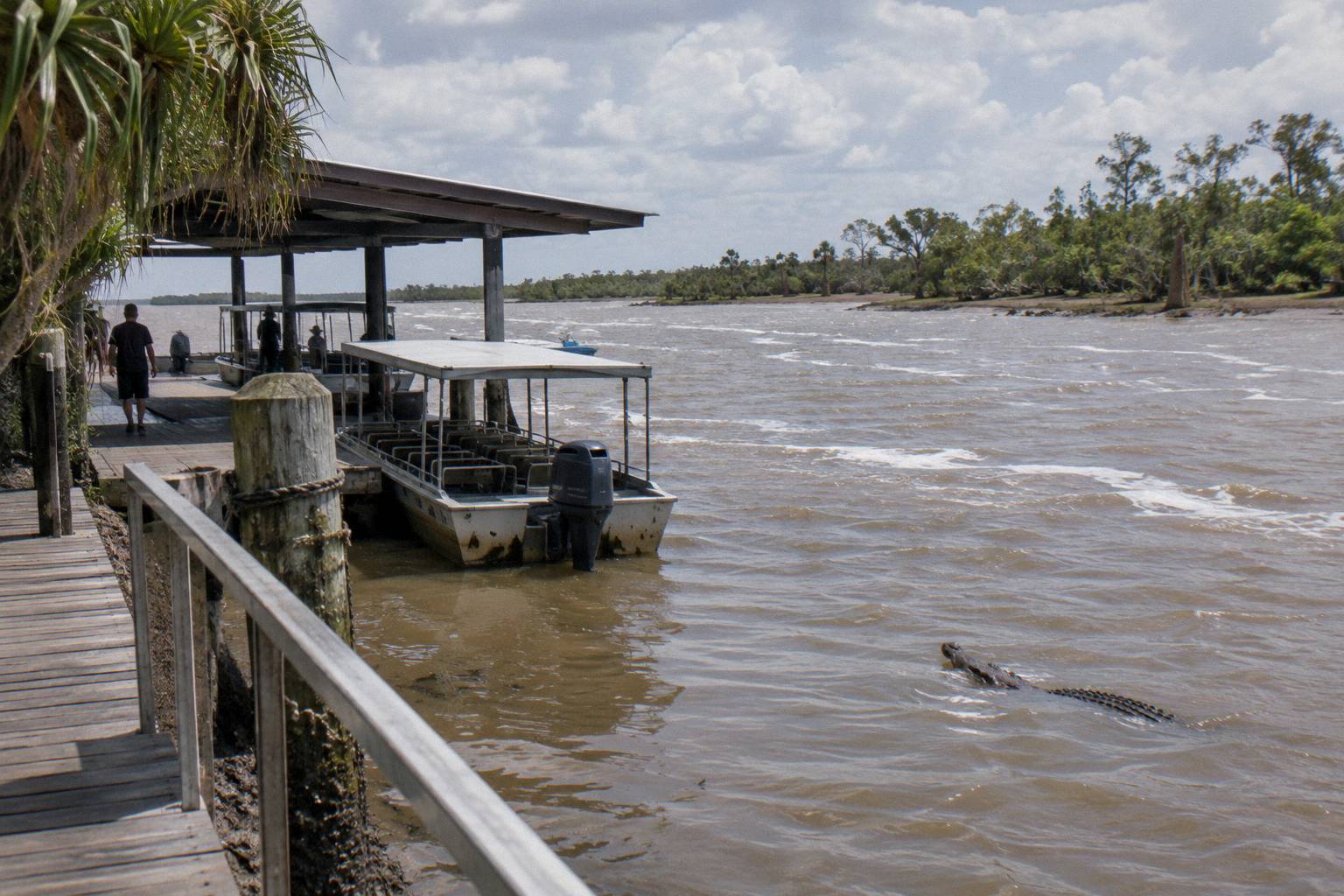
Both NT crocodile species are protected, and you cannot take or interfere with a crocodile without a permit. That legal framing explains the cruise setup more than most visitors realise: the operators work under NT wildlife permits, the animals stay wild, and nobody is allowed to touch, trap or feed one outside the permit system. For a fuller picture of the river itself, the crocodiles of the Adelaide River guide covers what lives there and how the cruise fits in.
| NT Government figure | Value |
|---|---|
| Saltwater crocodiles in the NT wild, 2017 | About 100,000 |
| Population status | Thought to be at or approaching pre-hunting levels |
| Comparison with other states | More than Queensland and Western Australia |
| Species present in the NT | Saltwater and freshwater crocodiles |
| Protection status | Both protected; permit needed to take or interfere |
What Exactly Is A Saltwater Crocodile?
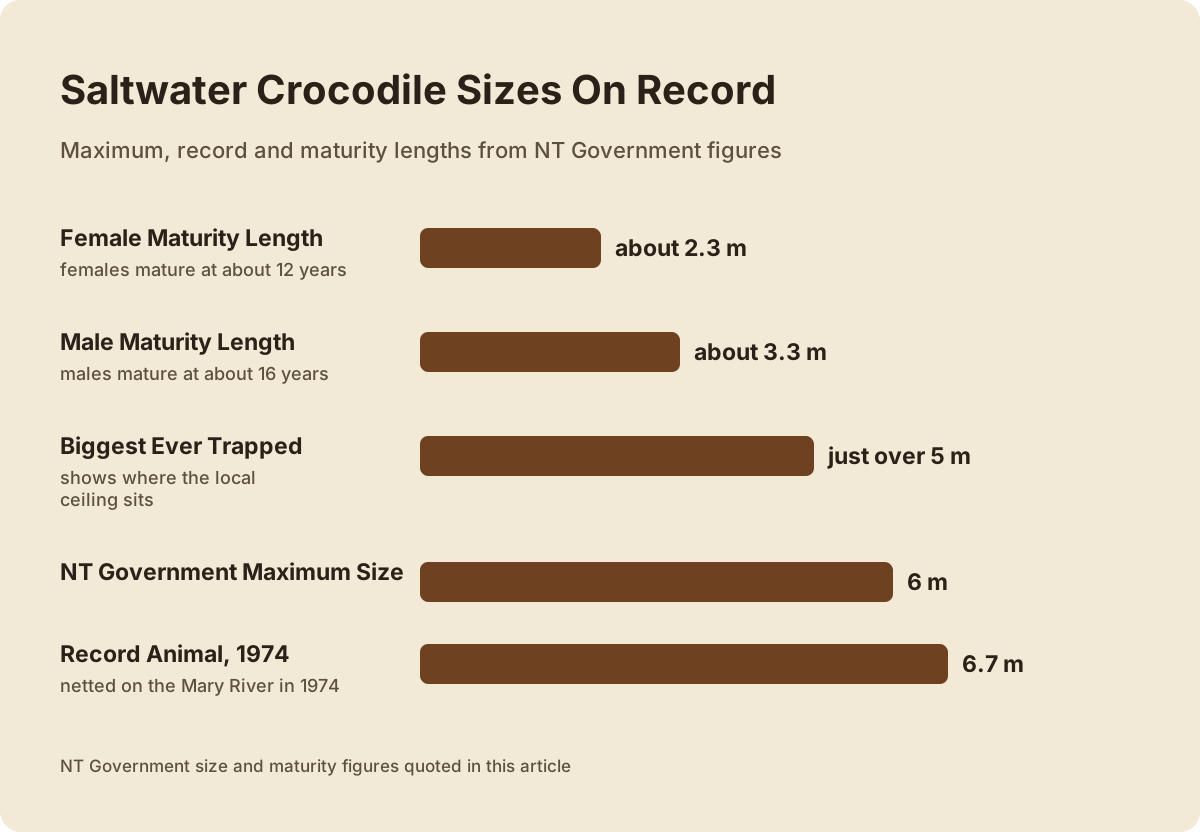
The saltwater, or estuarine, crocodile, Crocodylus porosus, is one of two crocodile species in the NT and is the animal the jumping cruises feature. It is the largest living reptile and can grow up to 6 m, with females maturing at about 2.3 m at roughly 12 years and males at about 3.3 m at roughly 16 years, per the NT Government. The second species, the freshwater crocodile, Crocodylus johnstoni, also lives in the Top End and appears on Spectacular's own wildlife list for the river, but the leaping, feeding animals drawn to the boats are saltwater crocodiles.
The "estuarine" name misleads people. This is not a species confined to river mouths or the coast. Saltwater crocodiles occupy rivers, floodplains and billabongs far inland, which is why the NT Government warns that any body of water in the Top End may contain large and potentially dangerous crocodiles. Size is the other thing visitors routinely underestimate: maturity figures alone put a grown male well past three metres, and the species maximum is 6 m. When a crocodile rises level with the boat's upper deck, you are looking at an animal in the middle of its natural size range, not an exception.
A big male holds that bulk on a metabolism built for patience. The NT Government notes females take about 12 years to reach breeding size and males about 16, so every large crocodile on the river is also an old one. If you are weighing which cruise to book, the choice between the Spectacular Jumping Crocodile Cruise and its rivals comes down to boat and operator differences, not to crocodiles, because all three river operators work the same wild population.
How Long Can A Saltwater Crocodile Stay Underwater?
Large crocodiles can stay underwater for up to one hour, with the heart rate dropping to 2 to 3 beats a minute, and for short bursts they can move faster than a human on land, according to the NT Government. Both numbers reshape what you see from the boat. A crocodile that sinks beside the jetty has not left. It may be metres away, motionless, using almost no oxygen, and it can reappear a long way from where it went down.
The hour-long breath hold belongs to large animals resting in cool water, and it is the physiological trick behind the species' hunting style. An animal that can lie submerged for an hour does not need to chase anything. It waits. The land-speed figure surprises people more: for short bursts, over the first few body lengths, a big saltwater crocodile can outsprint a human. The NT Government lists this alongside its warning that saltwater crocodiles are a serious threat to humans, and the two facts belong together. Speed over distance is poor; speed over the first few metres is not.
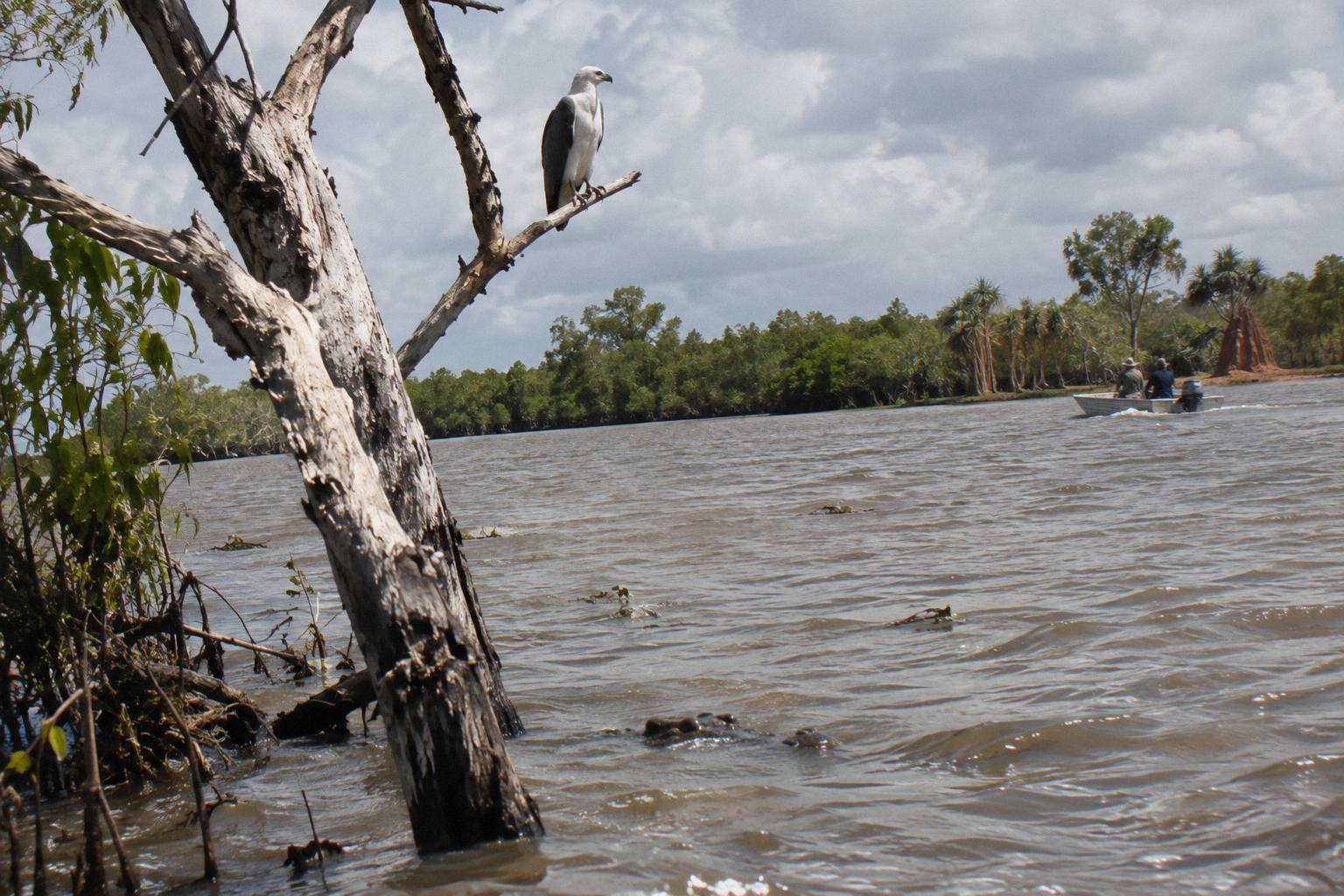
On the cruise itself this shows up as stillness. Long stretches of the hour on the water pass with the surface empty, then a shape rises without a ripple. The operators all say versions of the same thing about sightings and behaviour: the Original/Queen operator states, "We see crocodiles on almost every tour... behaviour can never be guaranteed." The crocodiles are not performing; they are responding to a boat they have learned to associate with a feed, on their own terms.
| Physiological fact | NT Government figure |
|---|---|
| Breath hold, large crocodile | Up to one hour |
| Heart rate while submerged | 2 to 3 beats a minute |
| Land speed | Faster than humans for short bursts |
| Female maturity | About 2.3 m at about 12 years |
| Male maturity | About 3.3 m at about 16 years |
The Adelaide River Cruises Jumping Crocodile Experience, which opens with a guide's briefing on crocodile behaviour and the rules, departs at 9am, 11am, 1pm and 3pm as listed on the operator's tour page, and the river cruise experience page here pairs with Jumping Croc Experience, 1 Hour on the operator's live listing when you are ready to pick a departure.
How Big Do Saltwater Crocodiles Actually Get?
The NT Government gives 6 m as the maximum size for the saltwater crocodile, the largest living reptile. It also records a 6.7 m animal netted on the Mary River in 1974 and notes the biggest ever trapped was just over 5 m. No operator publishes the size of any crocodile on the Adelaide River, and this page will not invent one. The 1974 figure is a historical record from the NT page, not a description of any animal alive on the river today, and the distinction matters when every cruise marketing line leans on big-croc imagery.
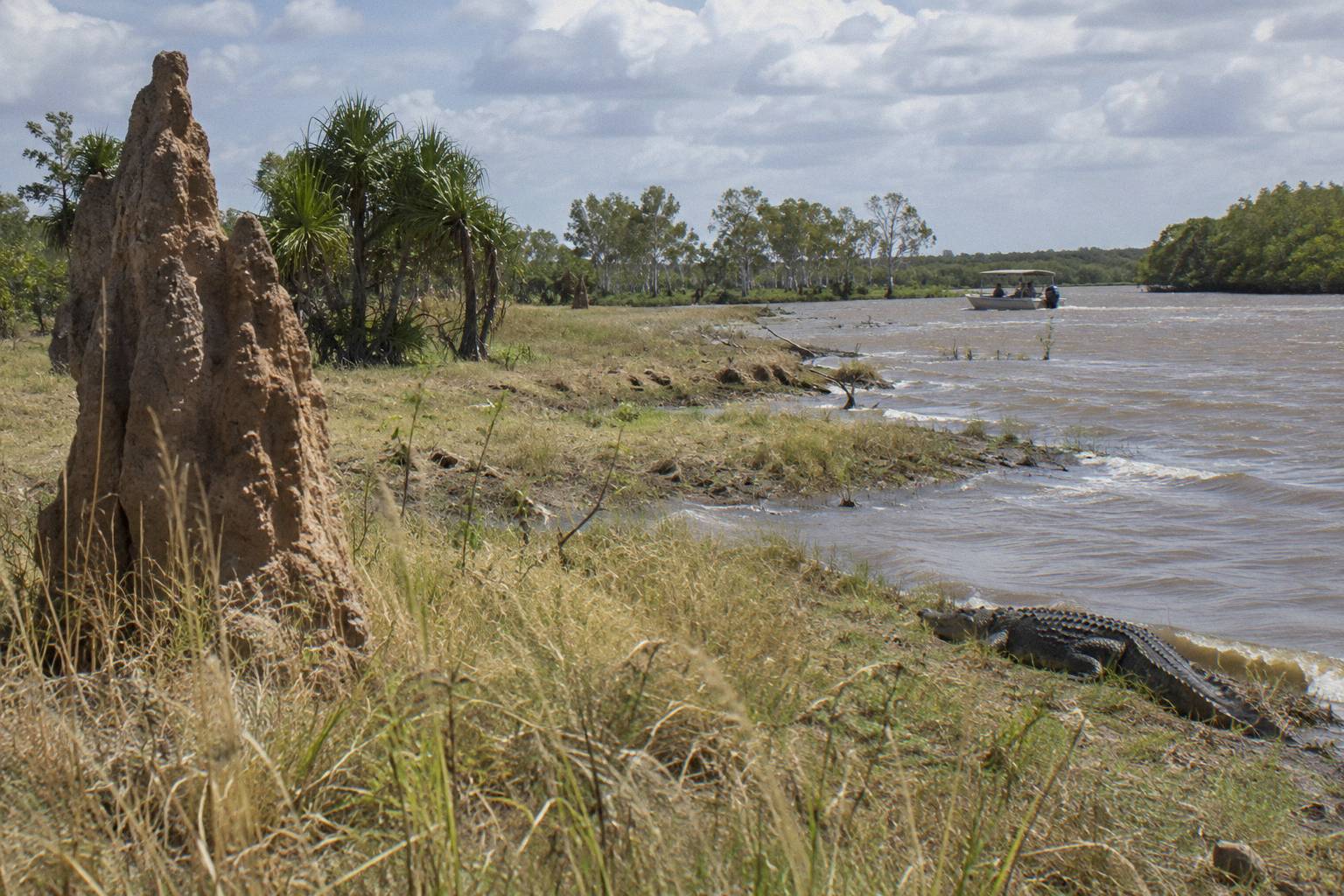
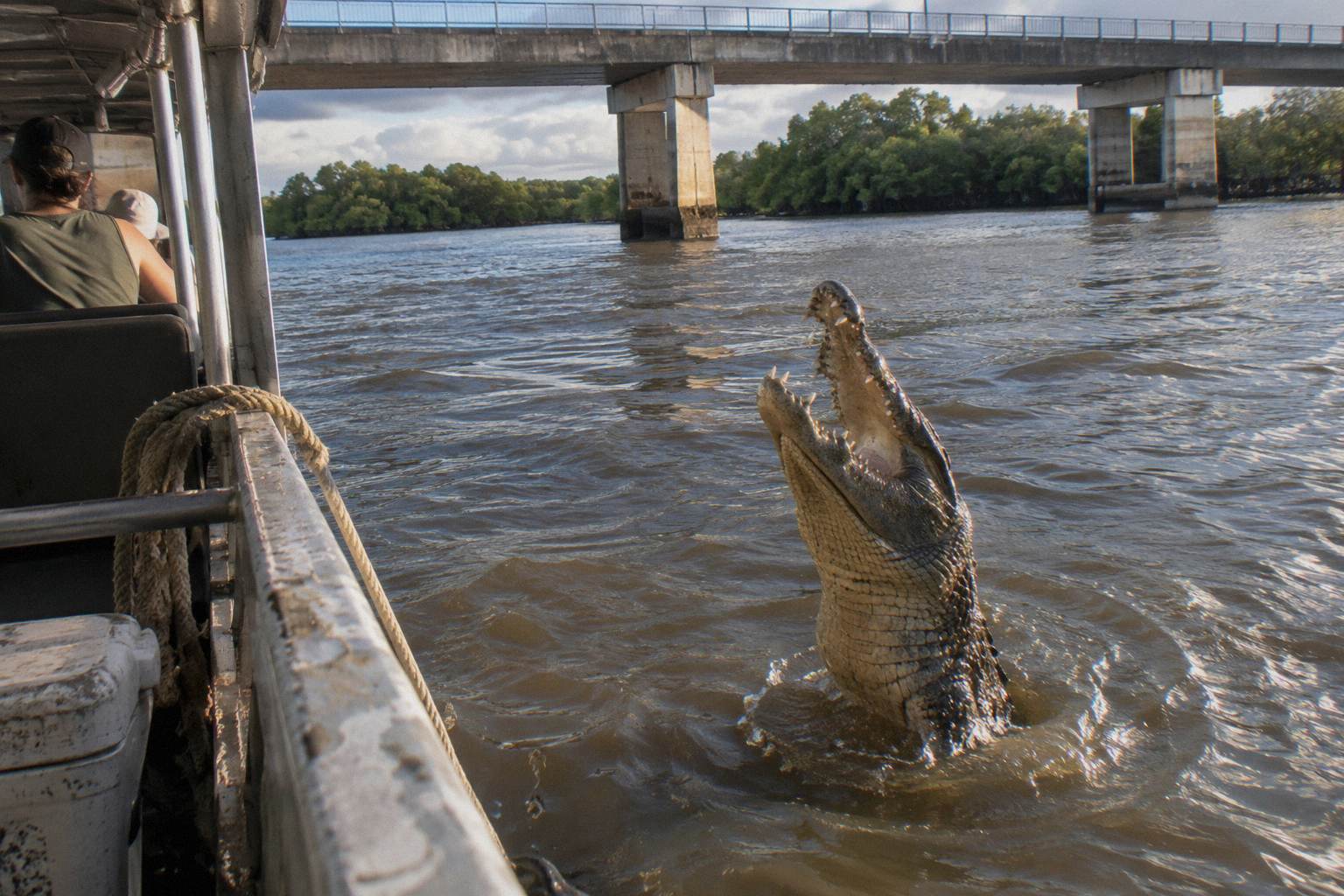
What you can honestly take from the numbers is a range. Males mature around 3.3 m and keep growing, so a fully grown male on the Adelaide River is realistically a three-to-five-metre animal, and the trapped record of just over 5 m shows where the local ceiling sits. That is an animal whose head is longer than a car's bonnet, rising under its own power. The leap itself, driven by the tail rather than the legs, is what puts that much body vertically beside a boat.
This is also where honest sourcing runs out. No operator and no NT page publishes a jump height, a jump distance, or a how-close-to-the-boat figure for these cruises, and any confident centimetre count you read elsewhere is invented. The decision content is simpler: all three river operators run boats designed for the encounter, from the Adelaide River Queen's croc-proof glass on its lower deck to the open-air Pathfinder vessels, and the crocodiles come close enough on almost every tour that standard phone cameras suit the interactions, as Adelaide River Cruises puts it. The guide to how jumping crocodiles work unpacks the mechanics in detail.
Why Do Crocodiles Jump For The Cruise Boats?
The crocodiles are wild animals that have learned to associate the boats with a small food offering: Spectacular says its crocodiles are offered a taste of buffalo meat, and the Original/Queen operator says its crocodiles are 100% wild and its feeding is done under NT wildlife permits. Nobody may take or interfere with a crocodile without a permit, per the NT Government. The vertical rise is a feeding response, powered by the tail, from animals that are never caught, penned or handled. They come because they choose to.
The permit detail is the part worth slowing down on. The NT page states that interfering with a crocodile requires a permit, though it does not describe the cruise permit scheme itself. Spectacular states that its staff hold Wildlife Permits from NT Parks and Wildlife, that its Animal Ethics Policy was developed with NT Parks and Wildlife, that there is no direct contact with the crocodiles, and that detailed feeding logs are kept. Its boats have a "jumper" positioned at the front. The Original/Queen operator's line is blunter: 100% wild crocodiles, fed under NT wildlife permits.
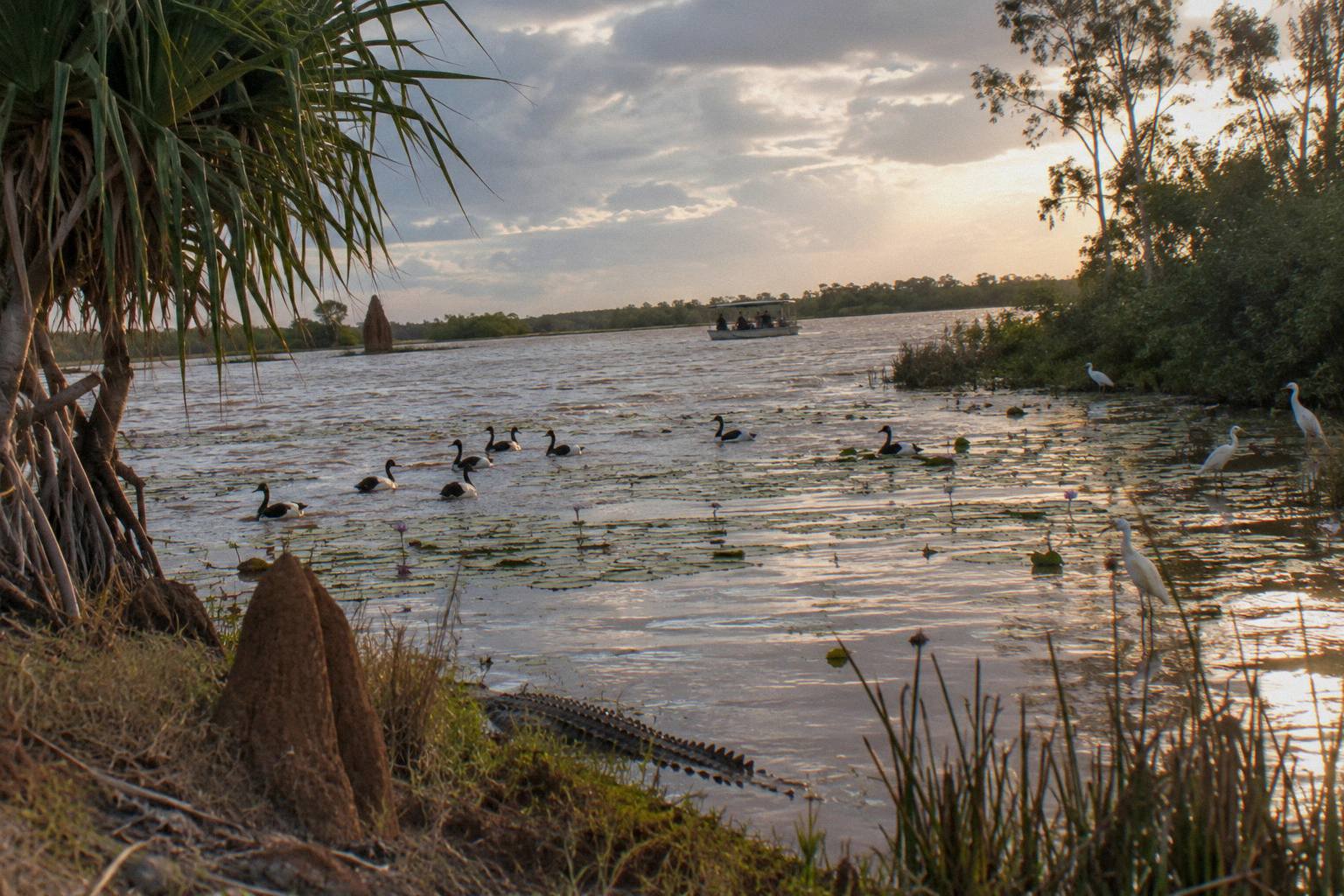
Beyond those statements, restraint is the honest position. This page will not tell you that the feeding is harmless, and it will not tell you that it harms the animals, because neither claim is supported by the sources here. What the sources do support is the wild status of the animals, the permit framework around the offering, and the operators' own insistence that behaviour can never be guaranteed. If you want the full mechanics of the leap and the debate around it, why crocodiles jump out of the water on the cruise covers it.
The Spectacular Jumping Crocodile Cruise runs this setup from an Indigenous-owned operation, run by Arirriki Aboriginal Corporation, which says every ticket supports an Aboriginal community.
Are Saltwater Crocodiles Dangerous To Cruise Passengers?
The NT Government states that any body of water in the Top End may contain large and potentially dangerous crocodiles and that saltwater crocodiles are a serious threat to humans. On the cruises themselves, the operators' rules are the protection: no direct contact, life jackets on board, supervised children, no swimming, no food on the boat, and a safety briefing before departure. This page will not issue a safety guarantee, and neither should any page you read; what can be said is what the operators and the government actually publish.
The NT Government's Be Crocwise advice, relayed here as general guidance, is aimed at people around Top End water, not specifically at cruise passengers: swim only where designated safe-swimming signs show and assume water is unsafe elsewhere; camp at least 50 m from the water; stand at least 5 m back from the water's edge when fishing; and do not lean out of or dangle limbs over the side of a boat. That last rule is the one that follows you onto the vessel. The cruise boats put you above the water, not beyond the rules.
The operators' own frameworks stack on top. Adelaide River Cruises opens every cruise with a safety briefing from the guides covering crocodile behaviour and the rules. The Original/Queen operator carries life jackets on board, prohibits swimming and food on the boat, and requires supervised children. Spectacular offers no direct contact with the crocodiles. Combined with the NT Government's standing warning, the picture is consistent: a managed wildlife experience around a genuinely dangerous animal, run under permits and rules. The deeper question of whether jumping crocodile cruises are safe is worth reading before you book.
| Source | Safety position stated |
|---|---|
| NT Government | Any Top End water may contain large, potentially dangerous crocodiles; saltwater crocodiles are a serious threat to humans |
| Be Crocwise advice (NT Government) | Swim only at designated signs; camp 50 m from water; fish 5 m back; never lean out of a boat |
| Adelaide River Cruises | Safety briefing on crocodile behaviour and rules before boarding |
| The Original/Queen operator | Life jackets on board; no swimming; no food on the boat; supervised children |
| Spectacular | No direct contact with the crocodiles |
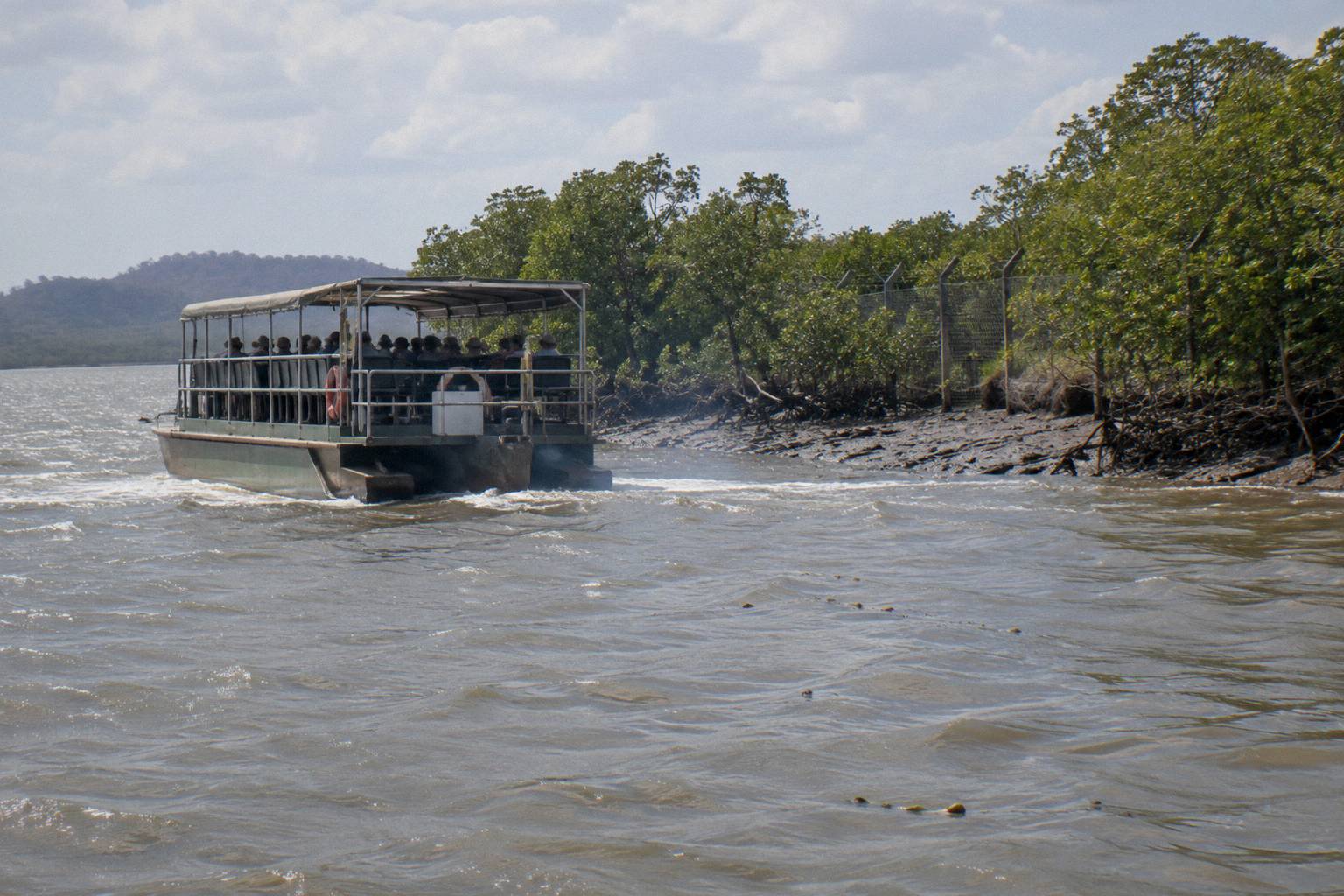
The Adelaide River Queen adds structure of its own: an air-conditioned lower deck behind croc-proof glass and an open-air upper deck under a shaded canopy, per the operator.
When Do Saltwater Crocodiles Nest?
Saltwater crocodiles build nests from November to May, with an average of about 50 eggs, per the NT Government. Those months sit outside the May-to-October window the operators name as the Dry Season, which is why nesting season and reduced wet-season departures overlap on the river. The timing is more than trivia for a visitor. A species that nests across half the year is a species with a constant presence on the floodplain, and the females guarding those nests are one more reason the Be Crocwise distances exist.
Fifty eggs sounds like abundance, but it funds a high-loss strategy. Nesting through the wet months, when the floodplain expands, means eggs and hatchlings face flooded nests, predators and a landscape that reshuffles every wet season. Maturity is slow on top of that: about 12 years for females, 16 for males, per the NT figures above. A population that replaces itself that patiently is exactly the kind that unregulated hunting nearly erased in the 1970s, and exactly the kind that legal protection has since rebuilt to roughly 100,000 in the NT wild.
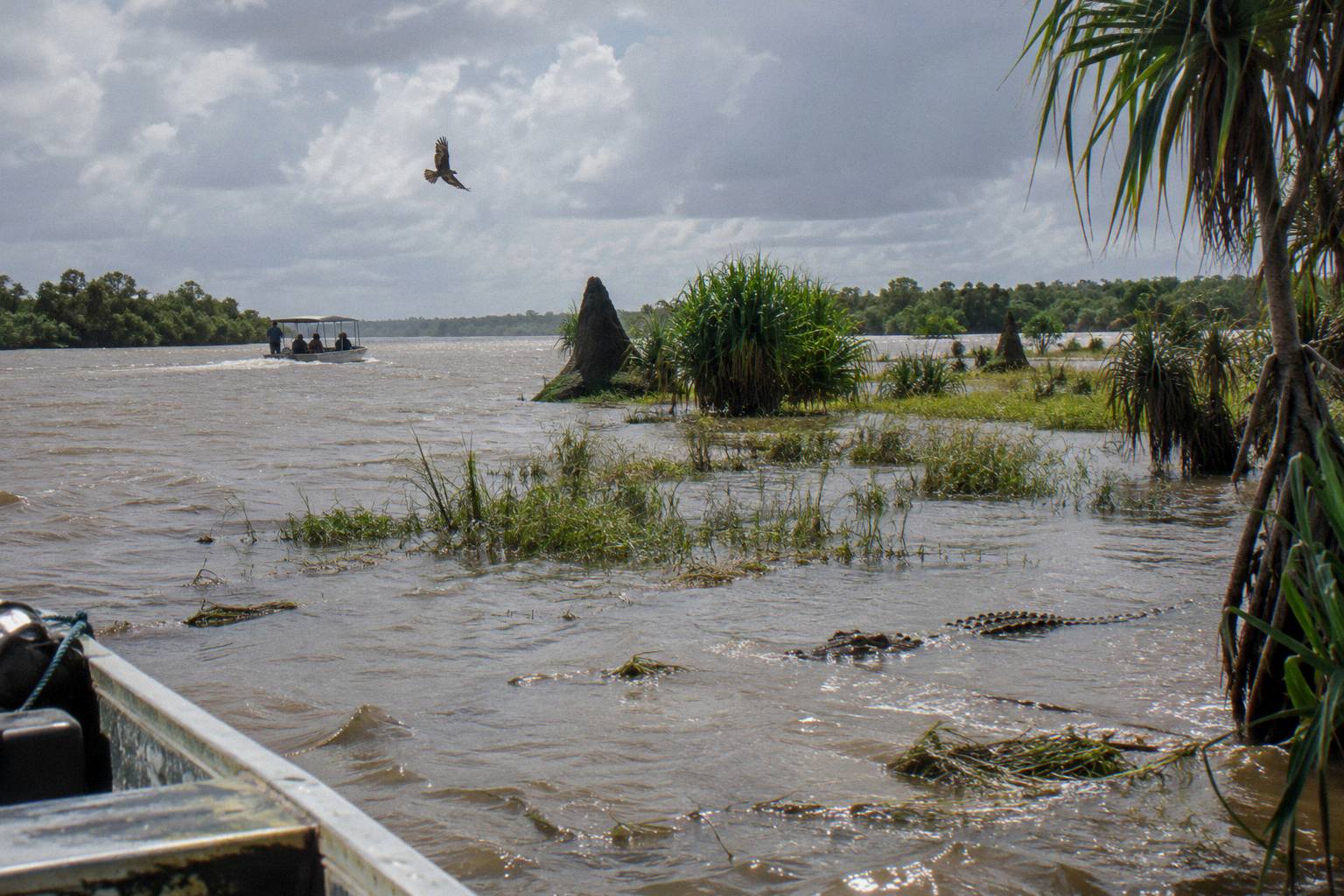
For cruise planning, the nesting calendar maps onto the season choice rather than the crocodile show. The Original/Queen operator says crocodiles are active year-round and the Dry Season, May to October, gives the most comfortable conditions, while wet-season departures may be reduced. Spectacular says it operates year-round except Christmas Day and adds that crocodiles often show a tactile response to rain. The comparison is laid out in jumping crocodile cruise wet season versus dry season, and the operators publish no morning-versus-afternoon crocodile behaviour claims, so treat any such tip as folklore.
Day tours that bundle the cruise with wetland stops suit visitors who want the floodplain context in one booking. The Jumping Crocodile River Cruise With Shuttle Bus by Wildlife Tours Australia runs about 4 hours, including the transfer from Darwin and the one-hour cruise by minibus, with the price sitting on the booking page rather than on this site.
What Other Wildlife Shares The River With Saltwater Crocodiles?
Spectacular's own wildlife list for the river includes white-bellied sea eagles, whistling kites, freshwater crocodiles, bull sharks, black flying-fox, the endangered speartooth shark and the critically endangered largetooth sawfish, in the operator's wording. Its access road often shows water buffalo, cattle and wading birds. No bird counts or seasonal bird claims are published, and no sighting can be promised. The floodplain is a bigger story than one species, even one as large as Crocodylus porosus.
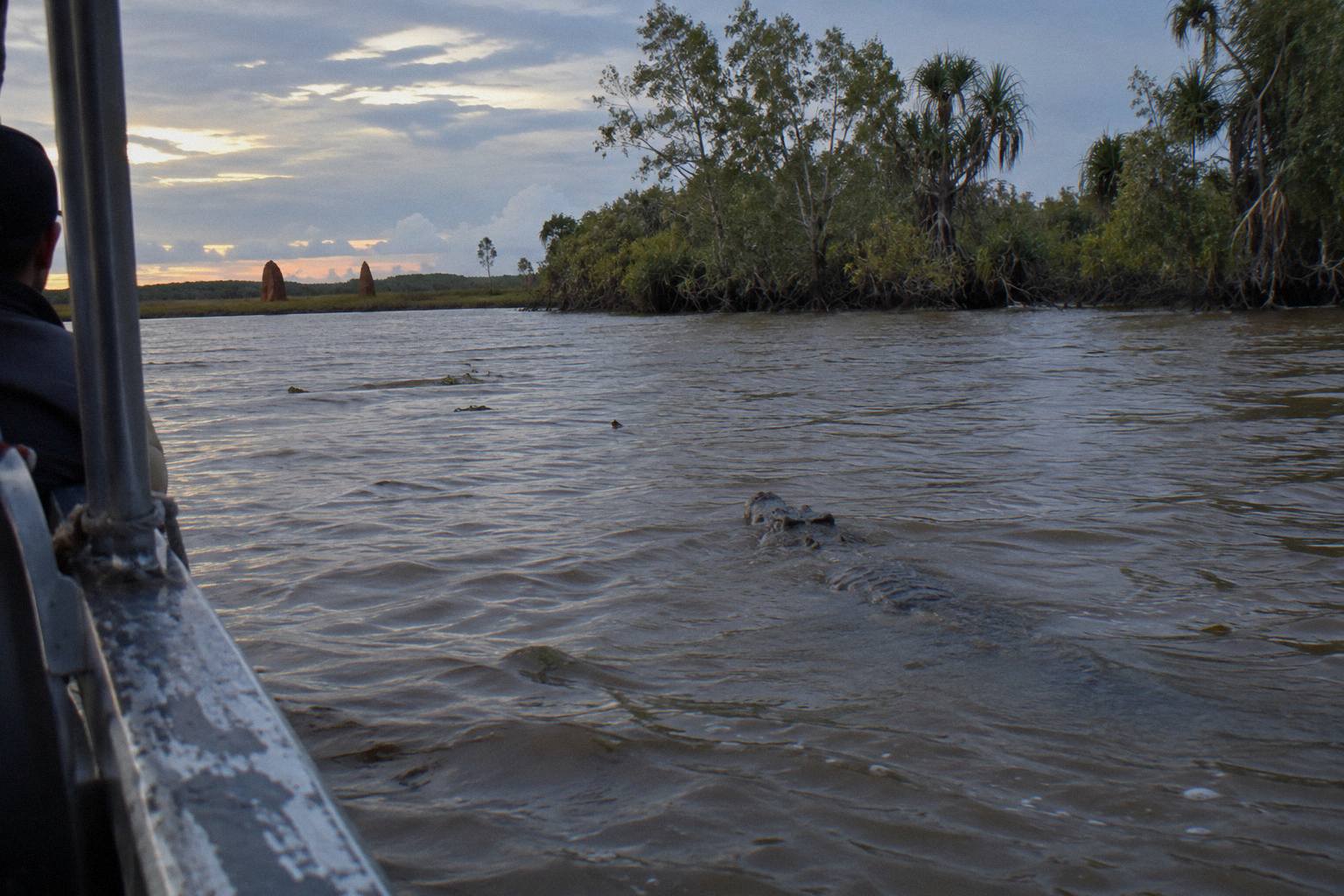
Two of those list entries deserve a second glance. Freshwater crocodiles, the NT's other species, share the system with their giant cousins. And the speartooth shark and largetooth sawfish are, in Spectacular's wording, endangered and critically endangered respectively: the Adelaide River is one of the places these rare animals still persist, which is a fact about the river's health that a first page of search results rarely mentions. The Adelaide River wildlife and birds guide goes further into what else the floodplain supports.
The buffalo on the access road connect back to the cruise itself. Spectacular says its crocodiles are offered a taste of buffalo meat, and the water buffalo standing in the shade near Beatrice Hill Farm are the living background to that offering. Photography-wise, Adelaide River Cruises suggests a zoom lens is useful for wildlife across the floodplain, while standard phone cameras suit the crocodile interactions because of the proximity, in its own wording. The photographing jumping crocodiles guide builds on exactly that split.
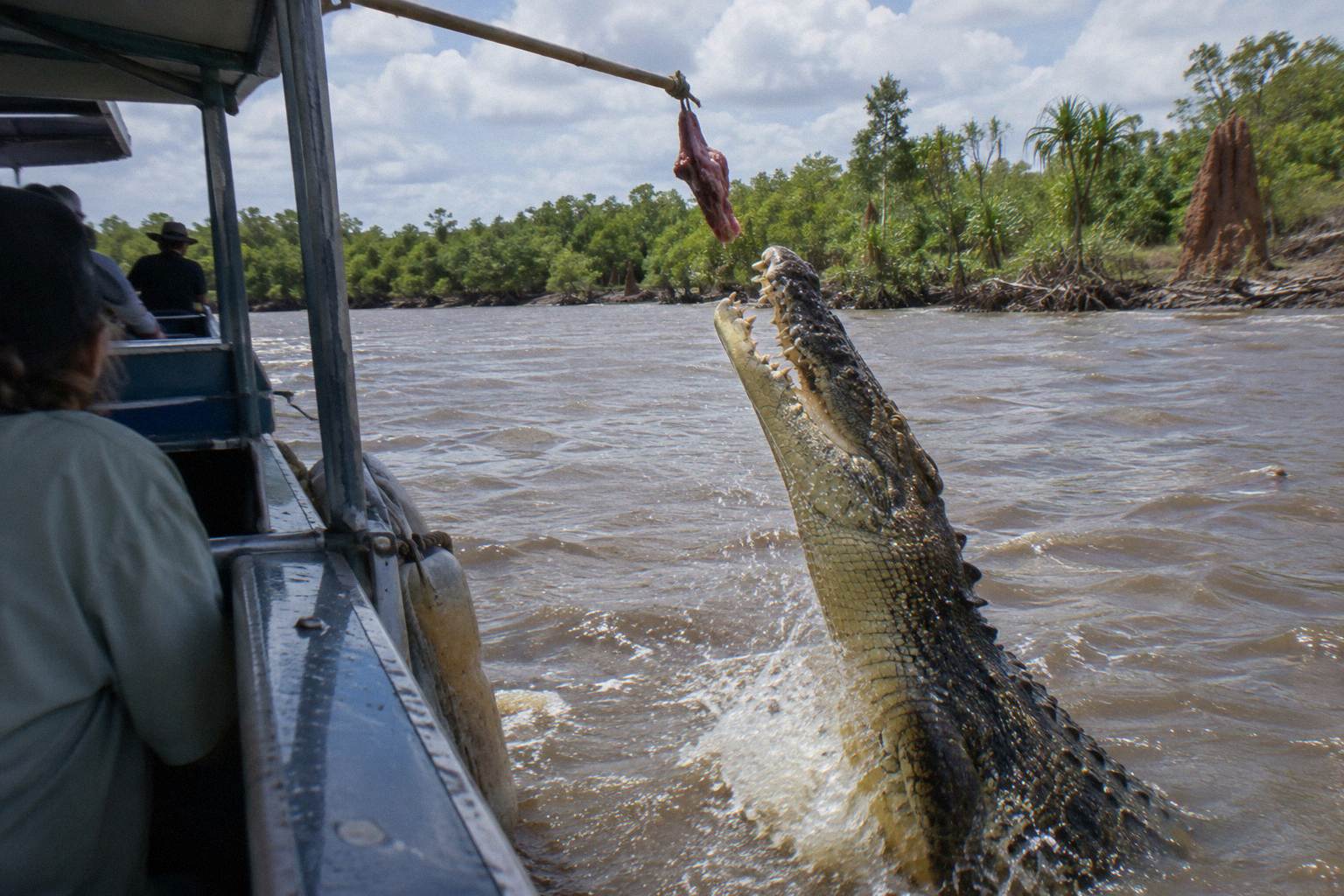
Are Saltwater Crocodiles Still Protected After Their Recovery?
Yes. Both NT crocodile species are protected by law, and you cannot take or interfere with a crocodile without a permit. The saltwater crocodile was almost extinct in the 1970s after unregulated hunting and is now widespread and no longer considered threatened, per the NT Government. The recovery is one of Australia's clearest conservation turnarounds, and it is the reason a cruise on the Adelaide River can virtually count on crocodiles appearing at all.
That legal protection is also the frame around the cruise industry. The NT page does not describe the cruise permit scheme, so this page will not either, but the operators' own statements fill the gap: Spectacular's staff hold Wildlife Permits from NT Parks and Wildlife and keep detailed feeding logs; the Original/Queen operator feeds under NT wildlife permits. The animals remain wild under law and in practice. A visitor's obligations are simpler and the same onshore and on the water: do not interfere with any crocodile, and follow the Be Crocwise distances summarised above.
Protection has a practical edge for the region too. A population at or approaching pre-hunting levels, spread through rivers, floodplains and estuaries across the Top End, is why the NT Government's warning that any body of water may contain large crocodiles is meant literally. The conservation success and the safety advice are the same story told twice. If you are planning around Darwin, the Darwin to Adelaide River guide covers the drive and the jumping-off points, and Adelaide River Crocodile Cruise keeps the full roster of river cruises and day tours in one place.
Visitors who want the cruise plus a fuller Territory day can pair it with the Litchfield waterfalls; the Litchfield Park Tour And Jumping Crocodile Cruise by Litchfield Escapes runs a full day including Wangi Falls, Florence Falls and Buley Rockhole.
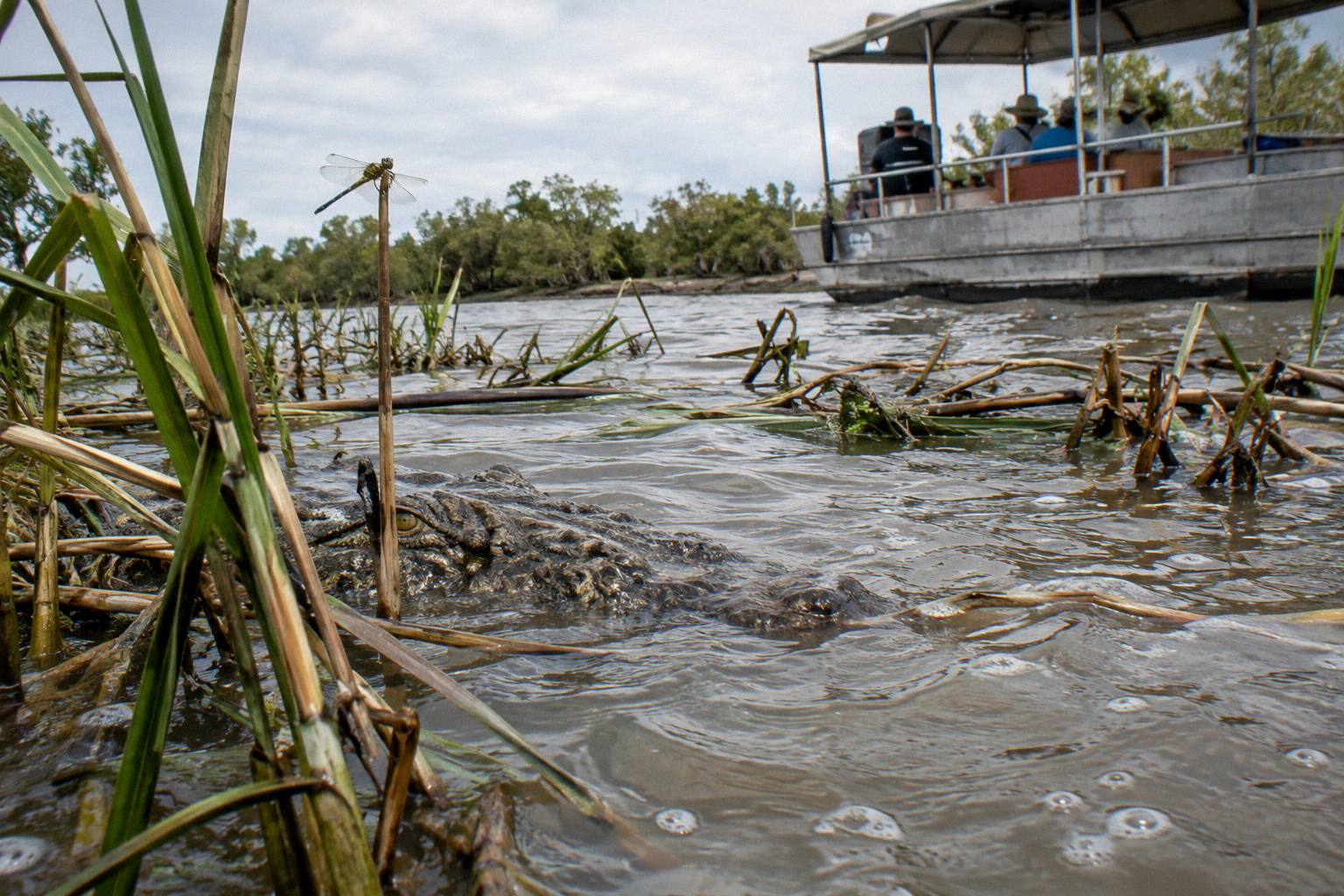
The essential facts from the NT Government's crocodile pages hold the whole page together, and the conservation record explains the recovery behind today's numbers. For the cruise-side detail, Spectacular's own cruise page states the buffalo-meat offering and permit framework in the operator's words.
Common Questions About Saltwater Crocodiles
Are The Jumping Crocodiles On The Adelaide River Saltwater Crocodiles?
Yes. The NT Government confirms the jumping-cruise crocodiles are saltwater (estuarine) crocodiles, Crocodylus porosus, one of two species in the NT. The freshwater crocodile, Crocodylus johnstoni, also lives in the Top End and appears on Spectacular's wildlife list, but the animals that leap beside the boats are saltwater crocodiles.
How Big Do Saltwater Crocodiles Get?
The species can grow up to 6 m, per the NT Government, which also records a 6.7 m animal netted on the Mary River in 1974 and notes the biggest ever trapped was just over 5 m. Females mature at about 2.3 m at roughly 12 years and males at about 3.3 m at roughly 16 years. No operator publishes the size of any individual crocodile on the Adelaide River.
How Many Crocodiles Live In The Adelaide River?
No river-by-river population count for the Adelaide River appears in the official sources. The NT Government counted about 100,000 saltwater crocodiles in the NT wild in 2017 and says there are more in the NT than in Queensland and Western Australia, but it does not break that figure down by river.
How Long Can A Saltwater Crocodile Stay Underwater?
Large crocodiles can stay underwater for up to one hour, with the heart rate dropping to 2 to 3 beats a minute, per the NT Government. For short bursts they can also move faster than humans on land, which is why the Be Crocwise advice says never to lean out of or dangle limbs over the side of a boat.
Do Crocodiles Jump Naturally, Or Only For The Cruise Boats?
The vertical rise is a natural feeding movement powered by the tail, and the cruises work with wild animals that have learned to associate the boats with a small food offering. Spectacular says its crocodiles are offered a taste of buffalo meat under NT Parks and Wildlife permits; the Original/Queen operator says its crocodiles are 100% wild and fed under NT wildlife permits. No operator or NT page publishes a jump height or distance.
Are Saltwater Crocodiles Endangered?
No. The species was almost extinct in the NT by the 1970s after unregulated hunting, but the NT Government now describes it as widespread and no longer considered threatened, with about 100,000 in the NT wild in 2017. Both NT crocodile species remain protected by law, and you cannot take or interfere with a crocodile without a permit.