Why Do Crocodiles Jump Out Of The Water On The Cruise?
The crocodiles on the Adelaide River jumping cruises are wild saltwater crocodiles offered buffalo meat under NT wildlife permits. Here is what the operators and the NT Government actually say about the jump.
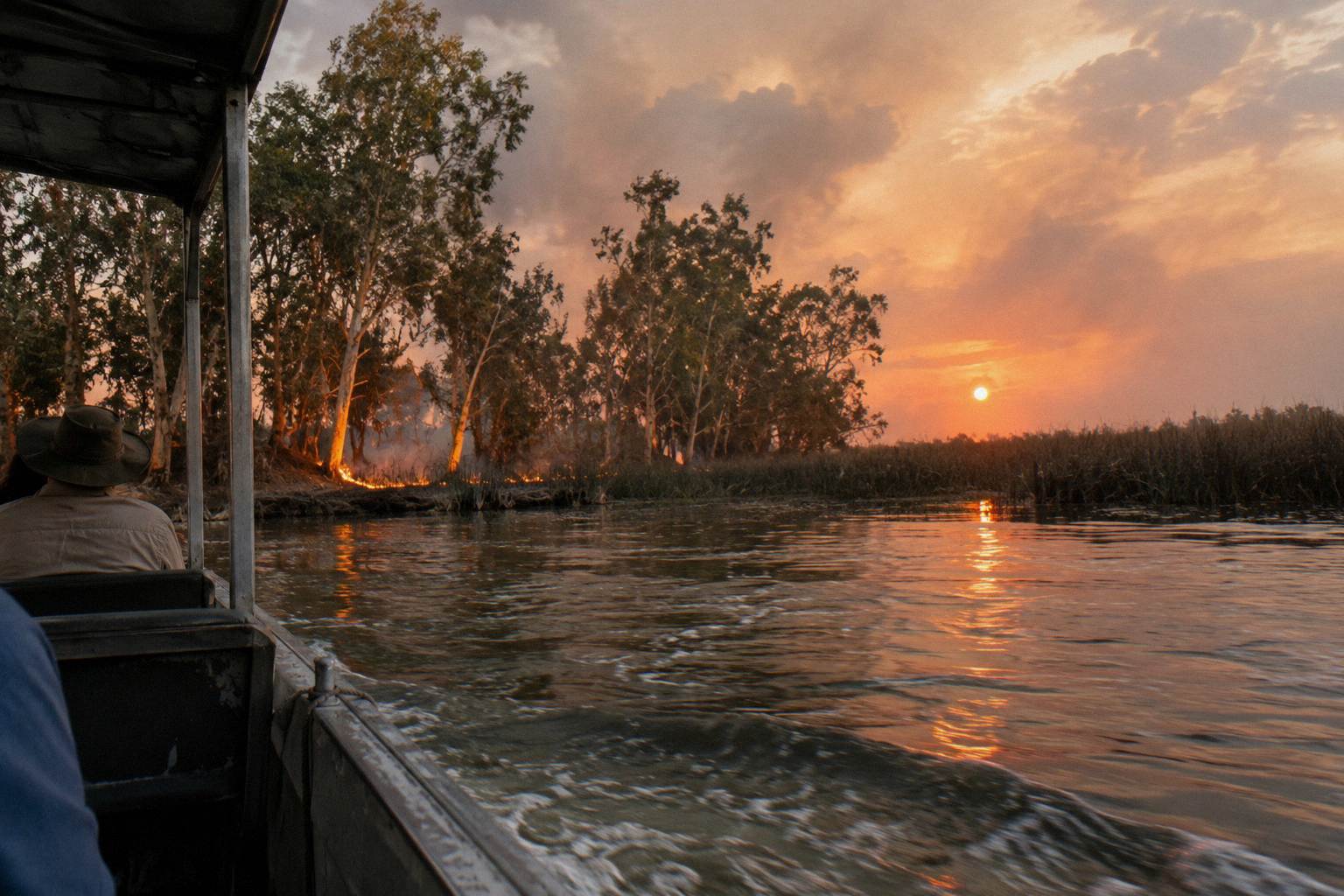
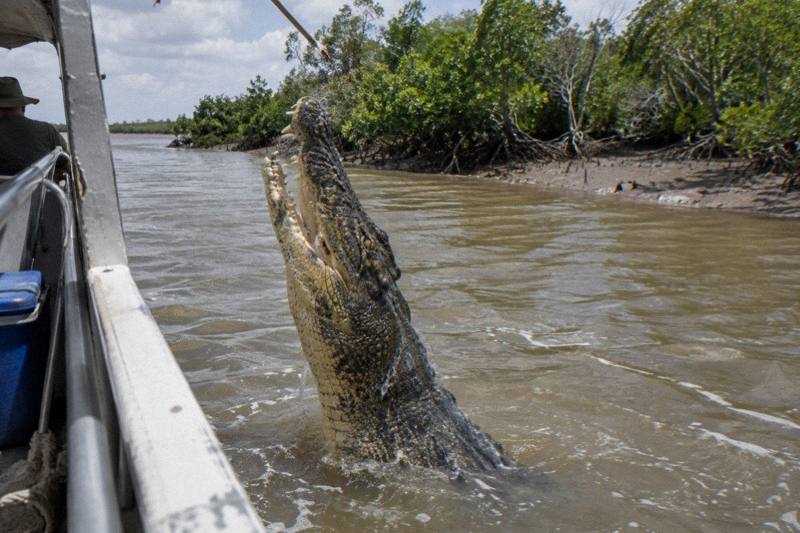
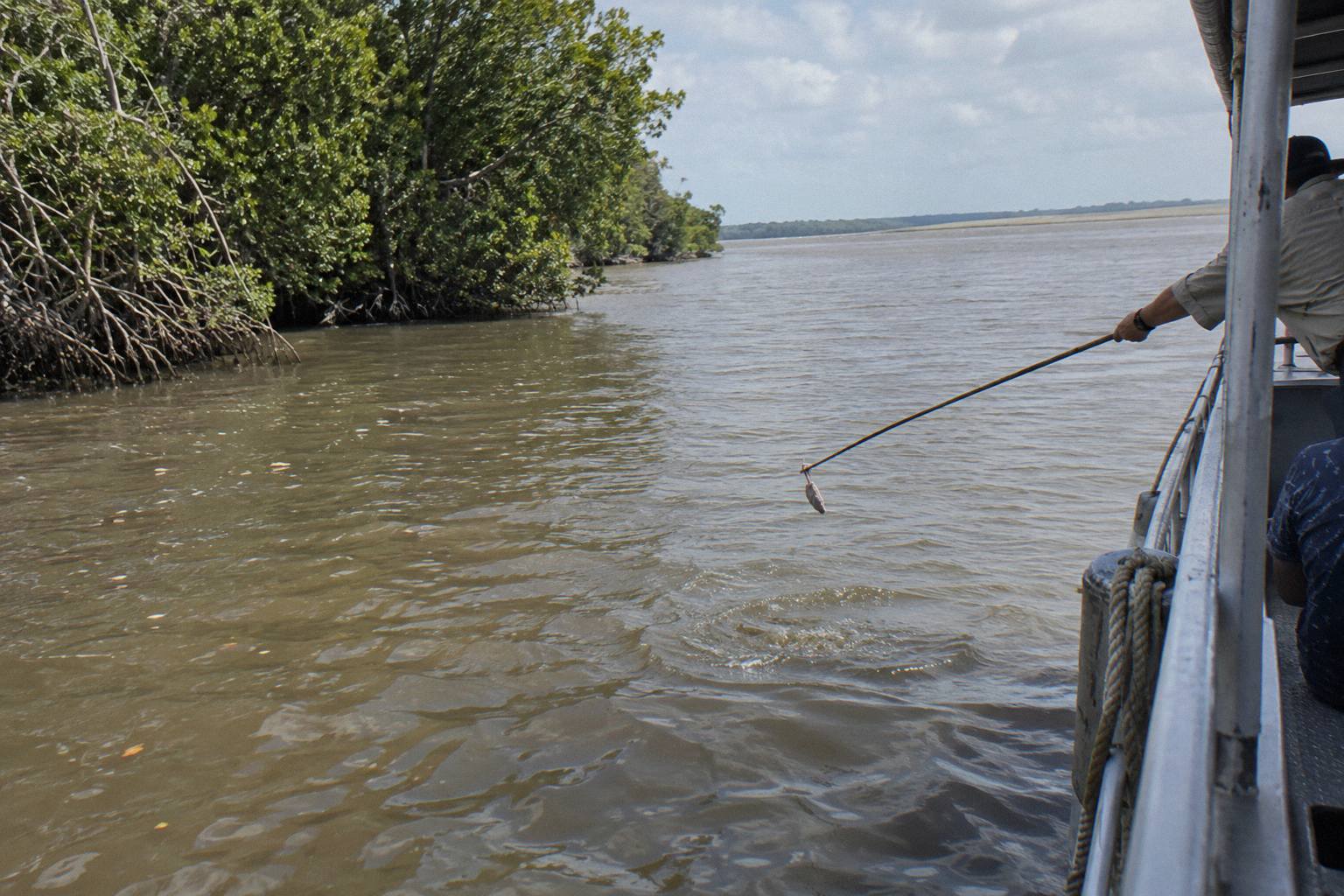
The crocodiles leap because the crews offer them food from the front of the boat. Spectacular Jumping Crocodile Cruises says its crocodiles are offered a taste of buffalo meat, and its boats carry a feeding station at the front, which the operator calls the jumper. The crocodiles themselves are wild saltwater crocodiles, not trained animals, and no operator claims anything beyond that mechanism.
That is the whole honest answer, and it is worth dwelling on how little else is actually documented. A reader asking this question is usually trying to work out whether the leaping is a natural behaviour or a staged trick, and the sources on this subject split cleanly into two kinds. The operators publish what they do on the water. The Northern Territory Government publishes facts about the animals. Neither publishes a scientific explanation of why a crocodile chooses to launch itself vertically, and this article will not invent one.
What can be said, plainly, is what happens on the river. A cruise boat moves along the Adelaide River, the crew uses food to draw a wild crocodile up out of the water, and the animal propels itself upward toward the offering. The crocodiles are saltwater crocodiles, Crocodylus porosus, the same species the NT Government describes as the largest living reptile, capable of growing up to 6 m. Feeding them is a permitted activity, not a free-for-all: Spectacular says its staff hold Wildlife Permits from NT Parks and Wildlife, and the Original Jumping Crocodile Cruises operator says its feeding is done under NT wildlife permits. The NT Government's own crocodile page notes that nobody may take or interfere with a crocodile without a permit, though it does not describe the cruise permit scheme itself.
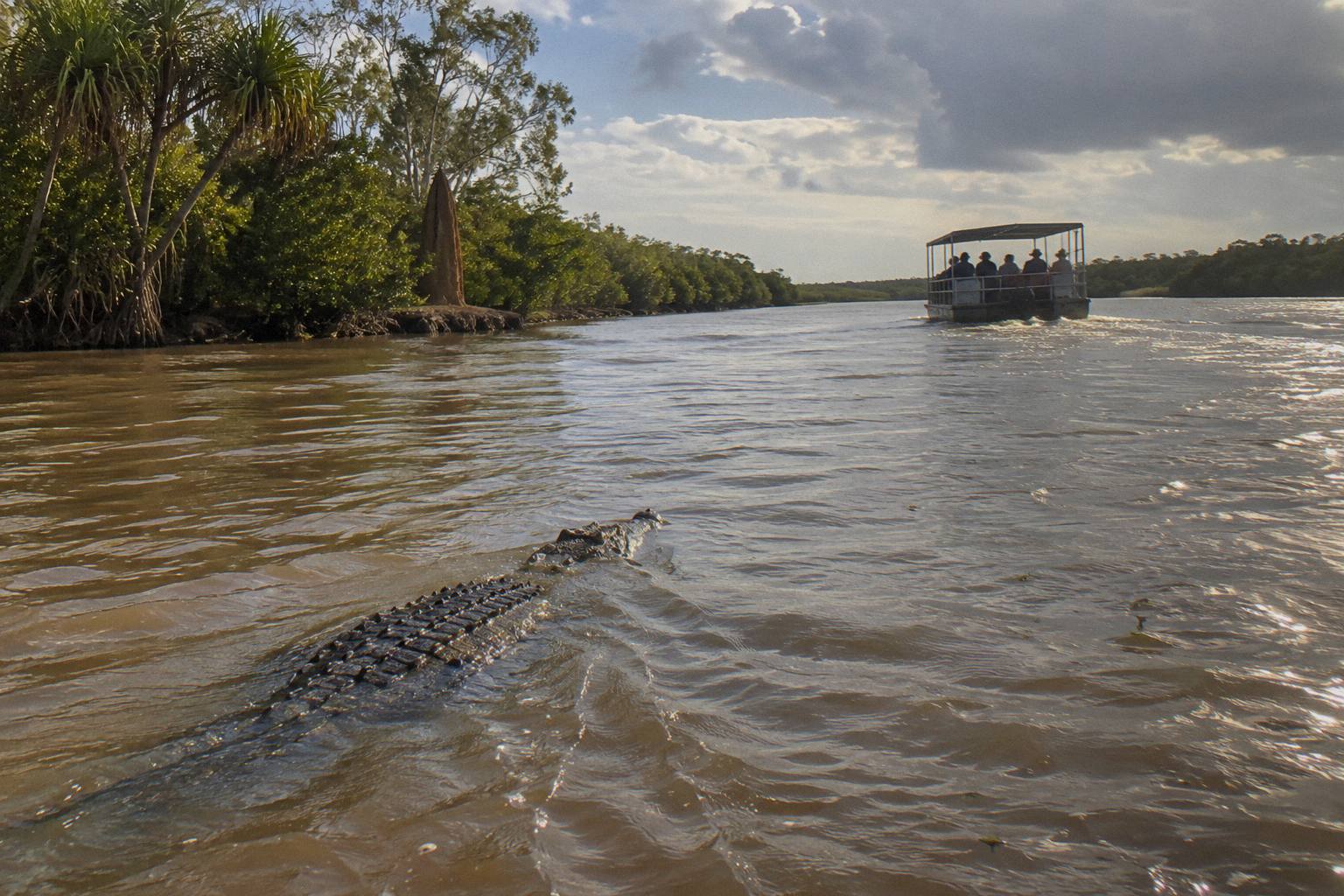
Three operators run these cruises from separate jetties on the river, and each has a slightly different setup on the water. Spectacular runs two custom vessels, Croc-Cat1, a multi-hull with stadium-style seating and the skipper at the rear, and Wildcat, a smaller boat that goes further down the river; which vessel runs depends on the numbers booked. Adelaide River Queen Cruises, which also trades as The Original Jumping Crocodile Cruises, runs the Adelaide River Queen, with an air-conditioned lower deck and an open-air upper deck under a shaded canopy, plus the smaller open-air Pathfinder vessels. Adelaide River Cruises runs a one-hour experience that opens with a safety briefing from the guides on crocodile behaviour and the rules. If you want to compare the three head to head, the Adelaide River Crocodile Cruise site carries a full guide to the differences between the jumping crocodile cruise operators, and there is also a deeper look at how jumping crocodiles work elsewhere in this section.
If the jump itself is what is drawing you to the river, these are the three river-only cruises plus one day tour that pairs the cruise with the surrounding wetlands.
The featured tour on this site is the Adelaide River Cruises Jumping Crocodile Experience, a roughly one-hour cruise from Anzac Parade, Middle Point, and you can read more about the Adelaide River Cruises operator before committing. Its tour page lists departures at 9am, 11am, 1pm and 3pm daily.
What The Boats Actually Do To Get A Crocodile To Jump
The crews hold food out from the front of the boat, and the crocodile rises to take it. Spectacular describes its vessels as having a jumper at the front, the position from which the buffalo meat is offered. The Original and Queen operator describes its crocodiles as 100% wild, and its feeding is done under NT wildlife permits. Neither operator publishes a script, a schedule of named animals, or any guarantee of how the leap looks on a given day.
Start with the food, because that is the one mechanism any source actually states. Spectacular's words are that the crocodiles are offered "a taste of buffalo meat." That phrasing matters. It is not a feast, and the operator's Animal Ethics Policy, which it says was developed with NT Parks and Wildlife, sits alongside detailed feeding logs that its staff keep. The structure exists because the activity is regulated: wildlife permits, an ethics policy, and records of what was offered and when. The Original and Queen operator makes a parallel point from the other direction, calling its crocodiles 100% wild and noting that feeding happens under NT wildlife permits.
Then there is the hardware. Spectacular's boats have the jumper at the front, meaning the feeding position is part of the vessel design rather than an improvised arrangement. On the Adelaide River Queen, the operator describes croc-proof glass and individual seating, with an open-air upper deck that gives the classic view down onto a rising crocodile. The Pathfinder vessels are open-air, carrying up to 38 passengers each, which the operator states for the Pathfinder only. Adelaide River Cruises does not state its boat type or capacity, and this article will not guess at either.
Wondering whether you need to lock in a date? The operators recommend booking ahead, especially from June to August, and Adelaide River Cruises offers a full refund if you cancel more than 24 hours before departure. Check availability on the operator's live listing before you plan your day around a specific sailing.
What none of this adds up to is a promise. The Original and Queen operator puts it in its own words: "We see crocodiles on almost every tour... behaviour can never be guaranteed." That sentence deserves to travel with every description of the jump ever written. The crocodiles are wild animals making their own decisions about whether to rise, and the operators are candid that some days outperform others.
Is The Jump Natural Or Staged?
By the operators' own descriptions, the jump is a natural movement by a wild animal, prompted by food offered under permit. Nothing in any operator page or NT Government page claims the crocodiles are trained, named performers running a script. Equally, nothing claims the leaps would happen at the boat without the food being offered. The activity sits deliberately between those two descriptions.
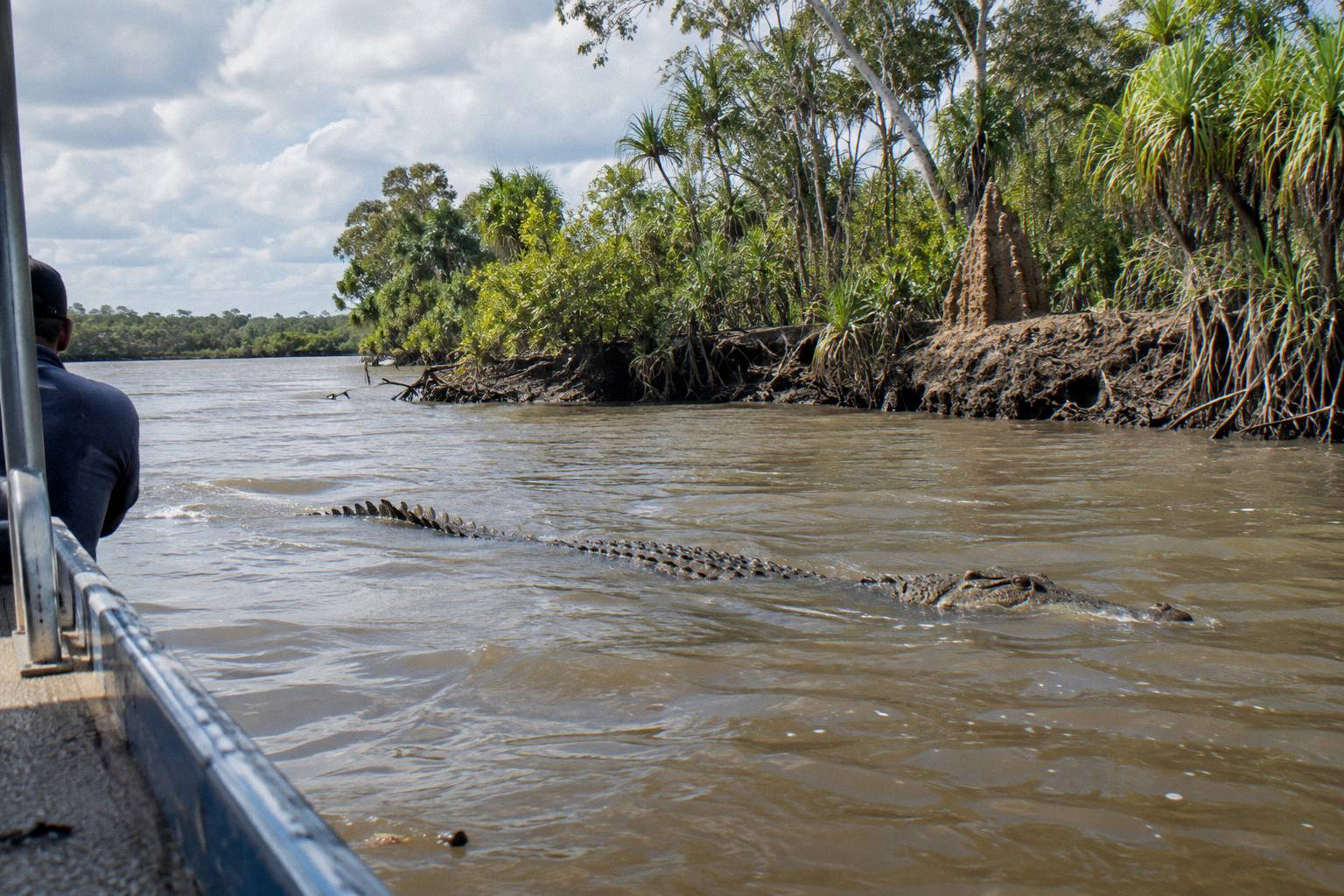
The word "staged" implies a controlled show, and the permit structure argues against that reading. You do not need Wildlife Permits, an Animal Ethics Policy developed with NT Parks and Wildlife, and feeding logs for a trained-animal performance; you need them for a regulated interaction with protected wild animals. Both species of NT crocodile are protected by law, and the NT Government page on crocodiles states plainly that you cannot take or interfere with a crocodile without a permit. The cruises operate inside that frame, not outside it.
But the honest version of "natural" is narrower than some marketing implies. A crocodile rising vertically out of the water is a real, powerful movement the animal is physically built for, and the NT Government notes that for short bursts crocodiles can move faster than humans on land. What triggers the movement on the cruise is the food. Without the buffalo meat held at the front of the boat, there is no reason for a crocodile to expend that energy next to a vessel full of passengers. The leap is genuine; the occasion is manufactured. Both halves of that sentence are true at once, and neither the operators nor this article claims otherwise.
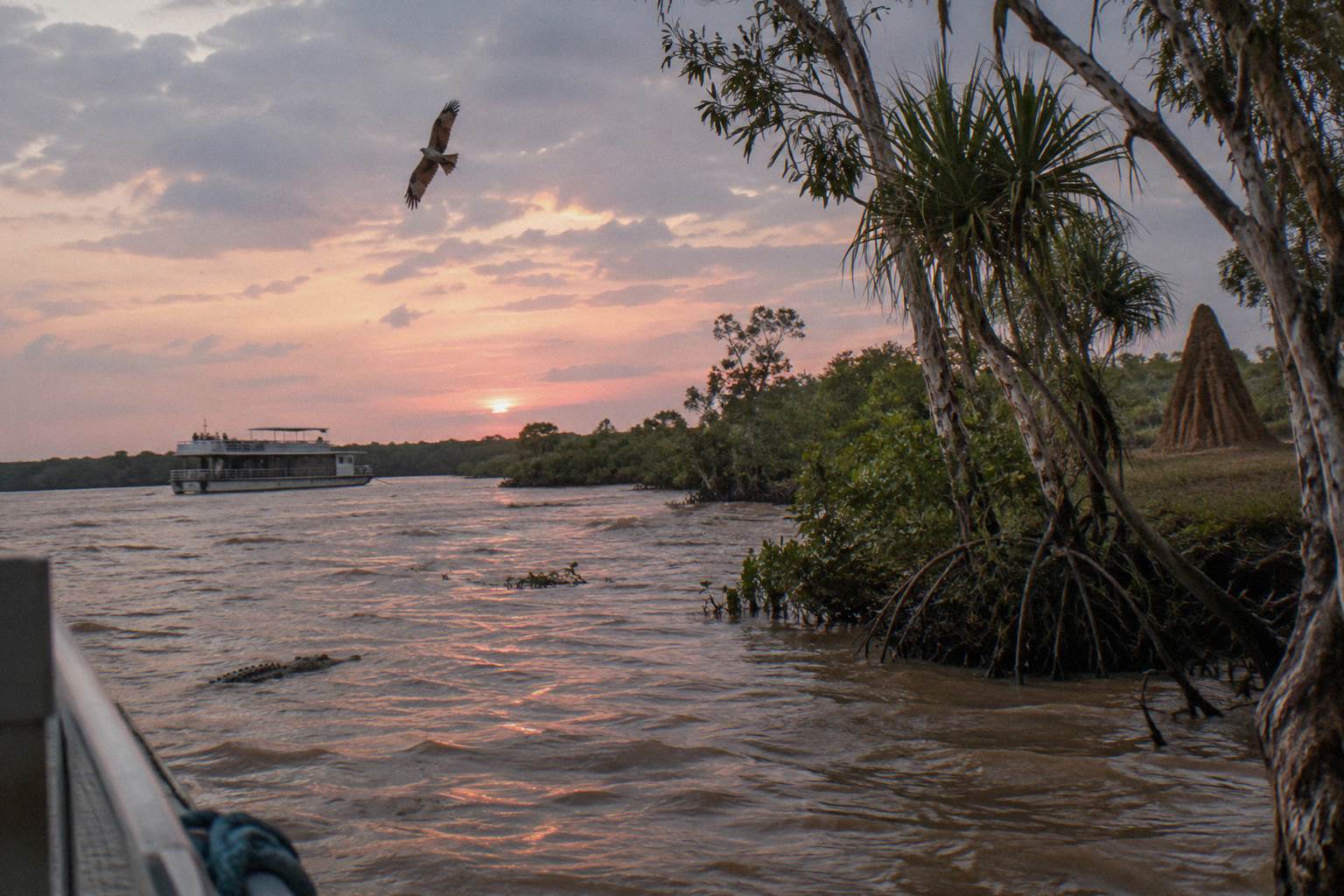
It is also worth being clear about what is not published anywhere. No operator and no NT Government page publishes a jump height, a jump distance, or a figure for how close the crocodiles come to the boat. Any number of that kind you have read elsewhere did not come from these sources, and this site will not print one. The same goes for crocodile names, individual sizes, sighting odds, and any claim about a best side of the boat: none of it is stated by the operators, so none of it appears here.
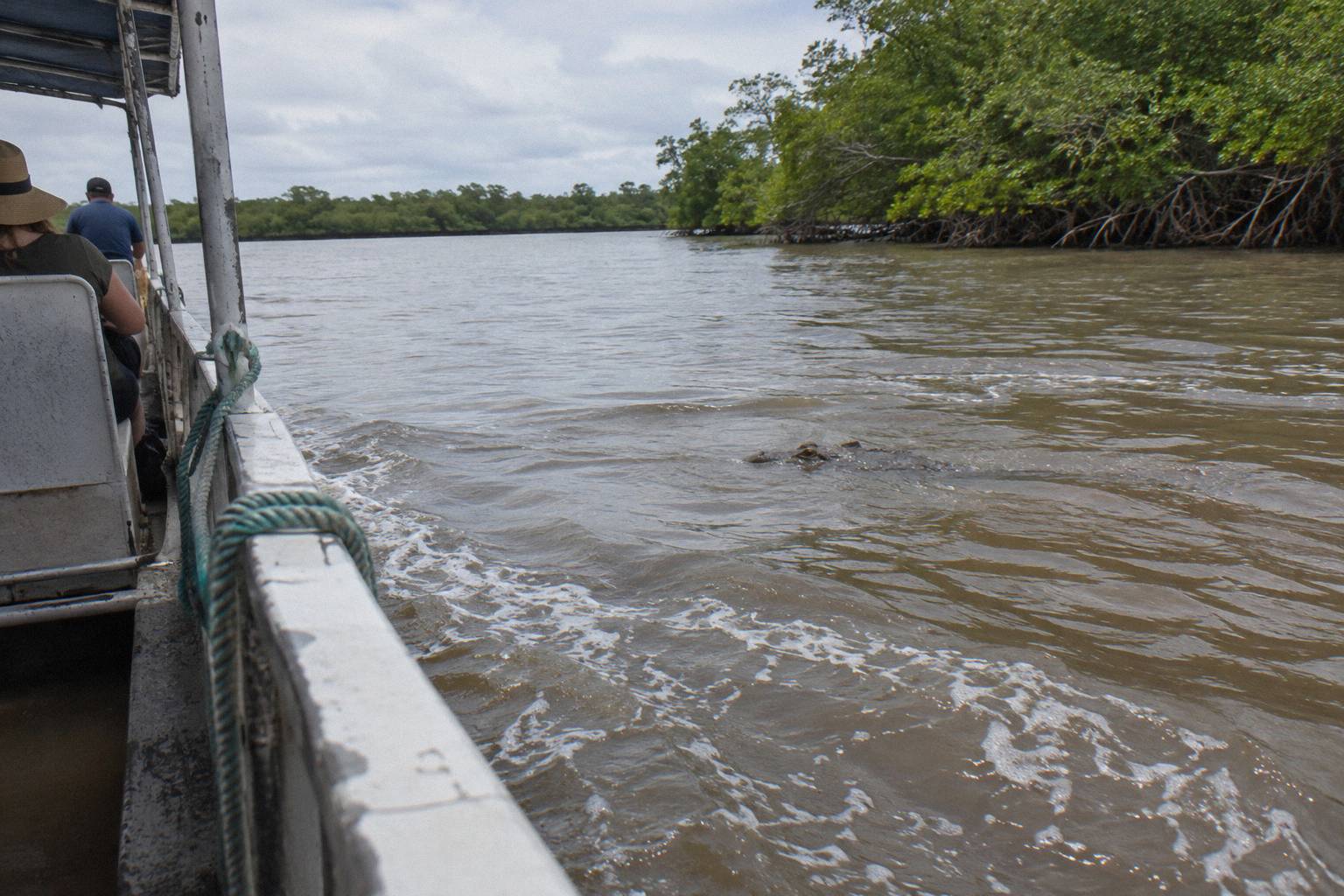
Which Crocodiles Are Doing The Jumping?
They are saltwater crocodiles, Crocodylus porosus, the estuarine species the NT Government calls the largest living reptile, growing up to 6 m. The NT holds two crocodile species, the other being the freshwater crocodile, Crocodylus johnstoni, but the animals that leap on the Adelaide River cruises are the saltwater ones. About 100,000 saltwater crocodiles lived in the NT wild in 2017, thought to be at or approaching pre-hunting levels.
The species distinction matters more than it might first appear. Freshwater crocodiles, the smaller johnstoni species, also live in the Top End, and Spectacular's own wildlife list even includes them among the animals seen around the river. But the vertical lunge from deep water, the bulk rising clear of the surface, belongs to the saltwater crocodile on these cruises. The NT Government says females of the species mature at about 2.3 m, around 12 years, and males at about 3.3 m, around 16 years, which gives a sense of the size class of the adults that come to the boats.
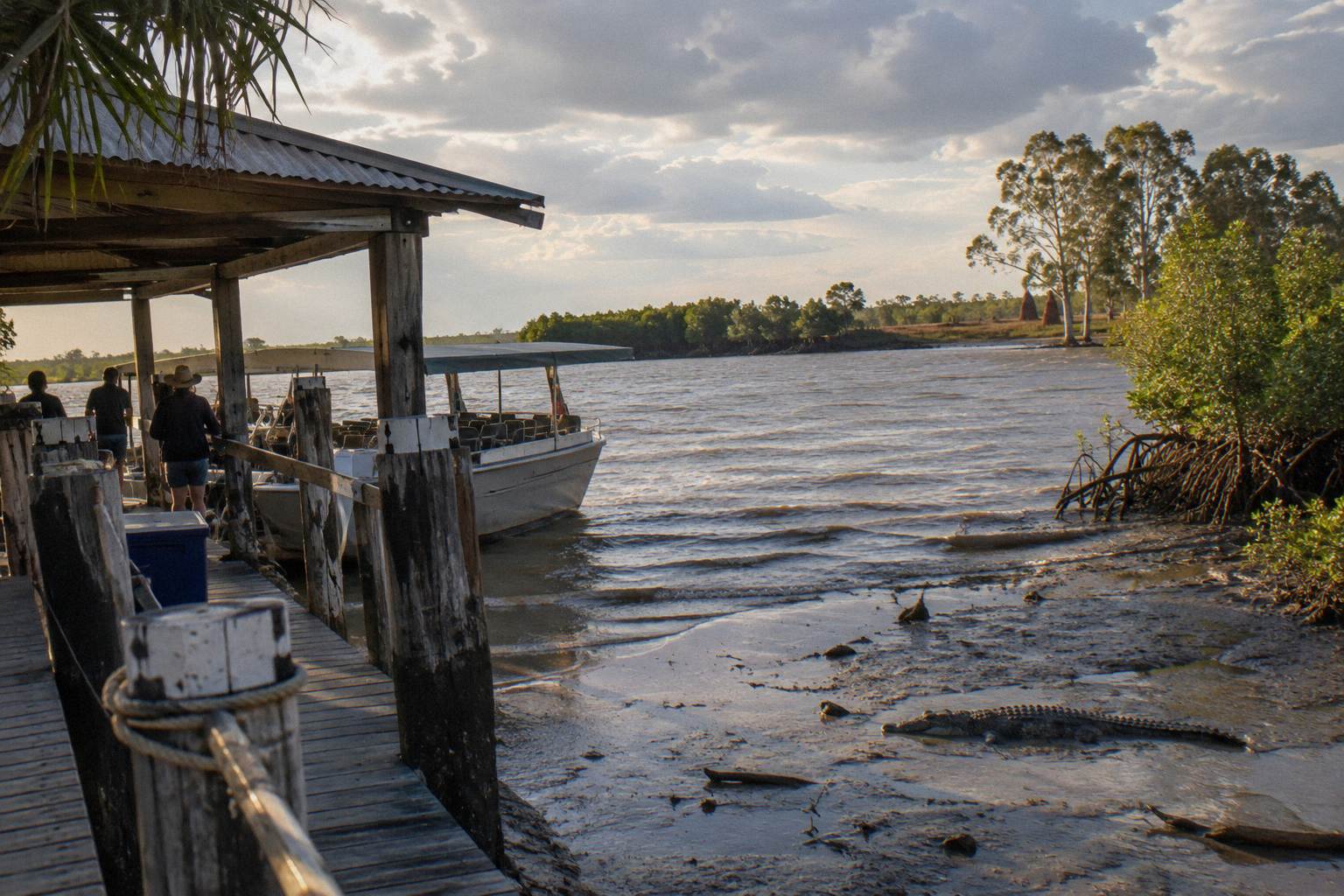
The population backstory explains why the river has so many of them. The saltwater crocodile was almost extinct in the 1970s after hunting, and it is now widespread and no longer considered threatened, according to the NT Government's page on the conservation of crocodiles. The NT page also says there are more saltwater crocodiles in the NT than in Queensland and Western Australia, though it gives no combined figure. Nests are built from November to May, averaging about 50 eggs, which overlaps with the months outside the May-to-October Dry Season that the operators name.
One gap worth naming once: no river-by-river population count for the Adelaide River exists in any of these sources. Numbers you may have seen for how many crocodiles live in this particular river did not come from the operators or the NT Government pages used here.
| Question about the crocodiles | What the stated sources say |
|---|---|
| Which species jumps? | Saltwater crocodile, Crocodylus porosus; the NT also has the freshwater Crocodylus johnstoni |
| How large do they get? | Up to 6 m, per the NT Government, the largest living reptile |
| Are they trained or captive? | The Original and Queen operator calls them 100% wild; no operator claims training |
| Are they protected? | Yes, both NT species; interference requires a permit |
| Is there an Adelaide River count? | No river-specific population figure exists in the sources |
| What triggers the leap? | Food offered from the front of the boat under NT wildlife permits |
Do The Same Crocodiles Jump Every Day?
No source says so, and no operator names individual crocodiles at all. The operators describe wild animals that choose whether to approach a boat, with the Original and Queen operator stating that behaviour can never be guaranteed even though crocodiles are seen on almost every tour. Any claim that a specific famous crocodile performs on a schedule is not something the operators or the NT Government publish.
This is where cruise marketing and verifiable fact diverge most sharply. Around the Adelaide River, stories circulate about individual crocodiles with nicknames and reputations, and it is true that wild crocodiles can be long-lived, site-attached animals. But none of that appears on any operator page or government source used here. This site's policy on crocodile facts is simple: names, sizes and sighting odds come from the NT Government or nowhere, and the NT Government publishes none of them for individual Adelaide River animals.
What the operators do publish is about reliability in aggregate. The Original and Queen operator sees crocodiles on almost every tour. Spectacular operates year-round except Christmas Day and notes that crocodiles often show a tactile response to rain, whatever that looks like on the water. The Original and Queen operator adds that crocodiles are active year-round. None of this is a timetable of named performers; it is a set of statements about a wild population that has learned the boats sometimes carry buffalo meat.
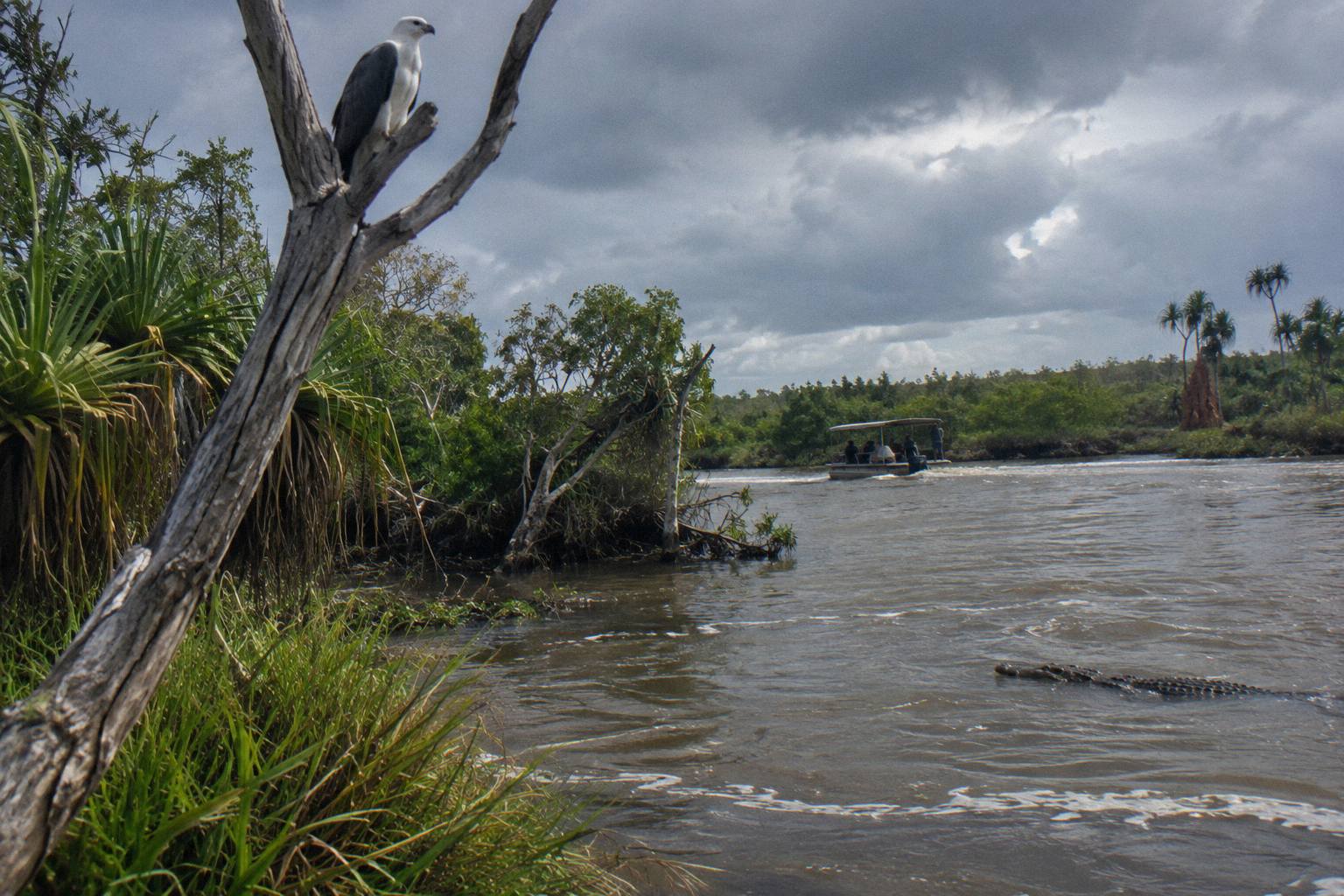
The seasonal picture is more concrete. Spectacular runs daily at 9am, 11am, 1pm and 3pm year-round, and Adelaide River Cruises' tour page lists the same four daily departures. The Adelaide River Queen departs at 1pm daily, though the operator's website banner says cruise times changed for the wet season and asks guests to book online or call to confirm. The Original and Queen operator's FAQ names the Dry Season as May to October and says those months give the most comfortable conditions. If you are weighing the seasons, the site's comparison of the jumping crocodile cruise wet season versus the dry season covers the timing trade-offs in detail.
Is Feeding Wild Crocodiles Like This Harmful?
No source used here says it is, and no source used here says it is not. Spectacular states its Animal Ethics Policy was developed with NT Parks and Wildlife and that detailed feeding logs are kept; the Original and Queen operator states its feeding happens under NT wildlife permits. The NT Government requires permits for any interference with a crocodile but does not describe the cruise permit scheme. Beyond those statements, this article offers no verdict.
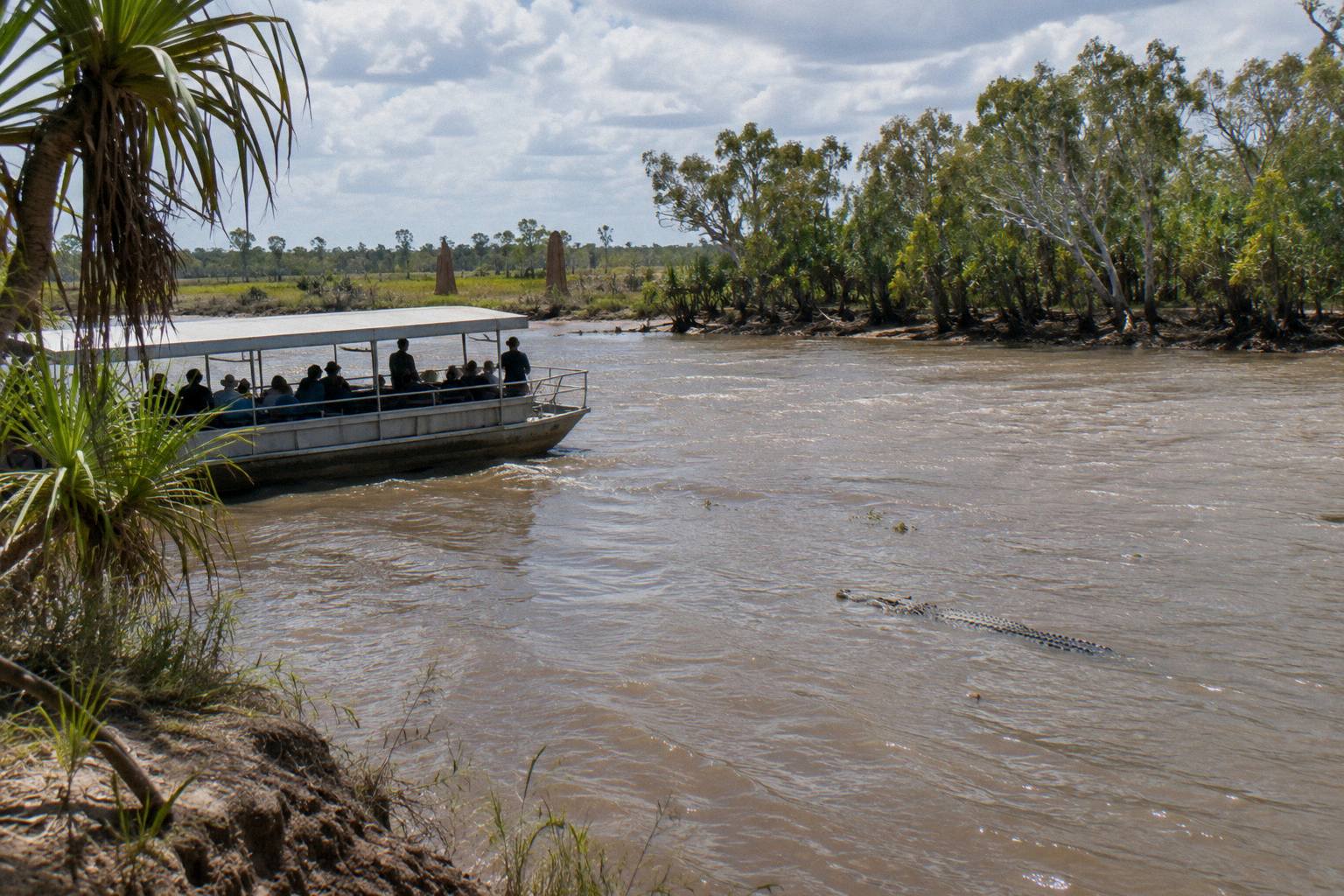
That restraint is deliberate. The question of whether food-motivated wildlife tourism is good for the animals is a live debate in many places, and honest coverage of the Adelaide River version means reporting exactly what the operators and regulator publish and stopping there. Spectacular's framing is the most detailed: Wildlife Permits held by staff, an ethics policy co-developed with NT Parks and Wildlife, no direct contact between passengers and crocodiles, and feeding logs. The Original and Queen operator's framing is shorter: 100% wild crocodiles, feeding under NT wildlife permits, life jackets on board, no swimming, no food carried by passengers on the boat, supervised children.
The regulatory layer is real. Permits, not goodwill alone, are what make the activity lawful; the NT Government is explicit that taking or interfering with a crocodile without a permit is prohibited. What the government does not publish is an assessment of the cruise feeding practice itself, so any confident claim about harm or harmlessness, in either direction, would be invention.
| Source | What it actually says about the feeding |
|---|---|
| Spectacular Jumping Crocodile Cruises | Buffalo meat offered; Wildlife Permits from NT Parks and Wildlife; Animal Ethics Policy developed with NT Parks and Wildlife; feeding logs kept; no direct contact |
| The Original / Adelaide River Queen operator | Crocodiles described as 100% wild; feeding under NT wildlife permits |
| NT Government | Permits required to take or interfere with a crocodile; no description of the cruise permit scheme |
| This article | Reports the above and offers no independent verdict |
What Else Rises Out Of The Water On The Cruise
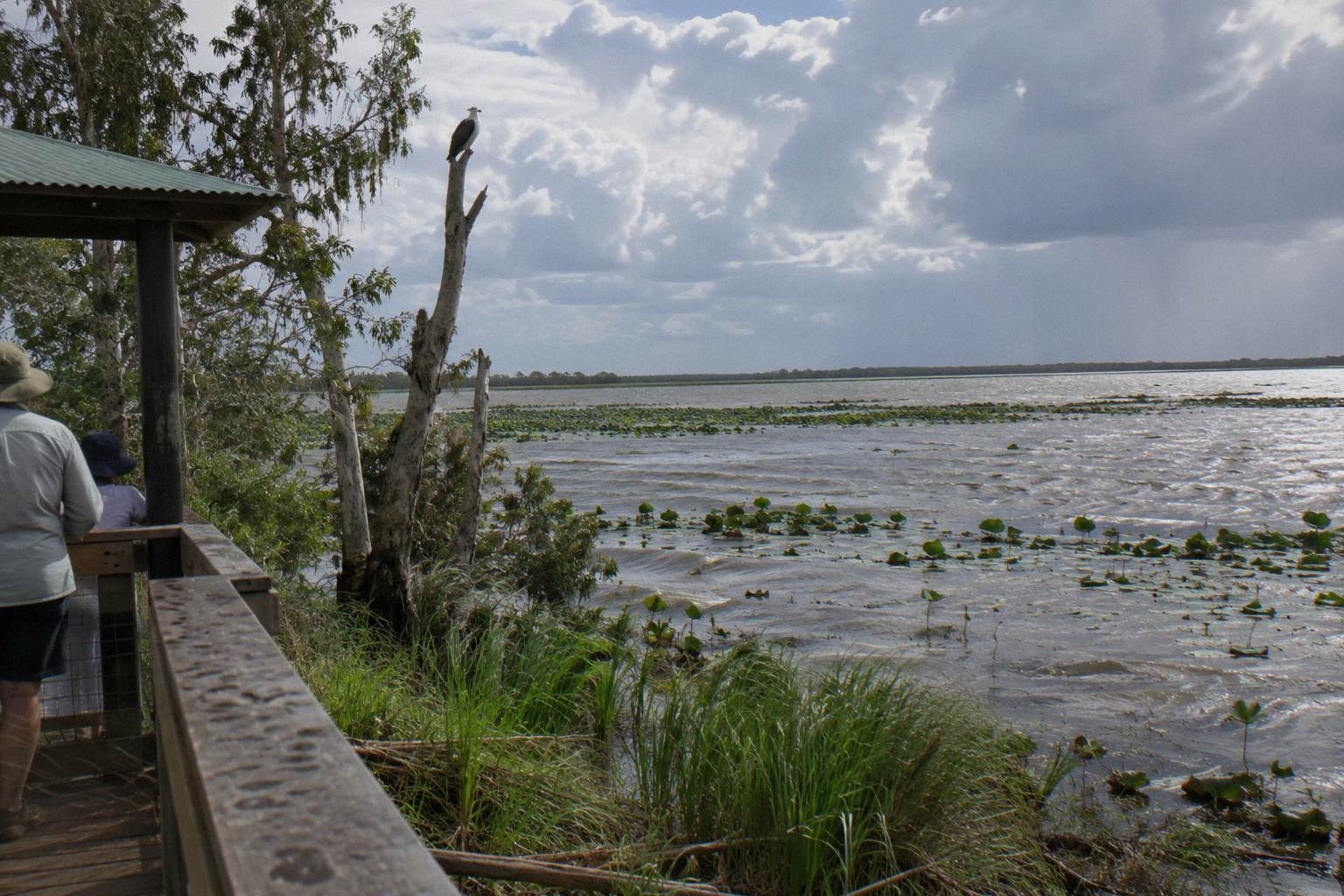
Spectacular's own wildlife list includes white-bellied sea eagles, whistling kites, freshwater crocodiles, bull sharks, black flying-fox, the endangered speartooth shark and the critically endangered largetooth sawfish, in the operator's wording. Its access road often shows water buffalo, cattle and wading birds. The sources publish no bird counts or seasonal bird claims, and no sighting is ever promised.
The river is more than a crocodile stage, and the operators that describe it say so. Spectacular's list is unusually specific about the less famous animals, and two of them, the speartooth shark and the largetooth sawfish, carry official conservation listings in the operator's own phrasing. The access road to its jetty on Beatrice Hill Farm runs about 2 km past unsealed ground where buffalo, cattle and wading birds often appear, which is a reminder that the floodplain, not just the river, is the attraction. The site's longer guide to Adelaide River wildlife and birds collects what is stated about the rest of the ecosystem.
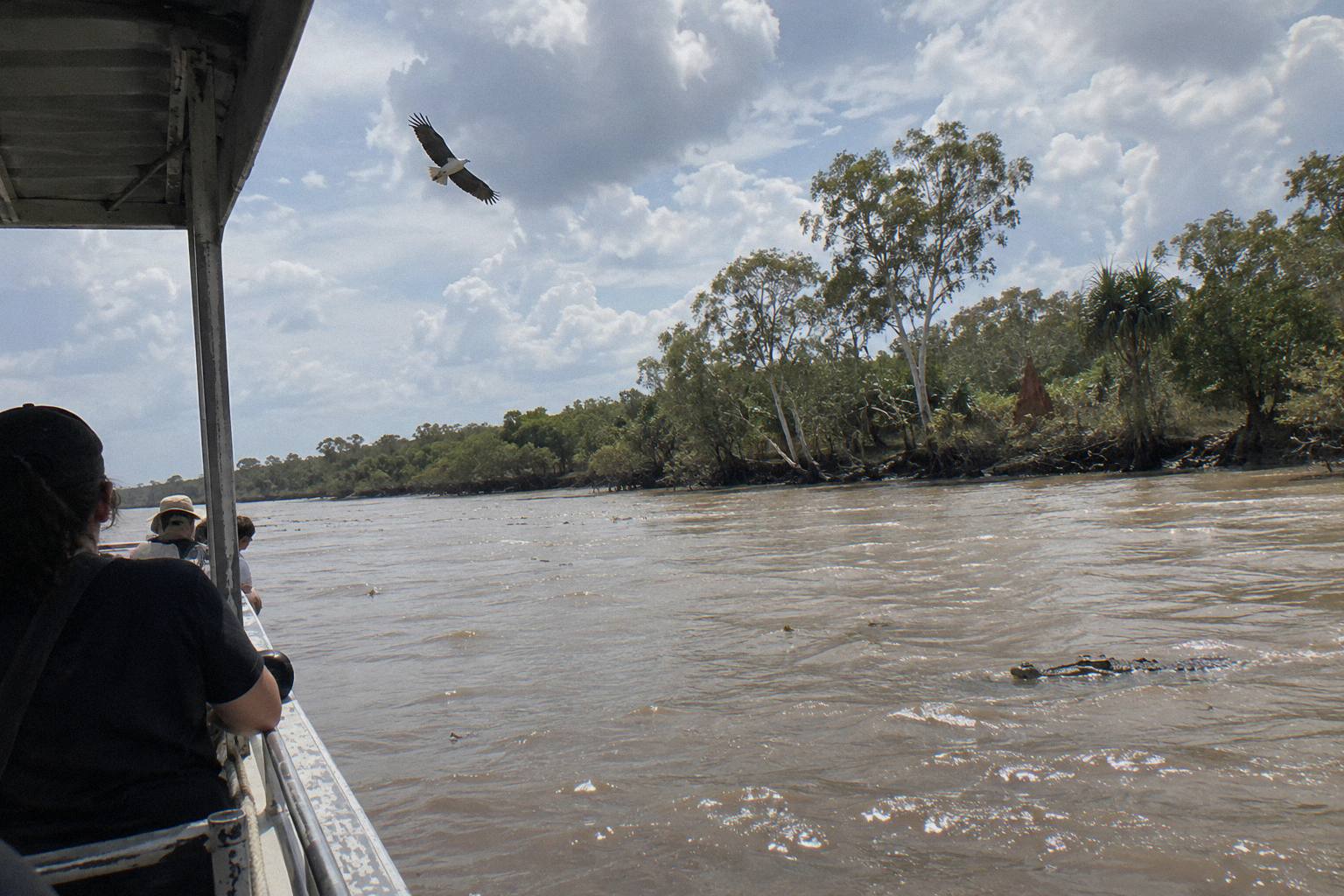
Photography advice follows the same pattern of attributing rather than asserting. Adelaide River Cruises suggests a camera or a charged phone, and its FAQ makes a useful distinction: a zoom lens is handy for wildlife across the floodplain, while standard phone cameras suit the crocodile interactions because of the proximity. That is the operator's own wording, and it is the only lens guidance any source here gives. Spectacular simply encourages photography. For anyone planning shots rather than snapshots, the site's guide to photographing jumping crocodiles works through the practical decisions.
Which Cruise Gives You The Best Chance Of Seeing A Jump
All three river operators run roughly one-hour cruises built around the same permitted feeding mechanism, so the choice comes down to boat style, price and timing rather than a documented difference in crocodile behaviour. No source claims one jetty outperforms another. Operator fares run from A$55 adult at Spectacular to A$75 on the Pathfinder, with Adelaide River Queen at A$65 and Adelaide River Cruises at A$58.50.
Those fares are the operators' own published figures and can change. Spectacular charges A$55 for adults aged 15 and over, A$40 for children 4 to 14, with infants 3 and under free, and family tickets at A$155 for two adults and two children, excluding a small booking fee added at checkout. The Adelaide River Queen charges A$65 for adults 14 and over and A$50 for children 4 to 13, infants free. The Pathfinder has a single A$75 fare for anyone aged 1 and over, and Adelaide River Cruises charges A$58.50 for adults 15 and over, A$42.55 for children 1 to 14, with family and concession rates stated including taxes and fees. Day tours from Darwin carry their prices on the booking pages, and this site never compares a cruise-only fare with a day-tour fare.
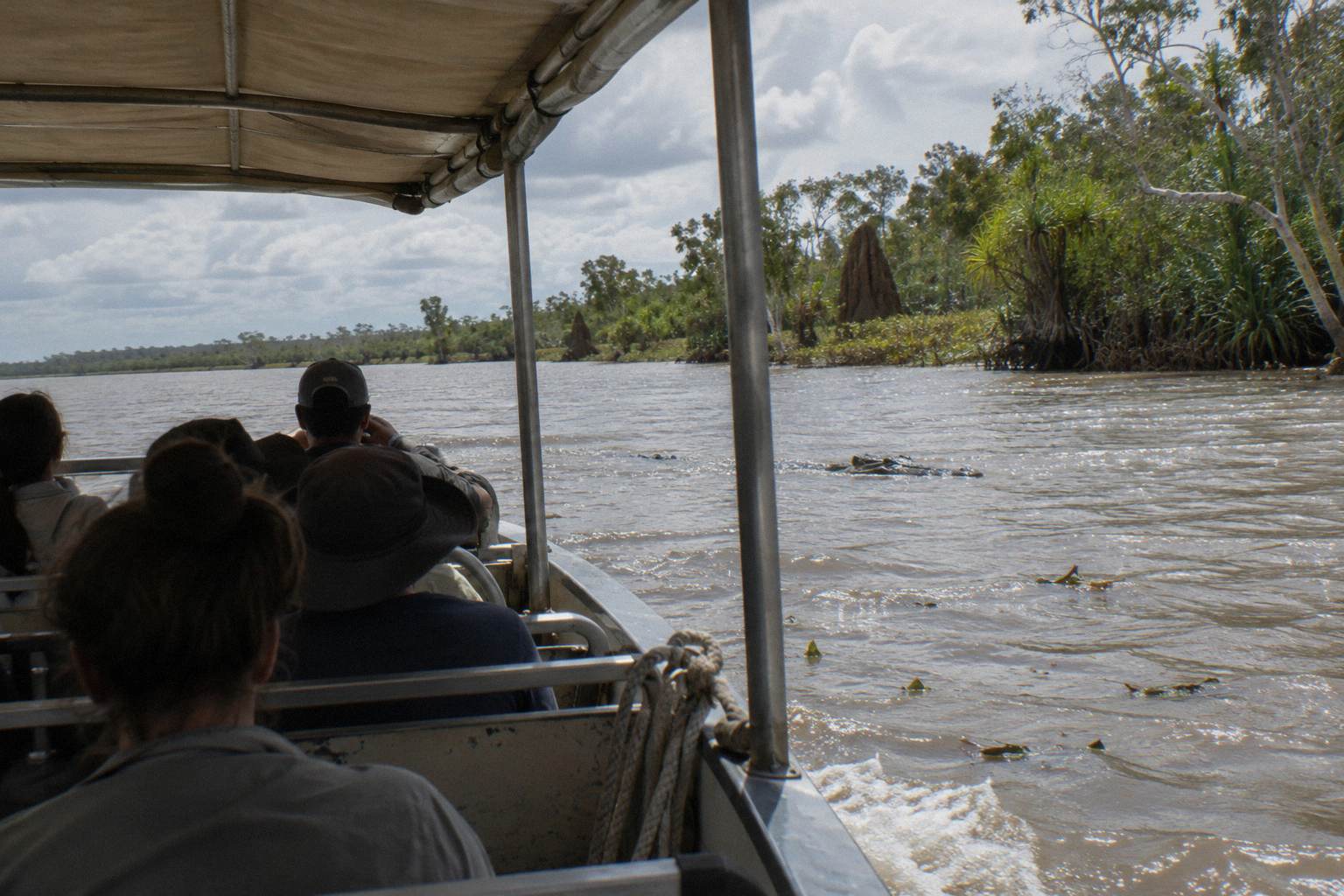
The boat experience differs more than the jump mechanism does. Spectacular's Croc-Cat1 is a multi-hull with stadium-style seating and the skipper at the rear, under cover, and its smaller Wildcat goes further down the river depending on numbers. The Adelaide River Queen pairs an air-conditioned lower deck with an open-air upper deck under a canopy, behind croc-proof glass per the operator. The Pathfinders are open-air boats of up to 38 passengers. Adelaide River Cruises states no boat type or capacity. If a calm, seated, shaded hour with the family matters most, that guide to taking the jumping crocodile cruise with kids sets out the age bands and supervision rules at each operator.
For travellers who would rather not drive, a day tour bundles the cruise with the wetlands around it. The Jumping Crocodile Adventure Cruise With Lunch from Wallaroo Tours NT runs about 4 hours with hotel transfers, lunch at the Humpty Doo Pub, Fogg Dam and Window on the Wetlands, though which cruise operator it uses is not stated. The Croc Bus option, about 4 to 5 hours, is one of two day tours stated to cruise with Adelaide River Cruises; Croc Country Safaris' Jumping Crocodile Cruise And Fogg Dam is the other. No day-tour price or start time is published; the booking pages carry those.
Booking behaviour is where the operators do give concrete advice. Spectacular says its cruises do sell out, with no minimum numbers required to run. The Original and Queen operator recommends booking several days ahead in the Dry Season, and warns that school holidays and long weekends often sell out earlier. Adelaide River Cruises strongly recommends booking in advance, especially from June to August, and says walk-ins are not guaranteed. Its FAQ offers a full refund for cancellations more than 24 hours before departure, with tickets non-refundable inside 24 hours unless the operator cancels for weather or operations. Whichever page you book through, read its terms before paying.
If you are still deciding, these are the three experiences again: the featured river cruise, the Queen's double-deck alternative, and the wetlands day tour.
Common Questions About Crocodiles Jumping On The Cruise
Why Do Crocodiles Jump Out Of The Water On The Cruise?
Because the crews offer them a taste of buffalo meat from the front of the boat, under NT wildlife permits. The crocodiles are wild saltwater crocodiles, not trained animals, and the operators publish no further explanation of the behaviour beyond the permitted feeding mechanism.
Is The Jumping Crocodile Cruise Cruel Or Harmful To The Crocodiles?
No source used here says it is, and none says it is not. Spectacular states its Animal Ethics Policy was developed with NT Parks and Wildlife and that feeding logs are kept; the Original and Queen operator feeds under NT wildlife permits. The NT Government requires permits for interference with crocodiles but publishes no assessment of the cruise practice.
Are The Crocodiles On The Cruise Wild Or Captive?
The Original and Queen operator describes its crocodiles as 100% wild. No operator claims captive or trained animals, and all feeding is stated to happen under NT wildlife permits.
Do Crocodiles Jump Naturally, Without Food?
Saltwater crocodiles are physically capable of powerful vertical movement; the NT Government notes they can move faster than humans on land for short bursts. But on the cruise, the documented trigger for the leap is the buffalo meat offered from the boat. No source claims the crocodiles leap at boats without it.
How High Can The Crocodiles Jump?
No operator and no NT Government page publishes a jump height, a jump distance or a how-close-to-the-boat figure. Any specific number you have read elsewhere did not come from these sources.
Do The Same Crocodiles Come To The Boats Every Day?
No source says so. The operators describe wild animals that choose whether to approach, with the Original and Queen operator stating that crocodiles are seen on almost every tour but that behaviour can never be guaranteed. No operator names individual crocodiles.