Crocodiles Of The Adelaide River: Who You Meet From The Boat
The Adelaide River carries one of the densest gatherings of saltwater crocodiles reachable by boat from Darwin, and the jumping cruises are built entirely around them. Here is what the Northern Territory Government and the operators themselves actually say about the animals you are looking at.
Short answer
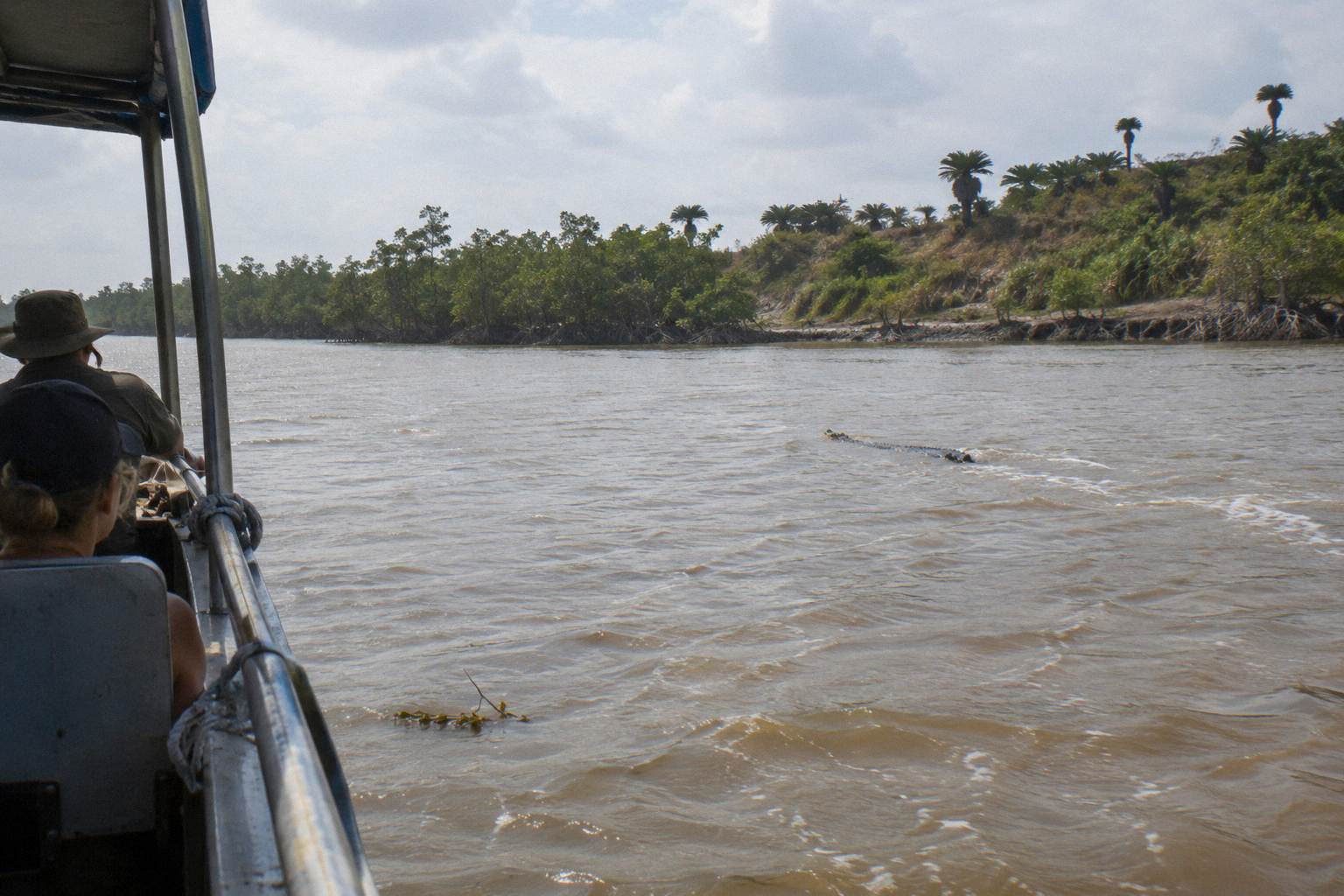
The jumping-cruise crocodiles on the Adelaide River are saltwater crocodiles, Crocodylus porosus, the largest living reptile, growing up to 6 m. About 100,000 saltwater crocodiles lived in the NT wild in 2017. No published count exists for the Adelaide River itself, and no operator or NT page states a jump height.
Two crocodile species live in the Northern Territory, and only one of them leaps vertically out of the water beside a tour boat. That one, the saltwater crocodile, is the reason the Adelaide River supports three competing cruise operators, a steady stream of coaches down the Arnhem Highway, and a small genre of holiday photographs that no other Australian river trip reliably produces. This page gathers what can actually be verified about the animals: the species and their sizes, the population picture, why the jumping happens, how close the crocodiles come to the boats, and the rules that keep both species protected. The sources are the NT Government's own crocodile pages and the operators' published material, nothing else. Where a popular claim has no source behind it, this page says so plainly rather than filling the gap with something that merely sounds right.
What Crocodile Species Live In The Adelaide River?
The Northern Territory has two crocodile species, the saltwater (estuarine) crocodile, Crocodylus porosus, and the freshwater crocodile, Crocodylus johnstoni, and the crocodiles that jump for the cruises are saltwater crocodiles. Both species are protected by law, and you cannot take or interfere with a crocodile without a permit. The two animals look and behave differently, and the distinction matters for anything you see from the boat.
The naming confuses people first. "Saltwater crocodile" does not mean the animal lives in the sea, it means the species tolerates salt water, and saltwater crocodiles occupy rivers, floodplains, estuaries and coastal waters across the Top End. The freshwater crocodile, the smaller and fish-eating relative, is a different animal entirely, with a narrower snout and a generally shy disposition toward people. The NT Government's species page sets out both, along with the legal protection that applies to each. A visitor who can tell the two apart gets considerably more out of an hour on the river, because the crocodile lying motionless on a far bank with a thin snout is not the same animal as the one rising beside the bow.
| Saltwater crocodile | Freshwater crocodile | |
|---|---|---|
| Scientific name | Crocodylus porosus | Crocodylus johnstoni |
| Other name | Estuarine crocodile | Freshwater johnstoni |
| Seen jumping on the cruises | Yes | No |
| Diet and temperament | Large prey; the NT page describes the species as a serious threat to humans | Fish-eating; not described as a cruise performer |
| Legal status | Protected; almost extinct in the 1970s, now widespread and no longer considered threatened | Protected |
Both species appear in the cruise ecosystem in one specific way: Spectacular Jumping Crocodile Cruises includes freshwater crocodiles on its own wildlife list for the river, alongside the saltwater crocodiles the tours feed. So a passenger may genuinely see both species in an hour, though only one of them is the headline act. For a deeper treatment of the species itself, the site's saltwater crocodile facts for cruise visitors page covers the same NT Government material from a traveller's angle, including the size and maturity figures summarised further down this page.
How Big Do Adelaide River Crocodiles Get?
The saltwater crocodile is the largest living reptile and can grow up to 6 m, according to the NT Government. Females mature at about 2.3 m, around 12 years old, and males at about 3.3 m, around 16 years. No operator page and no NT page publishes the size of any individual crocodile on the Adelaide River, so any specific size you have read elsewhere is not sourced.
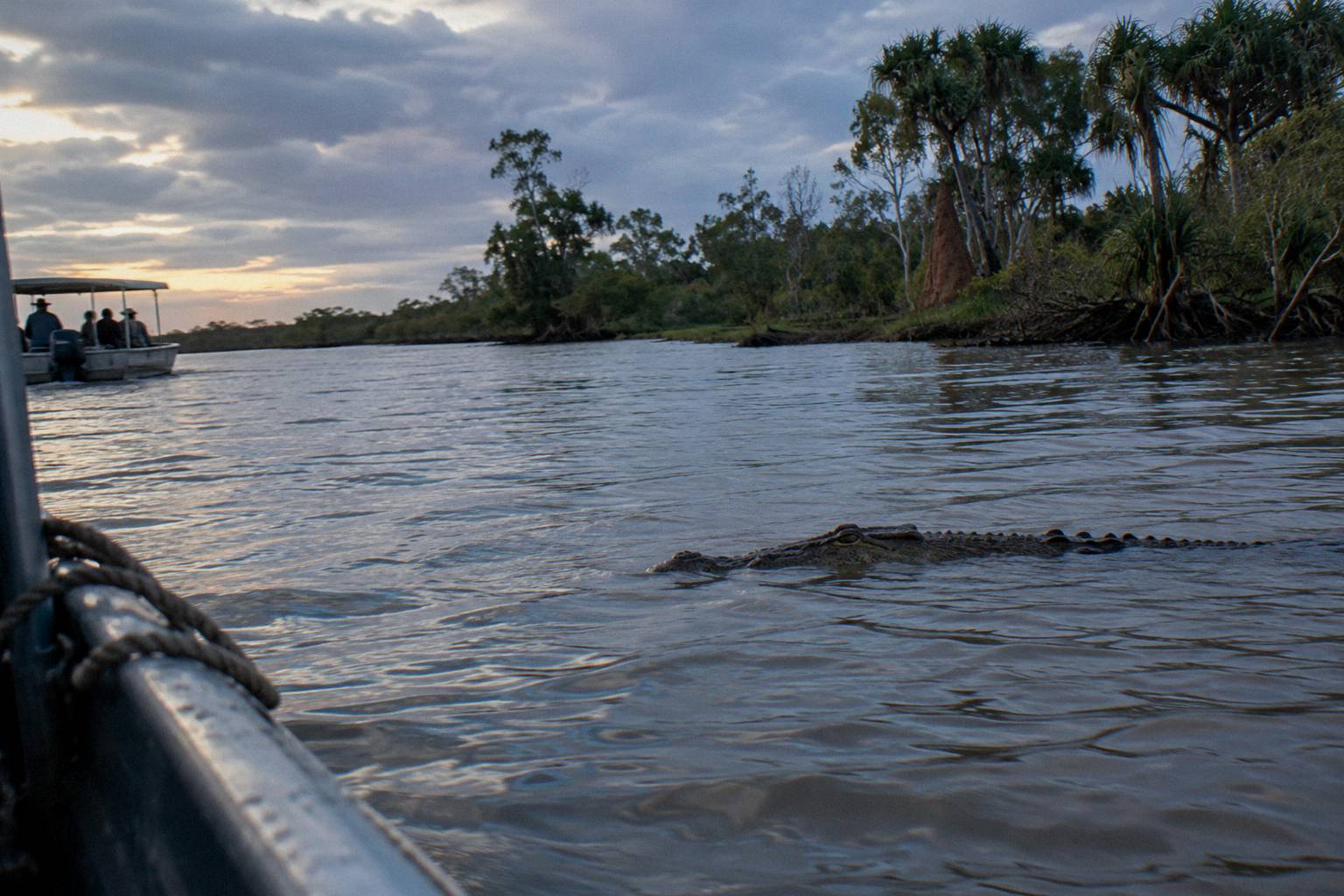
That single fact, maximum length, is the one people most want, and it is also the one most often inflated. The NT record is instructive: a 6.7 m saltwater crocodile was netted on the Mary River in 1974, and the biggest ever trapped was just over 5 m. Those are NT-wide figures from the Government, not Adelaide River animals, and the difference between them shows how exceptional the extremes are. An animal anywhere near the top of the range is a rarity across the whole Territory, not a routine sighting on any particular stretch of water.
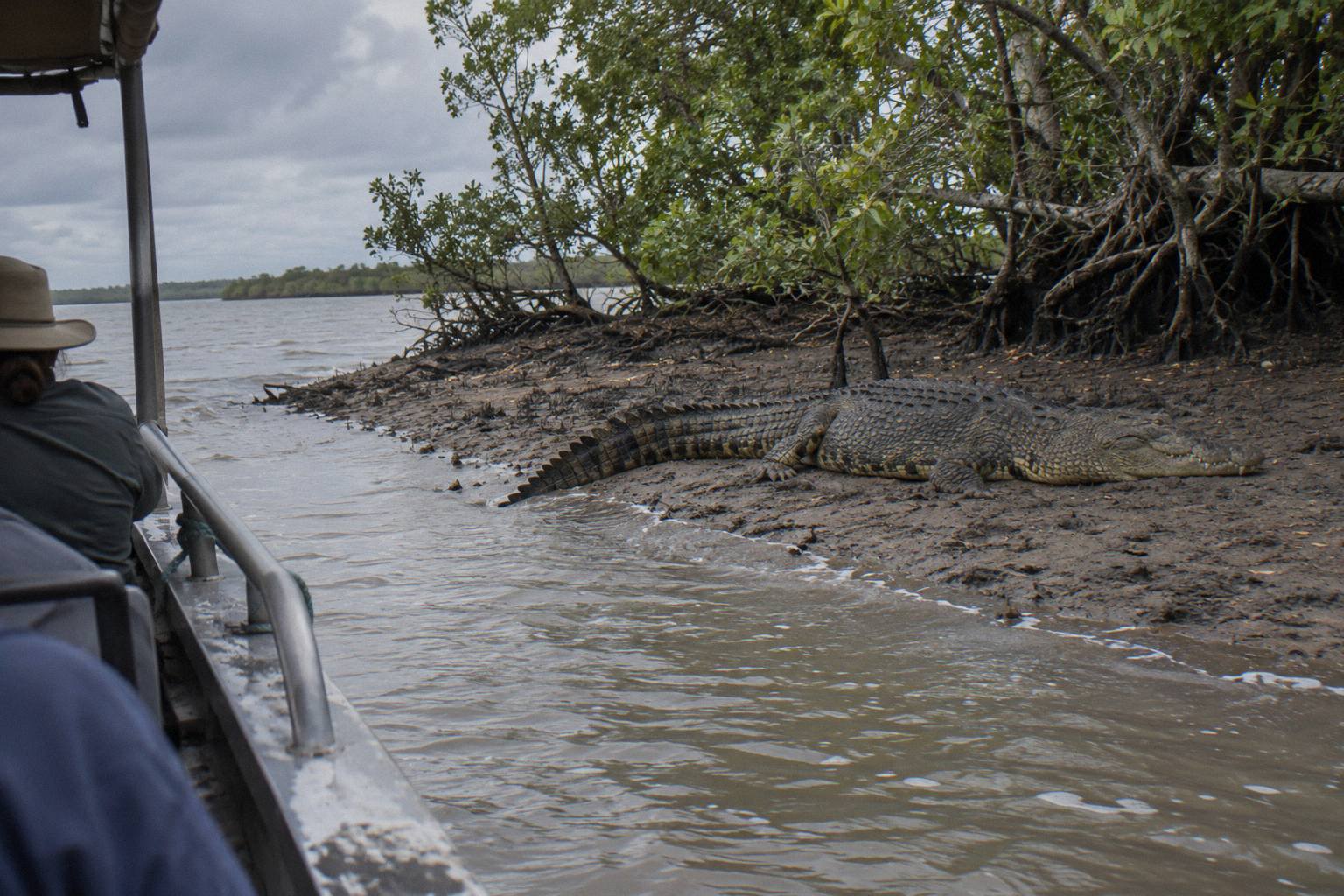
Physiology is where the animal gets genuinely strange. Large crocodiles can stay underwater for up to one hour, dropping to a heart rate of 2 to 3 beats a minute, and for short bursts they can move faster than a human can on land. Nesting runs November to May, with an average of about 50 eggs per nest. None of this is cruise marketing; it is the NT Government's published biology, and it explains a great deal of what passengers see, from the long submerged disappearances to the explosive lunge at the boat.
| Life-history fact | NT Government figure |
|---|---|
| Maximum length | Up to 6 m |
| Female maturity | About 2.3 m, at about 12 years |
| Male maturity | About 3.3 m, at about 16 years |
| Time underwater | Up to 1 hour, heart rate 2 to 3 beats a minute |
| Nesting season | November to May |
| Average clutch | About 50 eggs |
| Largest on record (NT) | 6.7 m, netted on the Mary River, 1974 |
If you are sizing up a cruise around these animals, the practical decision content sits on the boats rather than in the water. Three operators run river cruises, each from its own jetty, and their prices, times, vessels and age bands never cross over. That non-overlap is deliberate and worth internalising before comparing anything: a child fare at one operator covers an age band that a second operator prices as an adult, and a departure time listed by one has no meaning at another.
How Many Crocodiles Live In The Adelaide River?
No river-by-river population count for the Adelaide River exists in the published sources, so no honest number can be given here. The verified NT-wide figure is about 100,000 saltwater crocodiles in the wild in 2017, thought to be at or approaching pre-hunting levels. The NT page also states there are more saltwater crocodiles in the Territory than in Queensland and Western Australia.
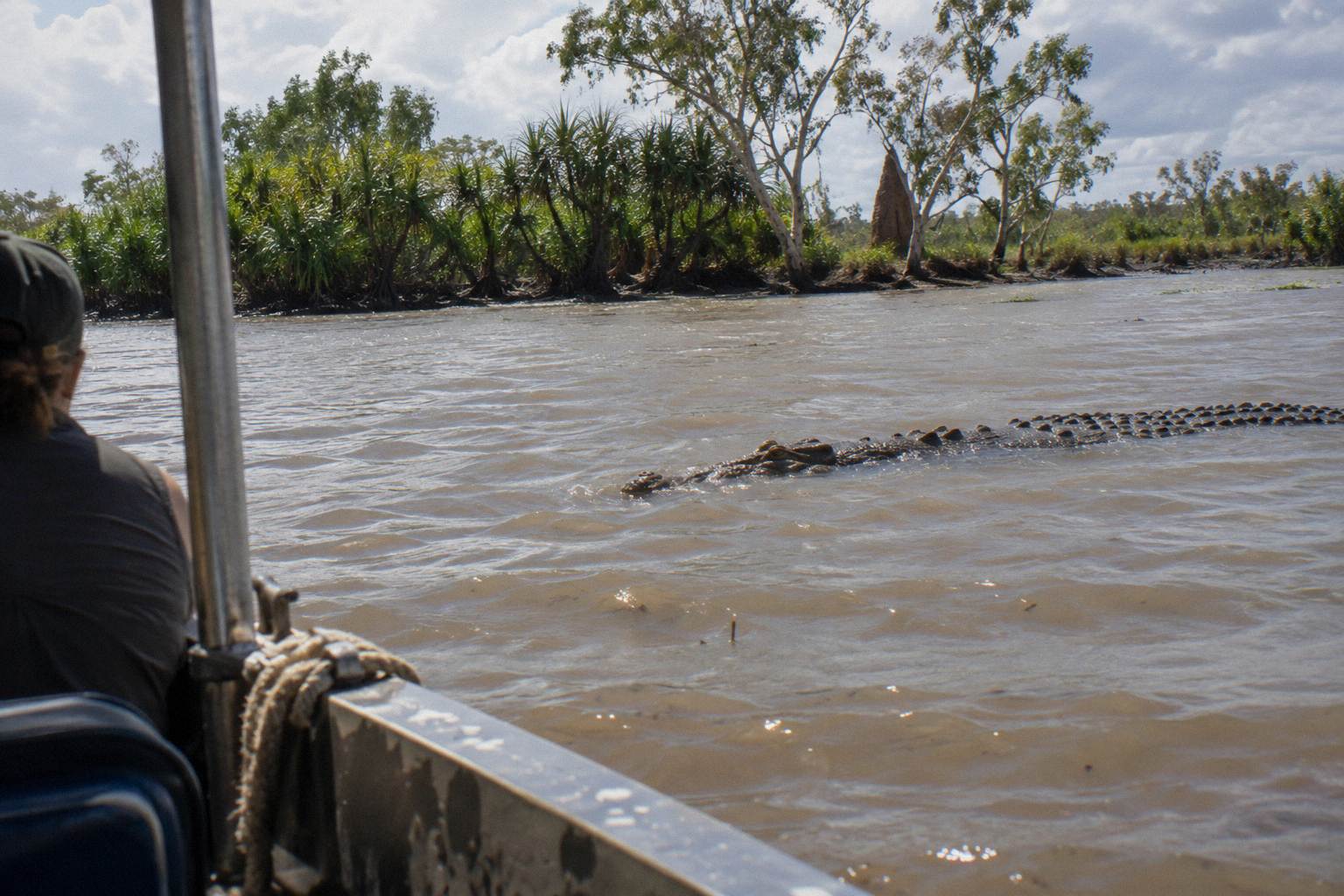
Any specific figure you have seen attached to the Adelaide River, a density per kilometre or a total head-count, traces back to no operator page and no NT Government page this site could verify. The honest answer is that the Territory-wide recovery is documented and the river-level count is not. The recovery story itself is remarkable enough: the saltwater crocodile was almost extinct in the 1970s after decades of hunting, and it is now widespread and no longer considered threatened, a change documented on the NT Government's conservation page. Every animal a cruise boat meets today is a product of that turnaround.
Protection is the mechanism behind that recovery, and it is absolute. Both NT species are protected by law, and the NT page is explicit that nobody may take or interfere with a crocodile without a permit. The page does not describe the permit scheme under which the cruises feed crocodiles, so this site does not describe it either. What the operators say about their own arrangements is limited and specific: Spectacular states its staff hold Wildlife Permits from NT Parks and Wildlife, that its Animal Ethics Policy was developed with NT Parks and Wildlife, and that detailed feeding logs are kept, while the Original/Queen operator says its crocodiles are 100% wild and its feeding is done under NT wildlife permits. For readers weighing the river against the east-coast alternative, the site's Adelaide River versus Daintree crocodile cruise comparison puts the two experiences side by side.
Why Do The Crocodiles Jump Out Of The Water?
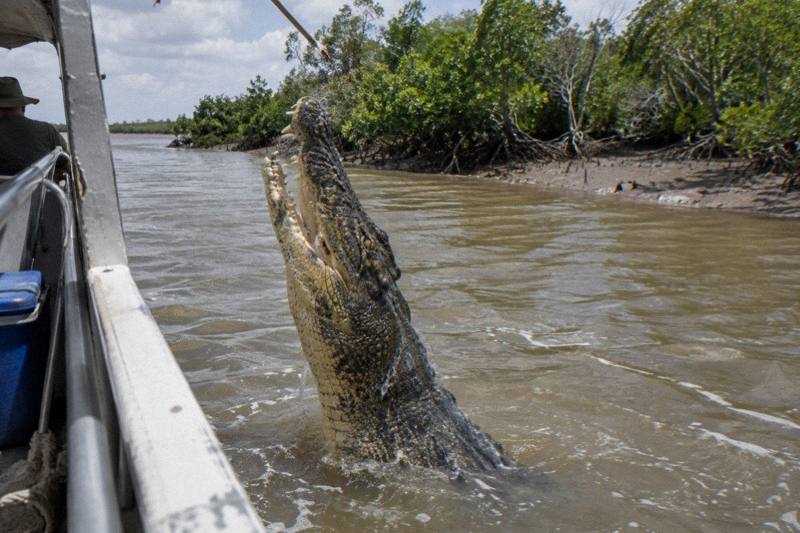
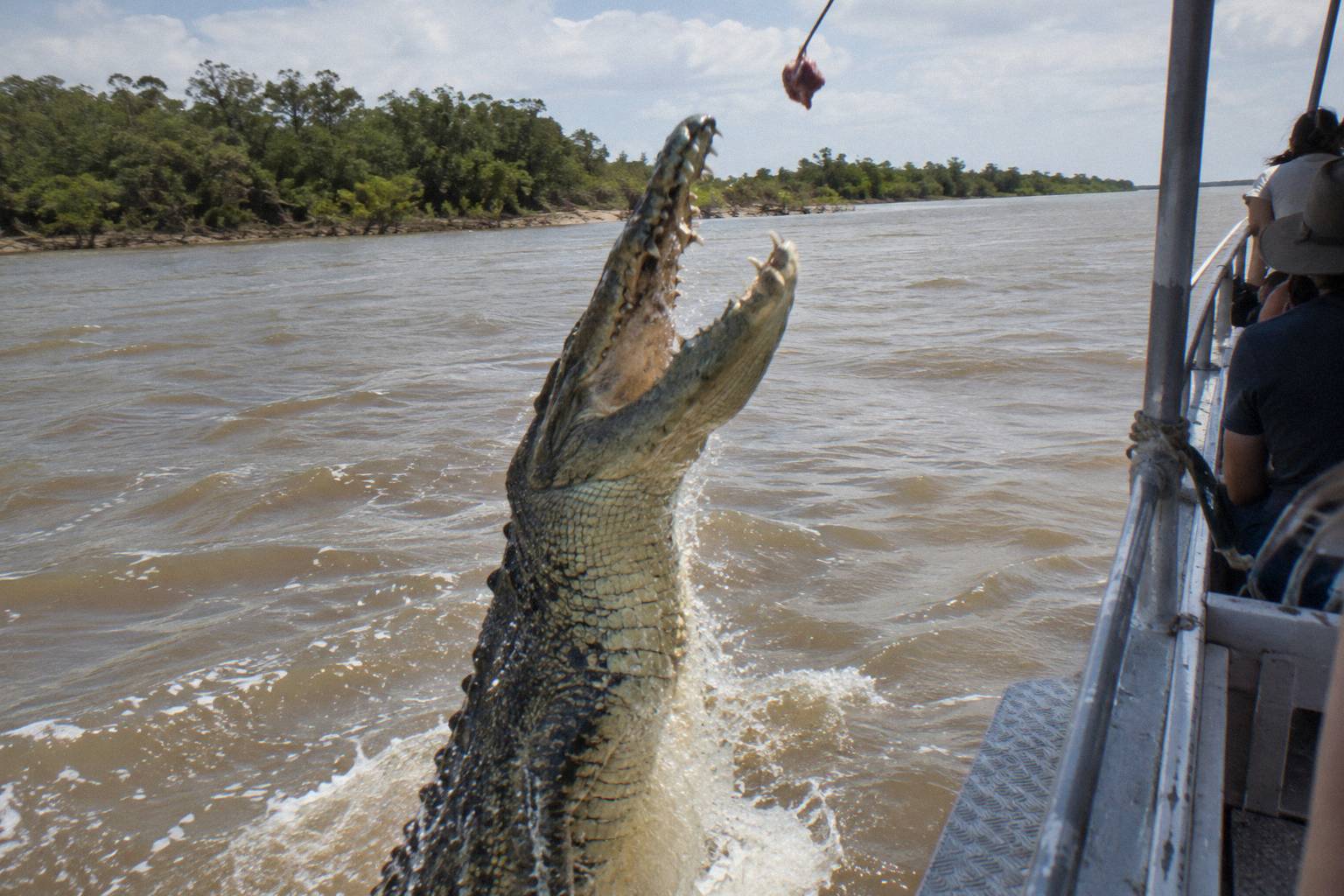
No operator and no NT Government page publishes a jump height, a jump distance, or a figure for how close the crocodiles come to the boats, so none is printed here. What the operators state is the mechanism: food is offered from the front of the vessel, and wild crocodiles rise vertically to take it. Spectacular says the crocodiles are offered a taste of buffalo meat from a feeding station at the boat's bow.
The vertical lunge is a real hunting behaviour, propelling the animal's head and forequarters clear of the water, and the cruises work by conditioning wild crocodiles to perform it beside a boat. Spectacular's boats carry a 'jumper' at the front, the pole or station the food hangs from, and the operator is clear that the animals get a taste, not a meal. The Original/Queen operator's framing is blunter: its crocodiles are 100% wild, and feeding happens under NT wildlife permits rather than any captive arrangement.
Both operators are also candid about the limits of the show. The Original/Queen operator's own words are worth quoting: "We see crocodiles on almost every tour... behaviour can never be guaranteed". No operator promises a jump, and no honest page should either. Whether the underlying behaviour is harmful is not something this site will assert in either direction beyond the sources: Spectacular publishes a permit arrangement, an ethics policy and feeding logs, and the NT Government's position covers permits and protection, not an assessment of cruise feeding. The site's longer piece on why crocodiles jump out of the water on the cruise works through the behaviour question in detail, and the Spectacular Jumping Crocodile Cruise guide covers that operator's boats and facilities side.
How Close Do The Crocodiles Get To The Boat?
Every boat design on the river is an answer to the same question, how do you put people metres from a large predator without contact. Spectacular's two custom vessels, Croc-Cat1 with stadium-style seating and the smaller Wildcat, are undercover, and the operator states plainly that there is no direct contact with the crocodiles. The Adelaide River Queen's arrangement splits the difference: the lower deck is air-conditioned behind glass the operator calls croc-proof, while the upper deck is open-air under a shaded canopy with individual seating. The Pathfinder vessels are open-air, up to 38 passengers each, per the operator, which changes both the feel and the photo angles considerably.
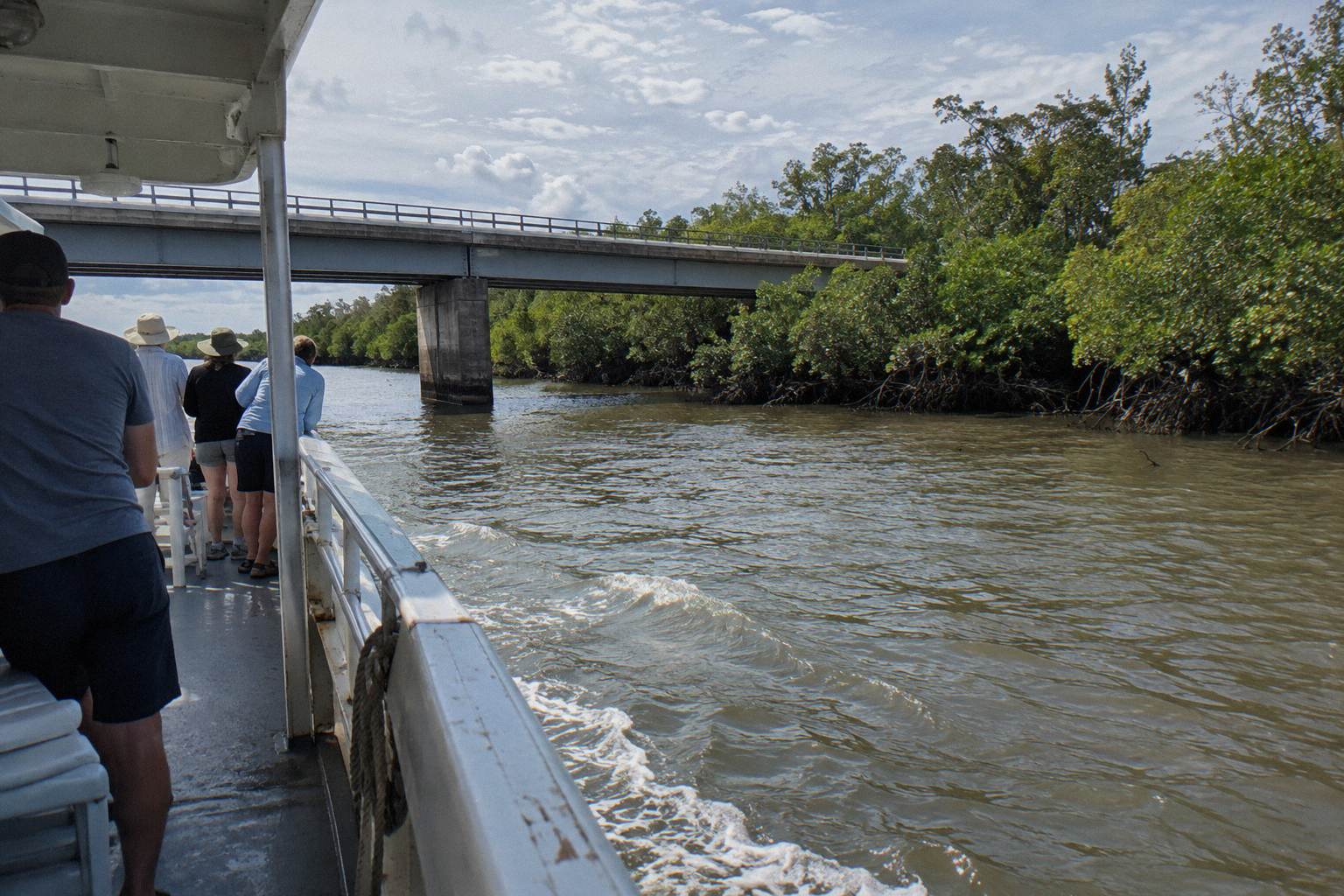
The safety rules on board are consistent across the operators that publish them. The Original/Queen operator carries life jackets, bans swimming, bans food on the boat and requires supervised children. Adelaide River Cruises opens its experience with a safety briefing from the guides covering crocodile behaviour and the rules. The NT Government's Be Crocwise safety advice adds the behaviour that applies to any Top End waterway: do not lean out of or dangle limbs over the side of a boat. For a fuller treatment, see the site's answer to whether jumping crocodile cruises are safe.
| Operator safety rule | Who states it |
|---|---|
| No direct contact with the crocodiles | Spectacular |
| Life jackets on board, no swimming, no food on the boat, supervised children | The Original/Queen operator |
| Experience opens with a safety briefing on behaviour and rules | Adelaide River Cruises |
| Do not lean out of or dangle limbs over the side of a boat | NT Government Be Crocwise advice |
What Other Wildlife Shares The River With The Crocodiles?
That list is more interesting than it first looks, because two of its entries are fish with serious conservation standing. The speartooth shark is endangered and the largetooth sawfish critically endangered, in the operator's own wording, and both are river animals that tolerate the Adelaide River's brackish lower reaches. Bull sharks and sawfish mean the crocodiles are not even the only large predator out there, just the one that jumps. The raptors matter too: white-bellied sea eagles and whistling kites are the birds most likely to appear in the frame above a hunting crocodile, and they are often the reason a zoom lens earns its place in the bag.
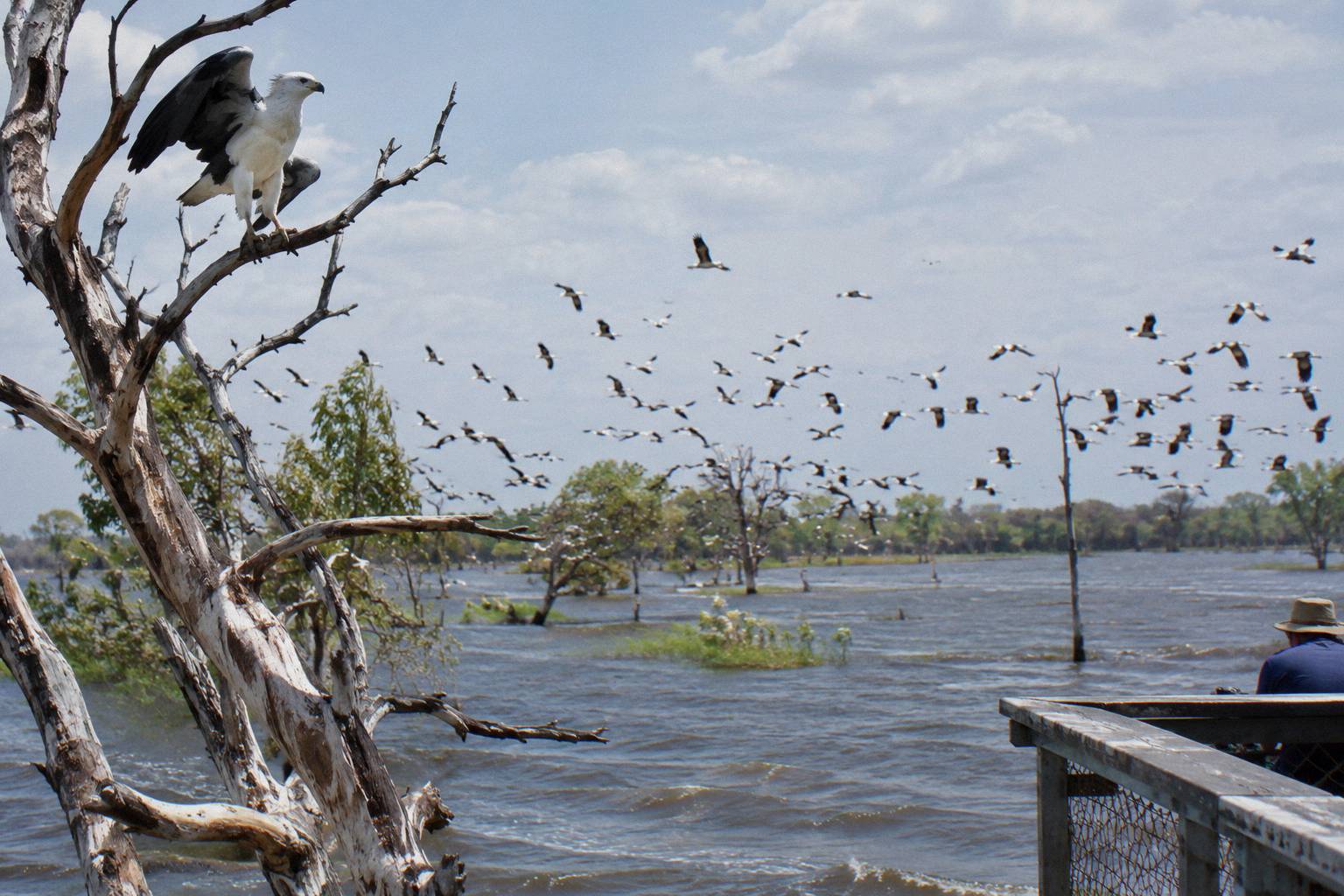
The sources are silent beyond that list. No bird counts, no seasonal bird patterns, no jabiru or mangrove detail appears in anything this site could verify, so none appears here. The practical planning point is photographic: Adelaide River Cruises suggests a zoom lens is useful for wildlife across the floodplain, while standard phone cameras suit the crocodile interactions because of the proximity, in the operator's own wording. The site's page on Adelaide River wildlife and birds carries the fuller planning detail, and the photographing jumping crocodiles guide works through the camera choices.
Are The Crocodiles Dangerous To Cruise Passengers?
The NT Government states that any body of water in the Top End may contain large and potentially dangerous crocodiles, and describes saltwater crocodiles as a serious threat to humans. No cruise can be honestly described as guaranteed safe, and no operator on the river claims that. What the operators publish instead are rules, permits, briefings and boat design, and passengers follow the rules or forfeit the trip.
The danger framing belongs to the Government, and it is not softened for tourists. The same pages that document the species' recovery carry the Be Crocwise advice, and its points apply around any Top End water: swim only where designated safe-swimming signs show and assume water is unsafe elsewhere, camp at least 50 m from the water, stand at least 5 m back from the water's edge when fishing, and do not lean out of or dangle limbs over the side of a boat. A cruise boat is a managed exception to a landscape-level rule, not a suspension of it, and the briefings exist to make that distinction stick.
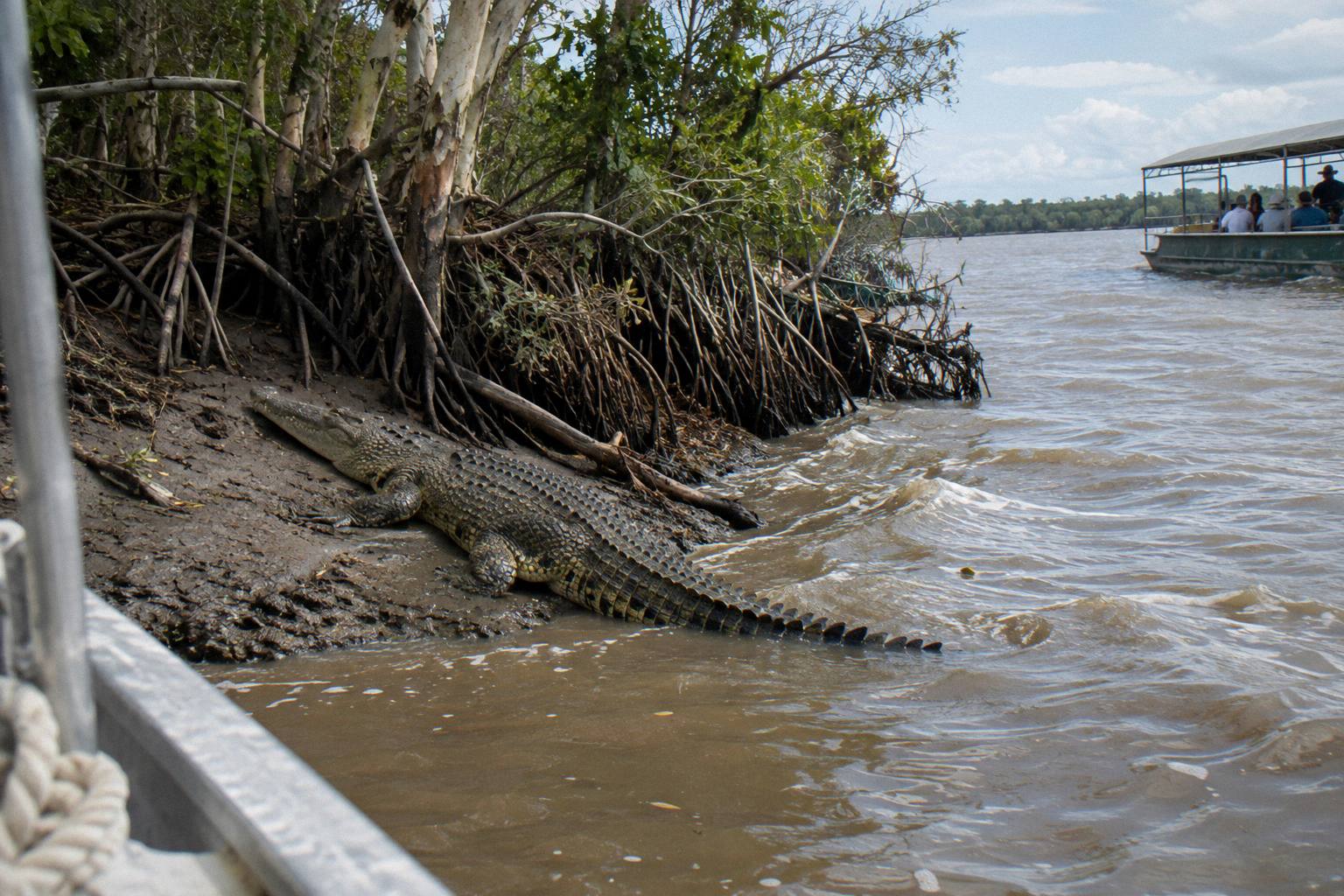
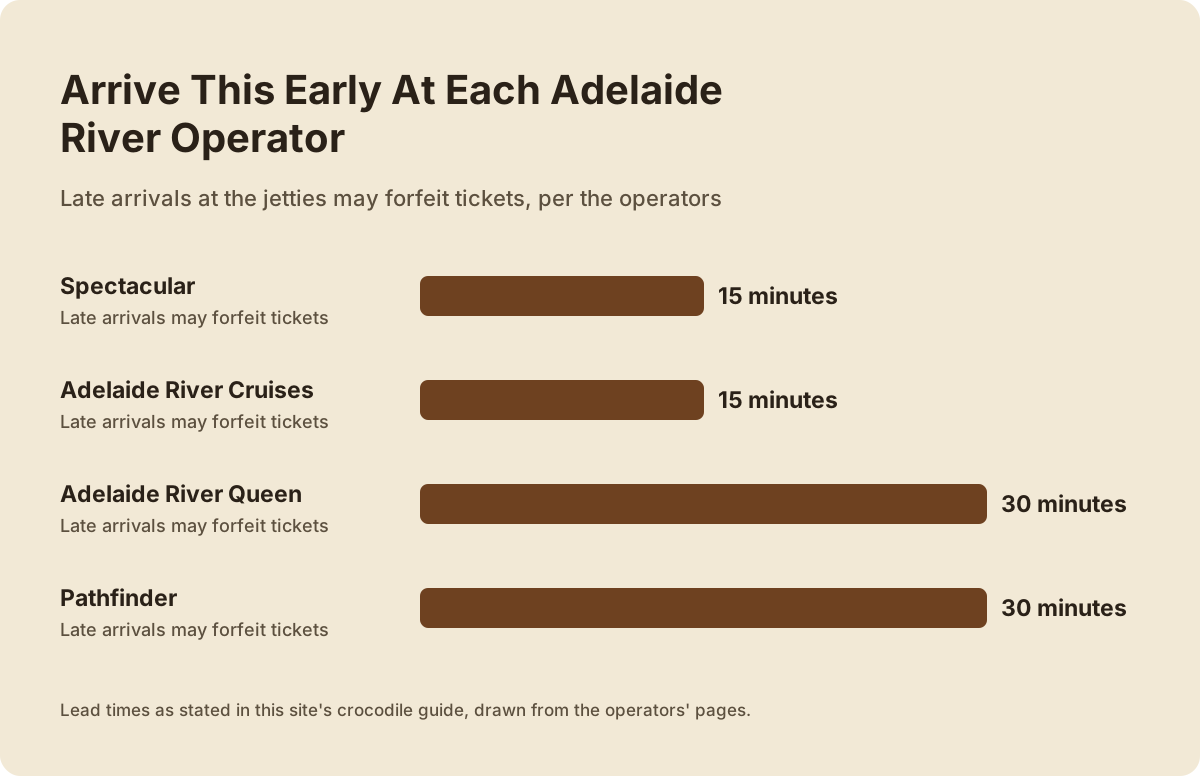
On the boats, the rules are concrete and short. No swimming anywhere on the river. No food on the vessels at the operators that ban it. Children supervised. Limbs inside the boat. Late arrivals at the jetties may forfeit tickets, so arrive at least 15 minutes early at Spectacular and Adelaide River Cruises, and at least 30 minutes at the Adelaide River Queen and Pathfinder. Each rule exists because the animals are exactly what the NT Government says they are, capable of a short burst of speed faster than a human on land and of an hour underwater at a heart rate of 2 to 3 beats a minute.
When Are Crocodiles Seen On The Adelaide River?
The Original/Queen operator says crocodiles are active year-round and sees them on almost every tour, while noting behaviour can never be guaranteed. The operators publish no morning-versus-afternoon crocodile behaviour claims, so no time of day can be recommended on animal grounds. The season differences that are documented are about comfort and departures, not crocodile activity.
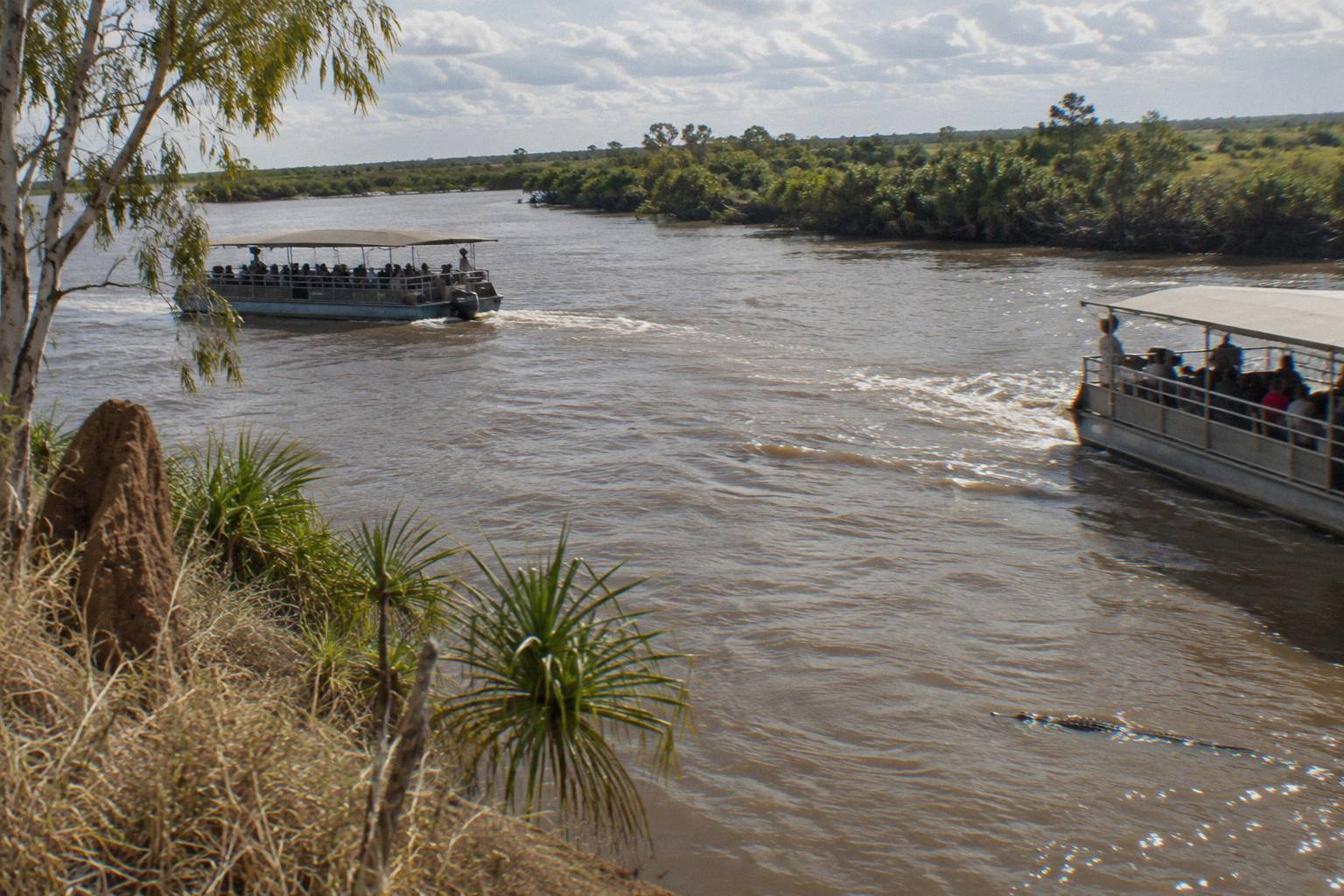
The timing question gets asked constantly and the honest answer is mostly about the schedule, not the animals. Spectacular departs daily at 9am, 11am, 1pm and 3pm, year-round except Christmas Day. The Adelaide River Queen departs 1pm daily, with wet-season departures possibly reduced and a website banner asking guests to confirm times when booking. Adelaide River Cruises' tour page lists 9am, 11am, 1pm and 3pm departures with operating months May to October, and the Pathfinder is available daily with no times printed at all.
| Operator | Departures | Season notes (operator-stated) |
|---|---|---|
| Spectacular | 9am, 11am, 1pm, 3pm daily | Open year-round except Christmas Day; operates as long as it is safe |
| Adelaide River Queen | 1pm daily | Wet-season departures may be reduced; confirm when booking |
| Pathfinder | Available daily, no times printed | Never state a Pathfinder time |
| Adelaide River Cruises | 9am, 11am, 1pm, 3pm listed on the tour page | Operating months listed as May to October |
On weather, the operators go further than most tourism businesses bother to. Spectacular points out that rain in Darwin or Humpty Doo does not mean rain on the river, says a cancelled or postponed cruise is rescheduled or refunded as appropriate, and adds that crocodiles often show a tactile response to rain. The Original/Queen operator names the Dry Season, May to October, as the most comfortable conditions. Beyond that, the site's wet season versus dry season comparison and its page on the best time of day for a jumping crocodile cruise carry the planning detail.
Which Crocodiles Will You Actually Meet?
You meet wild saltwater crocodiles, individually unnamed and unsized in anything this site could verify, plus whatever wildlife from Spectacular's list happens to be on the water that day. No operator names its crocodiles in published material supplied here, no individual size is stated, and no sighting odds are promised by anyone. The experience is an hour on the water with animals that choose to come to the boat.
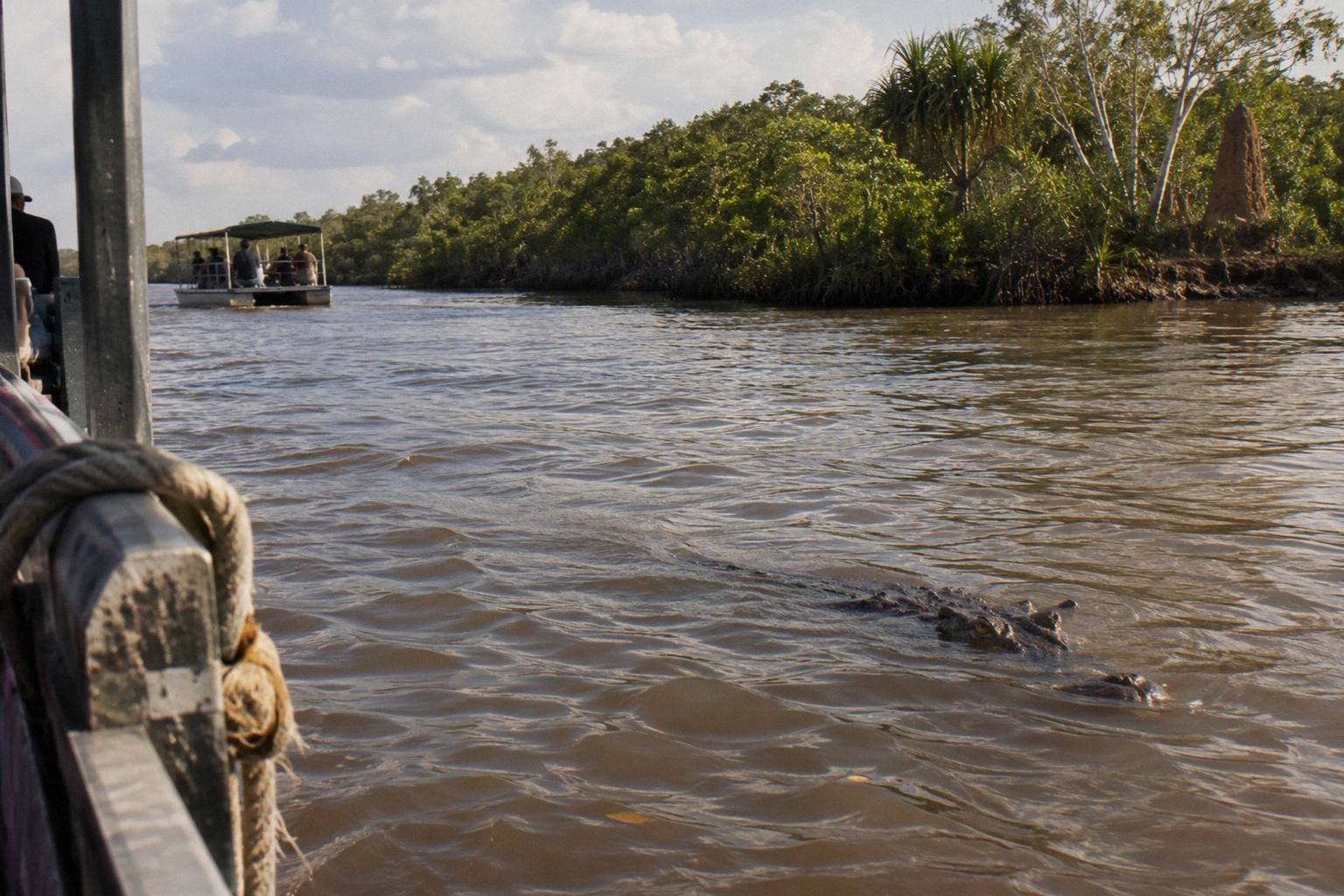
Popular coverage of the river leans hard on named celebrity crocodiles and headline lengths, and none of that can be checked against the sources this site allows. What can be stated is the population context (about 100,000 Territory-wide in 2017), the biology (up to 6 m, an hour underwater, about 50 eggs a nest), and the operator arrangements (permits, ethics policies, feeding logs, no direct contact). The gap between those verified facts and the folklore is the folklore's problem, not the river's.
That gap is also why the cruise works as a wildlife experience rather than a zoo exhibit. The Original/Queen operator's line about seeing crocodiles on almost every tour, with behaviour never guaranteed, is the most honest sentence any operator on the river publishes. A reader who accepts that framing, and books a departure that suits their Darwin itinerary, has realistic expectations. The site's answer to whether there are saltwater crocodiles in the Adelaide River and its breakdown of what differs between Adelaide River cruise operators finish that research trail. If the plan is to see the animals on Adelaide River Crocodile Cruise's featured river experience, the Adelaide River Cruises Jumping Crocodile Experience page carries the times, prices and age bands, with Jumping Croc Experience, 1 Hour on the live listing.
For visitors without a car, the half-day and full-day tours from Darwin fold the cruise into a loop that usually takes in Fogg Dam, Window on the Wetlands and a Humpty Doo stop, though the cruise operator is stated only for the Croc Bus, which uses Adelaide River Cruises. Prices for day tours sit on the booking pages, never on this site, and no start times or pickup points are published for any of them.
Common Questions About The Adelaide River Crocodiles
Are There Saltwater Crocodiles In The Adelaide River?
Yes. The crocodiles that jump for the cruises are saltwater crocodiles, Crocodylus porosus, the NT's larger of two protected species. Freshwater crocodiles also appear on the river, on Spectacular's own wildlife list.
How Many Crocodiles Live In The Adelaide River?
No river-by-river population count exists in the published sources. The verified NT-wide figure is about 100,000 saltwater crocodiles in the wild in 2017, thought to be at or approaching pre-hunting levels.
How Big Do Adelaide River Crocodiles Get?
The saltwater crocodile is the largest living reptile and can grow up to 6 m, per the NT Government. No individual crocodile on the Adelaide River has a published size, and the biggest ever trapped in the NT was just over 5 m.
How Far Can A Crocodile Jump Out Of The Adelaide River?
No operator and no NT Government page publishes a jump height or a jump distance. The cruises work by offering food from a station at the bow, and wild crocodiles rise vertically to take it.
Are The Jumping Crocodiles Wild?
Yes, per the operators. The Original/Queen operator states its crocodiles are 100% wild and fed under NT wildlife permits, and Spectacular keeps detailed feeding logs under its own permits from NT Parks and Wildlife.
Are Adelaide River Crocodiles Dangerous?
The NT Government states any Top End body of water may contain large and potentially dangerous crocodiles, and describes saltwater crocodiles as a serious threat to humans. The cruises manage that risk with rules, boat design and safety briefings, never by promising safety.