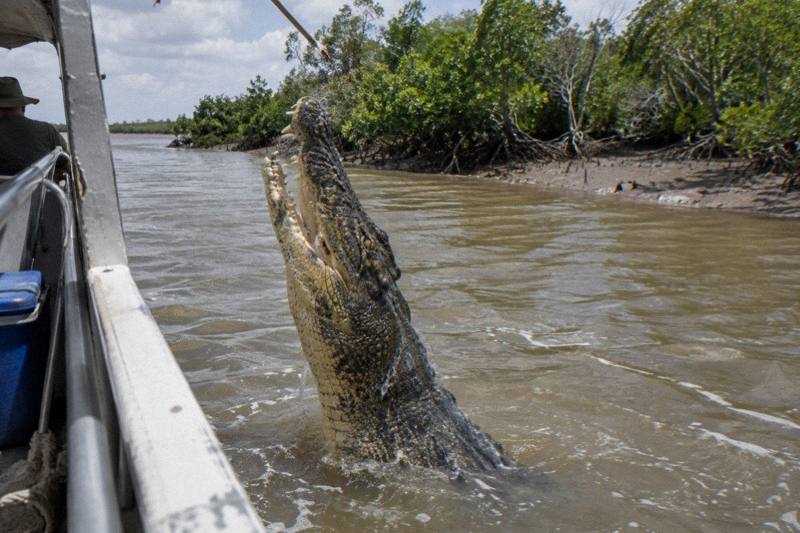
Jumping Crocodiles Explained: The Feeding Behaviour Behind The Leap
The leap is the whole reason the cruise exists, and it is a feeding behaviour, not a trick. Here is what the operators and the NT Government actually say about how it works, what the permits cover, and what nobody publishes.
Short answer
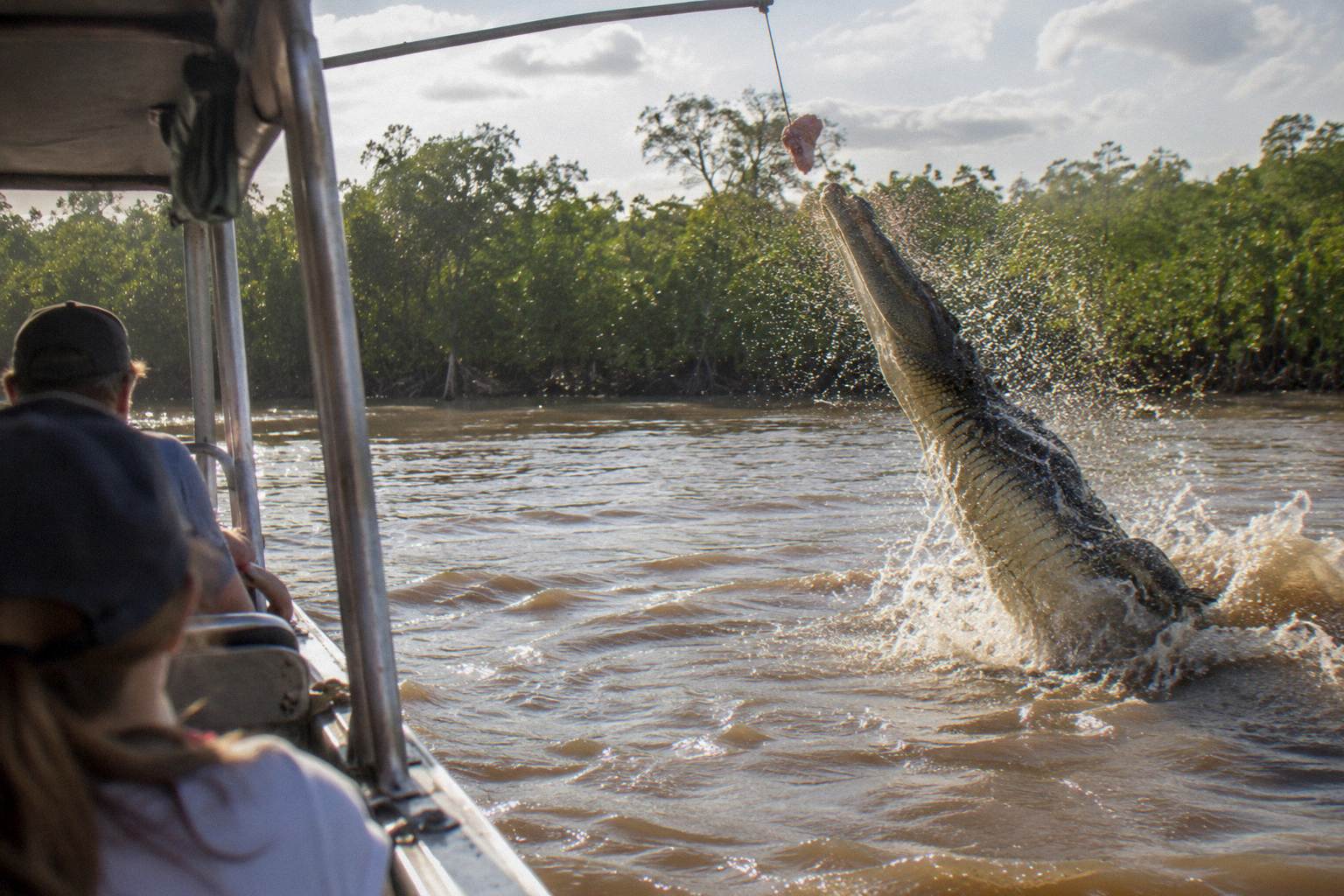
Saltwater crocodiles leap because food is held above the water from the front of the boat, and crocodiles lunge upward to take it. No operator or NT source publishes a jump height, a jump distance or a how-close figure. Feeding runs under NT wildlife permits with no direct contact between passengers and animals.
A one-metre crocodile can lunge clear of the water on nothing but the thrust of its tail, and on the Adelaide River it does this within arm's reach of a moving boat. The behaviour is real, the animals are wild, and the reason it happens at all comes down to a small piece of buffalo meat held on a pole from the bow. This page explains the leap from the ground up: which species jumps, what the operators say about the feeding, what the NT Government says about the permits behind it, and where the honest gaps sit. There are gaps. No operator on this river and no NT Government page publishes a jump height, a jump distance or a how-close-to-the-boat figure, and this site will not invent one.
The Adelaide River Crocodile Cruise guide here is built from the operators' own published pages and the NT Government's crocodile pages, nothing else, so every claim below is attributed to one of those sources. Where a number does not exist in those sources, the page says so plainly rather than reaching for folklore. That matters on this topic more than most, because crocodile folklore is plentiful: invented croc names, invented heights, invented "best sides of the boat". None of that survives contact with the actual sources.
Why Do Saltwater Crocodiles Jump?
Only one NT species leaps at the boats, and it does so for food. The crocodiles on the jumping cruises are saltwater crocodiles, Crocodylus porosus, the NT Government's larger of the territory's two species, capable of growing to six metres. The leap itself is an upward lunge at food held above the surface, not a display behaviour, and no cruise operator or NT page publishes how high or how far any crocodile jumps.
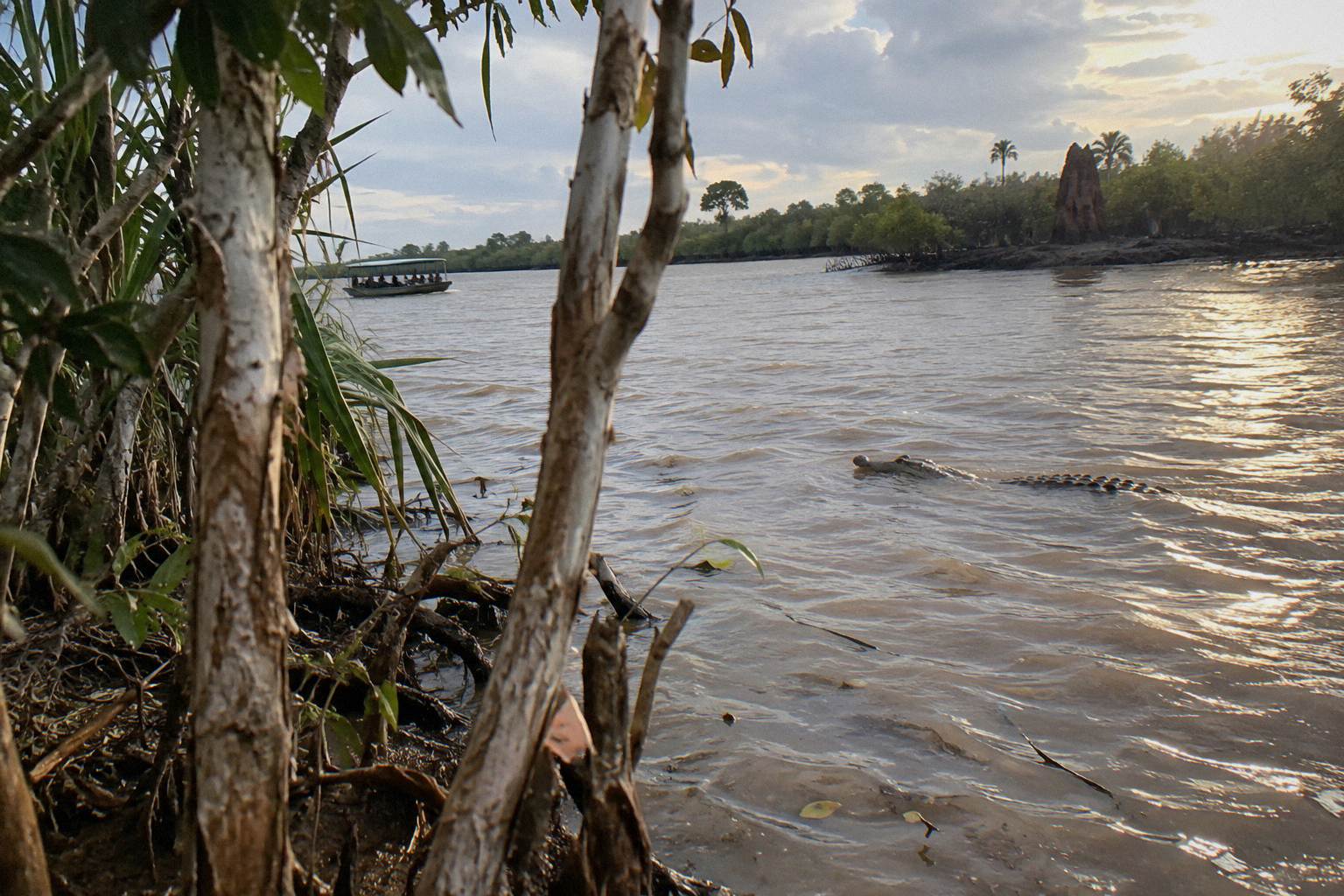
The NT Government recognises two crocodile species in the Northern Territory: the saltwater (estuarine) crocodile, Crocodylus porosus, and the freshwater crocodile, Crocodylus johnstoni. The animals that leap at the cruise boats are saltwater crocodiles. The NT page describes the saltwater crocodile as the largest living reptile, growing up to six metres, with females maturing at about 2.3 metres (roughly 12 years) and males at about 3.3 metres (about 16 years). For context on what that body can do, the same page notes that large crocodiles can stay underwater for up to an hour with a heart rate of two to three beats a minute, and that for short bursts they can move faster than a human on land.
That raw capability is what makes the leap possible, but capability is not the trigger. The trigger is food. A crocodile that lunges vertically out of the water is doing what a crocodile does when prey hangs above the surface, and the cruise boats recreate that situation deliberately and under permit. The physics of a crocodile's vertical lunge come from the tail: the animal pushes water down and back with a single sweep and its body follows the head upward. Beyond that mechanics-level description, the sources this site uses go quiet, and it is worth saying so once, plainly: the official pages hold no jump mechanics detail, no heights and no distances. Anything more specific you have read elsewhere came from somewhere other than the operators or the NT Government.
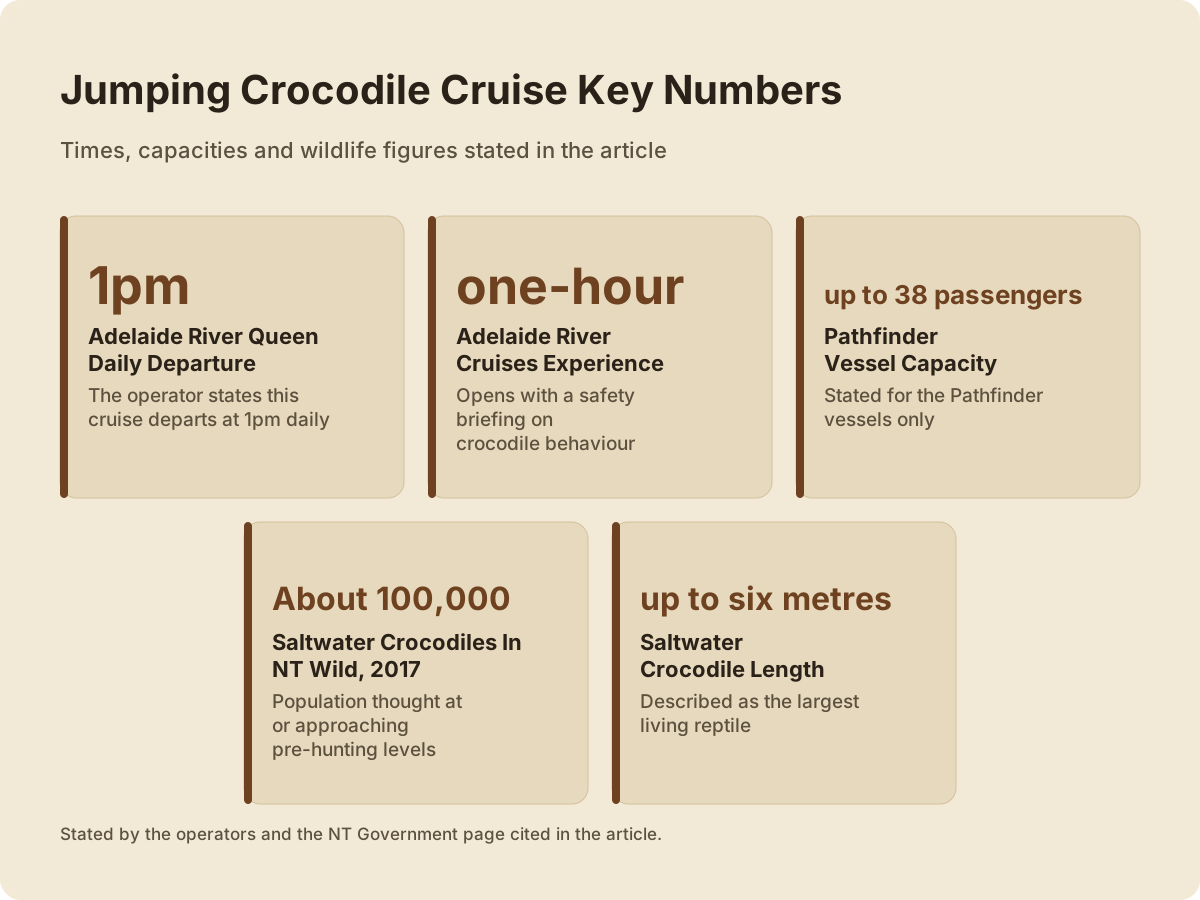
What the NT Government does publish is scale. About 100,000 saltwater crocodiles lived in the NT wild in 2017, a population thought to be at or approaching pre-hunting levels, and the NT page states there are more saltwater crocodiles in the NT than in Queensland and Western Australia. The species was almost extinct in the 1970s and is now widespread and no longer considered threatened. A 6.7 metre saltwater crocodile was netted on the Mary River in 1974, and the biggest ever trapped was just over five metres. No river-by-river population count for the Adelaide River exists in the sources this site uses, so any claim that a specific number of crocodiles lives in this river is not something an official page backs.
If the broader species picture interests you, the saltwater crocodile facts for cruise visitors guide on this site collects the NT Government figures in one place.
How Does The Cruise Get A Crocodile To Leap?
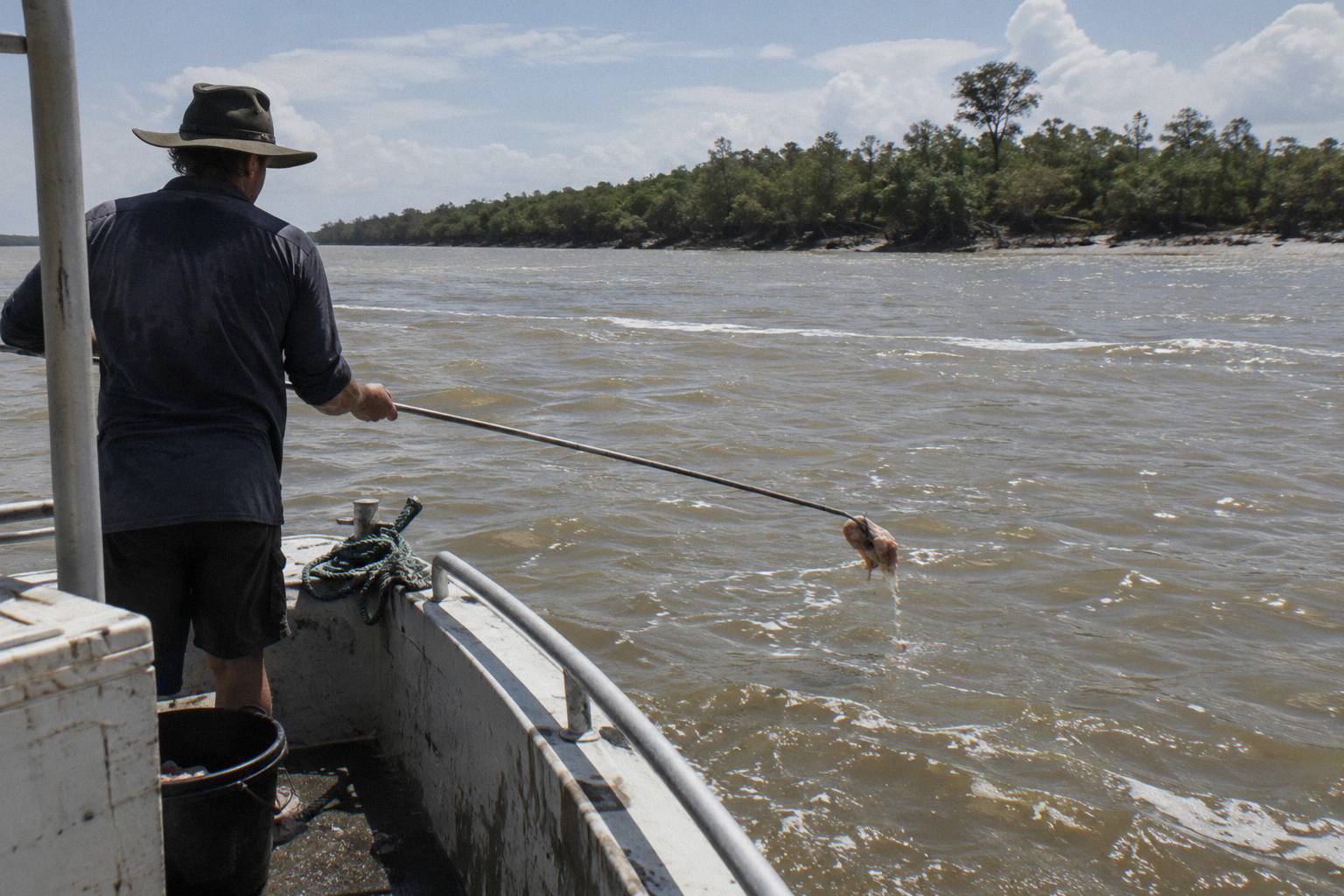
The operators dangle a small amount of food above the water from the front of the boat, and the crocodile lunges up to take it. Spectacular says its crocodiles are offered a taste of buffalo meat and that its boats have a "jumper" position at the front; the Original/Queen operator says its crocodiles are 100% wild and feeding is done under NT wildlife permits. No source publishes how close the animals come.
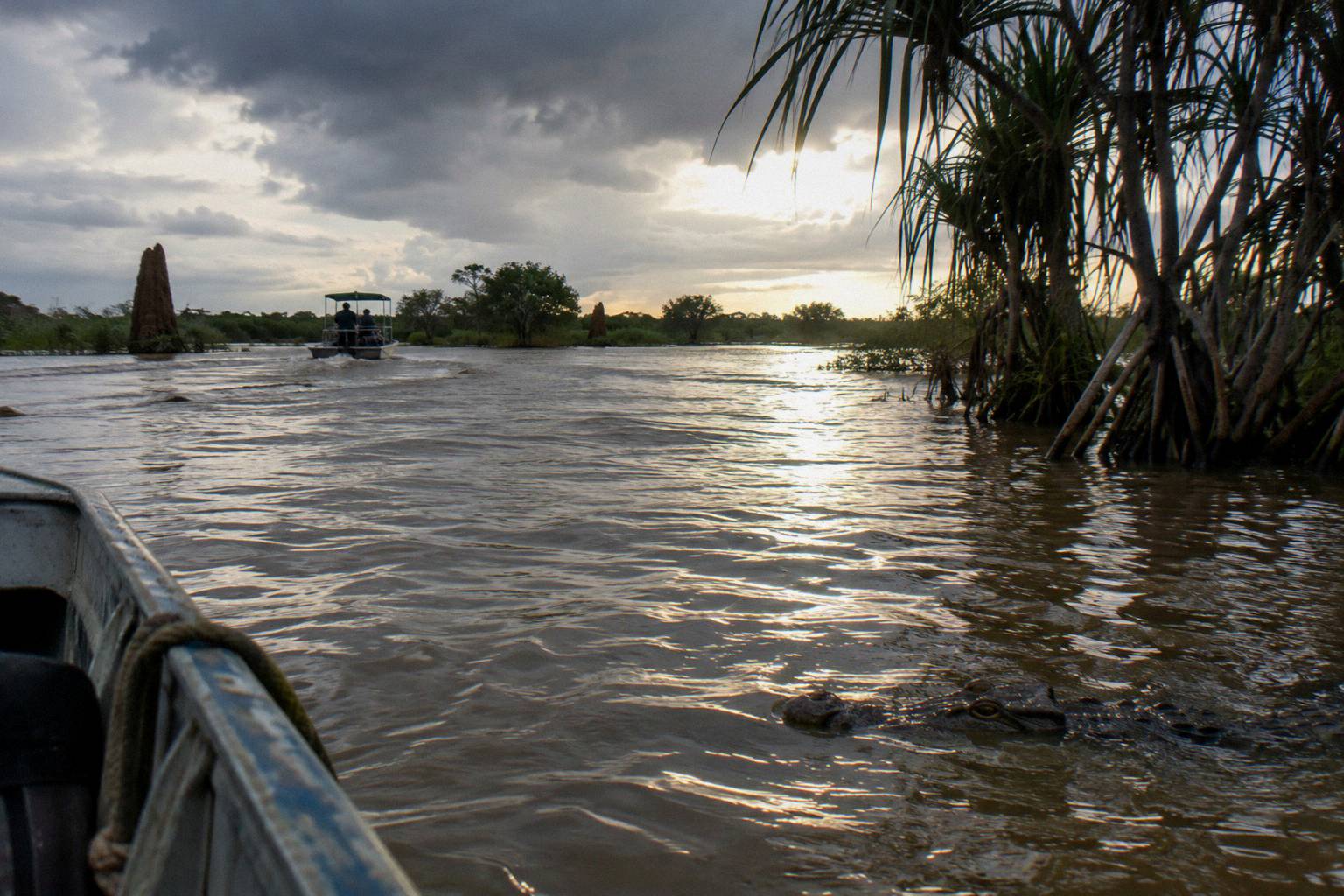
The mechanics from the passenger's side are simple. The boat moves slowly along stretches of river where crocodiles live, the crew uses the food to draw an animal toward the vessel, and when the crocodile commits to the lunge it rises out of the water with its jaws open toward the offering at the bow. Spectacular's own description of its boats notes a "jumper" at the front, which is the crew position from which the food is presented. The crocodile is never touched, never handled and never taken out of the water; Spectacular states there is no direct contact with the crocodiles, and the Original/Queen operator states its crocodiles are 100% wild.
Two things follow from the animals being wild, and the operators are candid about both. First, the crocodiles are not trained, timed or summoned on a schedule. The Original/Queen operator puts it directly: "We see crocodiles on almost every tour... behaviour can never be guaranteed." A crocodile that fed an hour ago may ignore the offering; one deep in the current may take several passes before it commits. Second, the food is a taste, not a meal. Spectacular's wording is that the crocodiles are "offered a taste of buffalo meat", which describes an inducement to display a natural lunge, not a diet.
There is a persistent idea that the same crocodiles appear every day at named locations, sometimes with invented names and sizes attached. Nothing in the operators' pages or the NT Government's pages supports names, sizes or sighting odds for individual animals, and this site prints none. What the operators do support is a little broader: Spectacular says the crocodiles often show a tactile response to rain, and the Original/Queen operator says crocodiles are active year-round. Neither operator publishes any morning-versus-afternoon behaviour claim, so a page claiming the "best time of day" on crocodile-behaviour grounds is going beyond what any operator states.
For deciding whether the cruise actually delivers the leap, three bookings span the range of what is on offer, from a straight one-hour river cruise to a version bundled with barramundi fishing:
The featured option on this page, the Adelaide River Cruises one-hour jumping crocodile experience, frames the whole trip around this behaviour: the operator describes a cruise that opens with a safety briefing from the guides on crocodile behaviour and the rules, then takes passengers onto the water for the feeding interactions. The operator's price is A$58.50 for an adult and A$42.55 for a child aged 1 to 14, stated including taxes and fees, with departures at 9am, 11am, 1pm and 3pm daily. Check availability
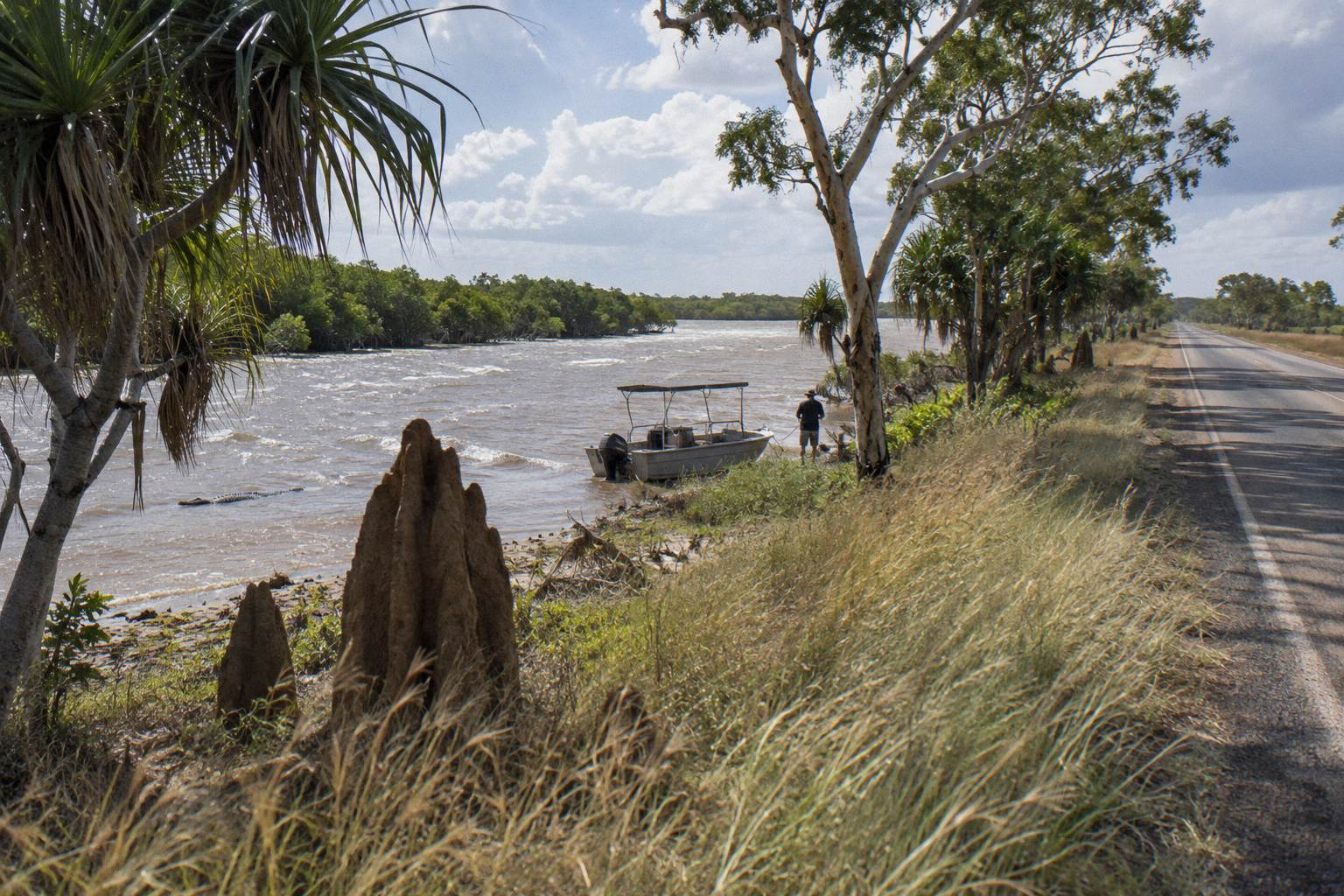
Is The Feeding Regulated, And Who Holds The Permits?
Yes, feeding runs under Northern Territory wildlife permits, and both river operators that describe their arrangements hold them. Spectacular says its staff hold Wildlife Permits from NT Parks and Wildlife, that its Animal Ethics Policy was developed with NT Parks and Wildlife, and that detailed feeding logs are kept. The Original/Queen operator says its feeding is done under NT wildlife permits.
The legal backdrop comes from the NT Government: both crocodile species are protected by law, and nobody may take or interfere with a crocodile without a permit. That is the general rule that covers every crocodile in the territory, and it is the reason the cruise feeding arrangements run through permits at all. It is worth being precise about what the NT page does and does not say: it states the permit requirement, but it does not describe the cruise permit scheme itself, so this site cannot tell you the conditions attached to a cruise operator's permit beyond what the operators volunteer.
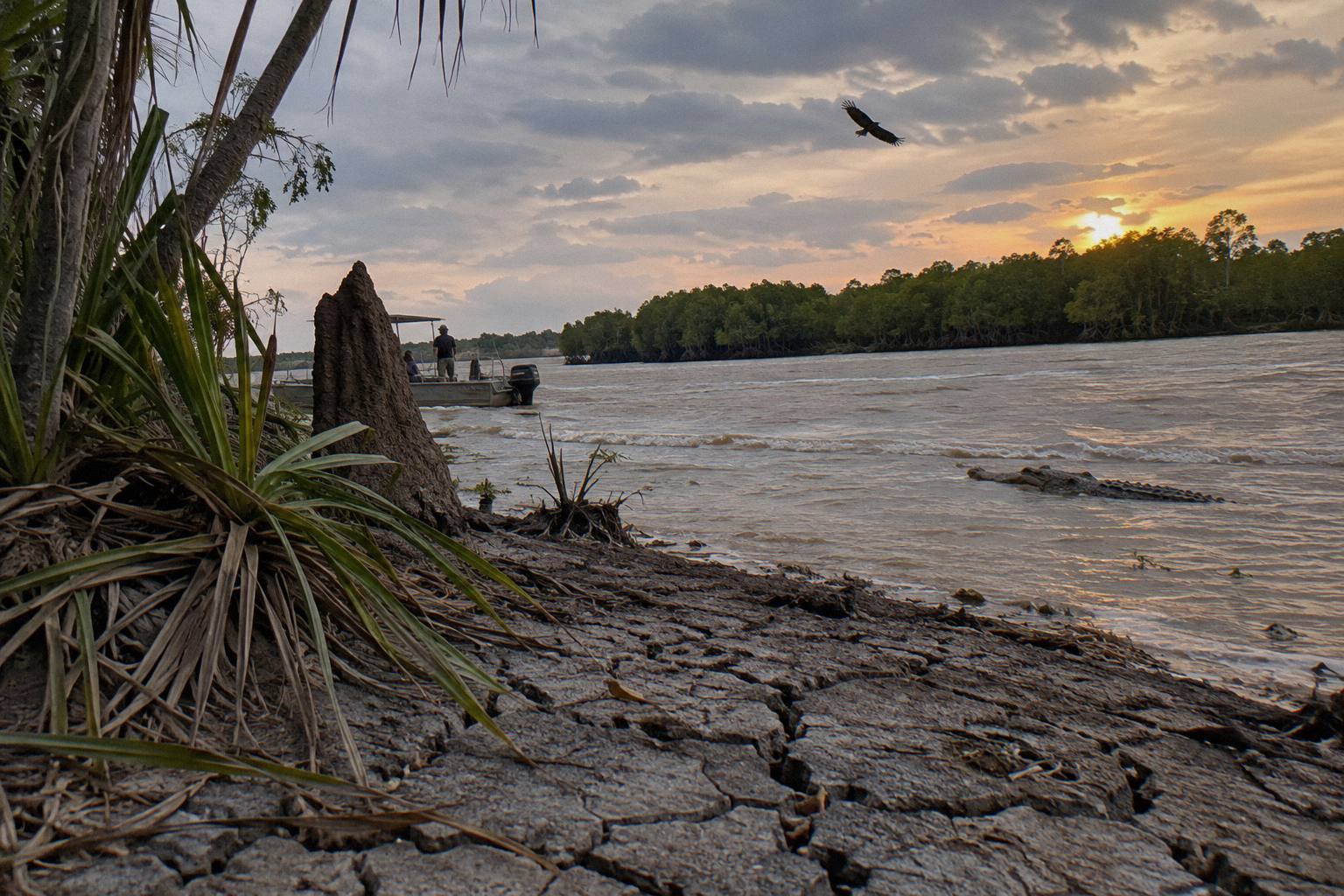
What the operators volunteer is more detailed than you might expect. Spectacular's published pages state that its staff hold Wildlife Permits from NT Parks and Wildlife, that its Animal Ethics Policy was developed with NT Parks and Wildlife, that detailed feeding logs are kept, and that there is no direct contact between passengers and crocodiles. The Original/Queen operator states that its crocodiles are 100% wild and that its feeding is done under NT wildlife permits. A third river operator, Adelaide River Cruises, describes a one-hour experience opening with a safety briefing from the guides on crocodile behaviour and the rules; its pages do not carry a matching statement about its own permit arrangements, so this site prints none for it.
| Operator | Permit and feeding statement, in the operator's words | Direct contact with crocodiles? |
|---|---|---|
| Spectacular Jumping Crocodile Cruises | Staff hold Wildlife Permits from NT Parks and Wildlife; Animal Ethics Policy developed with NT Parks and Wildlife; detailed feeding logs kept; crocodiles offered a taste of buffalo meat | No, per the operator |
| The Original / Adelaide River Queen | Crocodiles are 100% wild; feeding is done under NT wildlife permits | Not stated beyond the feeding arrangement |
| Adelaide River Cruises | Cruise opens with a safety briefing on crocodile behaviour and the rules; no permit statement on its pages | Not stated |
A question that follows naturally is whether the feeding harms the animals. The honest answer is that the sources this site uses do not address it, and the rules of this page forbid going beyond them in either direction. What can be said is what is on the record: the feeding is permitted, logged by at least one operator, developed with the parks authority in at least one operator's case, and involves tastes of food rather than full feeds. Whether you weigh that as acceptable is your call; the operators' own pages make no welfare claim beyond the ethics policy they name.
If you would rather see the leap in person than read about the permit scheme, the box below is the featured one-hour cruise for this page:
What Are The Boats That Produce The Leap?
Three river operators run jumping cruises from three separate jetties, each with its own vessels. Spectacular runs two custom boats, Croc-Cat1 and Wildcat, with a feeding position at the front. The Adelaide River Queen has an air-conditioned lower deck and an open-air upper deck behind croc-proof glass, per the operator, and the Pathfinder vessels are open-air with up to 38 passengers each. Adelaide River Cruises states no boat type.
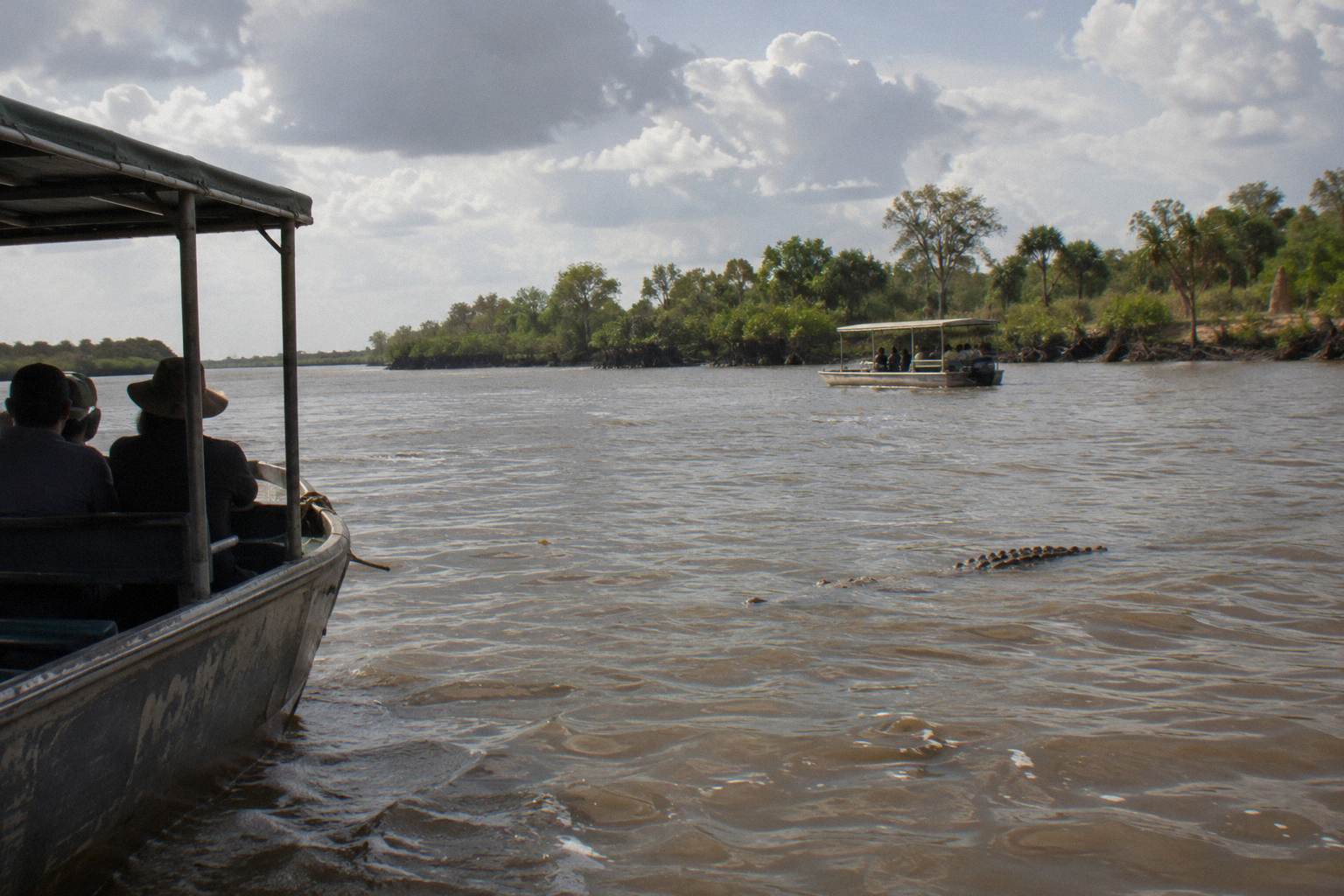
The vessel shapes what you see of the leap more than anything else except the crocodile itself. At Spectacular, the larger vessel is Croc-Cat1, a multi-hull with stadium-style seating and the skipper at the rear; the smaller Wildcat goes further down the river. Which vessel runs depends on the numbers booked, the operator says, and both are undercover. Spectacular is also Indigenous-owned, operated by Arirrki Aboriginal Corporation, which says every ticket supports an Aboriginal community.
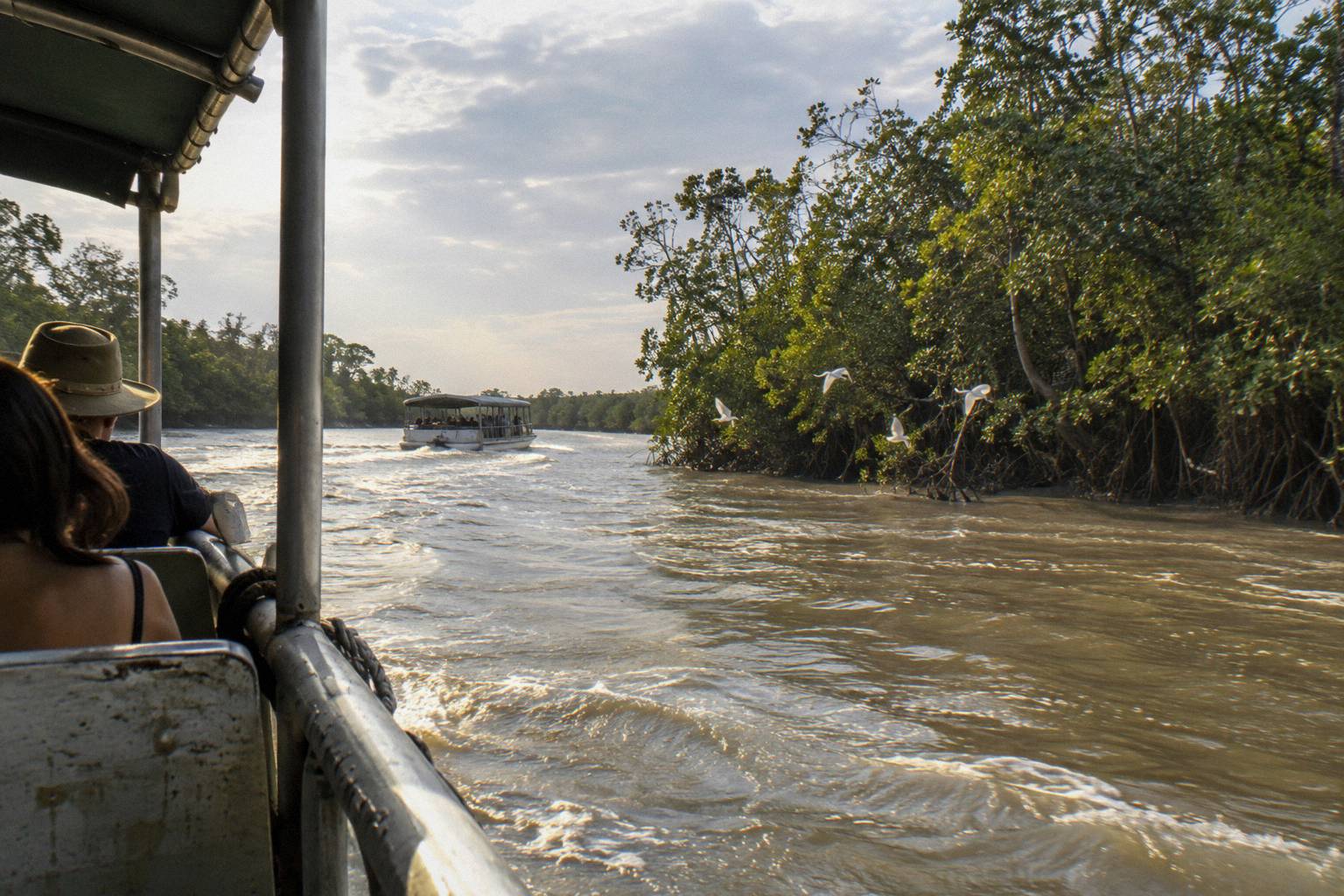
The Adelaide River Queen, run by Adelaide River Queen Cruises trading as The Original Jumping Crocodile Cruises, is a different proposition: a lower deck that is air-conditioned behind glass, and an open-air upper deck with a shaded canopy and individual seating, described by the operator as having croc-proof glass. The same operator's Pathfinder vessels are open-air, carry up to 38 passengers each, and put you closer to the air with nothing between you and the lunge but distance. Adelaide River Cruises, the third operator, publishes two different capacity numbers on its own pages, so this site prints no capacity or vessel claim for it at all, and no capacity should be read as applying site-wide.
| Operator | Vessels | Layout, as the operator describes it | Capacity stated? |
|---|---|---|---|
| Spectacular Jumping Crocodile Cruises | Croc-Cat1, Wildcat | Multi-hull with stadium seating, skipper at the rear; smaller vessel goes further downriver; undercover | No |
| Adelaide River Queen Cruises (The Original) | Adelaide River Queen | Air-conditioned lower deck, open-air upper deck with shaded canopy, individual seating, croc-proof glass | No |
| Adelaide River Queen Cruises (The Original) | Pathfinder vessels | Open-air viewing | Up to 38 passengers per vessel, stated for the Pathfinder only |
| Adelaide River Cruises | Not stated | One-hour experience opening with a safety briefing on crocodile behaviour and rules | No; the operator's own pages conflict |
A note on seating, because it is the most common question after the leap itself: no operator publishes a seat map, a seat advantage or a "best side of the boat" for the jumps, and the crocodiles approach the feeding position at the front rather than a fixed side. If a review or a forum post promises otherwise, it is speaking from one passenger's luck on one day, not from anything an operator states. The one thing every operator's arrangement shares is that the food is presented from the front of the vessel, so the lunge is oriented toward the bow.
The Adelaide River Queen's twin-deck setup suits visitors who want the leap with air-conditioning and glass between them and the spray, and the operator's cruise departs at 1pm daily:
How Close Do The Crocodiles Actually Get?
No operator and no NT Government page publishes a how-close-to-the-boat figure, and this site will not estimate one. What the sources do say is that the interactions are close enough that Adelaide River Cruises tells guests standard phone cameras suit the crocodile encounters because of the proximity, while a zoom lens is useful for wildlife across the wider floodplain.
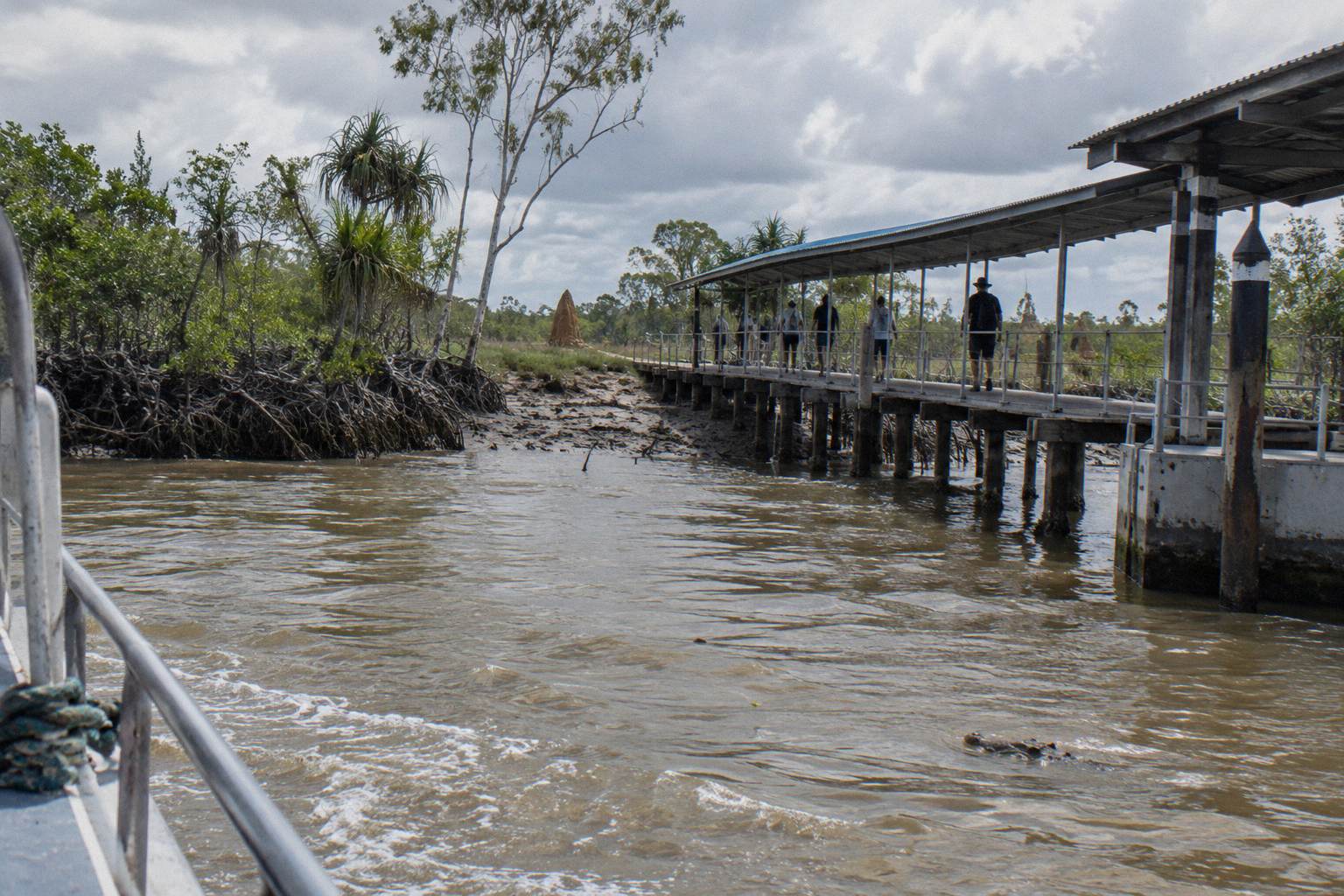
That photography detail, from Adelaide River Cruises' own FAQ, is probably the most concrete honest statement about proximity on the record. An operator that recommends a plain phone camera for the crocodiles, and a zoom lens only for the distant floodplain wildlife, is telling you the animals fill a phone frame on their own. The same operator has no cafe on site, so its guidance to bring a camera or a charged phone is the practical limit of its packing advice.
Close, on this river, sits inside a strict frame. Spectacular offers no direct contact with the crocodiles. The Original/Queen operator has life jackets on board, bans swimming, bans food on the boat, and requires supervised children. Adelaide River Cruises opens every cruise with a safety briefing on crocodile behaviour and the rules. The NT Government's Be Crocwise advice, which applies to every body of water in the Top End and not only to cruise boats, includes a rule that maps directly onto the deck: do not lean out of or dangle limbs over the side of a boat. Every cruise on this river operates inside that rule.
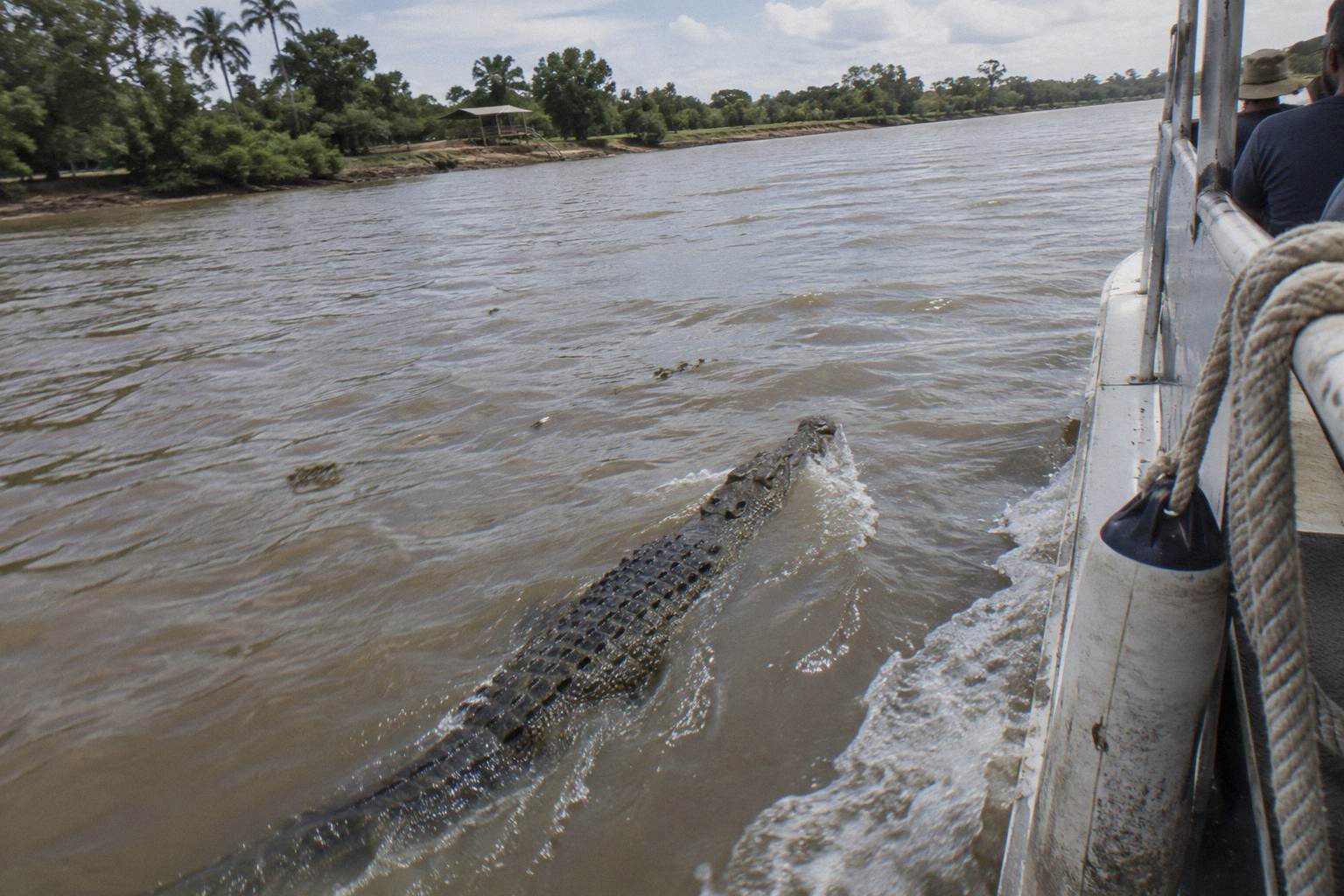
The proximity question has a second layer, which is whether the animals recognise boats as feeding opportunities. The operators' pages do not address crocodile cognition, and no operator names, numbers or sizes individual animals, so the honest position is that each encounter is with a wild animal whose behaviour the operator will not guarantee. What is documented is the feeding arrangement described above and the safety rules that frame it. If you want the closest documented setup, the open-air Pathfinder vessels carry up to 38 passengers with nothing between the seats and the river air:
The Pathfinder runs on a single fare of A$75 for any passenger aged 1 and over, infants under 1 free, with no separate child price, and it is "available daily" with no departure times printed on the operator's page. The operator is currently running a kids promotion under which one child under 13 travels free per full-paying passenger for travel between 5 October 2026 and 31 March 2027 unless it ends earlier, with limited seats; it is the operator's promotion, so check that it applies to your date.
How Safe Is Watching A Crocodile Leap From A Boat?
The NT Government's framing deserves to be quoted for what it is: a serious-threat warning about an apex predator, not marketing copy in reverse. Any body of water in the Top End may contain large and potentially dangerous crocodiles, and the Be Crocwise advice extends beyond boats: swim only where designated safe-swimming signs show and assume water is unsafe elsewhere, camp at least 50 m from the water, and stand at least 5 m back from the water's edge when fishing. On the river itself, the cruise-specific rules are the operators' own: Spectacular offers no direct contact with the crocodiles; the Original/Queen operator carries life jackets, bans swimming and food on the boat, and requires supervised children; Adelaide River Cruises opens with a safety briefing covering crocodile behaviour and the rules.
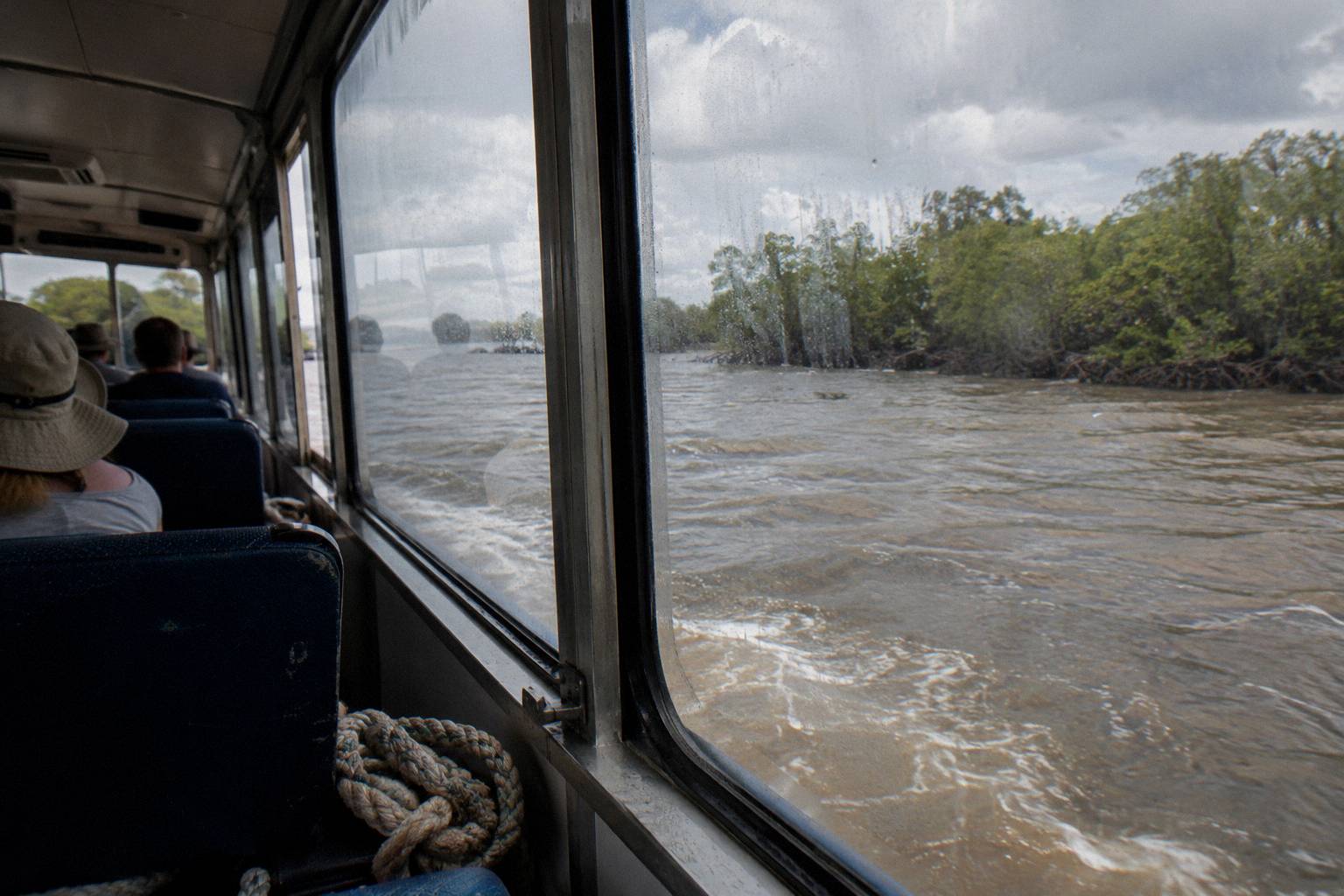
Context helps here rather than reassurance. The species you are watching is the largest living reptile, capable of six metres, able to hold a dive for an hour on a heartbeat of two to three beats a minute, and faster than a human on land in short bursts. Nobody on the cruise is at risk because the crocodile is docile; they are not at risk because the interaction is structured, permitted, brief and controlled from the boat. The distinction matters, and it is why this page attributes every safety statement rather than issuing its own.
Weather sits alongside safety in the operators' own terms. Spectacular operates as long as it is safe, notes that rain in Darwin or Humpty Doo does not mean rain on the river, and says a cancelled or postponed cruise is rescheduled or refunded as appropriate. The same operator observes that crocodiles often show a tactile response to rain. The Original/Queen operator says crocodiles are active year-round and that wet-season departures may be reduced. Adelaide River Cruises lists operating months of May to October on its tour page, which still carries wording from an earlier season, so treat that listing as the operator's page rather than a fixed calendar. If you are weighing the seasons against each other, the wet-season versus dry-season comparison guide on this site lays out what each operator states.
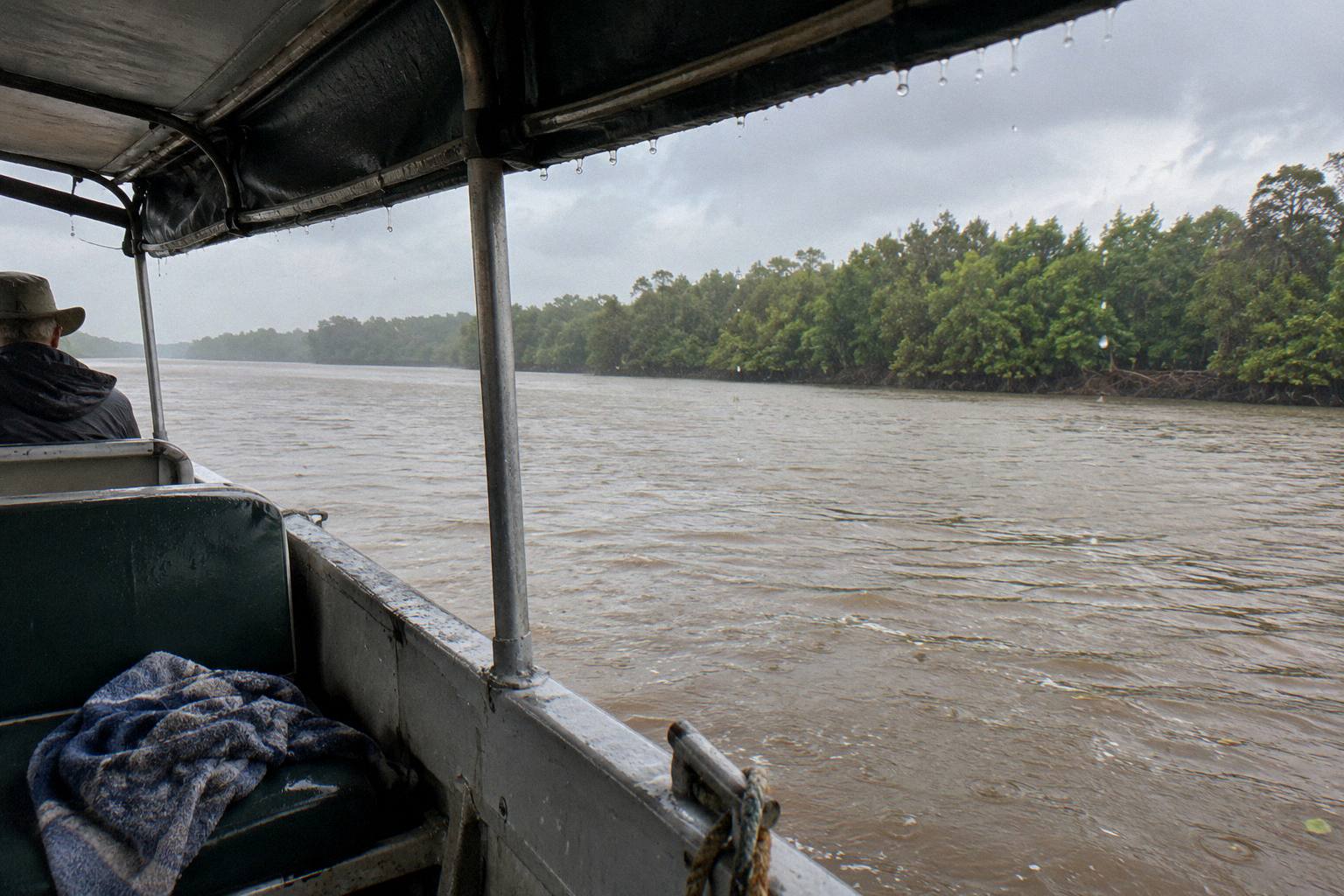
The undercover boats at Spectacular make that operator the rain-tolerant choice, and its two vessels run to stadium seating with the feeding position at the front:
Spectacular's operator price is A$55 for an adult aged 15 and over and A$40 for a child aged 4 to 14, with infants 3 and under free and family rates of A$155 for two adults and two children, all excluding a small booking fee added at checkout. Departures run daily at 9am, 11am, 1pm and 3pm, year-round except Christmas Day, with arrival at least 15 minutes before departure.
What Else Might You See When The Crocodiles Leap?
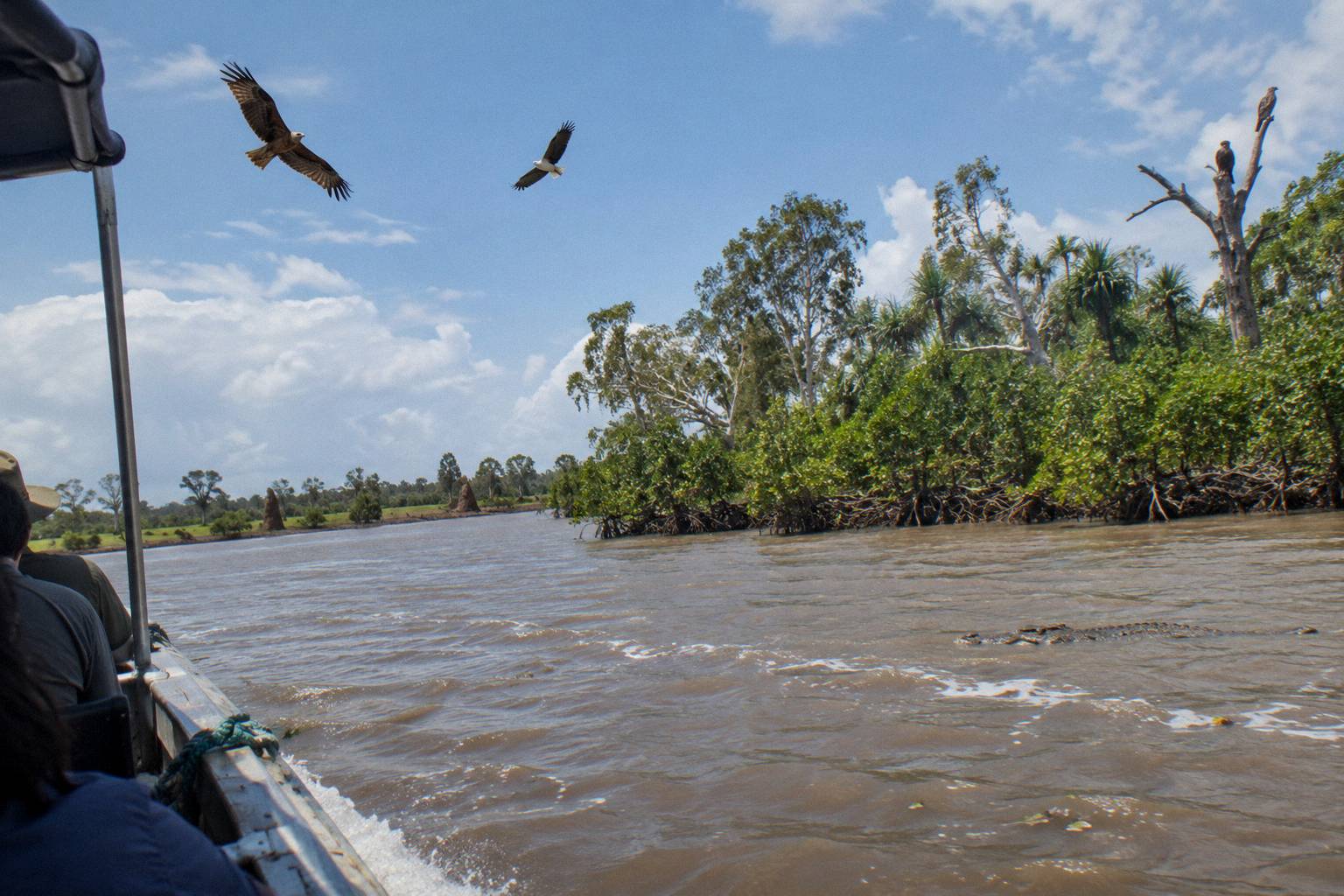
The leap is the headline, but the river carries more. Spectacular's own wildlife list names white-bellied sea eagles, whistling kites, freshwater crocodiles, bull sharks, black flying-fox, the endangered speartooth shark and the critically endangered largetooth sawfish, and its access road often shows water buffalo, cattle and wading birds. No bird counts or seasonal bird claims exist in the sources.
That list is Spectacular's wording, and it is worth reading closely because two of the entries are conservation-listed fish that most visitors have never heard of: the endangered speartooth shark and the critically endangered largetooth sawfish, both of which live in northern Australian rivers. Seeing either from a cruise boat is a matter of luck, and the operator's list is a list of what lives there, not a promise of sightings. The same applies to the raptors; a whistling kite over the floodplain is common enough, but no operator publishes bird counts or seasonal bird patterns, so this site promises nothing.
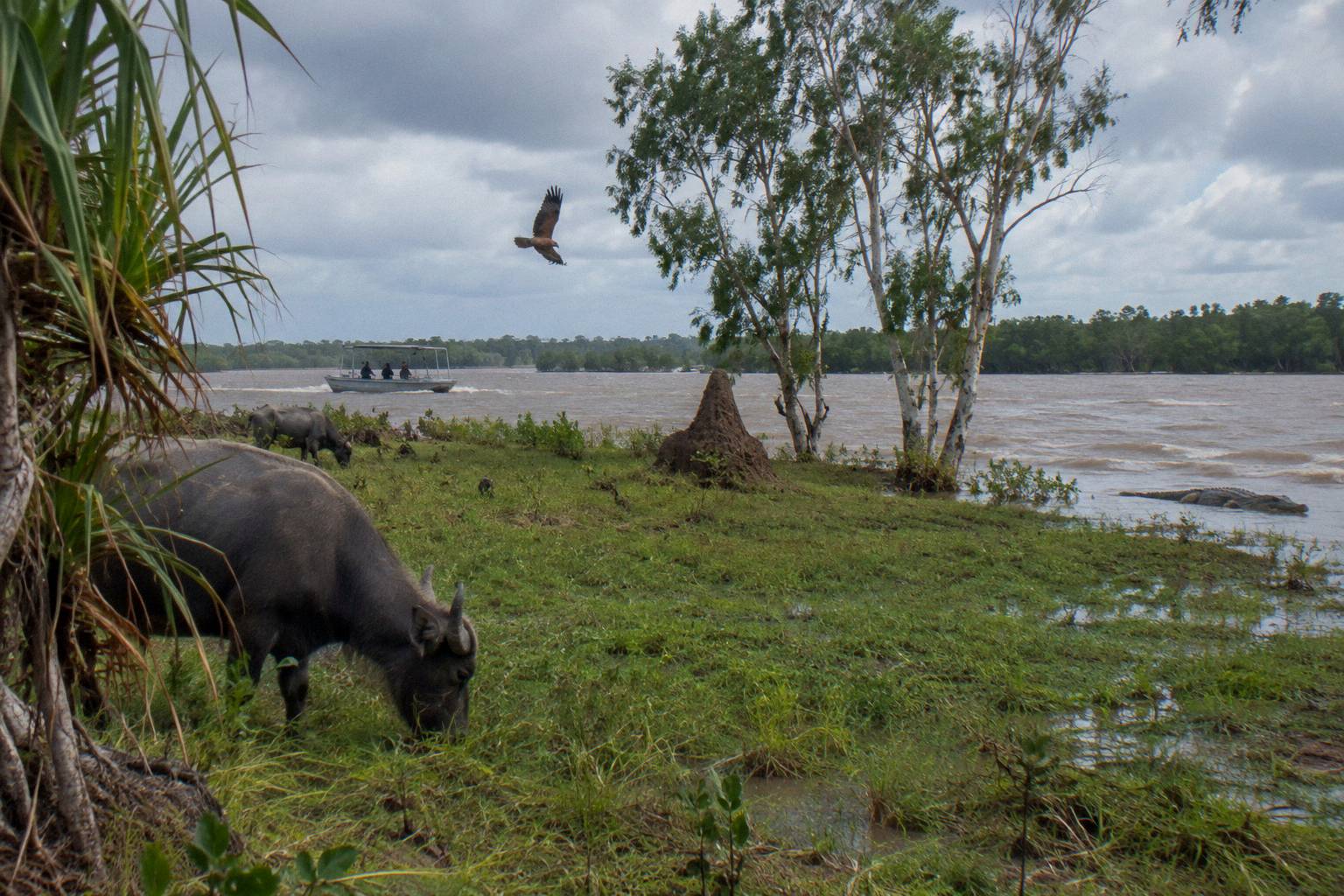
The drive in can carry its own rewards. Spectacular's access road, two kilometres of well-maintained unsealed road off the Arnhem Highway past the Windows on the Wetlands Visitor Centre, often shows water buffalo, cattle and wading birds, per the operator. The broader wildlife picture, including what the floodplain and mangroves hold, is covered in the Adelaide River wildlife and birds guide on this site.
Do You Need To Book Ahead To See The Leap?
The operators say yes, with emphasis. Adelaide River Cruises strongly recommends booking in advance, especially June to August, and says tours sell out and walk-ins are not guaranteed. Spectacular says plainly "we do sell out". The Original/Queen operator recommends booking several days ahead in the May-to-October Dry Season and says school holidays and long weekends often sell out earlier.
The cancellation side varies by operator, and the differences are worth knowing before you commit. Adelaide River Cruises' FAQ gives a full refund if you cancel more than 24 hours before departure, non-refundable inside 24 hours unless the operator cancels for weather or operations, in which case it offers a refund or reschedule. The Original/Queen operator prints no cancellation terms on its site; changes are subject to availability and the booking confirmation carries the terms. Spectacular's public pages also print no cancellation terms. Whichever booking page you use shows its own terms, so read them there rather than assuming any of this page's details carry across operators.
| Operator | Book-ahead advice, operator-stated | Cancellation terms published? |
|---|---|---|
| Adelaide River Cruises | Book in advance, especially June to August; tours sell out, walk-ins not guaranteed | Yes: full refund more than 24 hours before departure; non-refundable inside 24 hours unless the operator cancels |
| Spectacular Jumping Crocodile Cruises | "We do sell out"; no minimum numbers | No terms on public pages |
| The Original / Adelaide River Queen | Book several days ahead in the Dry Season; school holidays and long weekends sell out earlier | No terms on site; confirmation carries them |
Arrival times matter as much as booking. Arrive at least 15 minutes before departure for Spectacular and for Adelaide River Cruises, and at least 30 minutes for the Adelaide River Queen and the Pathfinder, where late arrivals may forfeit their tickets. A fuller treatment of departure scheduling, including what the operators say about wet-season changes, is in the jumping crocodile cruise times guide on this site.
Common Questions About How Jumping Crocodiles Work
Why Do Crocodiles Jump Out Of The Water On The Cruise?
Because food is held above the surface from the front of the boat and the crocodile lunges upward to take it. The leap is a natural feeding lunge by wild saltwater crocodiles, not a trained trick; the Original/Queen operator states its crocodiles are 100% wild and that behaviour can never be guaranteed.
How High Can A Jumping Crocodile Leap?
No operator and no NT Government page publishes a jump height, a jump distance or a how-close-to-the-boat figure, and this site will not invent one. Any specific height you have read elsewhere comes from a source other than the operators' own pages or the NT Government's crocodile pages.
What Are The Crocodiles Fed On The Cruise?
Spectacular says its crocodiles are offered a taste of buffalo meat, presented from a "jumper" position at the front of its boats. The Original/Queen operator says its feeding is done under NT wildlife permits. No operator describes its feeding as harmful or harmless beyond these statements.
Are The Jumping Cruise Crocodiles Saltwater Or Freshwater Crocodiles?
Saltwater crocodiles, Crocodylus porosus, the NT Government's larger of the territory's two species. Freshwater crocodiles, Crocodylus johnstoni, also live in the NT and appear on Spectacular's wildlife list, but the animals that leap at the cruise boats are saltwater crocodiles.
Is The Crocodile Feeding Allowed By Law?
Both species are protected by law and nobody may take or interfere with a crocodile without a permit. Spectacular says its staff hold Wildlife Permits from NT Parks and Wildlife, that its Animal Ethics Policy was developed with NT Parks and Wildlife and that detailed feeding logs are kept; the Original/Queen operator says its feeding is done under NT wildlife permits.
Do The Same Crocodiles Jump Every Day?
The operators publish no crocodile names, sizes or sighting odds, and the Original/Queen operator states that behaviour can never be guaranteed even though crocodiles are seen on almost every tour. Each encounter depends on which wild animal chooses to respond to the offering on the day.
If the mechanics have you convinced and the question is now which boat to be on, these are the three bookings this page compares throughout: