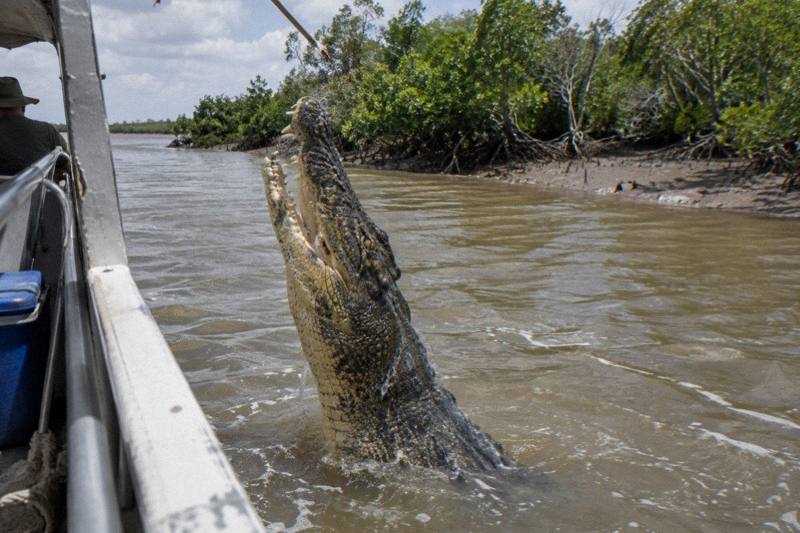
Birds And Wildlife On The Adelaide River Cruise Beyond The Crocodiles
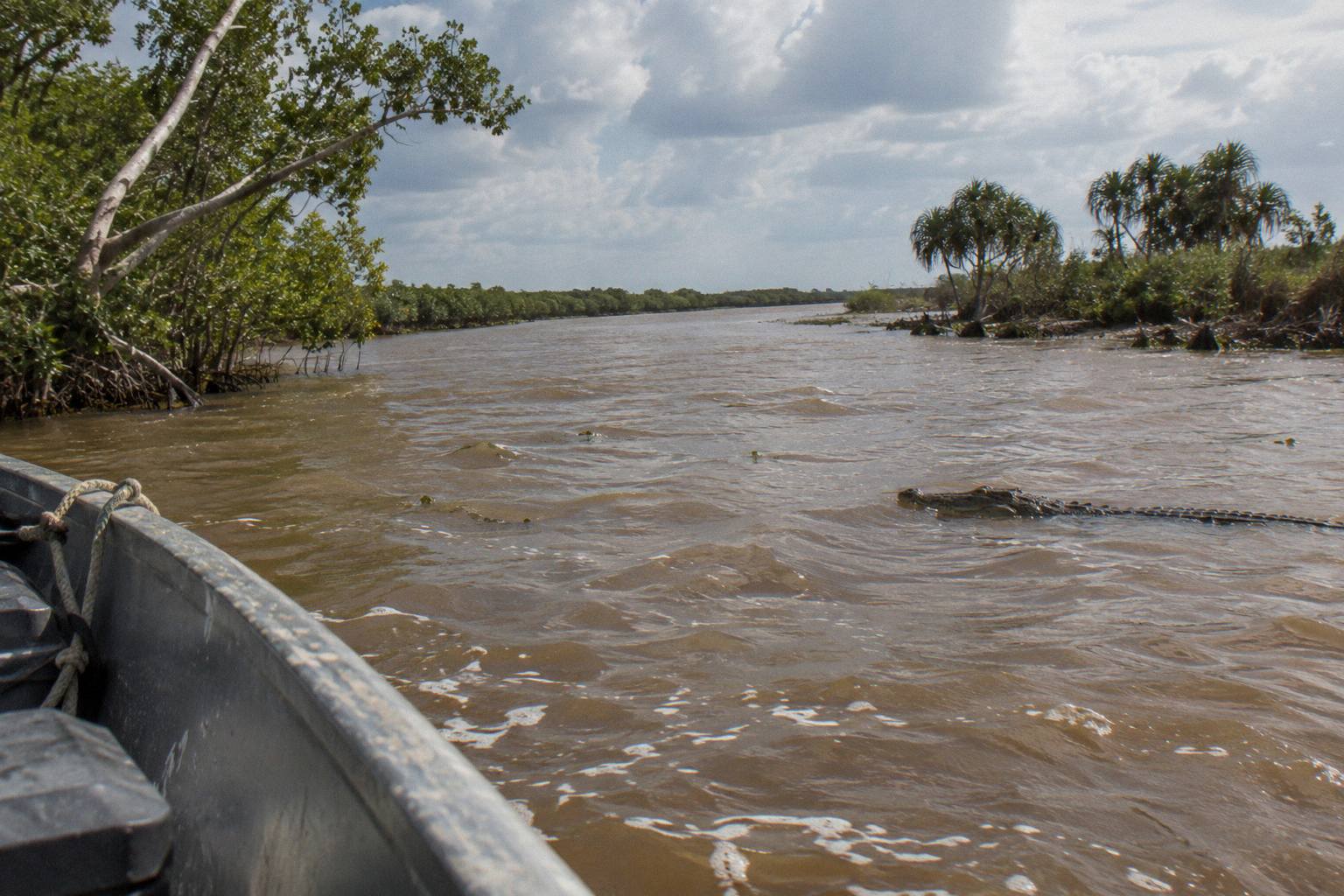
The saltwater crocodiles are the headline act, but the Adelaide River carries a second cast: sea eagles, whistling kites, rare sharks, sawfish, buffalo and wading birds, much of it visible from the same hour on the water.
Short answer
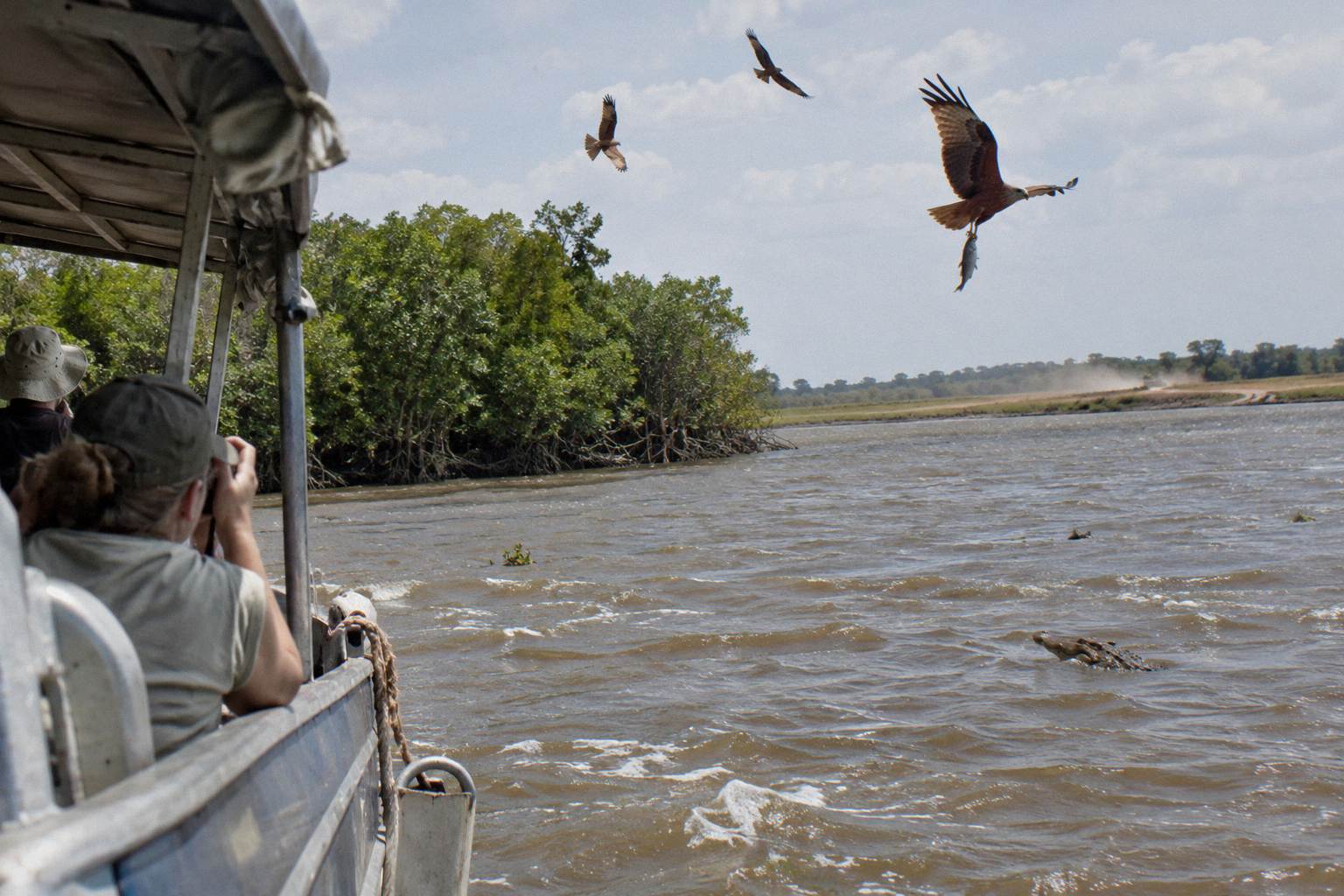
The river's documented wildlife beyond the jumping crocodiles includes white-bellied sea eagles, whistling kites, freshwater crocodiles, bull sharks, the endangered speartooth shark and the critically endangered largetooth sawfish, plus water buffalo, cattle and wading birds along the access road. Every cruise runs about one hour, and operator prices run from A$55 to A$75 for adults.
Three operators run jumping crocodile cruises on the Adelaide River, and every one of them sells the crocodiles first. That is fair, because the saltwater crocodile is the largest living reptile on earth and can grow up to 6 m, per the NT Government's own species page. But the river is not a single-species show. The operator Spectacular Jumping Crocodile Cruises publishes a wildlife list that names white-bellied sea eagles, whistling kites, freshwater crocodiles, bull sharks, black flying-fox, the endangered speartooth shark and the critically endangered largetooth sawfish, and the same operator notes that its access road often shows water buffalo, cattle and wading birds.
That list is unusually rich for a one-hour cruise an hour out of Darwin. Two of its entries, the speartooth shark and the largetooth sawfish, are species most visitors will never see anywhere else, and they live in the same stretch of water the cruise boats work. This page lays out what the sources actually document, species by species, and matches it against what the three operators offer a wildlife watcher in practice: boats, decks, facilities and arrival times. No sighting is ever promised, by the operators or by this page, because wild animals do not take bookings. What the river can promise is variety, and the evidence for that is on the record.
Readers planning the full excursion may also want the broader planning picture in the what to expect on a jumping crocodile cruise guide, which covers the mechanics of the day, and the species-by-species background in saltwater crocodile facts for cruise visitors. Here the crocodile is the anchor tenant, and everything else on the floodplain gets the attention.
What Wildlife Actually Lives In The Adelaide River?
Beyond the jumping saltwater crocodiles, the documented river cast includes white-bellied sea eagles, whistling kites, freshwater crocodiles, bull sharks, black flying-fox, the endangered speartooth shark and the critically endangered largetooth sawfish, while the access road often shows water buffalo, cattle and wading birds. That is the full extent of what the published sources state, and this page does not go beyond it.
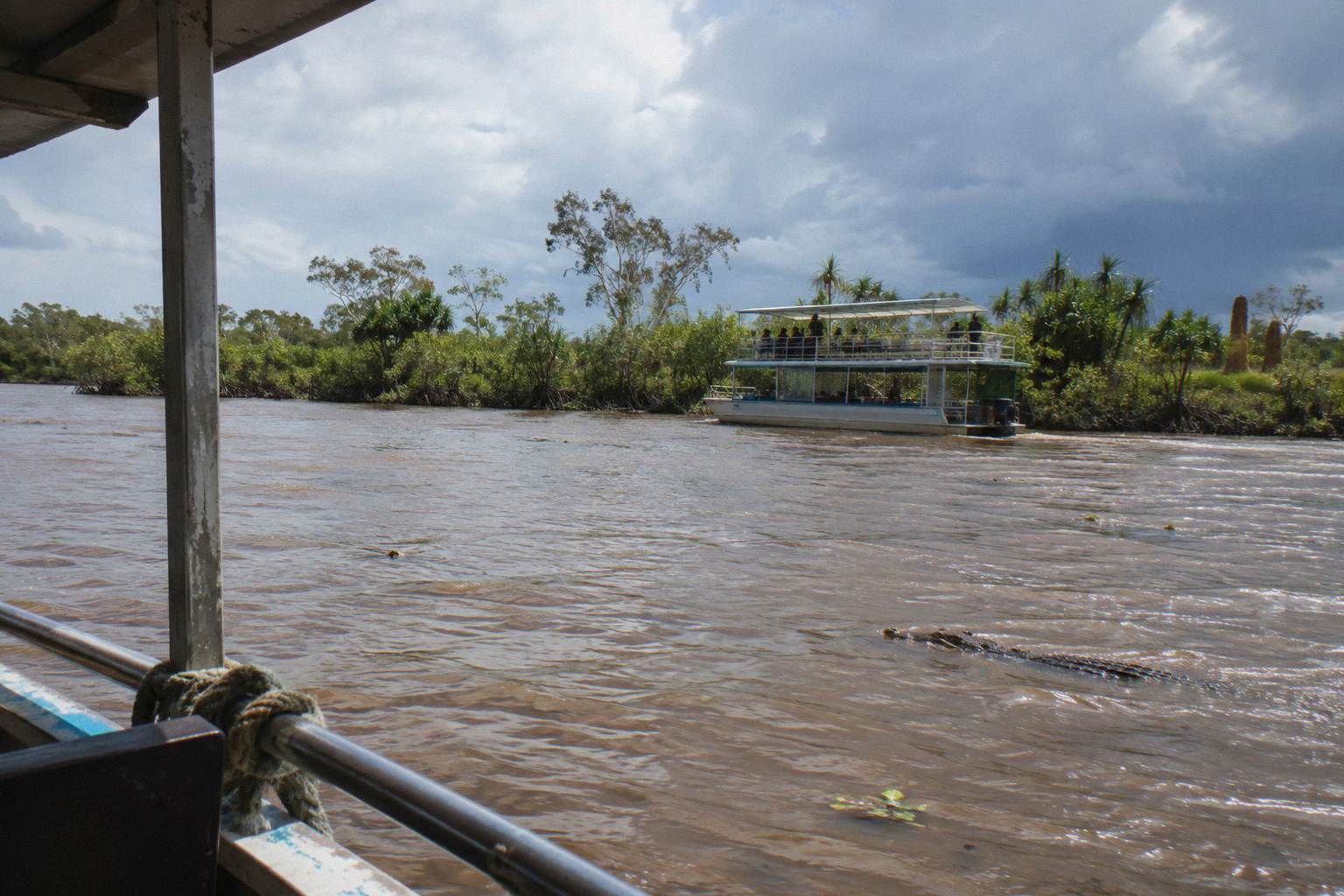
The honest caveat first. No bird counts, seasonal bird claims, mangrove detail or sighting odds appear in any source this site draws on, and no river-by-river crocodile population count for the Adelaide River exists in those sources either. What does exist is Spectacular's own wildlife list, published by an operator that works the river daily, and that list is the backbone of everything below. When a species is described here, the description comes either from that list, from the NT Government's crocodile pages, or from another named operator's published material. Where the record is silent, the page says so rather than filling the gap with plausible-sounding guesswork.
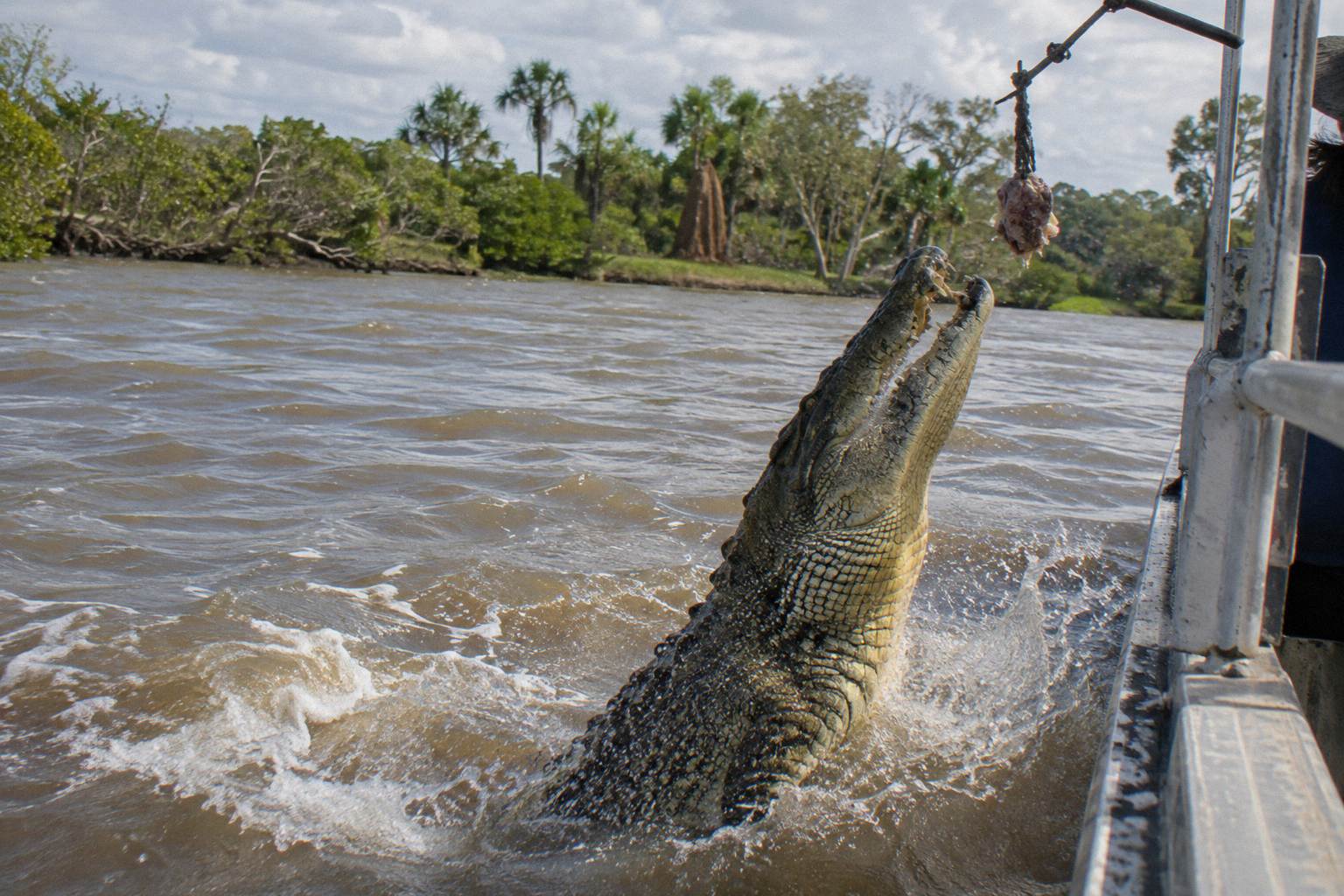
The NT Government supplies the wider frame. The Northern Territory holds two crocodile species, the saltwater crocodile, Crocodylus porosus, and the freshwater crocodile, Crocodylus johnstoni, and the jumping-cruise crocodiles are saltwater crocodiles, the largest living reptile. Females mature at about 2.3 m, at roughly 12 years, and males at about 3.3 m, at roughly 16 years. Large crocodiles can stay underwater for up to an hour with a heart rate of 2 to 3 beats a minute, and for short bursts they can move faster than a human can on land. About 100,000 saltwater crocodiles lived in the NT wild in 2017, a population thought to be at or approaching pre-hunting levels, and the NT page states there are more saltwater crocodiles in the NT than in Queensland and Western Australia.
| Species or animal | Where it appears | Status as stated in the sources |
|---|---|---|
| Saltwater crocodile (Crocodylus porosus) | The river itself; the cruise's headline animal | Largest living reptile; grows up to 6 m; protected by law |
| Freshwater crocodile (Crocodylus johnstoni) | The river; on Spectacular's wildlife list | NT's second crocodile species; protected by law |
| White-bellied sea eagle | The river and floodplain skies | On Spectacular's list; no count or season stated |
| Whistling kite | The river and floodplain skies | On Spectacular's list; no count or season stated |
| Bull shark | The river's waters | On Spectacular's list; no detail stated |
| Speartooth shark | The river's waters | Endangered, in the operator's wording |
| Largetooth sawfish | The river's waters | Critically endangered, in the operator's wording |
| Black flying-fox | The river's air and roosts | On Spectacular's list; no detail stated |
| Water buffalo, cattle, wading birds | The unsealed access road to Spectacular's jetty | "Often shows," in the operator's wording |
Two conservation footnotes from the NT Government round this out. Both crocodile species are protected by law, and nobody may take or interfere with a crocodile without a permit. The saltwater crocodile was almost extinct in the 1970s and is now widespread and no longer considered threatened, which is why a one-hour cruise can treat a six-metre predator as a routine sighting rather than a miracle.
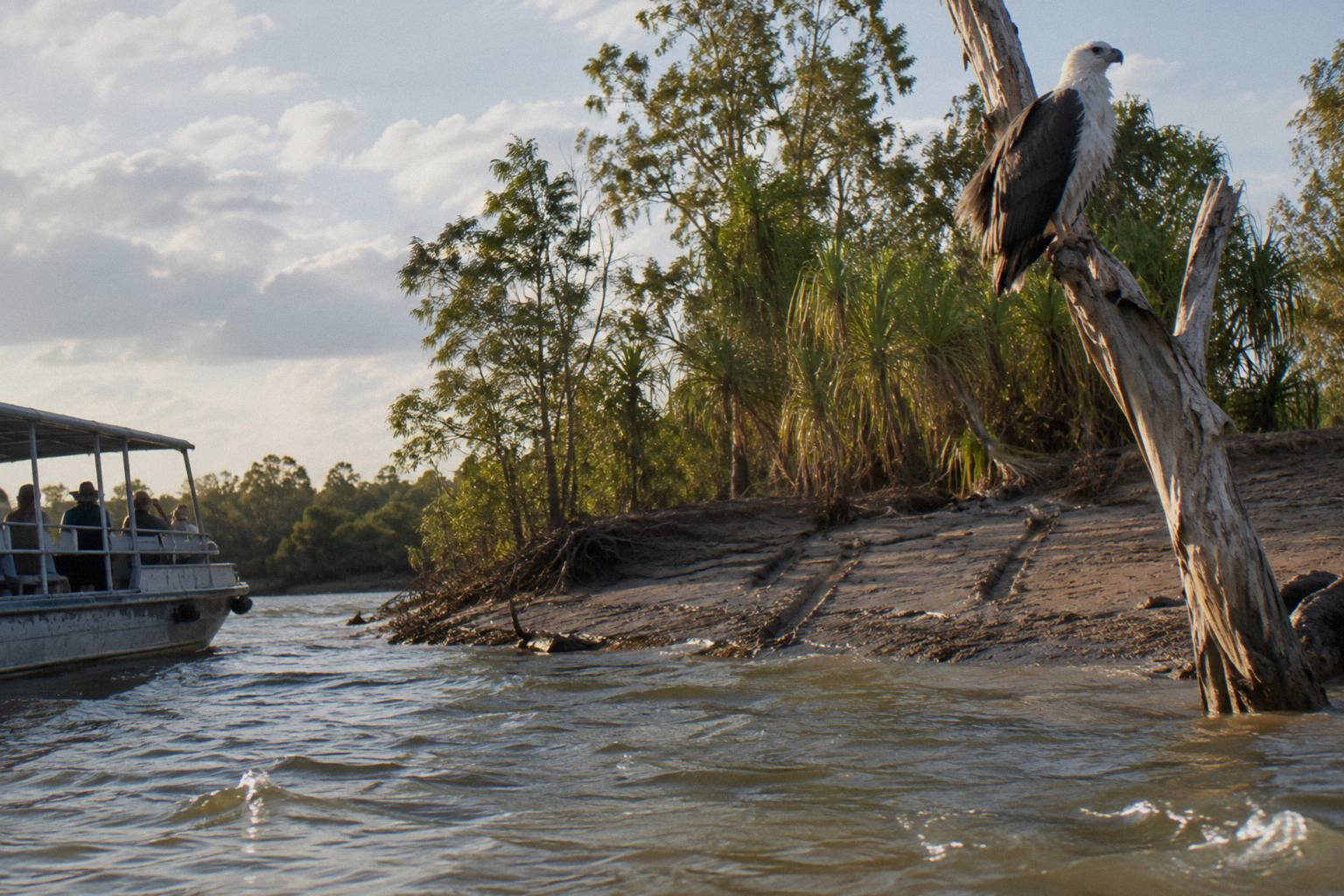
Which Birds Of Prey Will You See From The Boat?
The published record names two raptors: the white-bellied sea eagle and the whistling kite, both on Spectacular's own wildlife list. No other bird species, no counts and no seasonal patterns are stated in any source, so a realistic expectation is simply these two hunters working the river, with wading birds on the floodplain edges.
The white-bellied sea eagle is the one most wildlife watchers come for. It is a large fish-hunting raptor of northern Australian coasts and rivers, and the floodplain the Adelaide River threads through is exactly its country. The whistling kite is the more familiar voice of the Top End sky, and its name describes its call. Both appear on the operator's list without numbers, which is worth restating plainly: nobody publishes how many hunt this stretch of river, in which months, or with what reliability. The list says they are here. The cruise puts you on the water where they live. That is the whole of the honest claim.
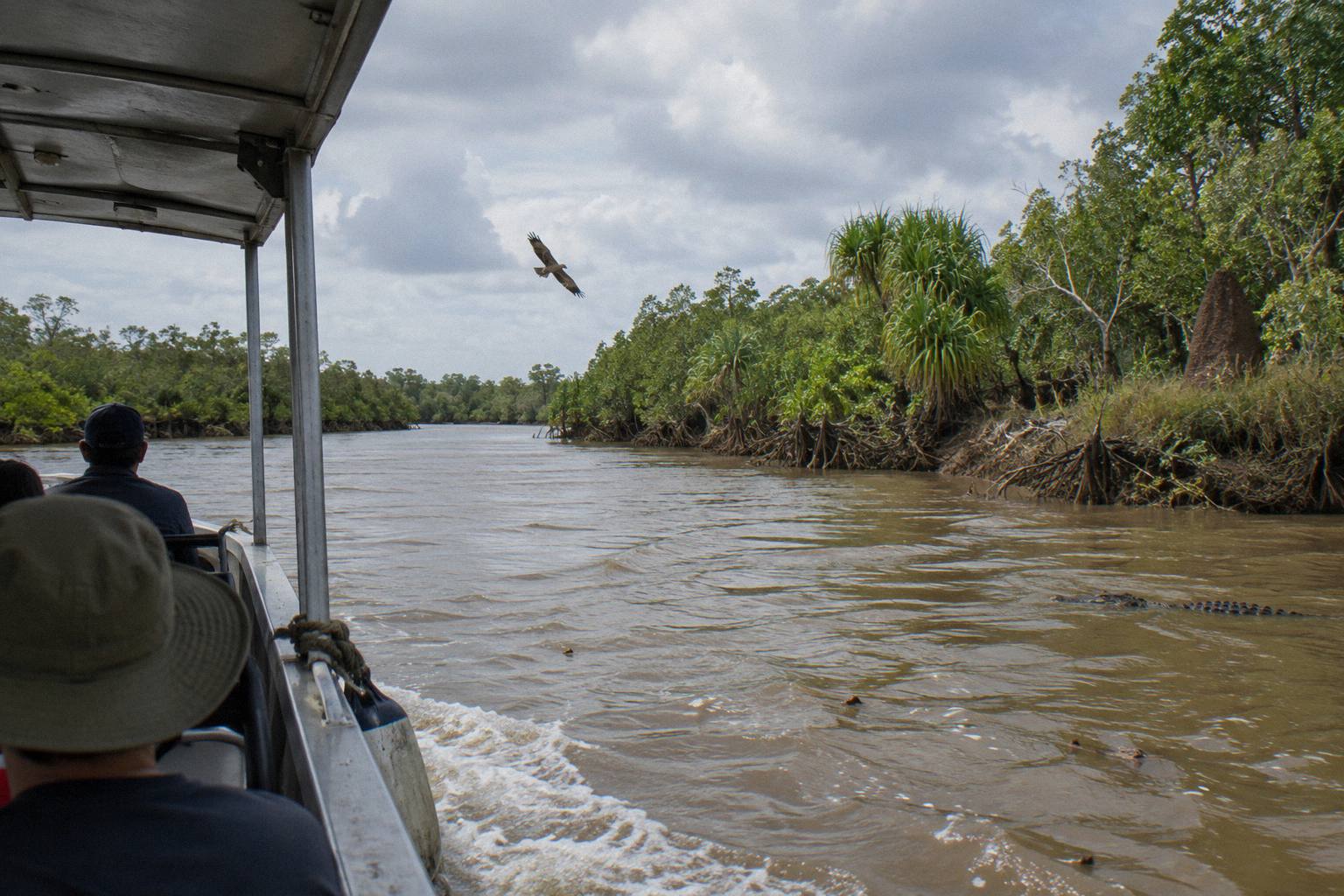
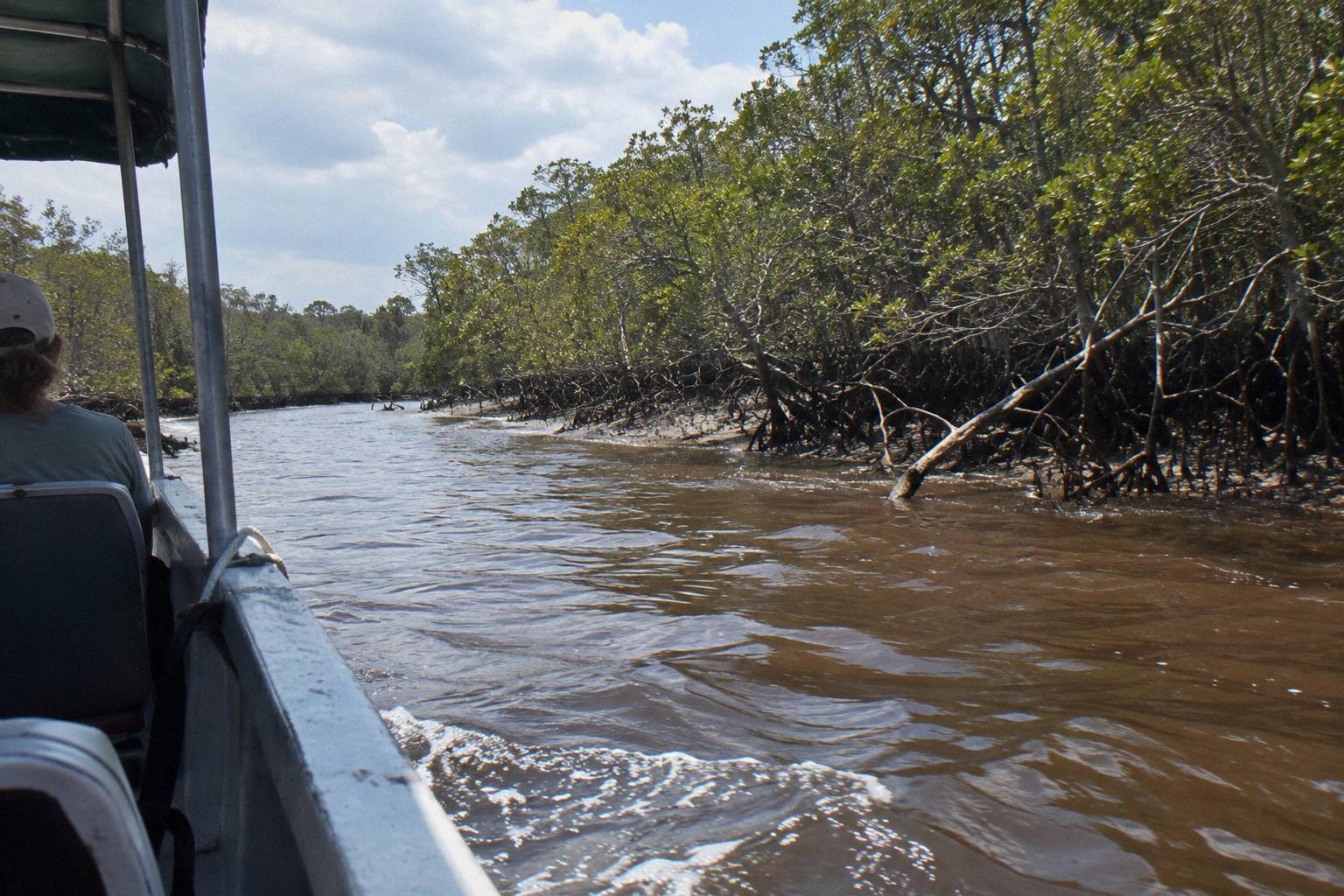
For birders weighing a visit against other Top End options, the distinction matters. Some wildlife destinations publish species checklists and sighting statistics; this river's operators do not. The compensations are structural rather than statistical. A one-hour cruise moves slowly along a narrow channel with high banks on both sides, the boats get close to the water, and the crocodile feeding that gives the cruise its name concentrates activity, which is precisely the kind of disturbance raptors notice and investigate. Photography is explicitly encouraged by Spectacular, and tours run in English, so the skipper's commentary is available for pointing out whatever is in the air that day.
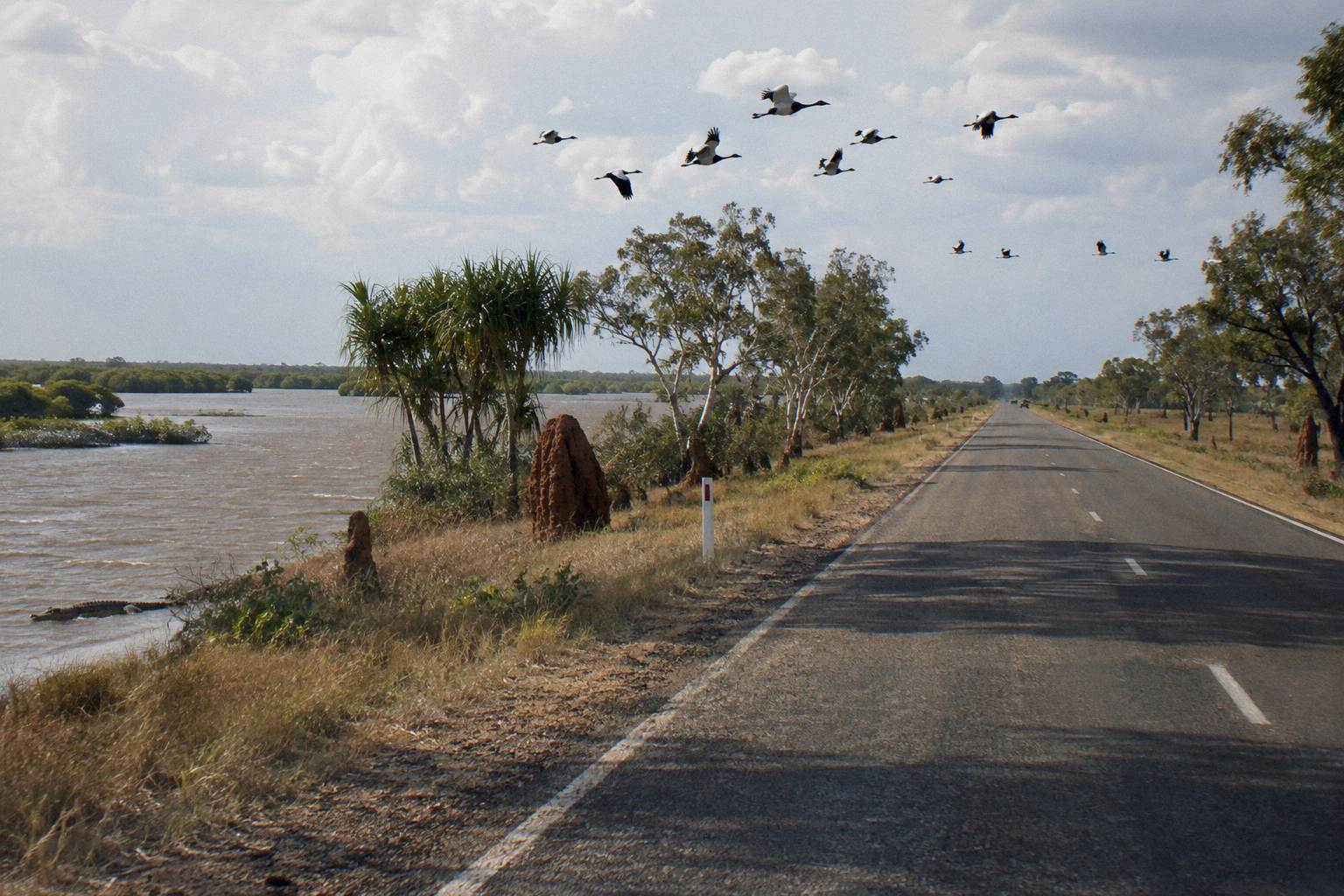
Spectacular's access road adds a third birding habitat before you even board. The operator says the roughly 2 km of well-maintained unsealed access road off the Arnhem Highway often shows water buffalo, cattle and wading birds, so the floodplain margins are effectively a drive-through hide. Passengers who arrive at the recommended 15 minutes before departure, with a little slack on top, give themselves a slow run down that road with the windows down. It costs nothing extra and it is the only part of the wildlife experience where you control the pace.
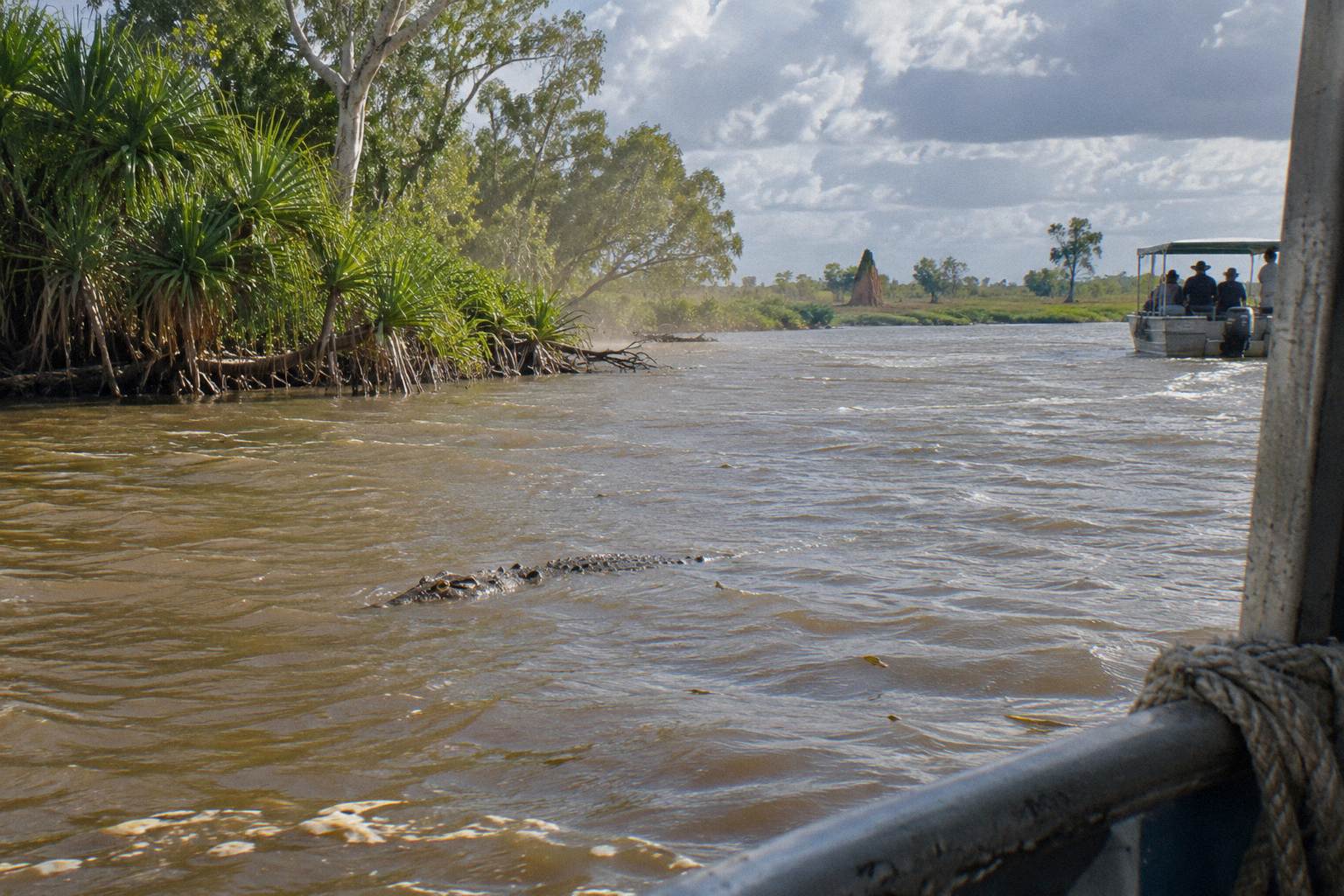
The choice of cruise matters here too. The Adelaide River Crocodile Cruise site exists because the three river operators differ in ways a wildlife watcher feels: the vessels, the decks, the departure spread and the onshore facilities. A side-by-side comparison of the three, including the Spectacular Jumping Crocodile Cruise and the Original Adelaide River Queen operators, is worth ten minutes before booking, because the wildlife is shared but the viewing platforms are not.
Why Are There Rare Sharks And Sawfish In A Crocodile River?
The Adelaide River is a tidal macrotidal system, and its waters hold bull sharks, the endangered speartooth shark and the critically endangered largetooth sawfish, all named on Spectacular's wildlife list. The sources state their presence and their conservation standing, and nothing more: no population figures, no habitat detail and no sighting likelihood is published for this river.
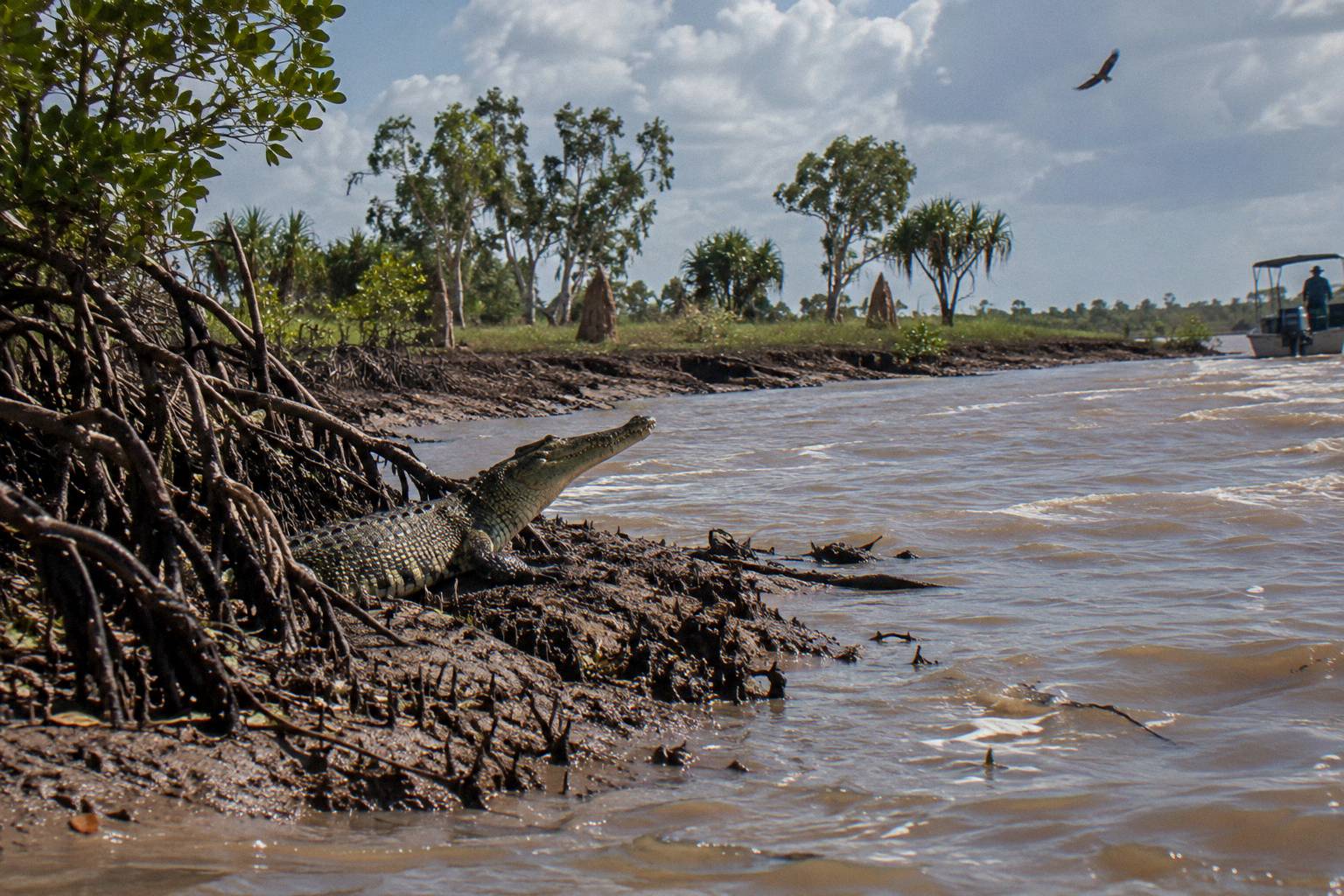
The speartooth shark and the largetooth sawfish are the quiet superstars of that list. Both are species whose global fortunes are dire enough that the operator's chosen adjectives, endangered and critically endangered, are conservation classifications rather than marketing adjectives. The largetooth sawfish is one of the most threatened of all sharks and rays worldwide, and the speartooth shark is a rare species strongly associated with the tropical rivers and estuaries of northern Australia and New Guinea. A one-hour tourist cruise sharing a channel with animals in that category is genuinely unusual, and it is the strongest single argument for treating the Adelaide River as a wildlife destination rather than a crocodile attraction with a river attached.
What the sources do not say matters just as much for expectations. There is no published figure for how many of these animals live in the Adelaide River, no statement about which months they are present, and no claim from any operator that passengers will see one. A crocodile rises when meat is offered; a sawfish does not. The realistic framing is that these animals are resident in the system, that the cruise operates inside that system, and that any appearance is a matter of the river's own timing. The operator's list is evidence of presence, not a program of appearances.
The bull shark is the third shark on the list and needs no introduction. It is a wide-ranging, salt-tolerant predator famous for travelling far up rivers, and its presence here is consistent with that habit rather than remarkable for it. The black flying-fox, the list's only mammal besides the buffalo and cattle on the access road, rounds out the non-crocodile, non-bird entries. It is Australia's largest bat, a nocturnal species whose daytime camps can hold large numbers, though again, no camp locations or sizes for this river appear in any source this site uses.
For a wildlife watcher, the practical question is which boat puts you closest to the water with the best sightlines, and that is answered in the operator details further down. Before that, the river's other crocodile deserves its own section, because it is the animal most often mistaken for the cruise's star.
Is The Freshwater Crocodile Different From The Jumping Crocodile?
Yes. The NT has two crocodile species: the saltwater crocodile, Crocodylus porosus, which is the jumping-cruise animal, and the freshwater crocodile, Crocodylus johnstoni, which appears on Spectacular's wildlife list as a separate river resident. The saltwater crocodile is the largest living reptile at up to 6 m; both species are protected by law and cannot be taken or interfered with without a permit.
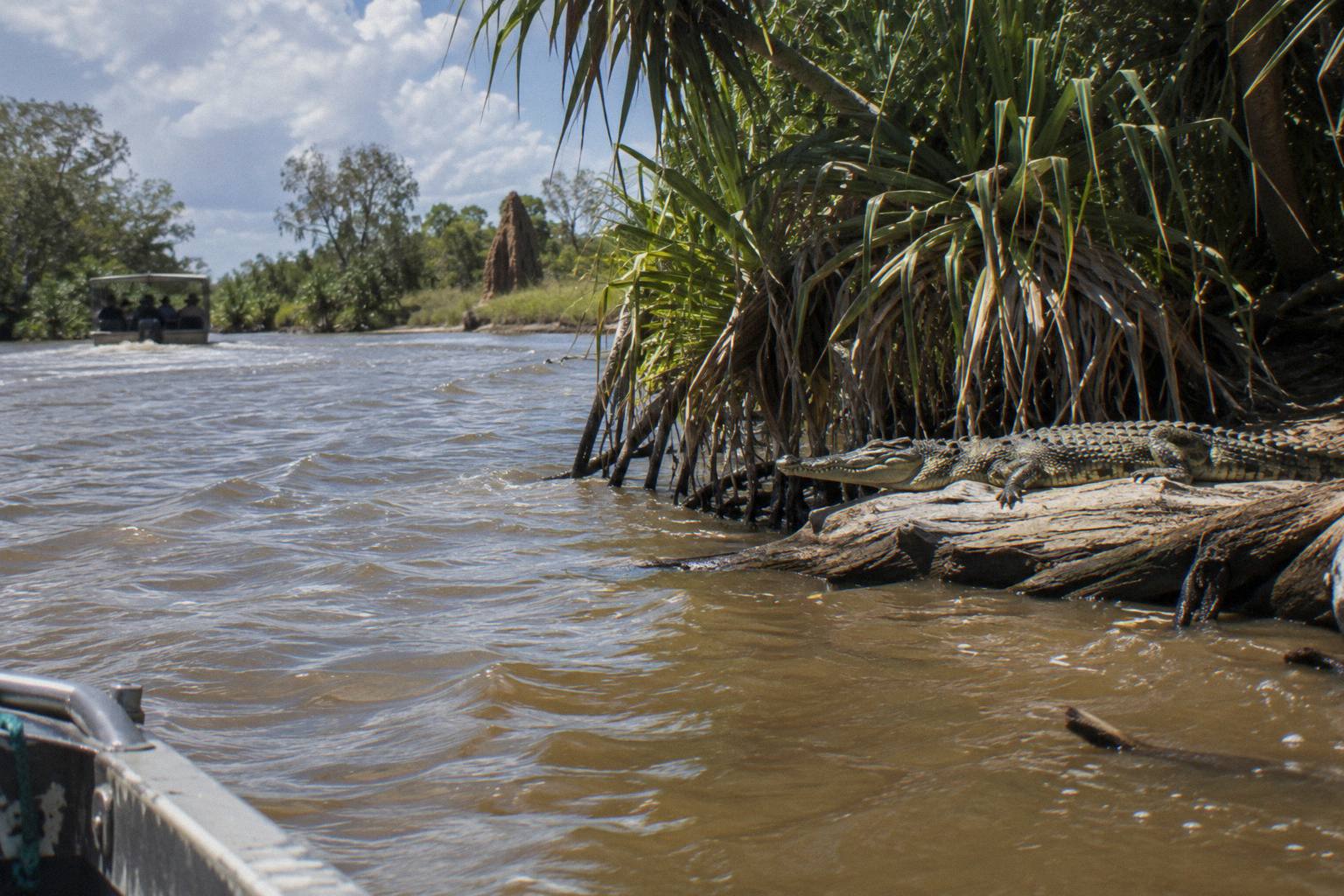
The distinction is more than taxonomy. Saltwater crocodiles are the animals that launch themselves at the bait poles, the ones the NT Government describes as a serious threat to humans, present potentially in any body of Top End water. Freshwater crocodiles are the smaller, fish-eating relative that generally avoids people, and seeing one on the river is a different experience from watching a three-metre estuarine male clear the water. Because both species appear in the sources for this river, a passenger who spots a crocodile that looks small, slender and uninterested in the boat may well be looking at the freshwater species, though no operator publishes identification guidance and no sighting of either species is guaranteed.
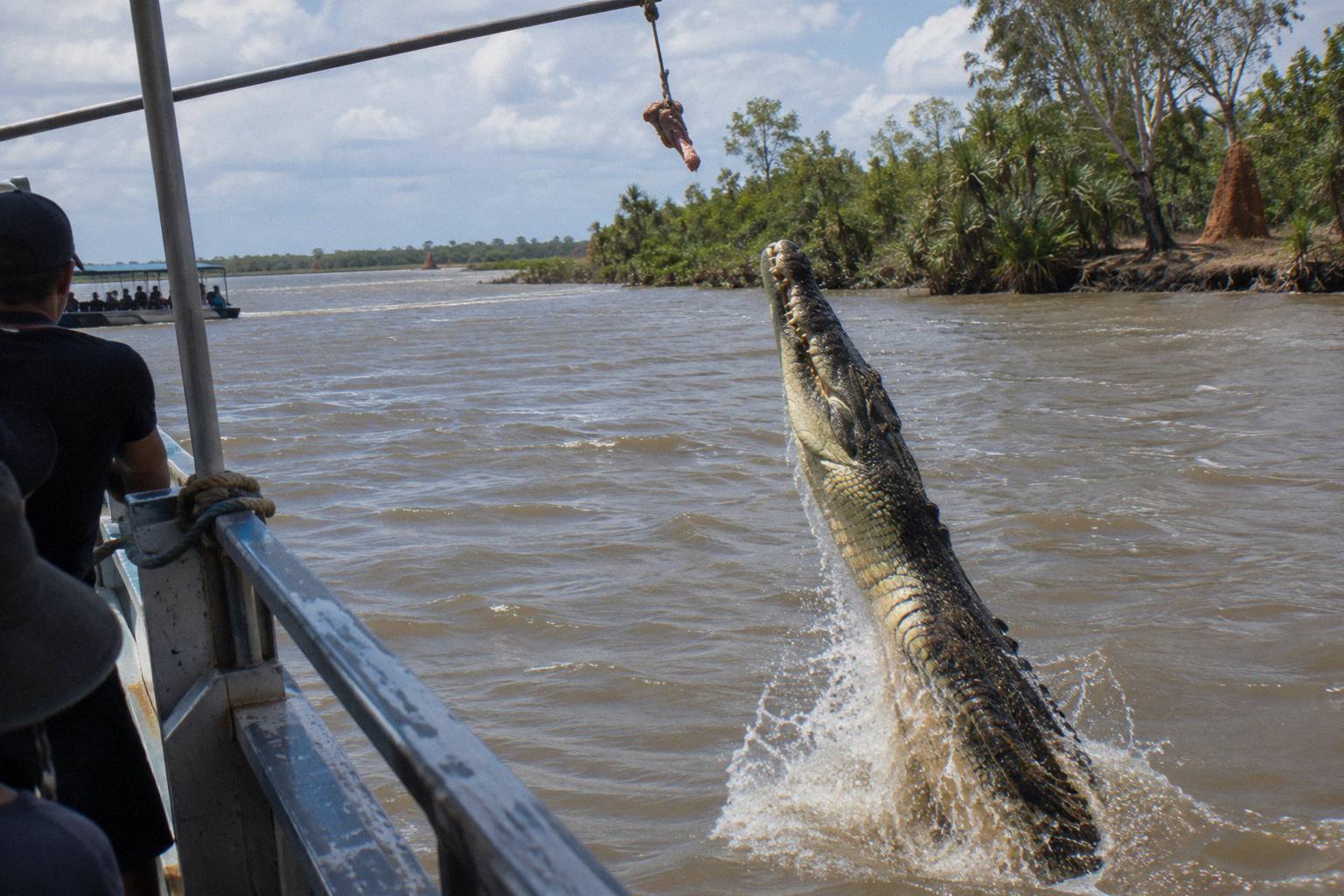
The NT Government's pages supply the anchor facts, and they are worth having in mind on the water. Nests are built from November to May with an average of about 50 eggs. A 6.7 m saltwater crocodile was netted on the Mary River in 1974, and the biggest ever trapped was just over 5 m. No equivalent Adelaide River specimen is on the record, and this page will not invent one: no crocodile's name, size or sighting odds for this river are stated in any source. The protection status is the practical point for visitors. Both species are protected, permits are required for any interference, and the cruise operators' feeding programs run under NT wildlife permits, which Spectacular states its staff hold from NT Parks and Wildlife.
| Saltwater crocodile | Freshwater crocodile | |
|---|---|---|
| Scientific name | Crocodylus porosus | Crocodylus johnstoni |
| Role on the cruise | The jumping animal the cruise is built around | A river resident on Spectacular's wildlife list |
| Size in the NT record | Largest living reptile; up to 6 m | Not stated in these sources |
| Threat to humans | A serious threat, per the NT Government | Not characterised in these sources |
| Protection | Protected by law; permit required to interfere | Protected by law; permit required to interfere |
| Maturation | Females about 2.3 m at ~12 years; males about 3.3 m at ~16 years | Not stated in these sources |
The Original/Queen operator's FAQ says it sees crocodiles on almost every tour and that behaviour can never be guaranteed, which is the closest any operator comes to a sighting claim. Apply that honesty to the whole cast: the river holds what it holds, and the cruise puts you in the room with it.
What Animals Do You Pass On The Way To The Jetty?
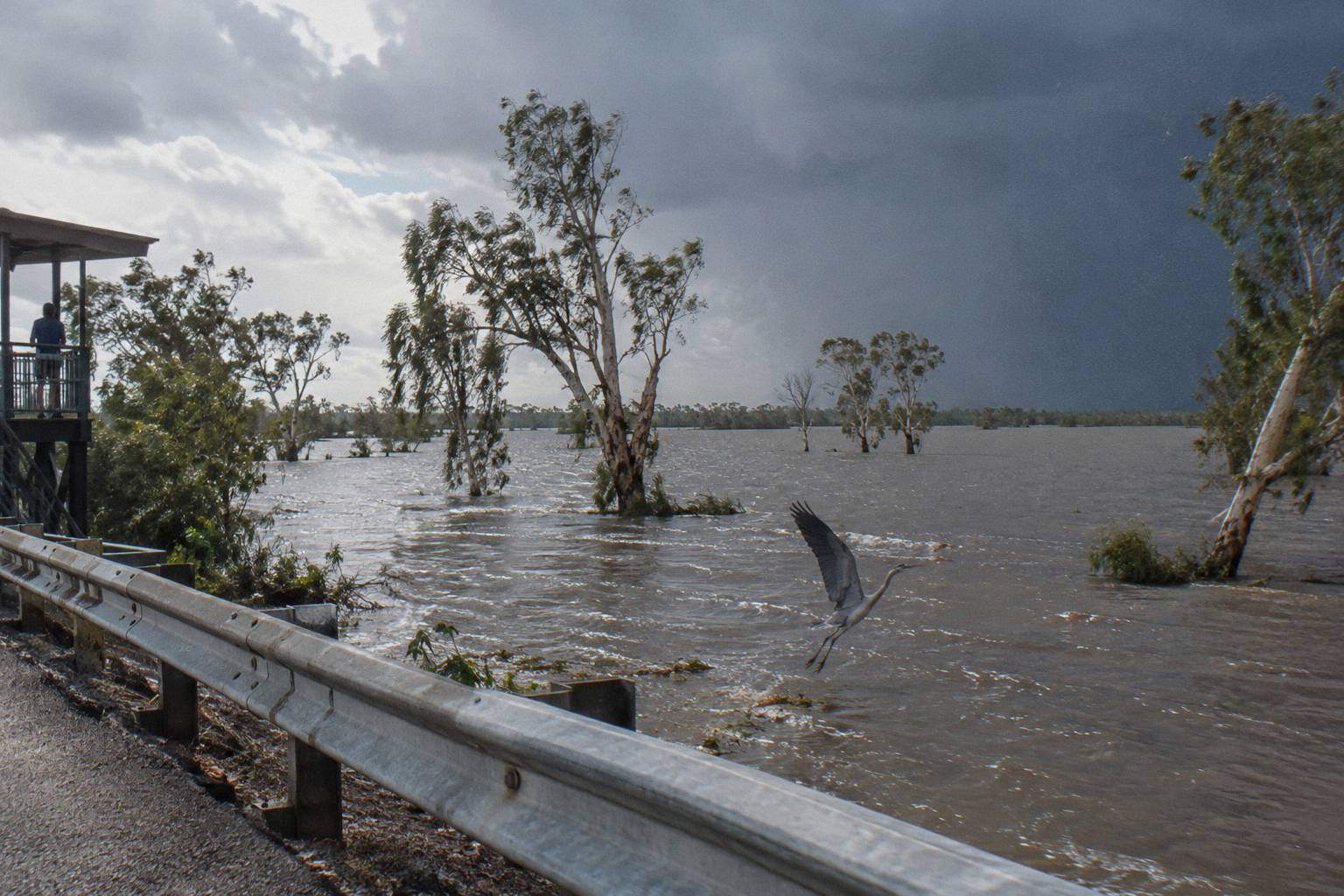
The drive in is a wildlife leg of its own. Spectacular's roughly 2 km of unsealed access road off the Arnhem Highway often shows water buffalo, cattle and wading birds, in the operator's own wording, and the road is reached past the Windows on the Wetlands Visitor Centre. Free parking is available at all three operators' jetties, so a slow arrival in your own car costs nothing but time.
Water buffalo are the headline here. They are feral animals in the Top End rather than native wildlife, but a buffalo standing in floodplain shallows beside the road is one of the defining images of the Adelaide River country, and Spectacular explicitly flags the access road as a place to see them, along with cattle and wading birds. The road is described as well-maintained unsealed gravel, and the operator says hire cars are fine on it, so there is no practical reason to rush the drive. The wading birds, unnamed in the sources, work the flooded margins in the same habitat, and the floodplain itself is the subject of the site's Adelaide River floodplain and mangroves guide for readers who want the landscape context.
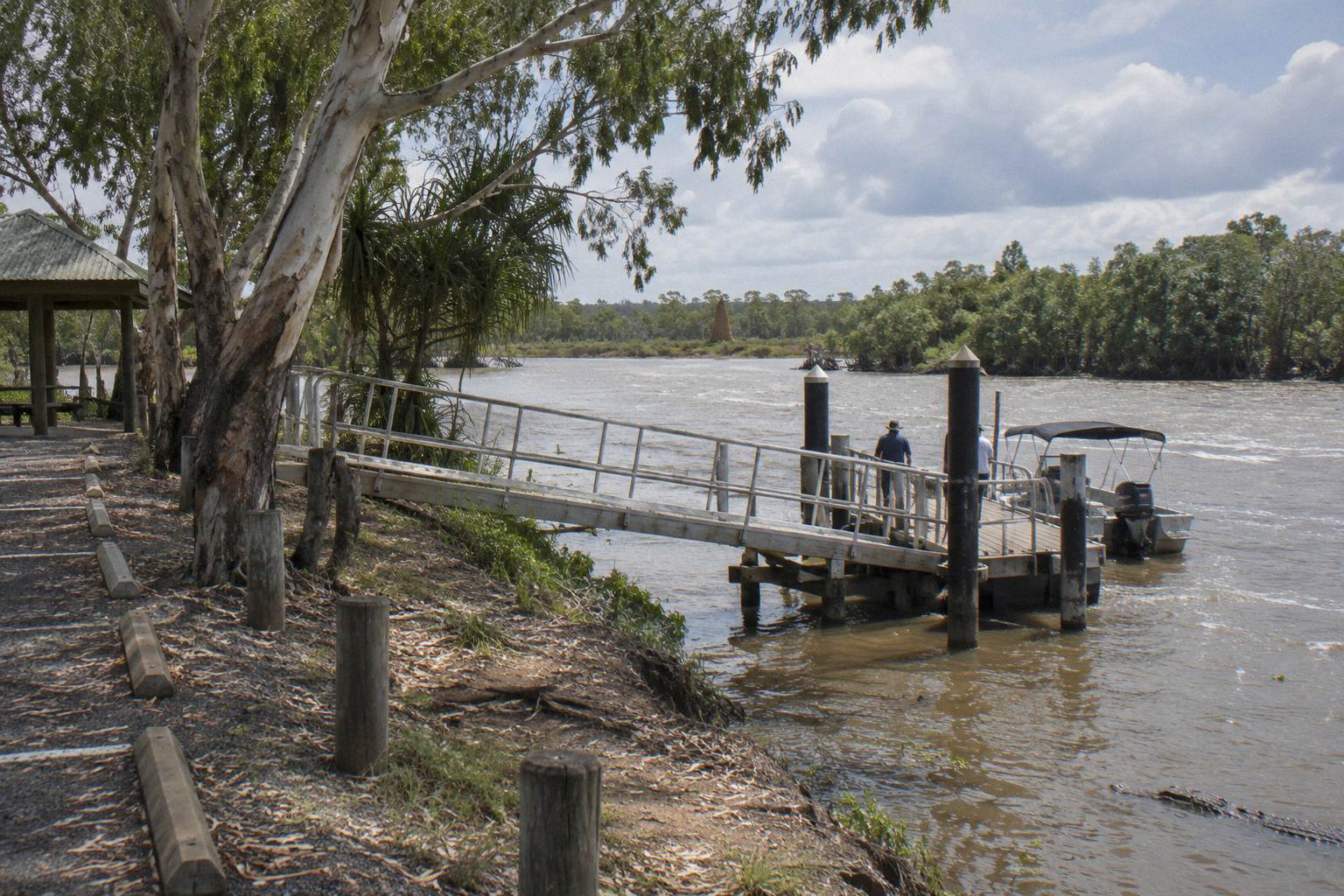
Each operator's approach sets a different scene. Spectacular's jetty sits on Beatrice Hill Farm at 2915 Arnhem Road, Middle Point, reached via the Windows on the Wetlands Visitor Centre, just under an hour from Darwin on the Arnhem Highway and just under two from Jabiru. The Adelaide River Queen and the Pathfinder vessels leave from 3220A Arnhem Highway, Wak Wak, at the Adelaide River Bridge, 100 m to the right of the highway, on a sealed road all the way, with a giant crocodile statue marking the car park; that operator gives the Darwin drive as 50 to 60 minutes and the drive from the centre of Litchfield National Park as 100 to 110 minutes. Adelaide River Cruises operates from Anzac Parade, Middle Point, about an hour or a little more from Darwin, its two published drive times differing slightly. No park pass is needed at any of them.
Arrival-time rules decide how much of this approach wildlife you actually get to absorb. Spectacular and Adelaide River Cruises ask passengers to arrive at least 15 minutes before departure; the Adelaide River Queen and Pathfinder ask for at least 30 minutes, and late arrivals may forfeit their tickets. Build the buffer into the drive rather than the car park. The buffalo do not care about your departure time, and neither do the wading birds, but the boat will leave without you.
For travellers without a car, day tours bundle the drive with the cruise and add floodplain stops of their own: Fogg Dam and Window on the Wetlands appear as inclusions on several Darwin day tours, including the Croc Bus, which pairs its cruise with Adelaide River Cruises and adds a Humpty Doo stop. The Darwin to Adelaide River guide covers the self-drive decision in full for readers still choosing.
Which Operator's Boat Suits A Wildlife Watcher Best?
Spectacular runs two undercover custom vessels, the multi-hull Croc-Cat1 with stadium-style seating and the smaller Wildcat, which goes further down the river; the Adelaide River Queen offers a lower air-conditioned deck and an open-air upper deck under a shaded canopy with individual seating and croc-proof glass; the Pathfinder vessels are open-air and carry up to 38 passengers. Adelaide River Cruises states no boat type or capacity.
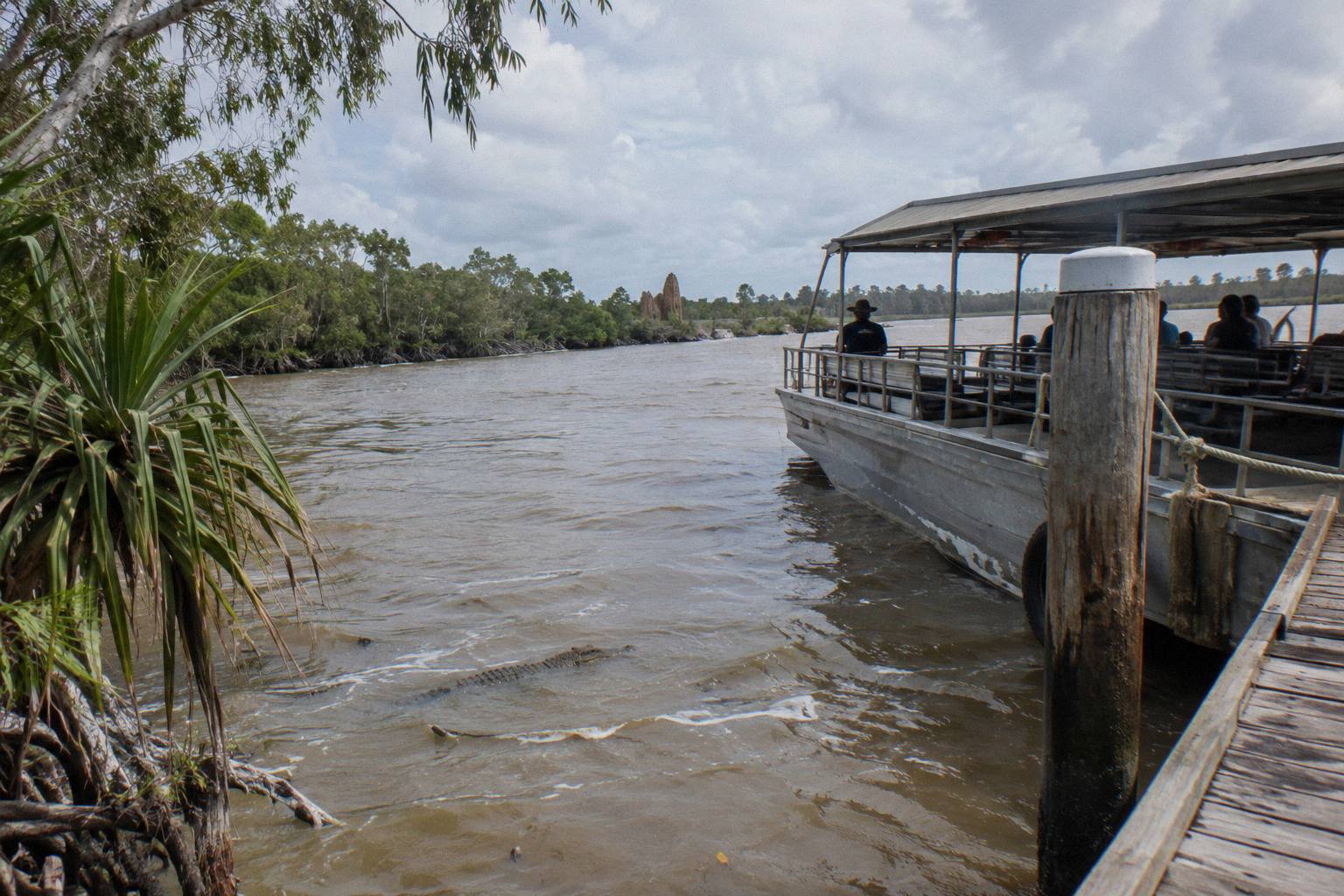
These differences are the real decision for anyone whose priority is wildlife rather than just crocodiles. An open-air deck, the Pathfinder's format, puts nothing between you and the air the eagles fly through, at the cost of exposure to Top End sun. An undercover vessel with stadium-style seating, Spectacular's Croc-Cat1, lifts sightlines and shelters camera gear. The Adelaide River Queen's two-deck arrangement splits the difference, with croc-proof glass on the viewing decks per the operator, and its 1pm daily departure makes it the only operator with a fixed midday slot. Spectacular and Adelaide River Cruises both list 9am, 11am, 1pm and 3pm departures daily, with Adelaide River Cruises' tour page listing operating months of May to October and Spectacular open year-round except Christmas Day. The Pathfinder is available daily with no times printed anywhere, so its schedule has to be confirmed at booking.
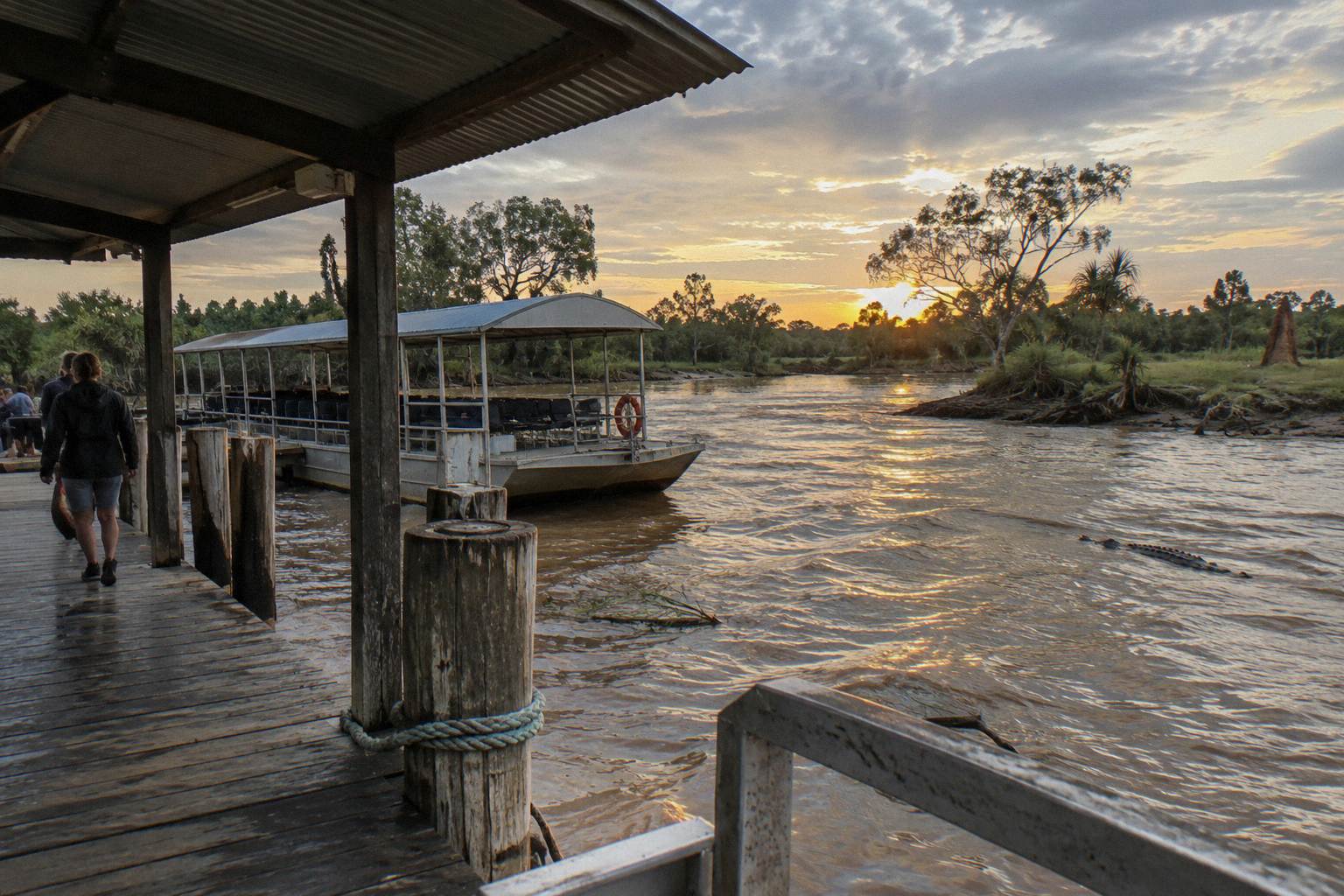
Capacity tells you about crowding, though only partially. The Pathfinder states up to 38 passengers per vessel. Spectacular states no capacity for either boat, and Adelaide River Cruises' own pages give two different capacity numbers, so this site prints none for either. Which of Spectacular's two vessels runs depends on the numbers booked, the operator says, so even the boat is not guaranteed in advance. What is guaranteed is the format: every river cruise is about one hour on the water, from every operator, and prices are close enough that the boat and the jetty should drive the choice more than the fare.
| Operator | Vessels and viewing | Adult price (operator's figure) | Departures stated |
|---|---|---|---|
| Spectacular Jumping Crocodile Cruises | Croc-Cat1 multi-hull, stadium seating, undercover; Wildcat, smaller, goes further down the river | A$55, child 4 to 14 A$40, family of 4 A$155 | 9am, 11am, 1pm, 3pm daily; year-round except Christmas Day |
| Adelaide River Queen | Lower deck air-conditioned; open-air upper deck, shaded canopy, individual seating, croc-proof glass | A$65, adult basis 14+, child 4 to 13 A$50 | 1pm daily; wet-season departures may be reduced |
| Pathfinder | Open-air vessels, up to 38 passengers each | A$75 single fare, age 1 and over | Available daily; no times printed |
| Adelaide River Cruises | Boat type and capacity not stated; opens with a guide safety briefing | A$58.50, child 1 to 14 A$42.55, family 2+2 A$159.55 | Operator's tour page lists 9am, 11am, 1pm, 3pm daily, May to October |
Prices are the operators' own published figures and can change; family rates and concessions vary by operator, with Adelaide River Cruises also publishing a pension-card concession of A$53.18 and Pathfinder running a kids promotion, one child under 13 free per full-paying passenger for travel between 5 October 2026 and 31 March 2027 unless it ends earlier, with limited seats, which should be checked to confirm it applies. This site never compares a cruise-only price with a day-tour price, because no day-tour price is stated anywhere; those sit on the booking pages.
What Should You Bring To Photograph River Wildlife?
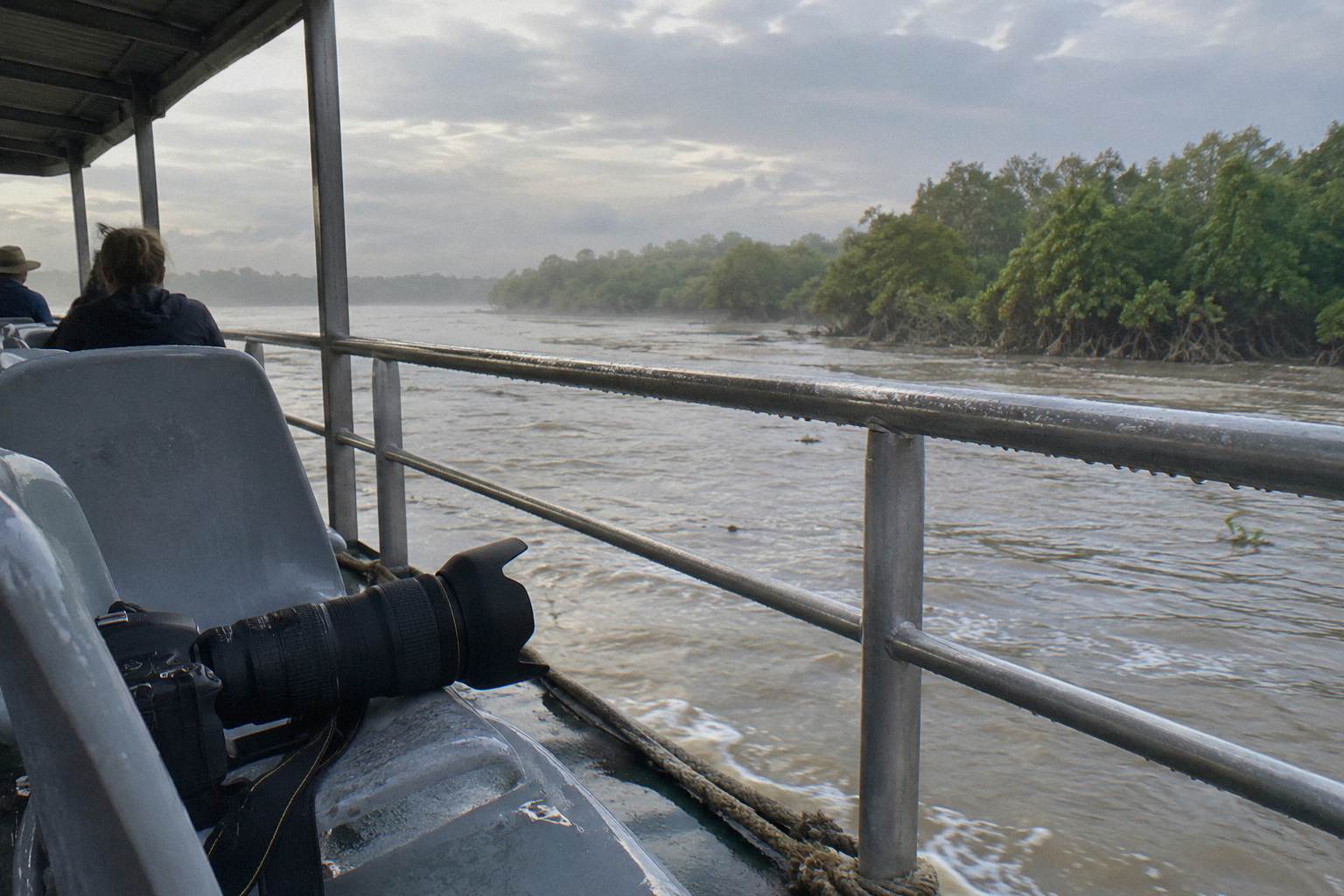
Spectacular asks passengers to bring water, sunscreen, a hat and a camera, with comfortable clothing and sturdy footwear, and explicitly encourages photography. Adelaide River Cruises suggests a camera or a charged phone, and its FAQ adds that a zoom lens suits wildlife across the floodplain while standard phone cameras suit the crocodile interactions because of the proximity, in the operator's own wording.
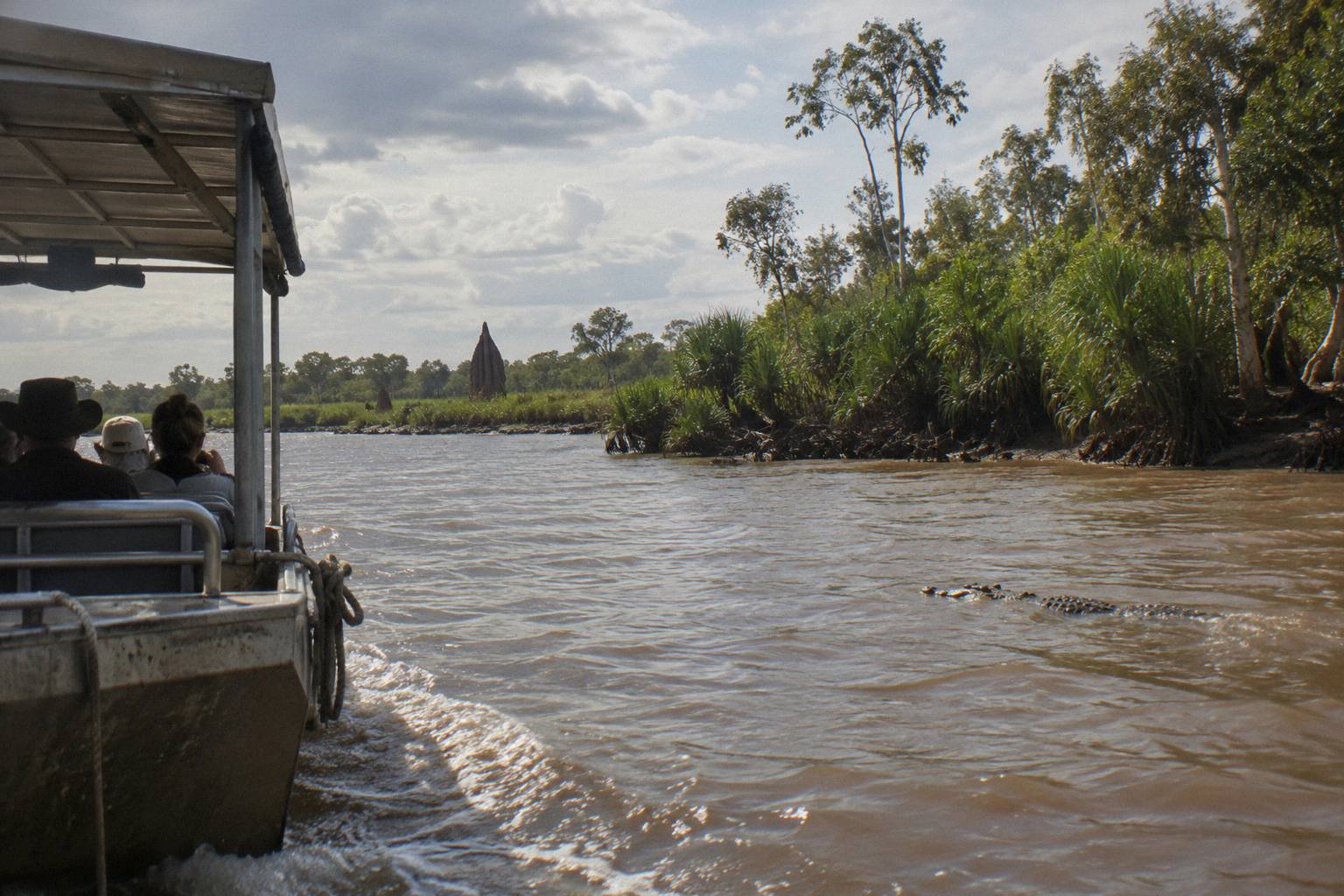
That camera advice is unusually specific and worth taking literally. The crocodiles come to the boat, so a phone handles them. The rest of the cast, sea eagles riding thermals, kites over the far bank, wading birds on the floodplain margins, buffalo across the water, keeps its distance, and that is where the zoom earns its place in the bag. The operator's phrasing draws exactly the right line between the two photographic situations a one-hour cruise contains, and it comes from a jetty operator rather than a camera shop, which is why this site repeats it with attribution rather than paraphrasing it into generic advice.
The onshore facilities shape the rest of the packing list. Spectacular has free tea and coffee on arrival, a kiosk with hot food and snacks, a pavilion with a 270-degree view, a gift shop, animal exhibits and toilets onshore, so a longer pre-boarding wait is comfortable. The Original/Queen operator has the licensed Stumpy Tail Coffee Stop, open 8am to 4pm daily in cruise season, plus a gift shop, toilets for checked-in passengers, a playground and shaded seating, a combination that suits families waiting out the 30-minute arrival window. Adelaide River Cruises has no cafe on site, per its FAQ, so water and snacks for the drive matter more on that itinerary. Toilets are onshore at every operator that states it, and Spectacular has no toilet on the boat itself.
The bird-photography specifics are covered in more depth on the photographing jumping crocodiles page, which treats gear and technique in full. The wildlife-specific addition here is patience at the edges of the day: arrive early, work the access road slowly, and stay after disembarkation if the schedule allows, because the pavilion at Spectacular and the shaded seating at the Queen's jetty are effectively free hides over the river.
Does The Time Of Year Change The Wildlife You See?
No operator and no NT source publishes a seasonal wildlife calendar for this river: no bird seasons, no shark seasons, no month-by-month sighting claims. That silence is worth stating once, plainly, because plenty of travel copy implies otherwise. What can be said is structural. The Dry Season, named as May to October in the Original/Queen operator's FAQ, is when all three operators are in full operation and when two of the three list their four-departure or daily schedules with confidence. Outside May to October, Spectacular continues to run its stated year-round schedule, the Adelaide River Queen warns that departures may be reduced and asks guests to confirm when booking, and Adelaide River Cruises' tour page lists May to October as its operating months, though that page still carries wording from an earlier season and should be checked live.
Booking pressure also follows the season. The Original/Queen operator recommends booking several days ahead in the Dry Season and says school holidays and long weekends often sell out earlier. Spectacular says plainly, "we do sell out." Adelaide River Cruises strongly recommends advance booking, especially June to August, notes that walk-ins are not guaranteed, and its FAQ sets a full refund for cancellations more than 24 hours before departure, with no refund inside 24 hours unless the operator cancels for weather or operations, in which case it offers a refund or reschedule. Whatever page you book through, read its terms: the Original/Queen operator prints no cancellation terms on its site and says the booking confirmation carries them.
Weather cuts both ways in a way wildlife watchers can use. Spectacular's remark that crocodiles often show a tactile response to rain is the only operator statement linking weather to animal behaviour on this river, and the NT Government's Be Crocwise advice, swim only where signs designate, camp at least 50 m from water, stand at least 5 m back when fishing, and never lean out of or dangle limbs over the side of a boat, applies on every bank regardless of season. For readers weighing the months in detail, the site's wet season versus dry season comparison covers the decision in full.
Is The Cruise Worth It Purely For The Wildlife?
For a general wildlife watcher, honest answer: it depends on the operator's setup, not on promises. The documented cast, two raptors, two crocodile species, three sharks and rays including a critically endangered sawfish, plus buffalo on the drive in, is rich for a one-hour cruise, but no operator guarantees any sighting beyond the crocodile feeding itself, and the Original/Queen operator states even crocodile behaviour can never be guaranteed.
The value case rests on three legs. First, the species list includes animals, the speartooth shark and largetooth sawfish especially, that carry conservation status most destinations cannot match. Second, the format concentrates wildlife viewing into a single hour with high banks, slow travel and a feeding program run under NT wildlife permits, which Spectacular says are held from NT Parks and Wildlife with an Animal Ethics Policy developed with that agency, and detailed feeding logs kept. The Original/Queen operator likewise states its feeding is done under NT wildlife permits and its crocodiles are 100% wild. Third, the surroundings are free extras: the access road's buffalo and wading birds, the floodplain drive, and the wetlands visitor centre on the Spectacular approach.
The value case against is equally honest. If the crocodiles are the only animals that perform on the day, the cruise is still a crocodile cruise, and a visitor who books expecting a guaranteed eagle display will be disappointed by a river that publishes no such thing. The recommended posture is to book the boat that fits your viewing style, treat everything beyond the crocodiles as a bonus with genuinely good odds given the documented resident list, and give the edges of the day, the drive in, the wait onshore, the same attention as the hour on the water.
| Wildlife moment | When it happens | What the sources promise |
|---|---|---|
| Crocodiles responding to the bait | During the one-hour cruise | Feeding under NT wildlife permits; "behaviour can never be guaranteed" |
| Sea eagles and whistling kites | Over the river during the cruise | Presence documented on Spectacular's list; no odds stated |
| Speartooth shark and largetooth sawfish | In the river's waters | Presence and conservation status stated; no sighting claim |
| Buffalo, cattle and wading birds | On the roughly 2 km access road to Spectacular | "Often shows," per the operator |
| Floodplain birdlife from the pavilion | Before and after the cruise | 270-degree view stated; species not itemised |
Cost anchors, all the operators' own figures: A$55 adult with Spectacular, A$58.50 with Adelaide River Cruises, A$65 on the Adelaide River Queen, A$75 on the Pathfinder, with child and family rates varying by operator and prices subject to change. The jumping crocodile cruise cost and value guide unpacks the money side in full, including the family math. Readers who want the full-day floodplain bundle, cruise plus Fogg Dam, Window on the Wetlands and lunch stops, will find those inclusions on the day-tour listings, where prices sit on the booking pages rather than in any printed figure.
The wildlife reader's bottom line: this is one of the few one-hour wildlife experiences in Australia where the supporting cast includes a critically endangered sawfish, and the right way to sell it is exactly the way the river's own operators do, with a species list and no promises. For a wider comparison of what lives in these waters, the Adelaide River wildlife and birds blog post restates the list in question-and-answer form.
Common Questions About Adelaide River Wildlife
What Wildlife Can You See On The Adelaide River Besides Crocodiles?
Spectacular's published wildlife list names white-bellied sea eagles, whistling kites, freshwater crocodiles, bull sharks, black flying-fox, the endangered speartooth shark and the critically endangered largetooth sawfish, and its access road often shows water buffalo, cattle and wading birds. No sighting of any of them is guaranteed.
Are There Freshwater Crocodiles In The Adelaide River?
Yes, the freshwater crocodile, Crocodylus johnstoni, appears on Spectacular's wildlife list as a separate species from the jumping saltwater crocodile, Crocodylus porosus. Both are protected by law and neither can be taken or interfered with without a permit.
Are There Sharks In The Adelaide River?
Yes, three appear on the operator's list: bull sharks, the endangered speartooth shark and the critically endangered largetooth sawfish. The sources state their presence and conservation standing only, with no population figures or sighting odds for this river.
What Birds Will You See On A Jumping Crocodile Cruise?
The documented raptors are the white-bellied sea eagle and the whistling kite, plus unnamed wading birds along the floodplain and access road. No bird counts or seasonal patterns are published by any operator.
Does The Time Of Day Or Season Affect Wildlife Sightings?
No operator or NT source publishes morning-versus-afternoon or month-by-month wildlife claims for this river. The only stated weather-behaviour link is Spectacular's remark that crocodiles often show a tactile response to rain.
Is A Jumping Crocodile Cruise Good For Bird Watching?
It can be, with the right expectations. The boat travels slowly through sea eagle and kite habitat for about an hour, photography is encouraged, and Spectacular suggests arriving with time for the access road, which often shows wading birds. But the river publishes no bird list beyond those species and promises nothing.