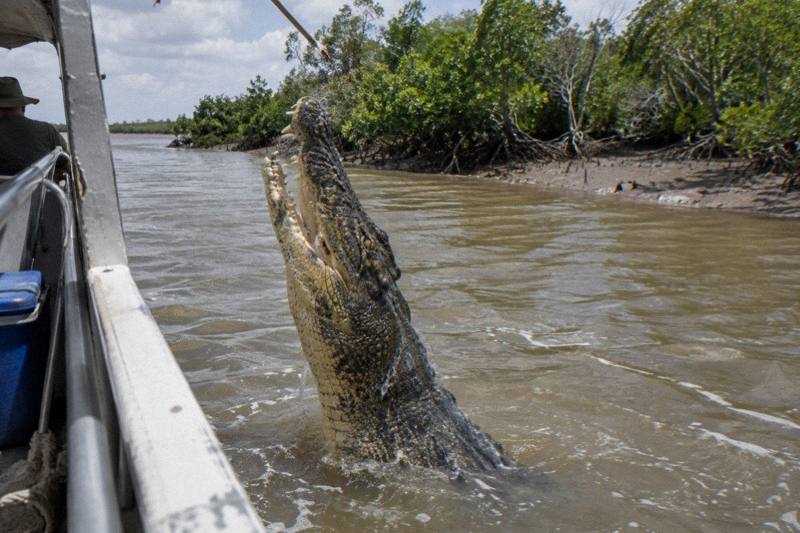
Is The Adelaide River The Most Crocodile-Infested River In Australia?
No official ranking of Australian rivers by crocodile count exists. Here is what is actually known about saltwater crocodile numbers in the NT, the Adelaide River, and why the river feels so crocodile-dense.
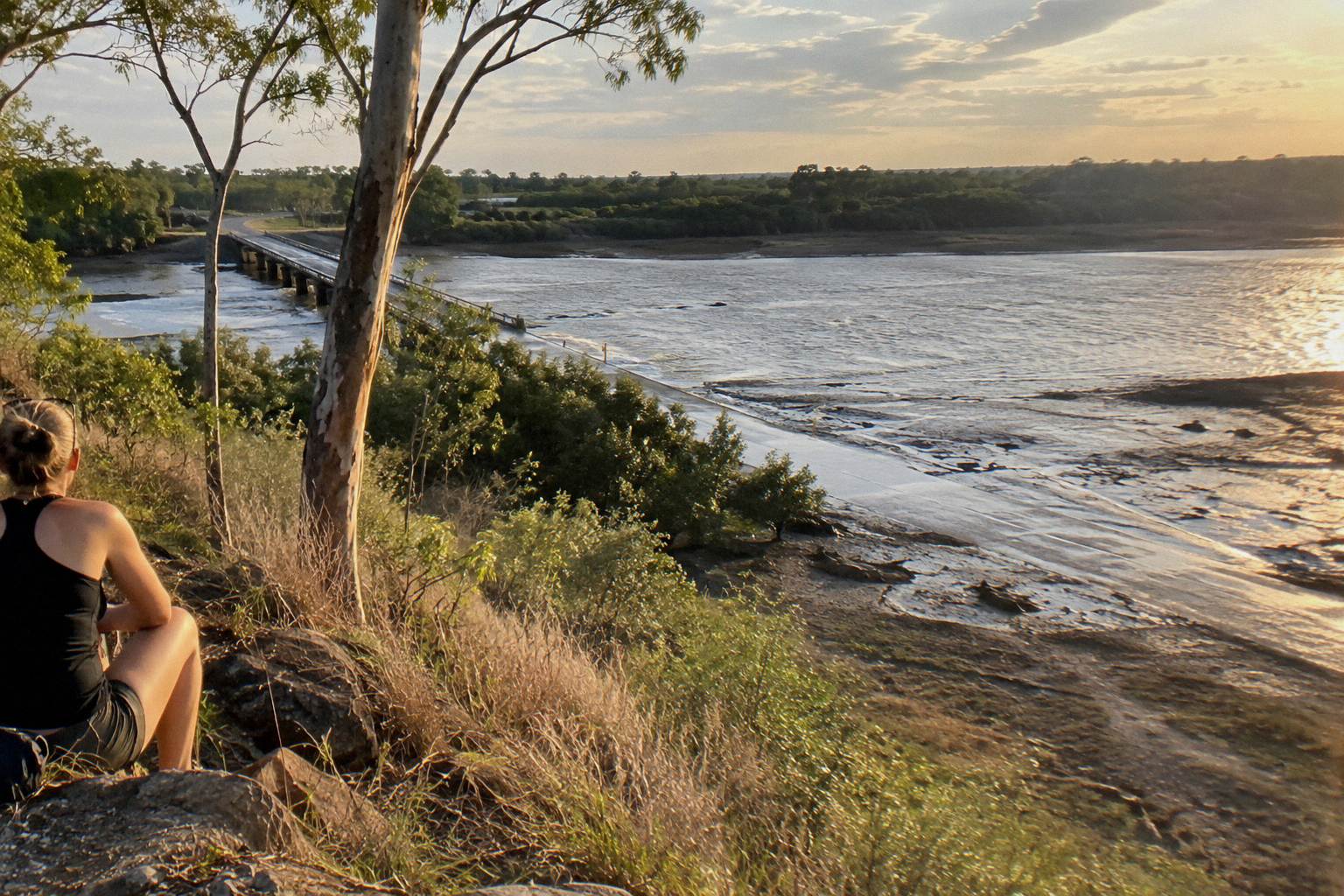
No. There is no official ranking of Australian rivers by crocodile density anywhere in the sources, so no river, including the Adelaide River, can honestly be crowned Australia's "most infested." What is documented is that about 100,000 saltwater crocodiles lived in the Northern Territory wild in 2017, and the NT Government states the NT holds more saltwater crocodiles than Queensland or Western Australia.
That gap between the question people ask and the data that exists is the whole story of this page. Search for the most crocodile-infested river in Australia and you will find confident-sounding claims, but the government material that actually tracks these animals does not publish a league table of rivers. The NT Government's crocodile pages, the most authoritative source available, give territory-wide figures and species biology, and stop there. Anything more precise about one river versus another is somebody's guess dressed up as a statistic.
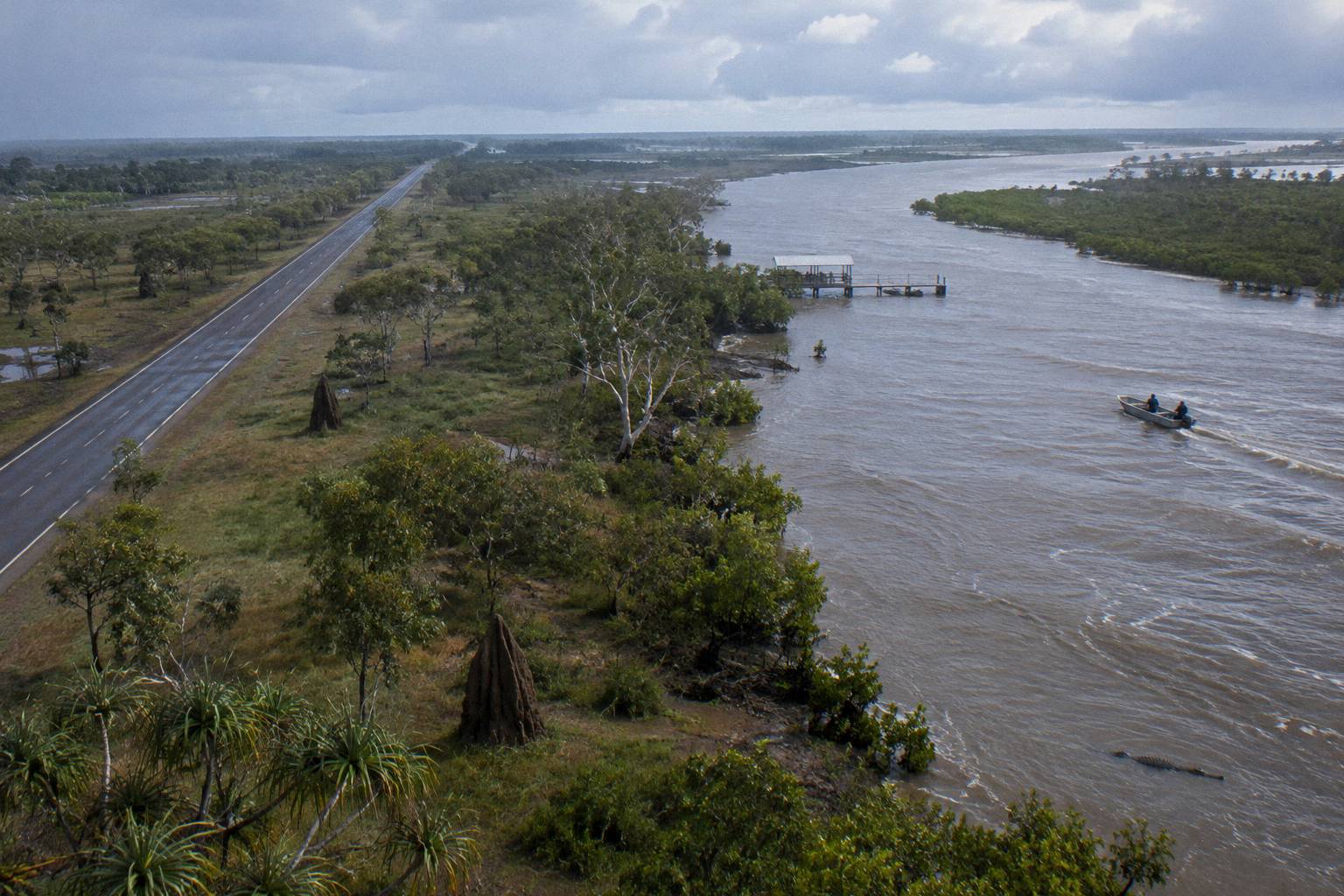
What can be said with confidence is why the Adelaide River carries its reputation. It sits in the Top End, the region the NT Government describes as containing, in any body of water, large and potentially dangerous crocodiles. It is a tidal river fringed by floodplain and mangrove, the habitat saltwater crocodiles use for nesting and hunting. And it is the one river in Australia where three separate cruise operators run daily jumping crocodile tours, which means visitors see the resident animals on an almost guaranteed basis, an experience no other river offers at the same scale. If you want to understand the species itself, the guide to the crocodiles of the Adelaide River covers the biology in depth.
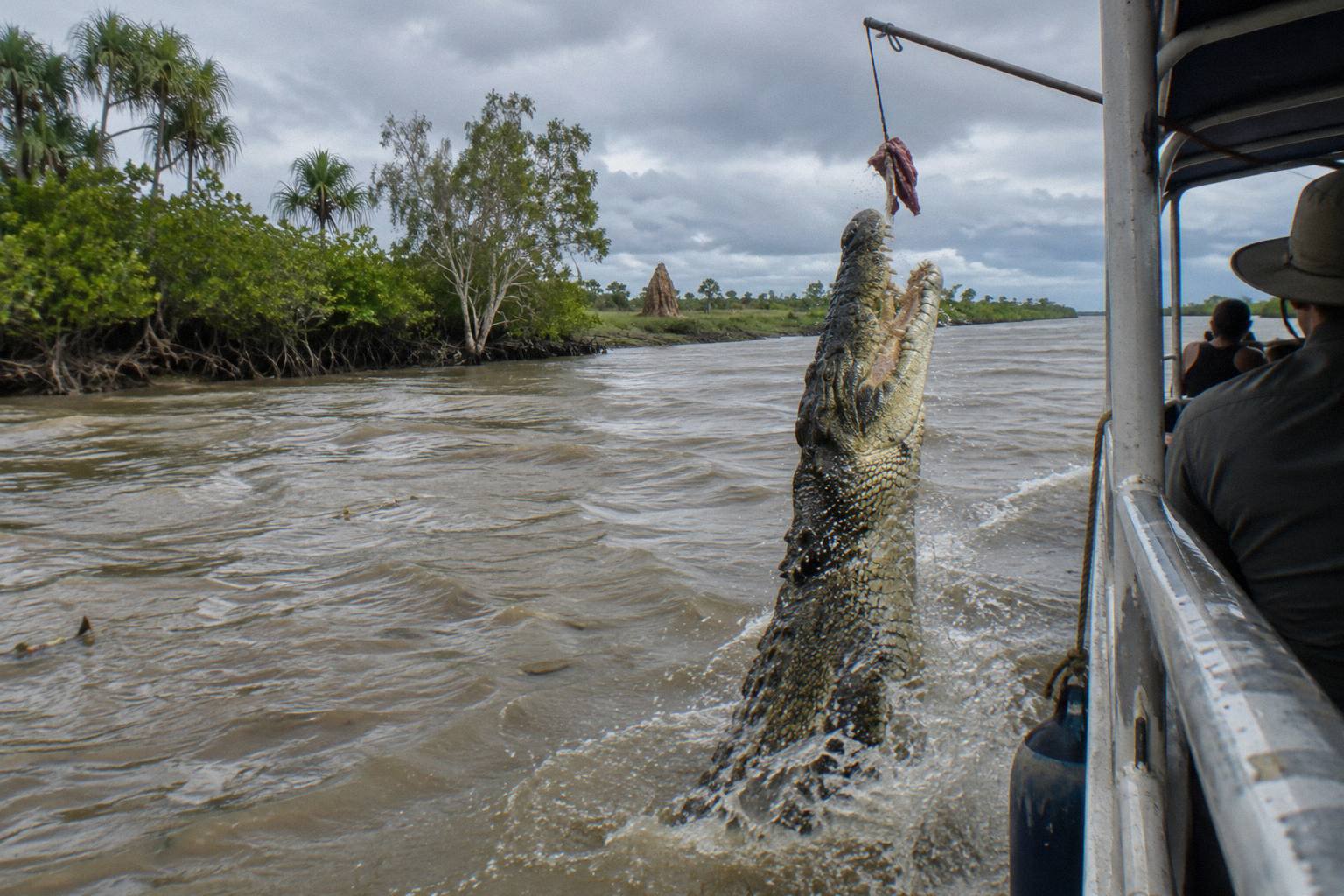
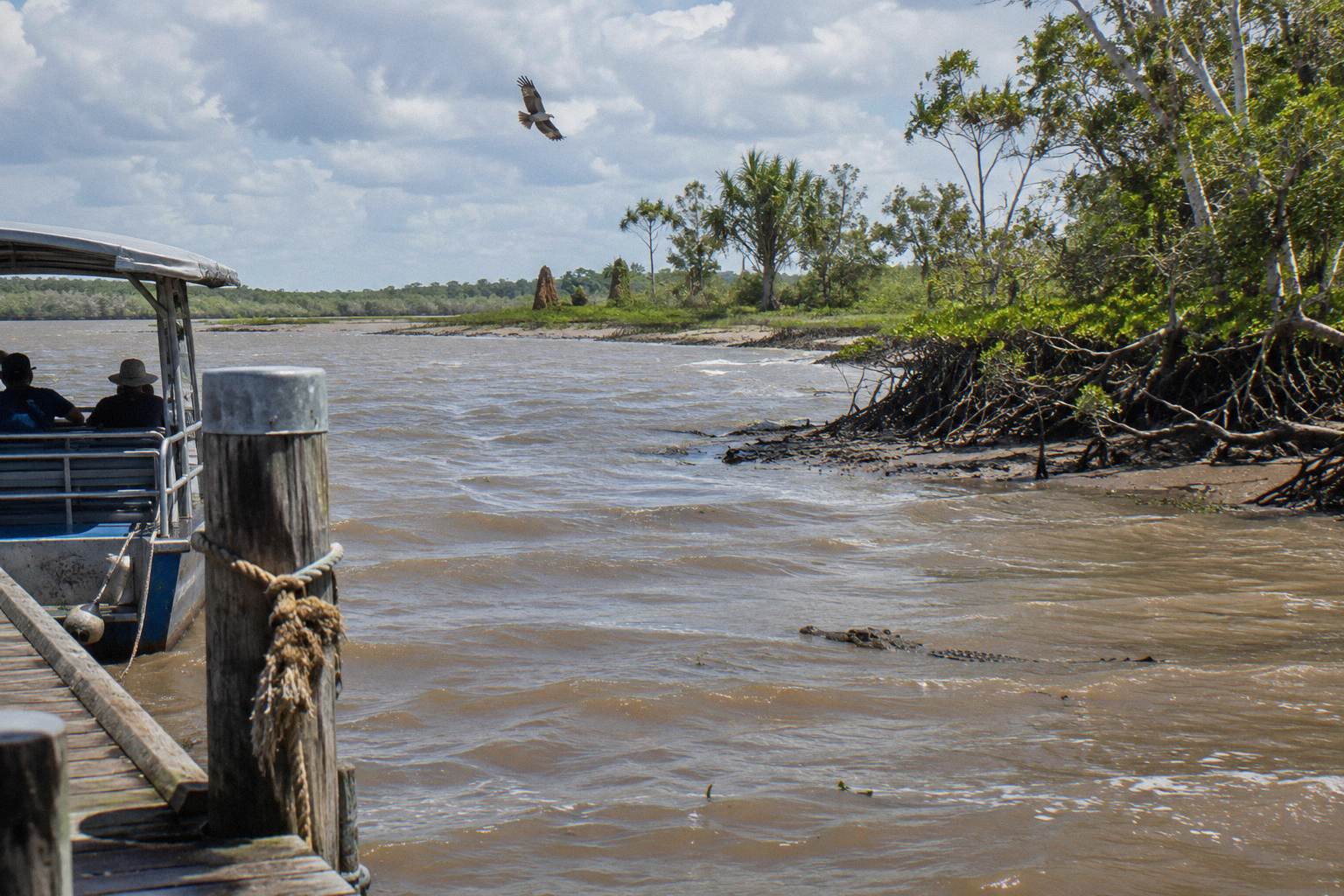
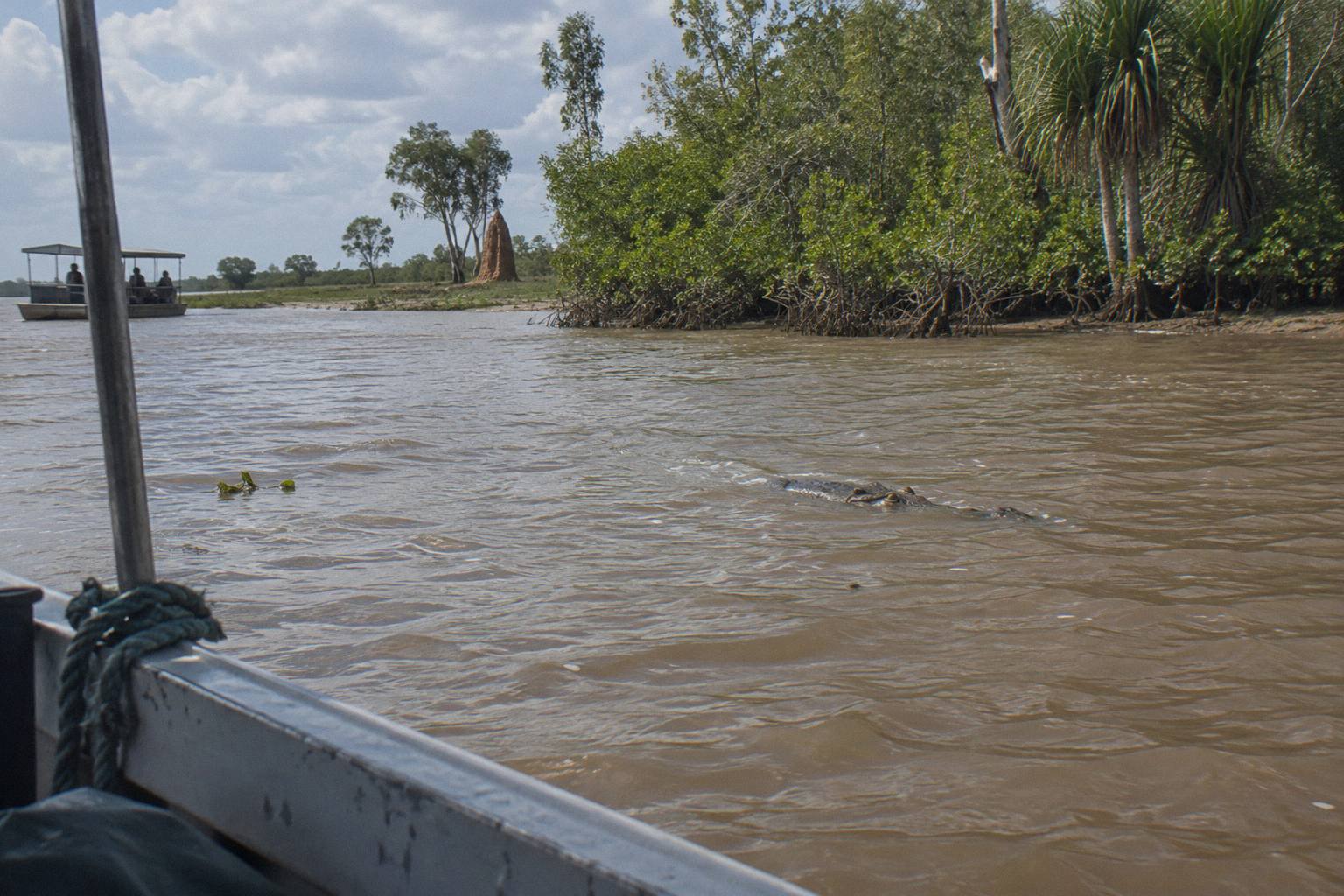
So the feeling that this river is wall-to-wall crocodiles comes from visibility, not from a census. The crocodiles here are wild animals that live along the river year-round, and the cruises know where their territories are. That produces close sightings on almost every departure, which the operators themselves frame carefully: the Original/Queen operator says "We see crocodiles on almost every tour... behaviour can never be guaranteed."
If reading about the population has you ready to see the animals, these are the three ways to do it, from a cruise-only hour on the water to a Darwin pickup with transport included.
How Many Saltwater Crocodiles Live In The Northern Territory?
About 100,000 saltwater crocodiles lived in the Northern Territory wild in 2017, a population the NT Government describes as thought to be at or approaching pre-hunting levels. The same NT pages state there are more saltwater crocodiles in the NT than in Queensland and Western Australia, though no combined national figure is given. That 2017 number is the most recent territory-wide count in the official sources.
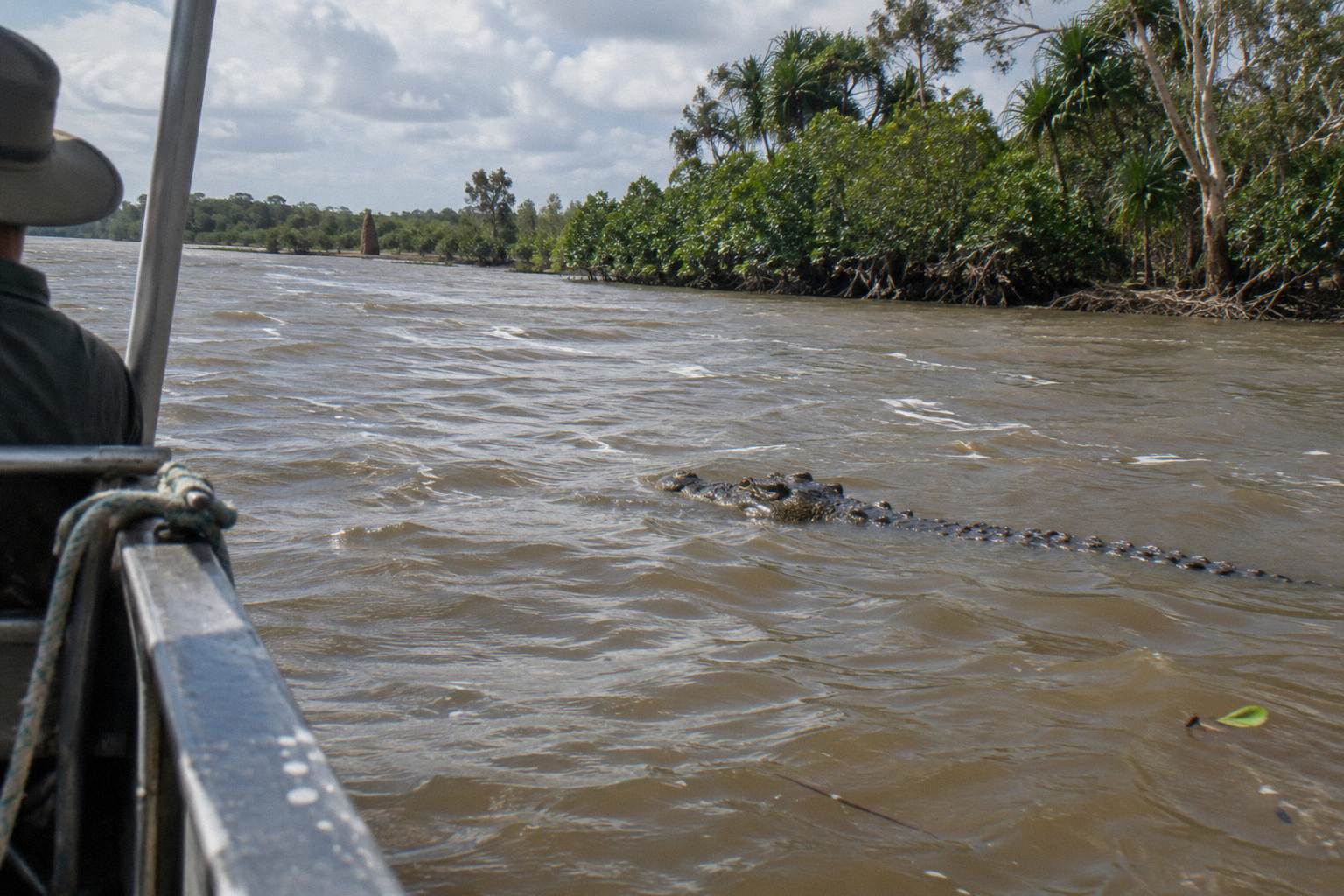
That figure needs its history to make sense. The saltwater crocodile was almost extinct in the 1970s after decades of hunting, and full legal protection followed. The population then recovered to the point where the NT Government now describes it as widespread and no longer considered threatened. A species that was nearly wiped out within living memory now numbers around one hundred thousand animals in one territory alone, which is why the Top End's waterways carry the warnings they do.
The recovery is also why "infested" is the wrong frame, even if it is the word everyone uses. These are not animals that have overrun a river; they are animals that have returned to their historic range after near-elimination. Both NT species, the saltwater crocodile Crocodylus porosus and the freshwater crocodile Crocodylus johnstoni, are protected by law, and you cannot take or interfere with a crocodile without a permit, per the NT Government's conservation pages. The jumping-cruise crocodiles on the Adelaide River are saltwater crocodiles, the larger of the two species.
| NT saltwater crocodile fact | Figure (NT Government) |
|---|---|
| Territory-wide wild population, 2017 | About 100,000 |
| Status of that population | Thought to be at or approaching pre-hunting levels |
| Comparison with other states | More saltwater crocodiles in the NT than Queensland or Western Australia |
| Maximum length | Can grow up to 6 m |
| Nesting season | November to May, average about 50 eggs |
| Protection status | Protected by law; permit needed to take or interfere |
One record in the NT material puts the species' potential in perspective: a 6.7 m saltwater crocodile was netted on the Mary River in 1974, and the biggest ever trapped was just over 5 m. The Mary River, incidentally, is another Top End river that gets called the most crocodile-dense in Australia, which is exactly the kind of claim no official count supports.
Wondering whether it is worth going out to see them for yourself?
Why The Adelaide River Feels More Crocodile-Dense Than Any Census Could Show
The Adelaide River's reputation comes from visibility rather than counted numbers: three separate operators run daily jumping crocodile cruises on it, the crocodiles are wild residents with established territories, and the tours know where to find them. That produces sightings on almost every departure, so visitors experience a river that feels saturated with crocodiles whether or not any census would rank it first.
Think about what a census would even measure. Crocodiles move along a tidal river, between the estuary, the channels and the floodplain, with the seasons and the tides. A count taken on one day at one water level would not describe the river on any other day. The NT Government publishes a territory-wide estimate because that is the level at which counting is reliable; it does not pretend to know how many animals are in any single river, and nor does anyone else in the official record.
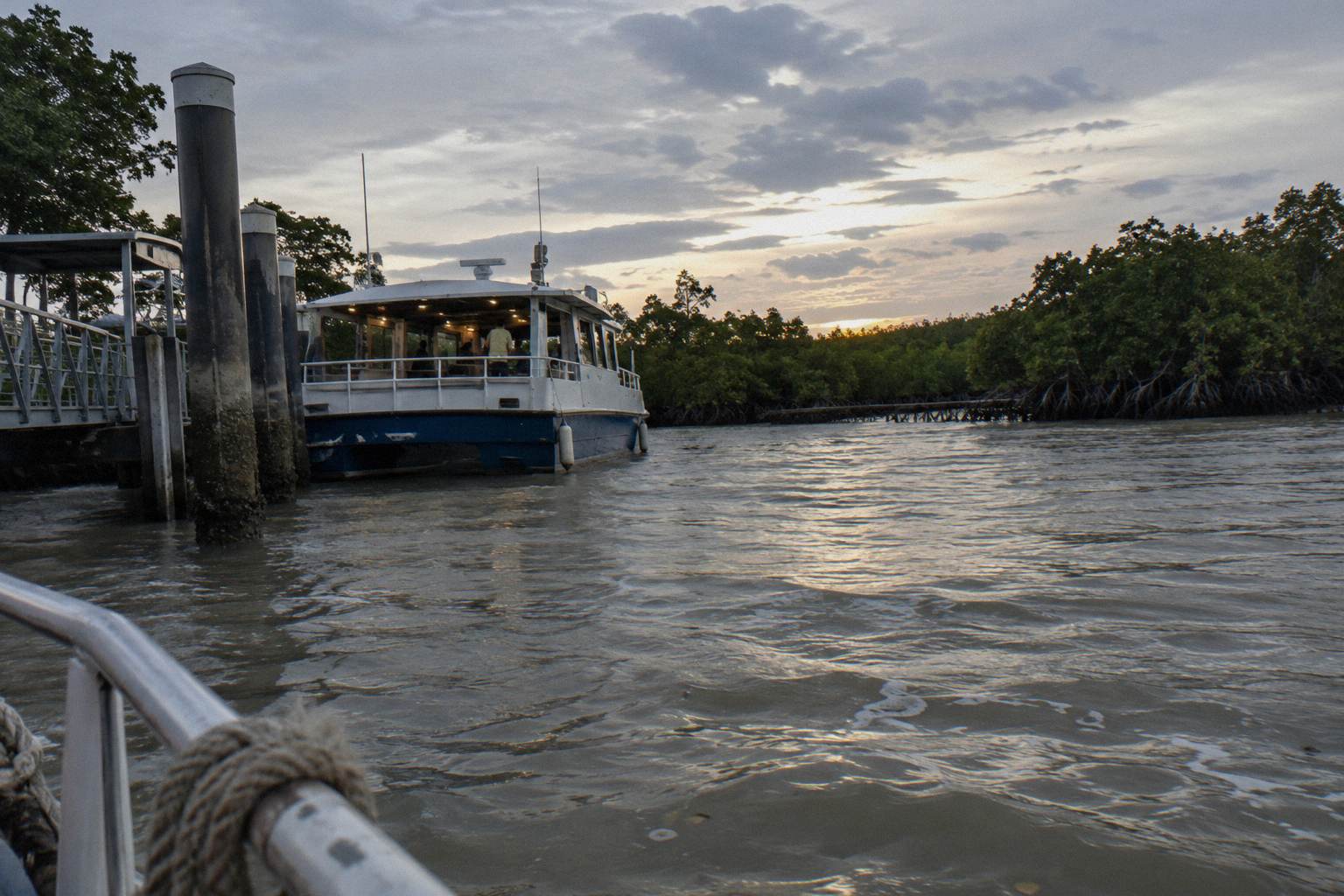
What the Adelaide River has instead of a number is infrastructure. Three river operators run the cruises, each from its own jetty: Spectacular Jumping Crocodile Cruises, Indigenous-owned and operated by Arirriki Aboriginal Corporation; Adelaide River Queen Cruises, which also trades as The Original Jumping Crocodile Cruises; and Adelaide River Cruises. Their skippers work the same stretch of water every day and learn where the resident crocodiles hold territory. When a cruise boat slows near a known animal's patch and offers a taste of buffalo meat under NT wildlife permits, the crocodile rises, and the passengers see a six-metre-capable reptile at arm's reach.
That is the mechanism behind the "most infested" feeling. It is not that the river holds more crocodiles per kilometre than anywhere else, it is that nowhere else concentrates the opportunity to see them. For more on what the experience is actually like, the guide to what to expect on a jumping crocodile cruise walks through the hour on the water.
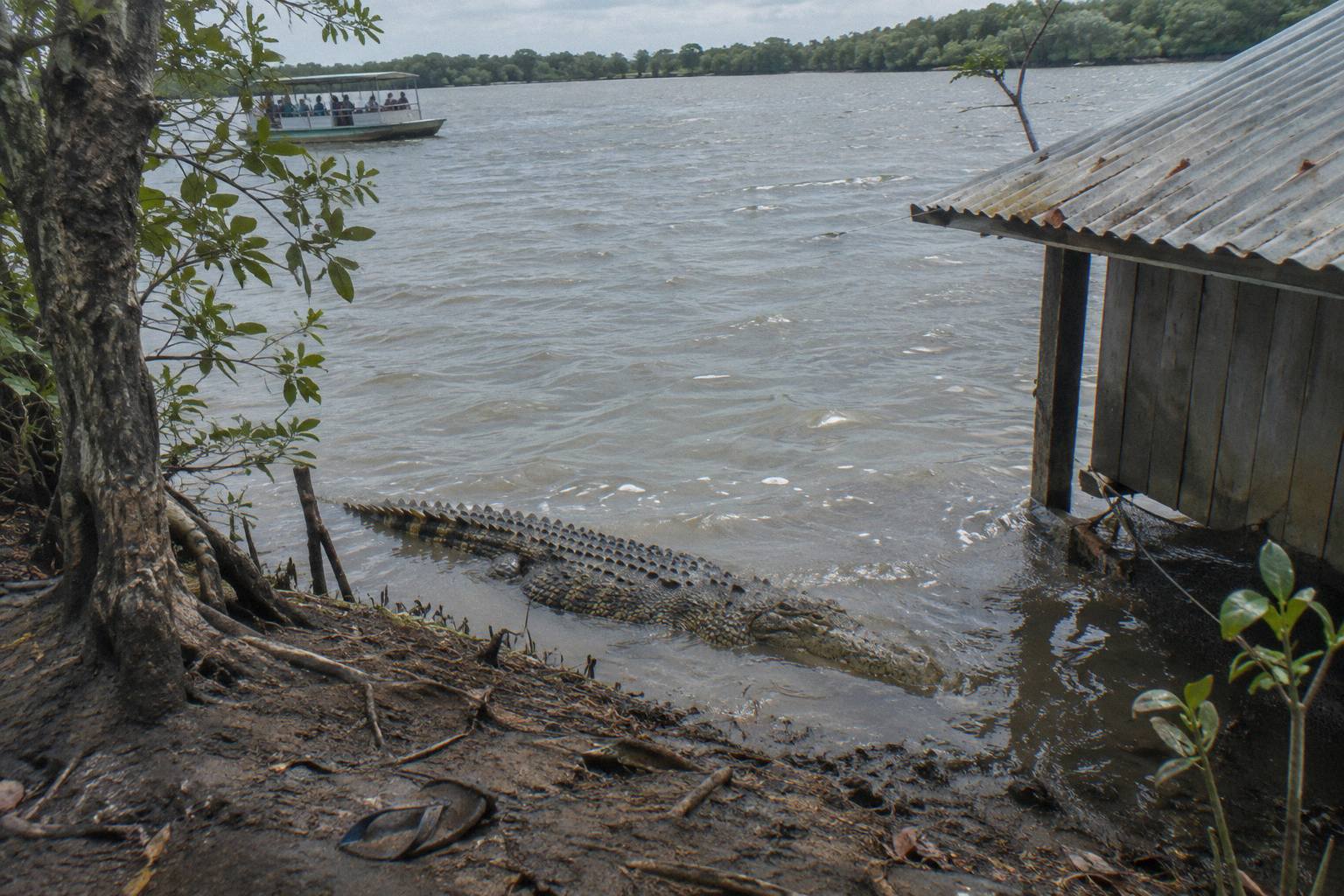
There is also a genuine ecological reason the river suits crocodiles. Nests are built from November to May and average about 50 eggs, and the Adelaide River's floodplain and mangrove fringe offer exactly the nesting and nursery habitat the species uses. A river that feeds, shelters and breeds a top predator will carry a stable resident population, which is all the cruises need.
Which Australian Regions Hold The Big Saltwater Crocodile Populations?
Official material names three regions: the Northern Territory, Queensland and Western Australia, with the NT Government stating plainly that there are more saltwater crocodiles in the NT than in the other two. It gives no combined national total and no state-by-state breakdown, so any precise figure comparing the three, or ranking rivers inside them, is not supported by the official sources.
The species' range is the frame here. Saltwater crocodiles live across northern Australia's warm waters, and each jurisdiction runs its own management and monitoring programs, which is why a single national river ranking has never existed. The NT's count is the one the official pages state with a number, the roughly 100,000 animals counted in 2017, and even that is a territory-wide estimate rather than a river-byriver tally. Queensland and Western Australia both hold wild populations, and their rivers and estuaries produce their own well-known crocodile country.
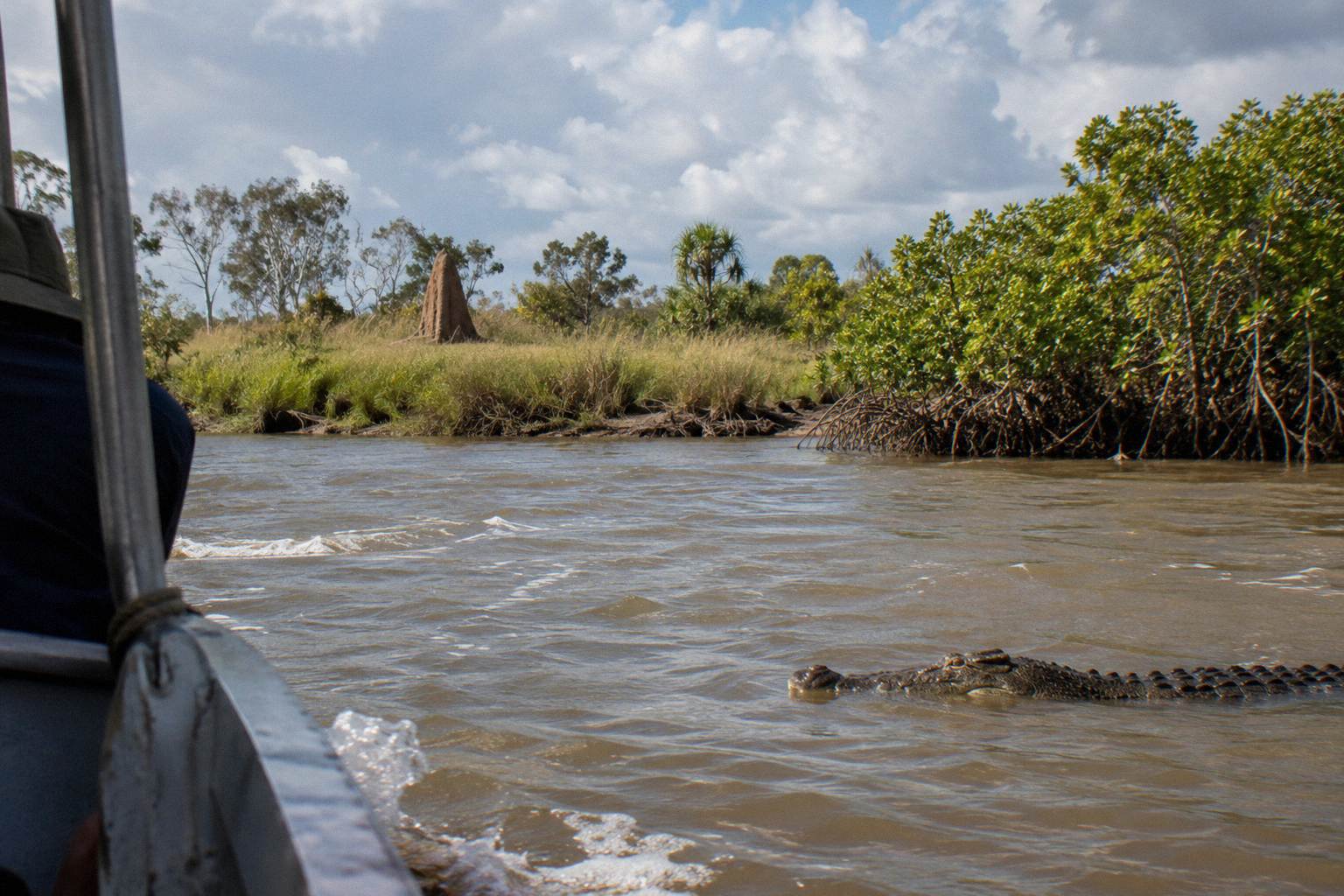
What the comparison does establish is that the Adelaide River flows through the strongest of the three populations. A visitor choosing where in Australia to see wild saltwater crocodiles is, on the official numbers, choosing the NT, and the Adelaide River is the NT's most accessible crocodile river from Darwin. That accessibility matters: the drive from Darwin is about an hour or a little more depending on which operator's jetty you head for, which puts the territory's signature wildlife experience within a half-day return trip of the capital.
| Region | What the official sources state |
|---|---|
| Northern Territory | About 100,000 wild saltwater crocodiles in 2017, at or approaching pre-hunting levels |
| Queensland | Holds wild saltwater crocodiles; fewer than the NT, no figure given |
| Western Australia | Holds wild saltwater crocodiles; fewer than the NT, no figure given |
| National total | Not stated in any official source |
| River-by-river counts | Do not exist in the sources for any river, including the Adelaide River |
This is also why the related question, whether there are saltwater crocodiles in the Adelaide River, has a firmer answer than the "most infested" one. Presence is observable and documented; density rankings are not.
Why No Official Ranking Of Australian Rivers Exists
Counting crocodiles river by river is impractical: the animals move across tidal channels, floodplains and estuaries with tides and seasons, they spend long stretches underwater, and monitoring programs are run jurisdiction-wide rather than per waterway. No government agency publishes an "infested river" league table, so every such ranking you encounter online is unofficial, method-free and unverifiable.
The biology explains the counting problem. Large crocodiles can stay underwater for up to one hour, with a heart rate of 2 to 3 beats a minute, and for short bursts they can move faster than humans on land. An animal that can vanish for an hour at a time, in water the colour of tea, along a river system braided into floodplain channels, is not something you count from a bank. Population estimates come from spotlight surveys and nest counts aggregated across survey sites, which is how the NT arrives at a territory-wide figure with confidence and never at a per-river one.
The word "infested" itself deserves a look. It treats the crocodiles as a pest problem, which is the exact framing the last century of policy got wrong. Hunting drove the species to near-extinction in the 1970s; protection and management brought it back. The NT Government's position is that the saltwater crocodile is now widespread and no longer considered threatened, and both NT species are protected by law, per the NT Government's crocodile pages. A river full of crocodiles is not infested; it is functioning.
None of this stops the question being a fair one for a traveller to ask, because what the asker really wants to know is simpler: will I see crocodiles if I go? On the Adelaide River, with three daily cruise operations working known territories, the practical answer is far better than any census could promise. The deeper dive into why crocodiles jump out of the water on the cruise explains the feeding behaviour behind those sightings.
Are The Jumping Cruise Crocodiles Wild Or Fed Captives?
They are wild. The operators state that their crocodiles are 100% wild animals living along the river, and the feeding that produces the famous vertical lunge is done under NT wildlife permits, offering only a taste of meat rather than a diet. No operator publishes a jump height, jump distance or how-close figure, and no crocodile is named, tracked or owned by any cruise company.
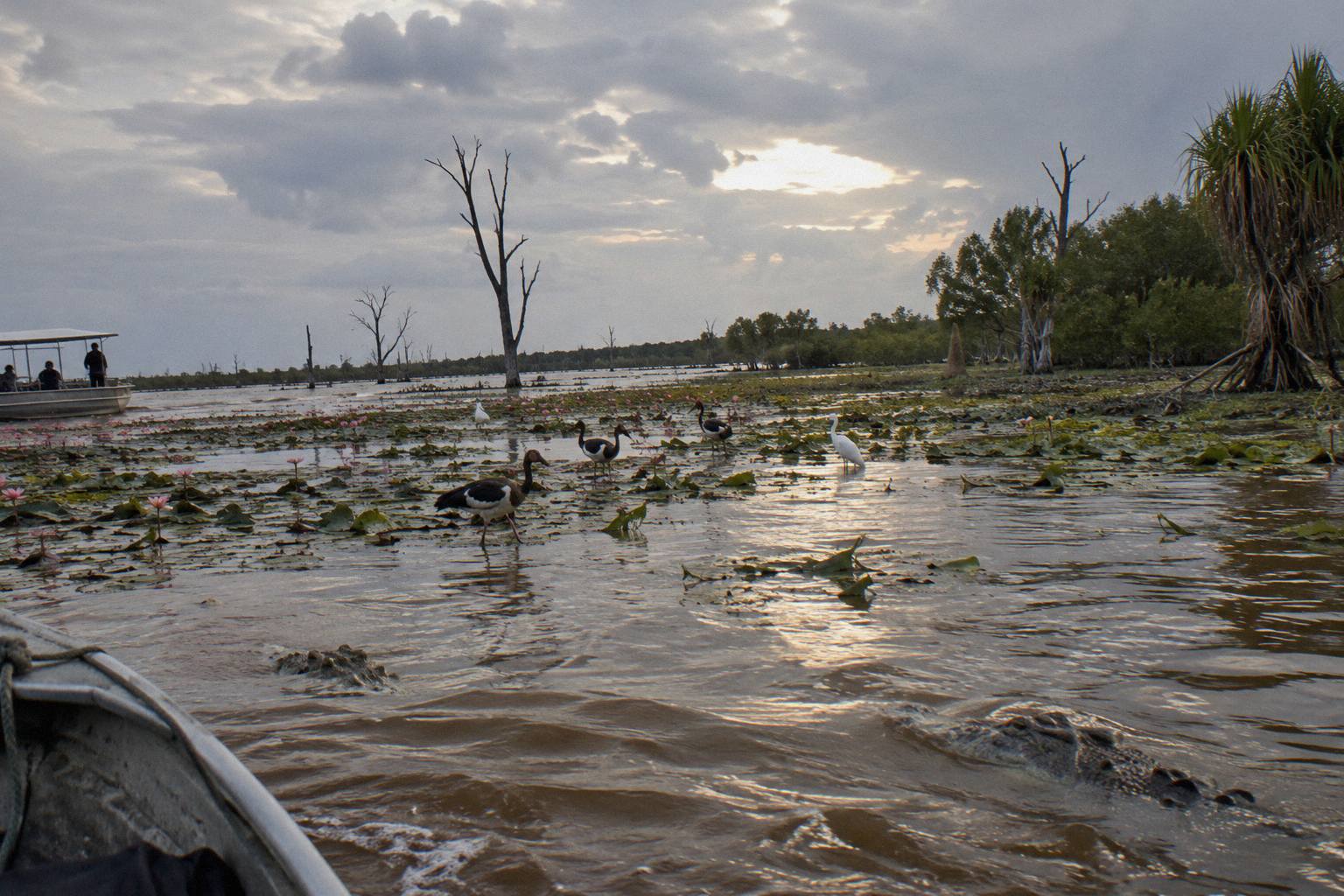
This matters to the "infested" question because it is the difference between a wildlife experience and a zoo. The crocodiles that rise beside the boats live and hunt in the river independently of the tours. The Original/Queen operator says its feeding is done under NT wildlife permits and its crocodiles are 100% wild; Spectacular says its staff hold Wildlife Permits from NT Parks and Wildlife, that its Animal Ethics Policy was developed with NT Parks and Wildlife, that the crocodiles are offered a taste of buffalo meat, that there is no direct contact with the animals, and that detailed feeding logs are kept.
The boats differ, and the choice between them shapes what you see. Spectacular runs two custom vessels, the multi-hull Croc-Cat1 with stadium-style seating and the smaller Wildcat, which travels further down the river; which vessel runs depends on the numbers booked, and both are undercover. The Adelaide River Queen has an air-conditioned lower deck and an open-air upper deck under a shaded canopy with croc-proof glass. The Pathfinder vessels are open-air and take up to 38 passengers each, a capacity stated for the Pathfinder only. Adelaide River Cruises runs a one-hour experience that opens with a safety briefing from the guides on crocodile behaviour and the rules, and does not publish a comparable capacity figure; its own pages give two different numbers, so none can be printed.
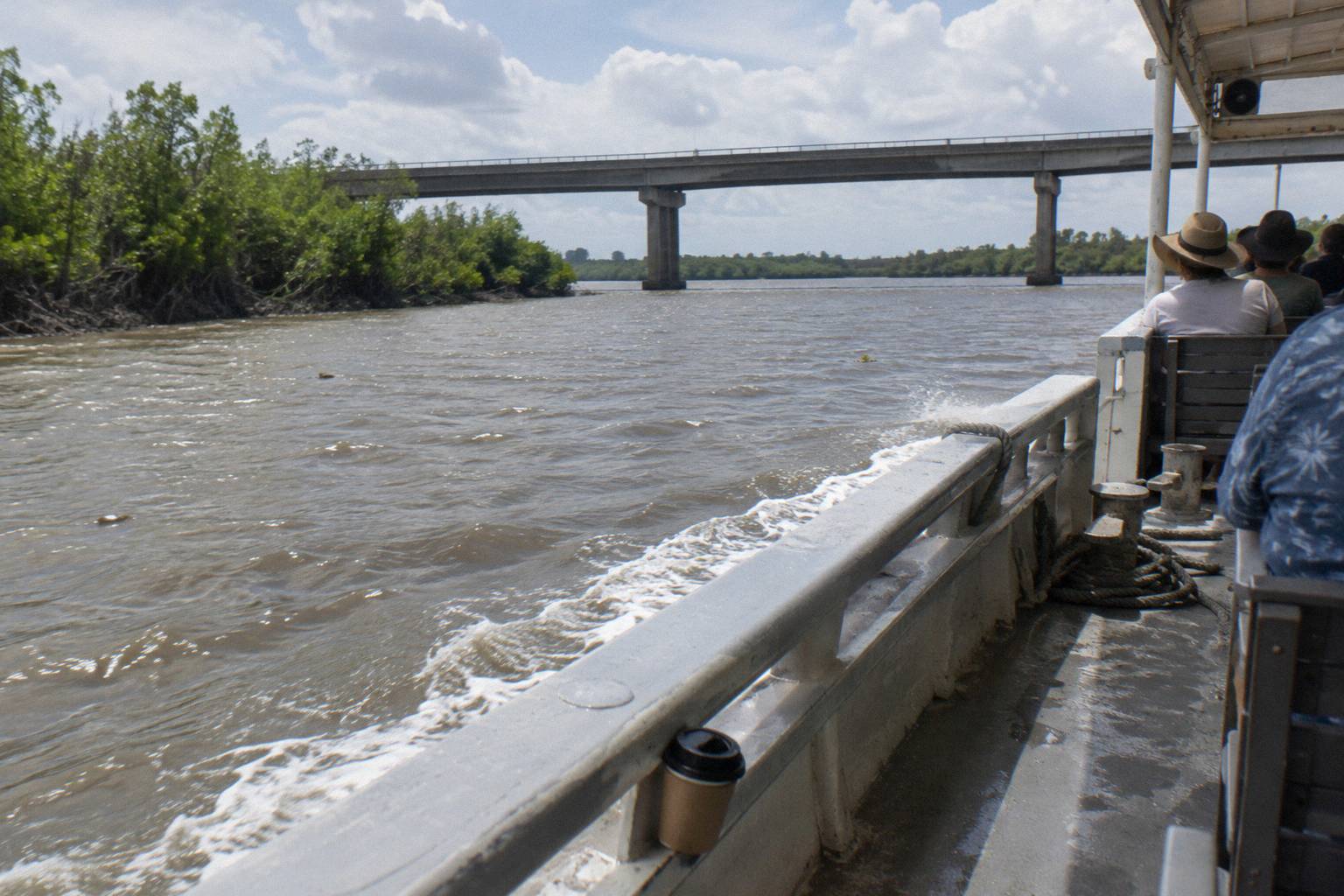
The open-air Pathfinder format puts passengers closest to the water of the three, with the trade-off of no cabin when the weather turns.
Its single fare is A$75 for any passenger aged 1 and over, with infants under 1 free, and the operator's kids promotion lets one child under 13 travel free per full-paying passenger for travel between 5 October 2026 and 31 March 2027 unless it ends earlier; it is the operator's promotion with limited seats, so check that it applies to your date.
How Big Do The River's Saltwater Crocodiles Get?
The NT Government gives the species ceiling: the saltwater crocodile is the largest living reptile and can grow up to 6 m. Females mature at about 2.3 m, at around 12 years, and males at about 3.3 m, at around 16 years. No individual Adelaide River crocodile's size is stated in any official or operator source, so no river animal can honestly be described as a known six-metre giant.
The species facts are worth sitting with, because they apply to any animal that surfaces beside the boat. An apex reptile that can reach six metres, hold its breath for an hour with a heart beating two to three times a minute, and outrun a human over a short distance on land is not an exhibit; it is the reason the NT Government's safety messaging exists. The record animals in the official record came from elsewhere: the 6.7 m crocodile netted on the Mary River in 1974, and the biggest ever trapped at just over 5 m.
Size and age also connect back to the population story. A species whose females take about 12 years to mature and males about 16 years, nesting only from November to May with an average clutch of about 50 eggs, recovers slowly. The territory's roughly 100,000 animals represent decades of protected breeding, and every large crocodile on the Adelaide River today is an animal that survived hunting-era odds or was born well after protection.
This is the honest version of the "most infested river" fantasy. The river does not need to hold record monsters to be extraordinary; it needs to hold a stable, breeding, wild population of the largest living reptile, visible from a boat an hour from Darwin. It does. The safety corollary, the NT Government's advice on how to behave around water in the Top End, is covered below.
What The NT Government's Safety Advice Says About Crocodile Country
The NT Government states that any body of water in the Top End may contain large and potentially dangerous crocodiles, and that saltwater crocodiles are a serious threat to humans. Its Be Crocwise advice is blunt: swim only where designated safe-swimming signs show, camp at least 50 m from water, stand at least 5 m back from the edge when fishing, and never lean out of or dangle limbs over the side of a boat.
That final rule is the one most relevant to a cruise, and it is enforced by the operators in their own ways. Spectacular offers no direct contact with the crocodiles and runs undercover vessels with a jumper position at the front of the boat. The Original/Queen operator carries life jackets on board, allows no swimming, no food on the boat, and requires supervised children. Adelaide River Cruises opens every departure with a safety briefing from the guides covering crocodile behaviour and the rules. Nobody on any of the three cruises is invited to touch, feed by hand or enter the water, and the NT Government's crocodile safety pages supply the framing behind every one of those rules.
The safety picture is also why the cruise format exists at all. Seeing a wild saltwater crocodile safely requires either enormous luck from a bank at a legal distance, or a purpose-built vessel operated under permit by people who work the river daily. The cruises are the second option, and they are the reason so many visitors come away describing the Adelaide River as the most crocodile-packed place they have ever seen, a perception built entirely of real, close, wild sightings. If the underlying worry is the risk side, whether jumping crocodile cruises are safe is the dedicated treatment.
One caution applies to how you read this whole topic. "Infested" invites the idea that more crocodiles means more danger for visitors, but the NT's safety record around cruise operations is not what the word implies, because the cruises control what passengers do. The danger the NT Government warns about is uncontrolled water: swimming, camping and fishing at the edge, anywhere in the Top End.
Seeing The River's Crocodiles For Yourself
Three river operators depart the Adelaide River daily, Spectacular at 9am, 11am, 1pm and 3pm, the Adelaide River Queen at 1pm, and Adelaide River Cruises with departures listed at 9am, 11am, 1pm and 3pm on its tour page; every cruise runs about one hour on the water. From Darwin, allow about an hour or a little more to drive, depending on the jetty, or take a day tour with transport included.
The drive-yourself option is straightforward. Spectacular's jetty sits on Beatrice Hill Farm at Middle Point, reached via the Windows on the Wetlands Visitor Centre and about 2 km of well-maintained unsealed access road that the operator says hire cars handle fine, and its access road often shows water buffalo, cattle and wading birds. The Adelaide River Queen and Pathfinder leave from the Adelaide River Bridge on the Arnhem Highway, on sealed road all the way, with a giant crocodile statue standing in the car park so you cannot miss it. Adelaide River Cruises departs from Anzac Parade, Middle Point. Parking is free at all three, and no park pass is needed.
For travellers without a car, or who want the river folded into a bigger day, Darwin-based day tours bundle the cruise with regional stops. The Croc Bus From Darwin To The Jumping Crocodile Cruise runs about 4 to 5 hours and pairs the cruise, which it takes with Adelaide River Cruises, with Fogg Dam entry and a Humpty Doo stop. Others add lunch at the Humpty Doo Pub, Window on the Wetlands, or a full day in Litchfield National Park. No day-tour price, start time or pickup point is printed anywhere on this site; the booking page carries those.
Booking ahead is the consistent operator message. Spectacular says plainly "we do sell out", and the Original/Queen operator recommends booking several days ahead in the Dry Season, with school holidays and long weekends selling out earlier. Adelaide River Cruises strongly recommends advance booking, especially June to August, and its FAQ gives a full refund if cancelled more than 24 hours before departure, non-refundable inside 24 hours unless the operator cancels for weather or operations. Whatever page you book through, read its terms; each booking page carries its own.
The featured way onto the water is the Adelaide River Cruises Jumping Crocodile Experience, an hour-long departure with the operator's price at A$58.50 for adults and A$42.55 for children, and a family rate of A$159.55 for two adults and two children, stated including taxes and fees. If you are still weighing options, the comparison of the different Adelaide River cruise operators and the rundown of where to see crocodiles near Darwin cover the field from both angles.
However you get to the river, this site, Adelaide River Crocodile Cruise, exists to sort the documented facts from the folklore, and on this question the folklore is thick. The river's crocodile density is real in the sense that matters to a visitor: wild animals, reliably seen, an hour from Darwin. Whether it is number one in Australia is a question nobody counting crocodiles has ever claimed to answer.
Common Questions About The Adelaide River's Crocodile Population
Is The Adelaide River The Most Crocodile-Infested River In Australia?
No official ranking exists. The documented facts are Northern Territory-wide: about 100,000 saltwater crocodiles lived in the NT wild in 2017, more than in Queensland or Western Australia, and no river-by-river count exists for the Adelaide River or any other river in the official sources.
How Many Crocodiles Are In The Adelaide River?
Nobody has published a count. No river-by-river population figure for the Adelaide River exists in the official sources; the NT Government's roughly 100,000 figure applies to the whole territory as of 2017. What is certain is that the river holds a stable wild population that the cruise operators locate reliably.
Does Australia Have More Crocodiles Than Other Countries?
The sources on this page cover Australia only and give no international comparison. Within Australia, the NT Government states there are more saltwater crocodiles in the Northern Territory than in Queensland or Western Australia, and no combined national total is published.
Are The Adelaide River Crocodiles Saltwater Or Freshwater Crocodiles?
The jumping-cruise crocodiles are saltwater crocodiles, Crocodylus porosus, the larger of the two NT species. Freshwater crocodiles, Crocodylus johnstoni, also live in the NT, and Spectacular's wildlife list includes them among the river's other residents.
Why Does The Adelaide River Feel So Full Of Crocodiles?
Three cruise operators work the river daily and know where the wild residents hold territory, so sightings happen on almost every departure. The density you experience is visibility, not a census; the operators themselves note that behaviour can never be guaranteed.
Are The Crocodiles On The Jumping Cruises Wild?
Yes. The operators describe their crocodiles as 100% wild, living and hunting in the river independently of the tours, with feeding conducted under NT wildlife permits as a taste of meat rather than a diet.