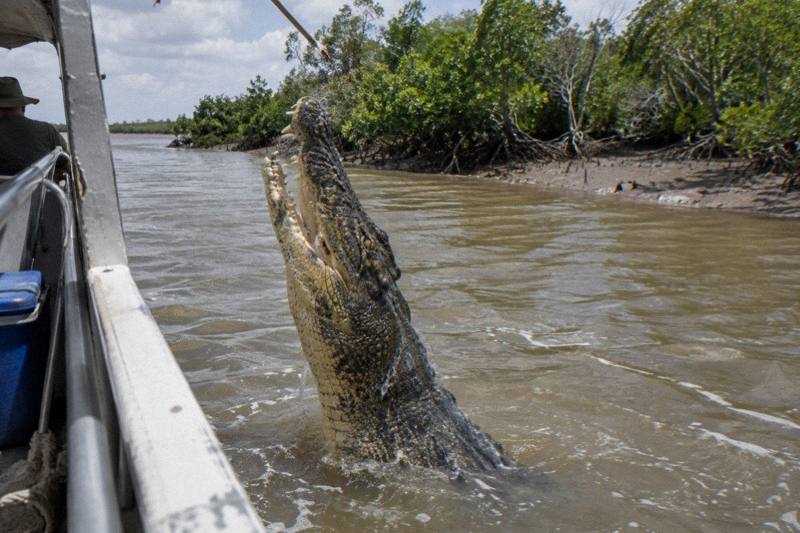
Are There Saltwater Crocodiles In The Adelaide River?
Yes, the Adelaide River holds wild saltwater crocodiles. Here is what the NT Government and the cruise operators actually state, plus how the jumping cruises work.
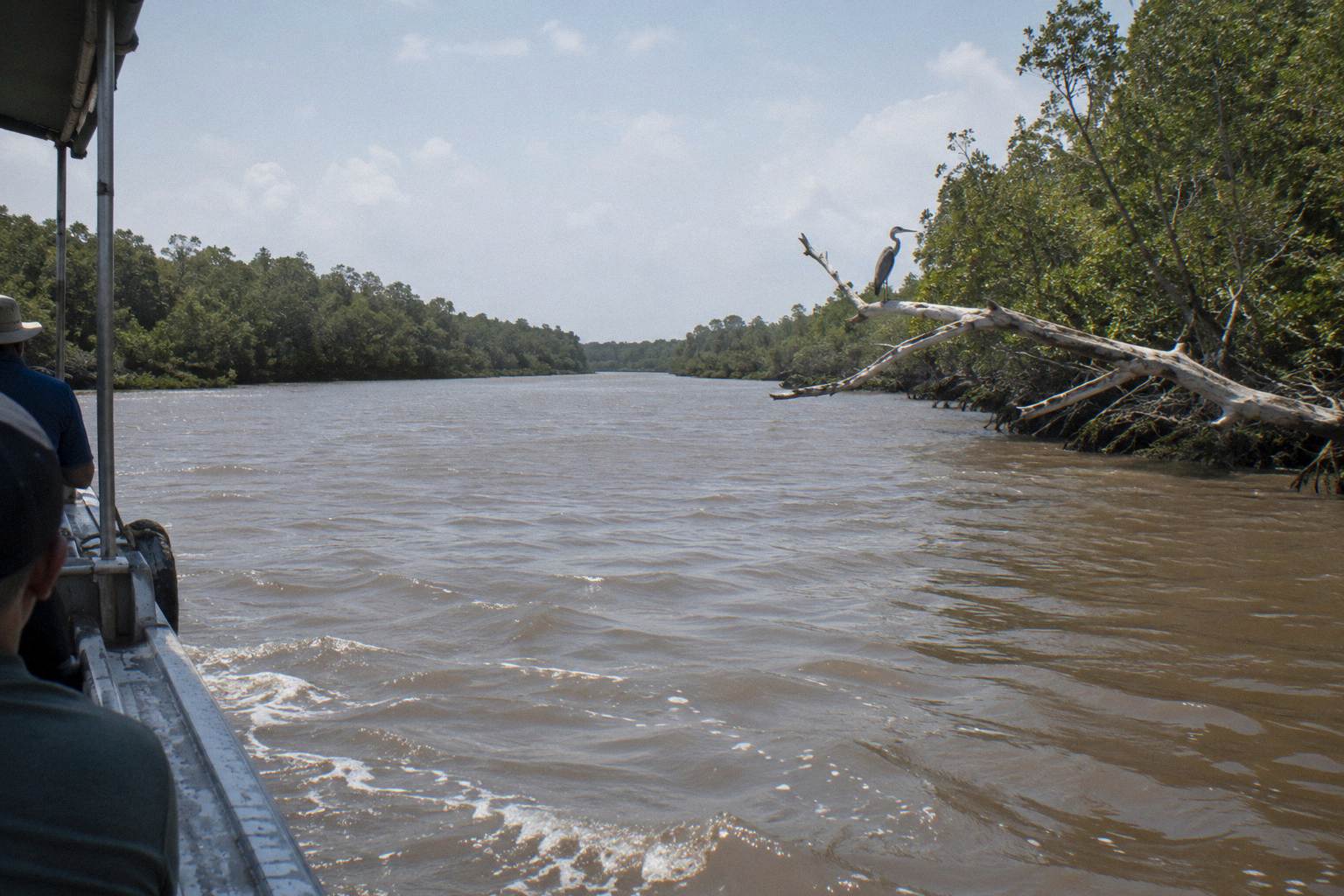
Yes. The Northern Territory Government recognises two crocodile species in the Territory, the saltwater (estuarine) crocodile and the freshwater crocodile, and the crocodiles that jump beside the Adelaide River cruise boats are saltwater crocodiles. The operators describe them as wild, and the NT Government says any body of water in the Top End may contain large and potentially dangerous crocodiles. What no source publishes is a population count for this river.
That single word, saltwater, carries a lot of weight in the Northern Territory. The NT Government's own crocodile page explains that the saltwater crocodile, Crocodylus porosus, is the largest living reptile and can grow up to 6 m, which is why the jumping cruises exist at all: a reptile that size launching itself out of the water beside a boat is one of the most dramatic wildlife spectacles in Australia. The same page records that about 100,000 saltwater crocodiles lived in the NT wild in 2017, thought to be at or approaching pre-hunting levels, and that the Territory holds more saltwater crocodiles than Queensland and Western Australia.
It is worth being precise about what is and is not on the record. The sources this site draws on, the operator pages and the NT Government, do not publish a river-by-river count, so anyone quoting a number of crocodiles "in the Adelaide River" is guessing. The operators also never publish a crocodile's name, a size for an individual animal, or a jump height, and no honest page should invent one. What the sources do give is solid: the species, the biology, the protected status, and what each operator says about the animals its boats encounter. That is the scope of this article.
For a reader deciding whether to book, the practical takeaway is straightforward. The crocodiles are real, wild, saltwater crocodiles, they live in the river year-round, and three separate operators run roughly one-hour cruises that go out to see them jump.
If you want the fuller background first, the site's guide to crocodiles of the Adelaide River goes deeper on the animals themselves, and the piece on saltwater crocodile facts for cruise visitors collects the NT Government's biology in one place.
What Is The Difference Between Saltwater And Freshwater Crocodiles?
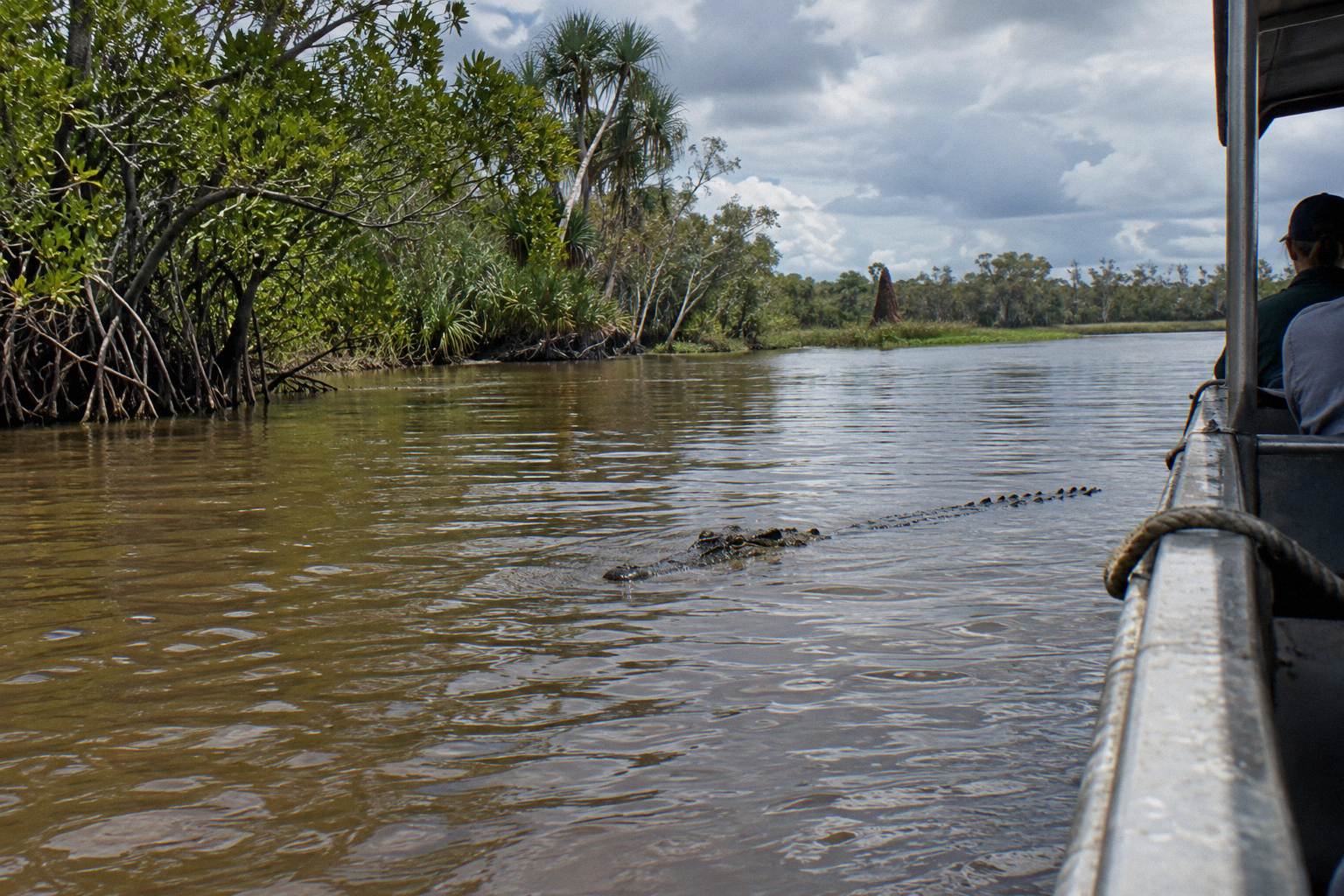
The Northern Territory has two species: the saltwater or estuarine crocodile, Crocodylus porosus, and the freshwater crocodile, Crocodylus johnstoni. The jumping-cruise crocodiles on the Adelaide River are saltwater crocodiles. The NT Government describes saltwater crocodiles as a serious threat to humans, and it says any Top End water may hold large and potentially dangerous crocodiles.
Despite the names, the split is not really about salt versus fresh. Estuarine crocodiles live in rivers, floodplains, estuaries and coastal waters across northern Australia, and the Adelaide River's muddy channels and mangrove-lined banks suit them well. Freshwater crocodiles, the smaller species, also appear in the region; Spectacular Jumping Crocodile Cruises even lists freshwater crocodiles among the wildlife seen from its vessels, alongside white-bellied sea eagles, whistling kites, bull sharks, black flying-fox, the endangered speartooth shark and the critically endangered largetooth sawfish. But the animals that rise out of the water beside the cruise boats are saltwater crocodiles, and the NT Government's species page is the authority on that point: the NT crocodile page sets out both species and their status.
The biology explains why saltwater crocodiles dominate the show. They are the largest living reptile, growing up to 6 m. Females mature at about 2.3 m, around 12 years old, and males at about 3.3 m, around 16 years. Large crocodiles can stay underwater for up to an hour with a heart rate of 2 to 3 beats a minute, and for short bursts they can move faster than a human on land. None of that makes them predictable performers, and every operator says some version of the same thing: behaviour can never be guaranteed.
Are The Crocodiles On The Jumping Cruises Actually Wild?
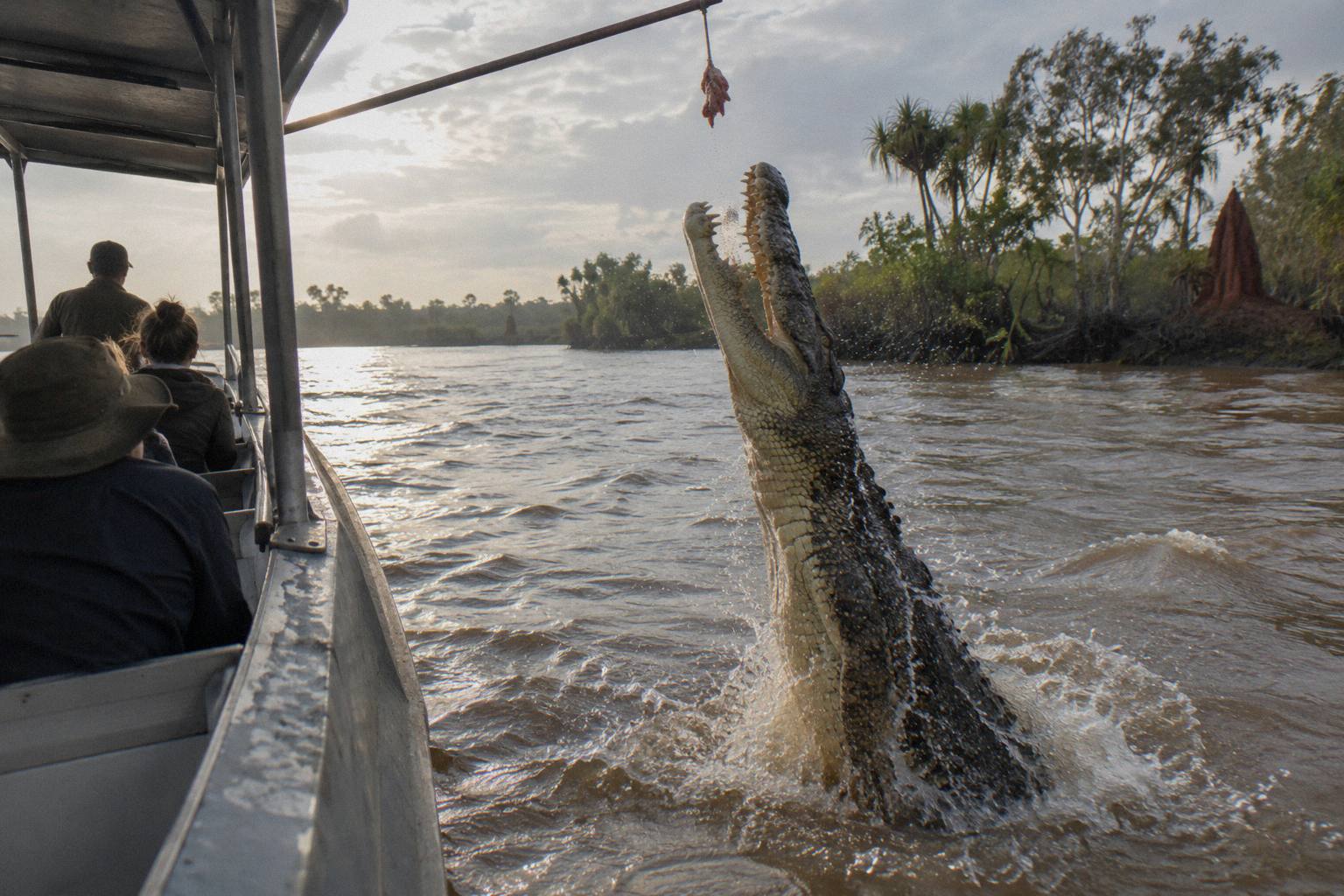
Yes, as far as the operators state it. The Original Jumping Crocodile Cruises operator says its crocodiles are 100% wild, and the feeding that produces the jumps is done under NT wildlife permits. Spectacular Jumping Crocodile Cruises says its crocodiles are offered a taste of buffalo meat, under Wildlife Permits from NT Parks and Wildlife, with feeding logs kept. Neither keeps or farms the animals.
This matters to a lot of travellers, because "wild" separates the Adelaide River experience from a zoo or a crocodile farm show. The river's crocodiles come to the boats on their own terms. The operators' crews dangle bait from a pole or a 'jumper' at the front of the vessel, and the crocodile chooses to lunge for it. The Original/Queen operator puts the honest caveat in its own words: 'We see crocodiles on almost every tour... behaviour can never be guaranteed.' No operator promises a sighting, and no operator names individual animals, sizes them, or quotes odds.
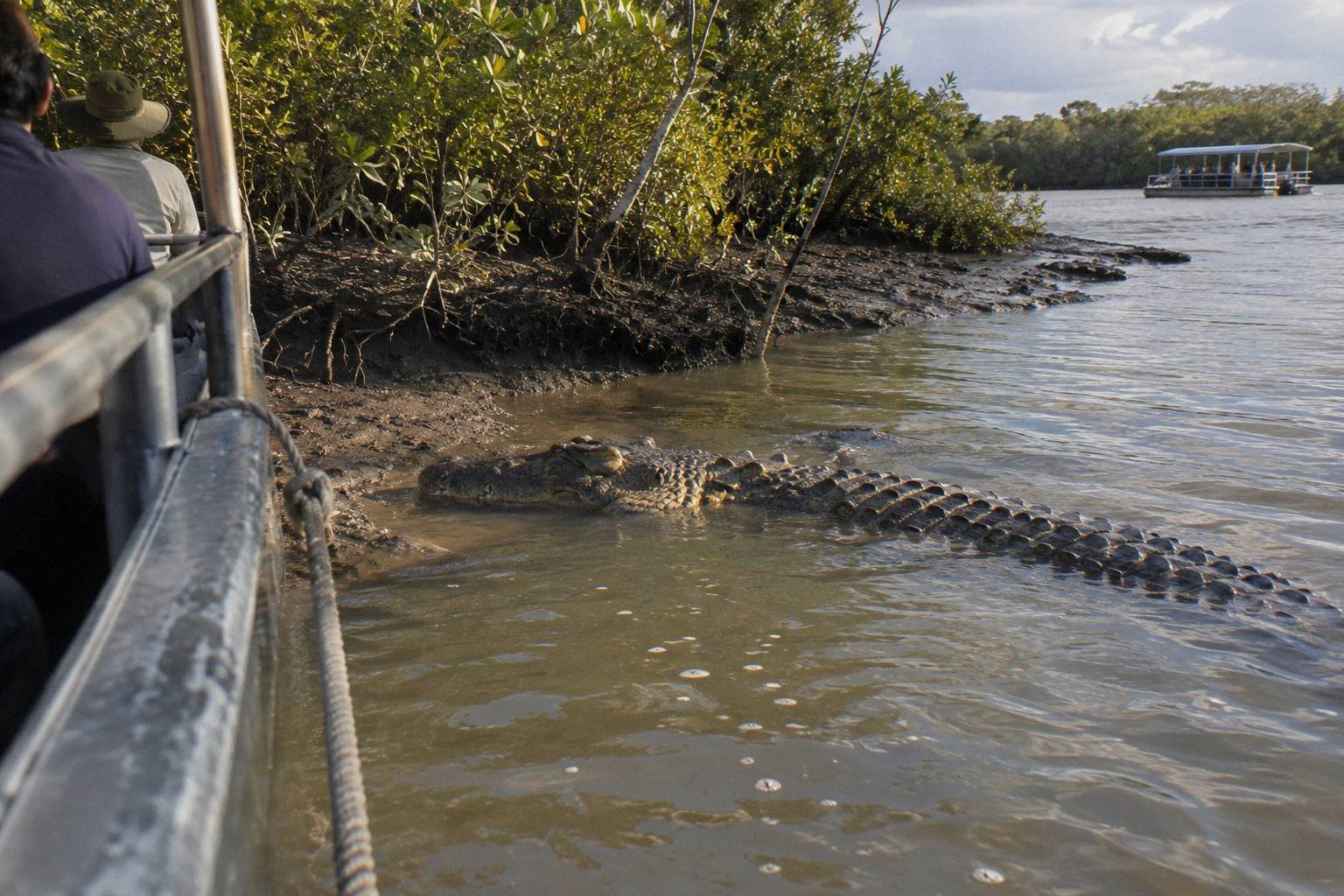
The permit framework sits behind all of it. The NT Government says both crocodile species are protected by law and that nobody may take or interfere with a crocodile without a permit. The NT page does not describe the cruise permit scheme, so this site does not either; what is on record is that Spectacular's staff hold Wildlife Permits from NT Parks and Wildlife, that its Animal Ethics Policy was developed with NT Parks and Wildlife, and that the Original/Queen operator's feeding is done under NT wildlife permits. Spectacular also states there is no direct contact between passengers and crocodiles, and that detailed feeding logs are kept.
The Adelaide River Queen, the vessel behind the Original cruises, adds a physical buffer of its own. The operator describes a lower deck that is air-conditioned with individual seating behind croc-proof glass, and an open-air upper deck under a shaded canopy. For a comparison of the boats and decks across the three operators, the article on what to expect on a jumping crocodile cruise walks through the differences in full.
How Big Do The Adelaide River's Saltwater Crocodiles Get?
The NT Government gives species limits, not river-specific ones: the saltwater crocodile is the largest living reptile and can grow up to 6 m. For Territory context, a 6.7 m saltwater crocodile was netted on the Mary River in 1974, and the biggest ever trapped was just over 5 m. No source publishes the size of any individual crocodile in the Adelaide River.
Those Mary River figures are worth a second look because they anchor expectations. A 6.7 m animal netted in 1974 and a biggest-ever-trapped of just over 5 m tell you the plausible ceiling for Top End crocodiles, and they come from the NT Government's conservation page rather than from any operator's marketing: the conservation page also covers the species' recovery. What they do not tell you is what you will see from a cruise boat on any given day, because no operator sizes or names its regular crocodiles and no source states a sighting.
| Question | What the sources say | Who says it |
|---|---|---|
| Species in the NT | Saltwater (estuarine) and freshwater crocodiles | NT Government |
| Cruise crocodiles | Saltwater crocodiles, described as wild | NT Government and operators |
| Maximum growth | Up to 6 m | NT Government |
| Female maturity | About 2.3 m, around 12 years | NT Government |
| Male maturity | About 3.3 m, around 16 years | NT Government |
| Adelaide River population | No count published | Not stated by any source |
The same NT pages add texture that helps the numbers land. Nests are built November to May and average about 50 eggs. Large crocodiles can hold their breath for up to an hour underwater. And the species was almost extinct in the 1970s, after decades of hunting, before protection allowed it to recover to the point where it is now widespread and no longer considered threatened. That last fact is the quiet backdrop to every jumping cruise on the river: the animals lunging beside the boats are the visible result of a conservation turnaround.
How Many Saltwater Crocodiles Live In The River?
No river-by-river count exists in the sources, for the Adelaide River or any other. The only population figure on record is Territory-wide: about 100,000 saltwater crocodiles lived in the NT wild in 2017, thought to be at or approaching pre-hunting levels. The NT page also states there are more saltwater crocodiles in the NT than in Queensland and Western Australia, though not as a combined figure.
It is worth pausing on why this gap exists, because it explains a lot of the nonsense floating around online. Crocodile populations are surveyed across habitats and regions, not counted river by river, and the Territory's figures are estimates tied to survey years. Any page that claims the Adelaide River holds some precise number of crocodiles, or crowns it the "most crocodile infested" river in Australia, is stitching together marketing language rather than a count. The honest answer to "how many" is: enough that three operators run daily cruises built around seeing them, and no published number beyond that.
What the sources do support is the recovery story. The saltwater crocodile was almost extinct in the 1970s and is now widespread across the Top End, no longer considered threatened, and protected by law: you cannot take or interfere with a crocodile without a permit. For travellers, the practical read is simple. The river reliably supports wild saltwater crocodiles, which is why the operators can say they see crocodiles on almost every tour, while still cautioning that behaviour, and by extension any individual sighting, can never be guaranteed.
Is It Safe To Take A Cruise With Saltwater Crocodiles?
The NT Government's Be Crocwise advice frames how Territorians treat any waterway: swim only where designated safe-swimming signs show and assume water is unsafe elsewhere; camp at least 50 m from the water; stand at least 5 m back from the water's edge when fishing; and do not lean out of or dangle limbs over the side of a boat. That last point is the one that applies directly to a cruise. The operator rules line up with it. The Original/Queen operator has life jackets on board, allows no swimming and no food on the boat, and requires supervised children. Spectacular offers no direct contact with the crocodiles. Adelaide River Cruises opens every trip with a safety briefing from the guides on crocodile behaviour and the rules.
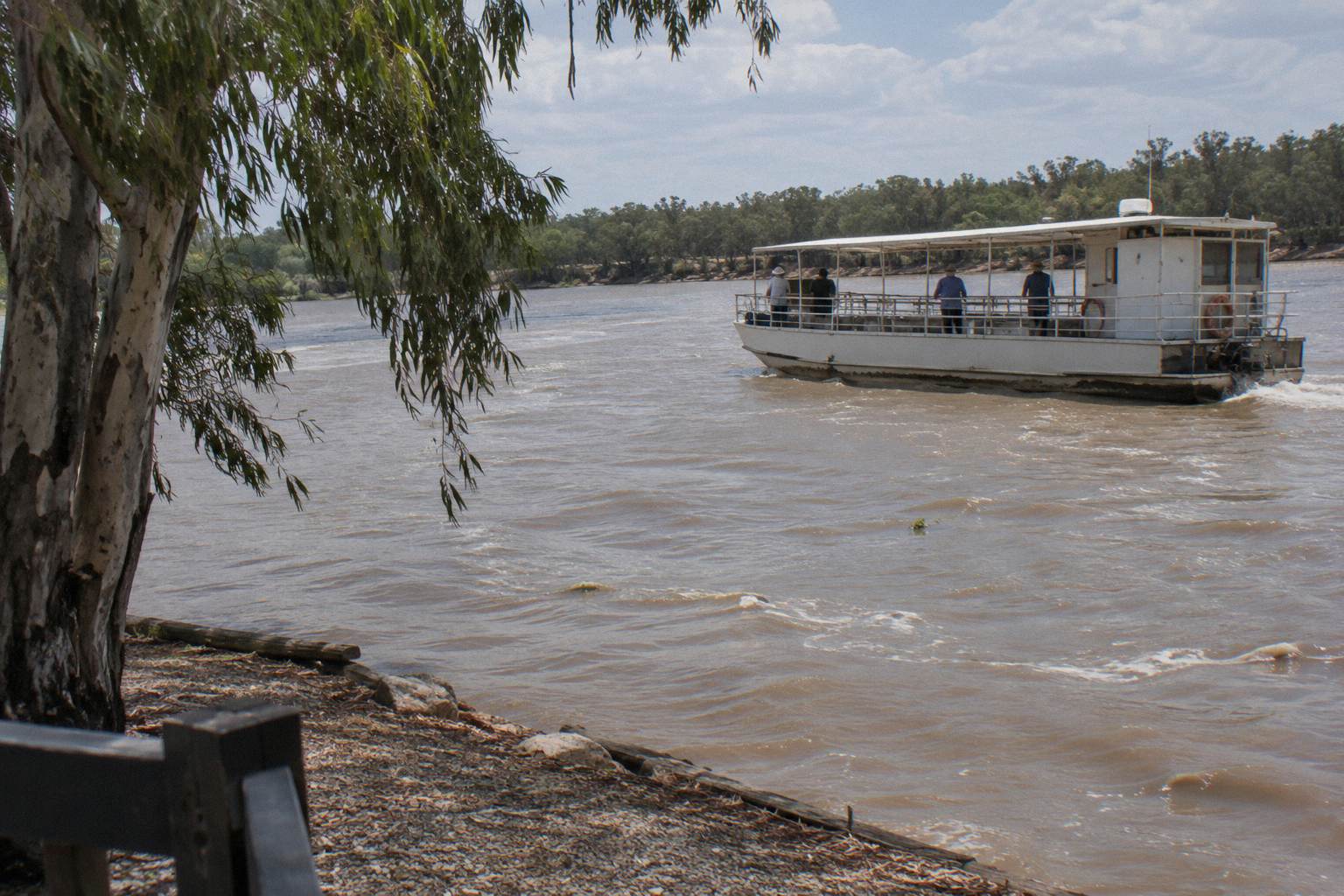
Within those rules, the boats themselves are designed for the setting. Spectacular runs two custom vessels, the multi-hull Croc-Cat1 with stadium-style seating and the skipper at the rear, and the smaller Wildcat, which goes further down the river; both are undercover, and which one runs depends on the numbers booked. The Adelaide River Queen pairs its enclosed lower deck with an open-air upper deck under a canopy. The Pathfinders are open-air vessels carrying up to 38 passengers each, a figure stated for the Pathfinder only. None of this is framed here as a safety guarantee, only as what the operators say about their equipment, alongside the government's standing advice on crocodiles.
For readers weighing the decision, the site's longer treatment of how close the crocodiles get to the boat covers the proximity question, and the honest answer on safety is the same in both places: the operators' rules and the NT Government's advice are the record, and anything beyond that is speculation.
When Are Saltwater Crocodiles Most Active In The River?
The sources do not rank times of day or seasons by crocodile activity, and the operators publish no morning-versus-afternoon behaviour claims. What is on record is seasonal: the Original/Queen operator says crocodiles are active year-round and the Dry Season, May to October, gives the most comfortable conditions. Spectacular adds that crocodiles often show a tactile response to rain.
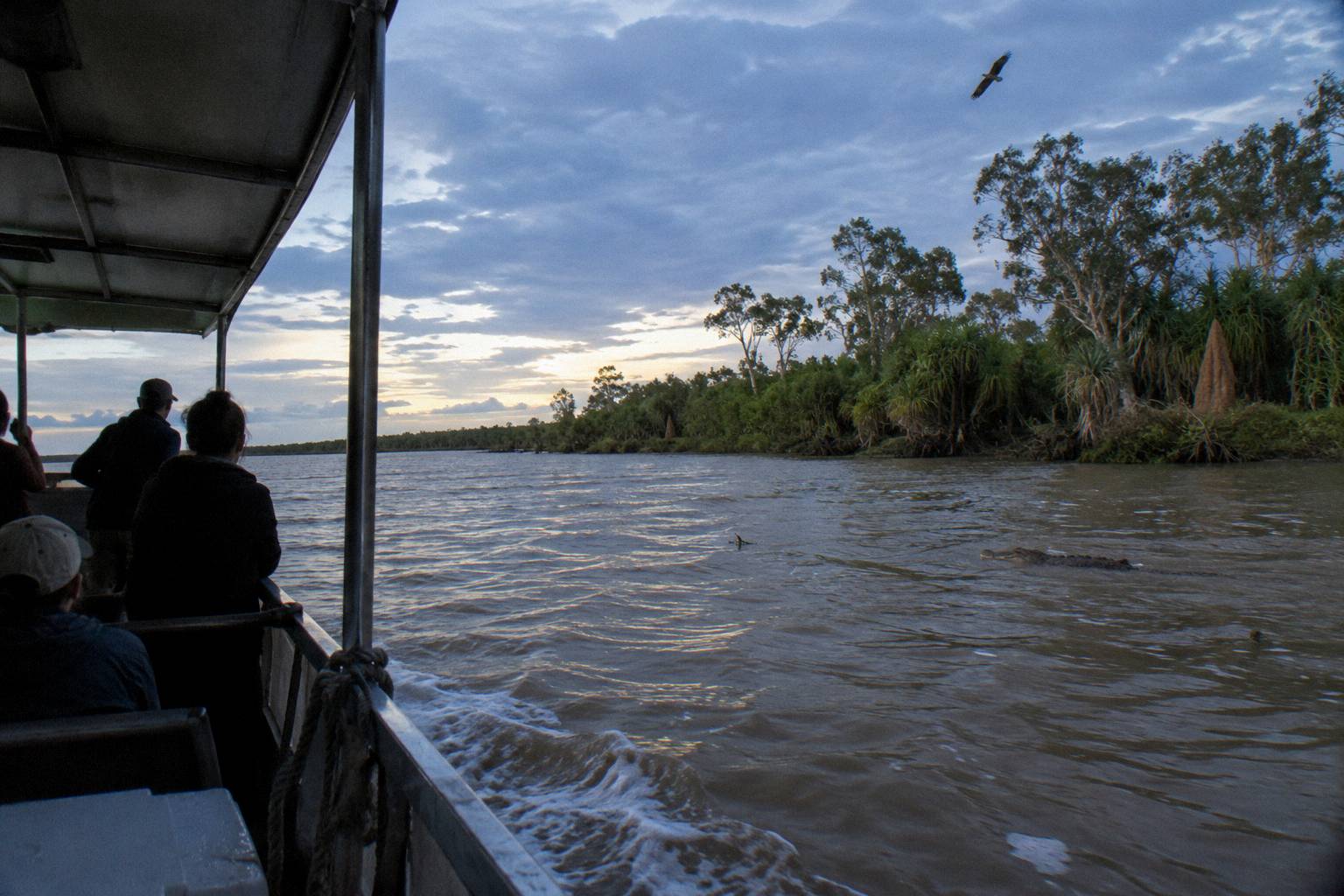
That is the whole of it, and it is more useful than the folk wisdom you will meet elsewhere. There is no published evidence that the 9am departure beats the 3pm, or the reverse; the operators run four departure times a day, at 9am, 11am, 1pm and 3pm, because all of them work. Spectacular departs daily at those times and is open year-round except Christmas Day, with no minimum numbers. The Adelaide River Queen departs at 1pm daily, though its operator notes wet-season departures may be reduced. Adelaide River Cruises' tour page lists the same 9am, 11am, 1pm and 3pm daily departures with operating months of May to October.
The seasonal picture has one genuinely interesting wrinkle: rain. Spectacular says it operates as long as it is safe, that rain in Darwin or Humpty Doo does not mean rain on the river, and that crocodiles often show a tactile response to rain. A cancelled or postponed cruise, it says, is rescheduled or refunded as appropriate. The Original/Queen operator's framing is plainer: crocodiles are active year-round, and outside May to October the departures may be fewer. Travellers chasing comfort pick the Dry Season; travellers who do not mind a shower may find the river at its most responsive.
| Operator | Departures | Season notes | Arrival buffer |
|---|---|---|---|
| Spectacular Jumping Crocodile Cruises | 9am, 11am, 1pm, 3pm daily | Year-round except Christmas Day | At least 15 minutes |
| Adelaide River Queen | 1pm daily | Wet-season departures may be reduced | At least 30 minutes |
| Adelaide River Cruises | 9am, 11am, 1pm, 3pm daily, per its tour page | Operating months listed as May to October | At least 15 minutes |
Late arrivals matter more than most people expect: the operators state that late arrivals may forfeit tickets, and the Original/Queen operator recommends booking several days ahead in the Dry Season, with school holidays and long weekends often selling out earlier. Adelaide River Cruises strongly recommends booking in advance, especially June to August, and says walk-ins are not guaranteed.
Why The Answer Shapes The Whole Cruise Experience
Yes, there are saltwater crocodiles in the Adelaide River, and yes, they are the reason the cruises exist. Knowing the species tells you what you are watching: the largest living reptile, fully protected by law, recovered from near-extinction in the 1970s, lunging for a taste of buffalo meat under NT wildlife permits from a boat designed for exactly that encounter.
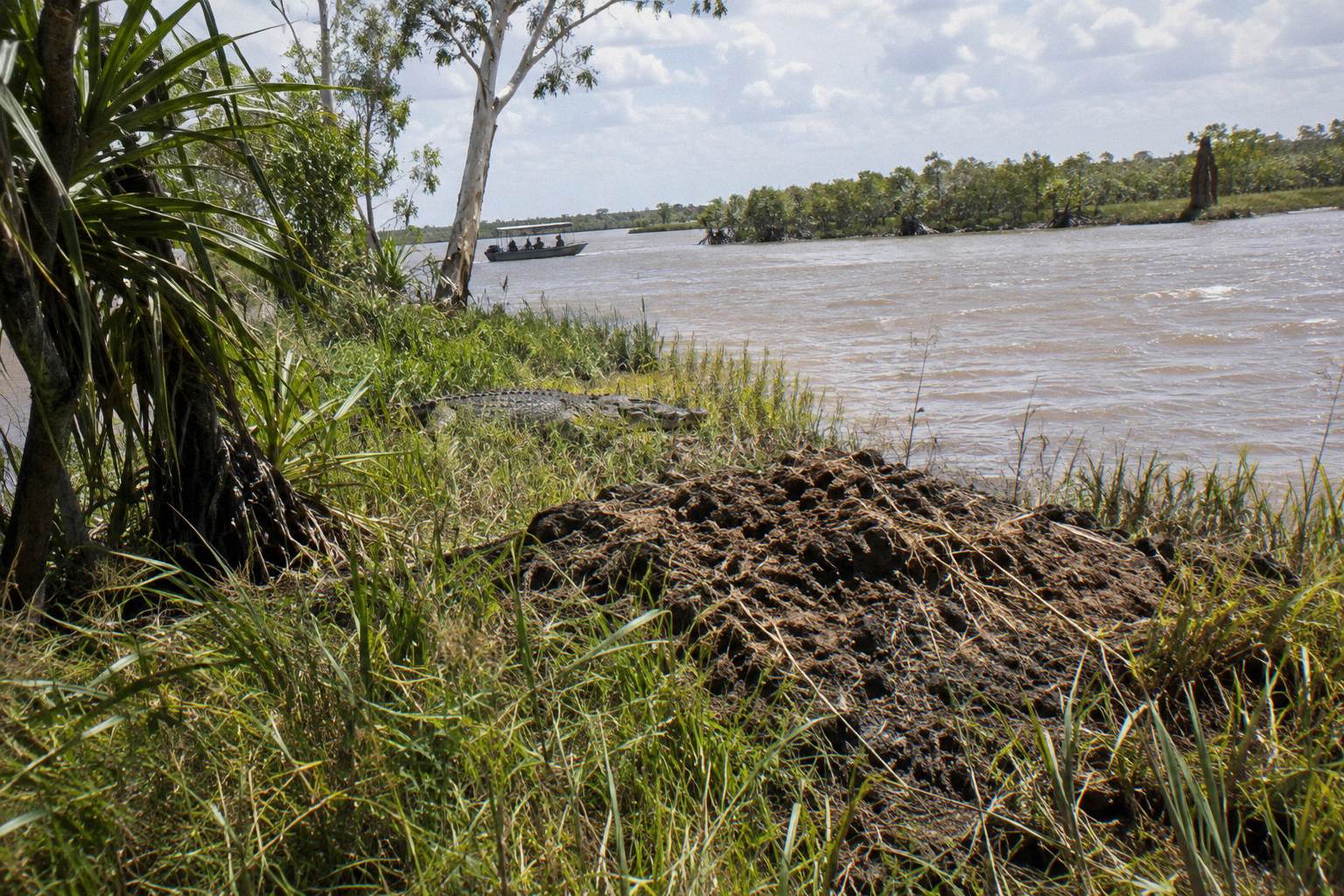
Put that way, the jumping cruise is less a show than a managed meeting with a wild animal on its own ground. The crocodile decides whether to jump. The operators decide everything they can control: the boats, the permits, the feeding logs, the safety briefings, the rules about limbs and food and children. The NT Government sets the frame with its protection laws and its Be Crocwise advice. Together those three layers are what let a one-hour river cruise run daily, three operators side by side, each from its own jetty, without anyone touching, naming or promising the animals.
For planning, the choice between operators comes down to boat style, price and timing rather than crocodiles, since the river and its saltwater residents are the constant. Whichever booking page you use, read its own terms before you pay; only Adelaide River Cruises publishes its cancellation policy in its FAQ, giving a full refund if cancelled more than 24 hours before departure.
Common Questions About Saltwater Crocodiles In The Adelaide River
Are There Saltwater Crocodiles In The Adelaide River?
Yes. The NT Government confirms the jumping-cruise crocodiles are saltwater crocodiles, and the operators describe them as wild. Any Top End water may contain large and potentially dangerous crocodiles, which is why the cruises run under strict rules and NT wildlife permits.
How Many Crocodiles Live In The Adelaide River?
No river-by-river count exists in the sources. The only published figure is Territory-wide: about 100,000 saltwater crocodiles lived in the NT wild in 2017, thought to be at or approaching pre-hunting levels.
Are The Jumping Crocodiles Wild Or Fed By The Operators?
The operators say both. The crocodiles are wild animals that come to the boats on their own terms, and the feeding that produces the jumps is done under NT wildlife permits. Spectacular keeps detailed feeding logs, and no operator offers direct contact with the animals.
How Big Can The Crocodiles Get?
The NT Government says the saltwater crocodile can grow up to 6 m, making it the largest living reptile. For context, a 6.7 m crocodile was netted on the Mary River in 1974, and the biggest ever trapped was just over 5 m. No source sizes any individual Adelaide River crocodile.
Are Saltwater Crocodiles Dangerous To Cruise Passengers?
No page should guarantee safety. The NT Government calls saltwater crocodiles a serious threat to humans, and its Be Crocwise advice says never to lean out of or dangle limbs over the side of a boat. The operators' rules, life jackets, safety briefings and no-contact policies, are the practical protections.
When Is The Best Time Of Year To See Them?
The operators say crocodiles are active year-round. The Dry Season, May to October, gives the most comfortable conditions according to the Original/Queen operator, while Spectacular notes crocodiles often show a tactile response to rain and runs year-round except Christmas Day.