How Far Can A Crocodile Jump Out Of The Adelaide River?
No official jump height or distance exists for Adelaide River crocodiles. Here is what the NT Government and the cruise operators actually say about crocodile size, speed and the jumping cruise.
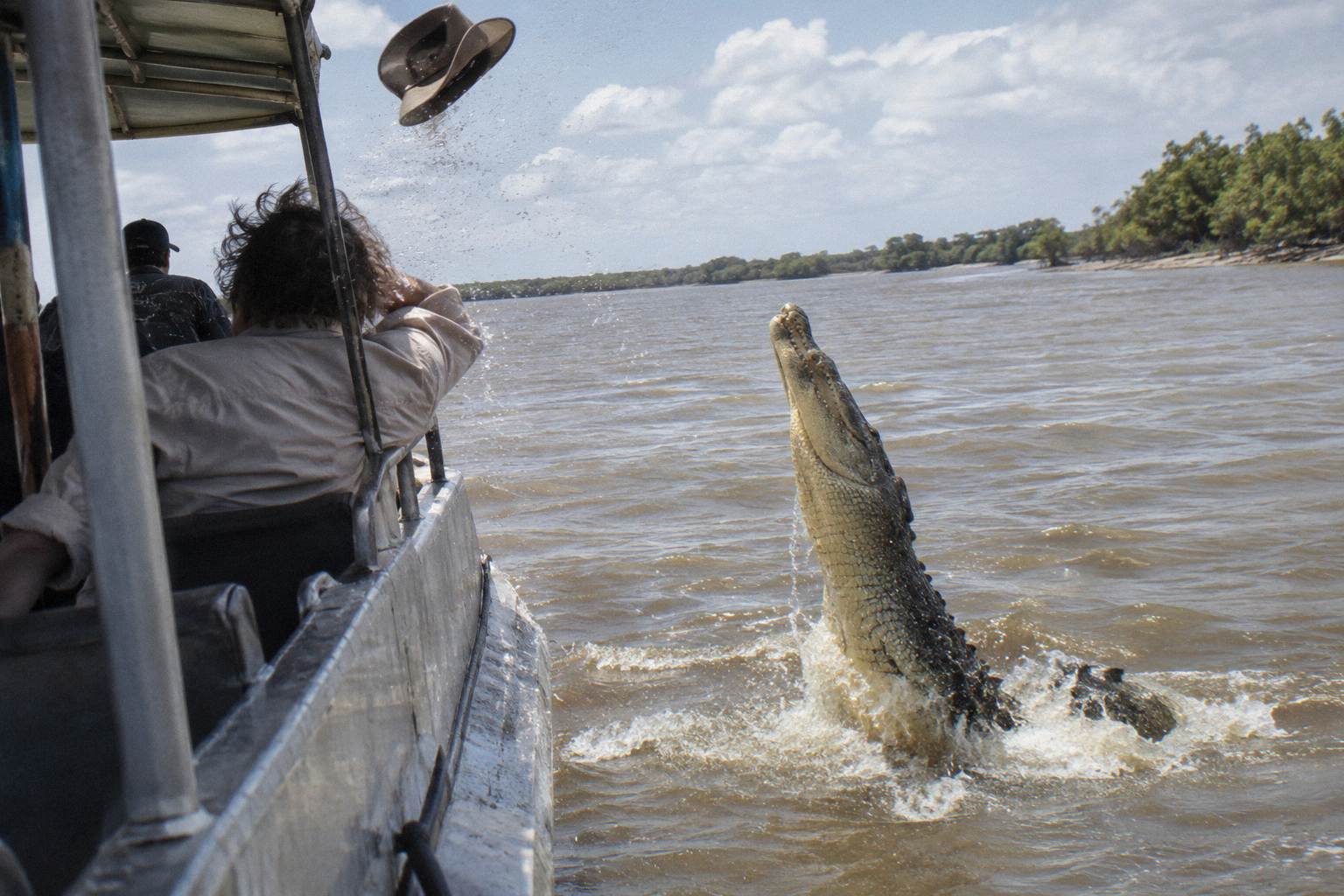
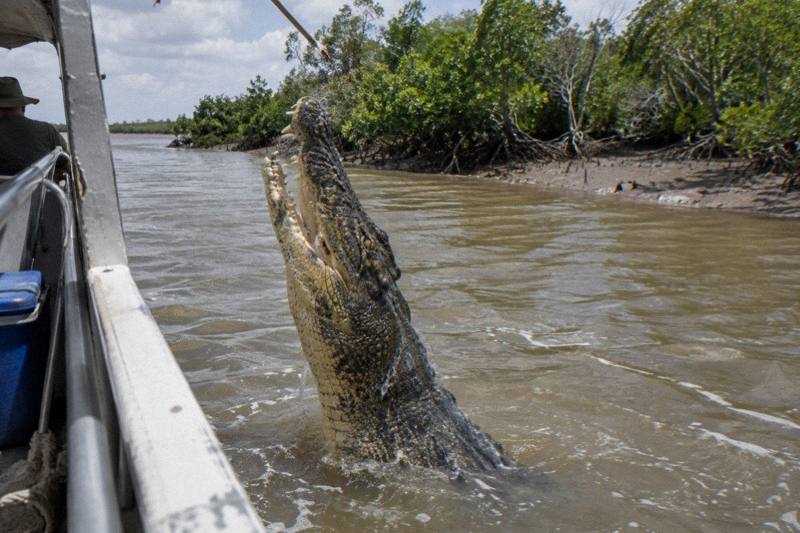
No operator on the Adelaide River and no Northern Territory Government page publishes a jump height, a jump distance or a how-close-to-the-boat figure, so there is no verified number for how far an Adelaide River crocodile can jump out of the water. That single fact is worth stating plainly at the top, because plenty of travel copy invents a figure anyway. Any centimetre or metre count you have read on a blog or a brochure was made up by someone who had the same absence of data this site has. What the sources do establish is scale, and scale is the real answer: the jumping crocodile is a saltwater crocodile, the largest living reptile on earth, able to grow up to 6 m and able to move faster than a human on land for short bursts. When an animal that size propels itself vertically beside a cruise boat, the question of centimetres answers itself.
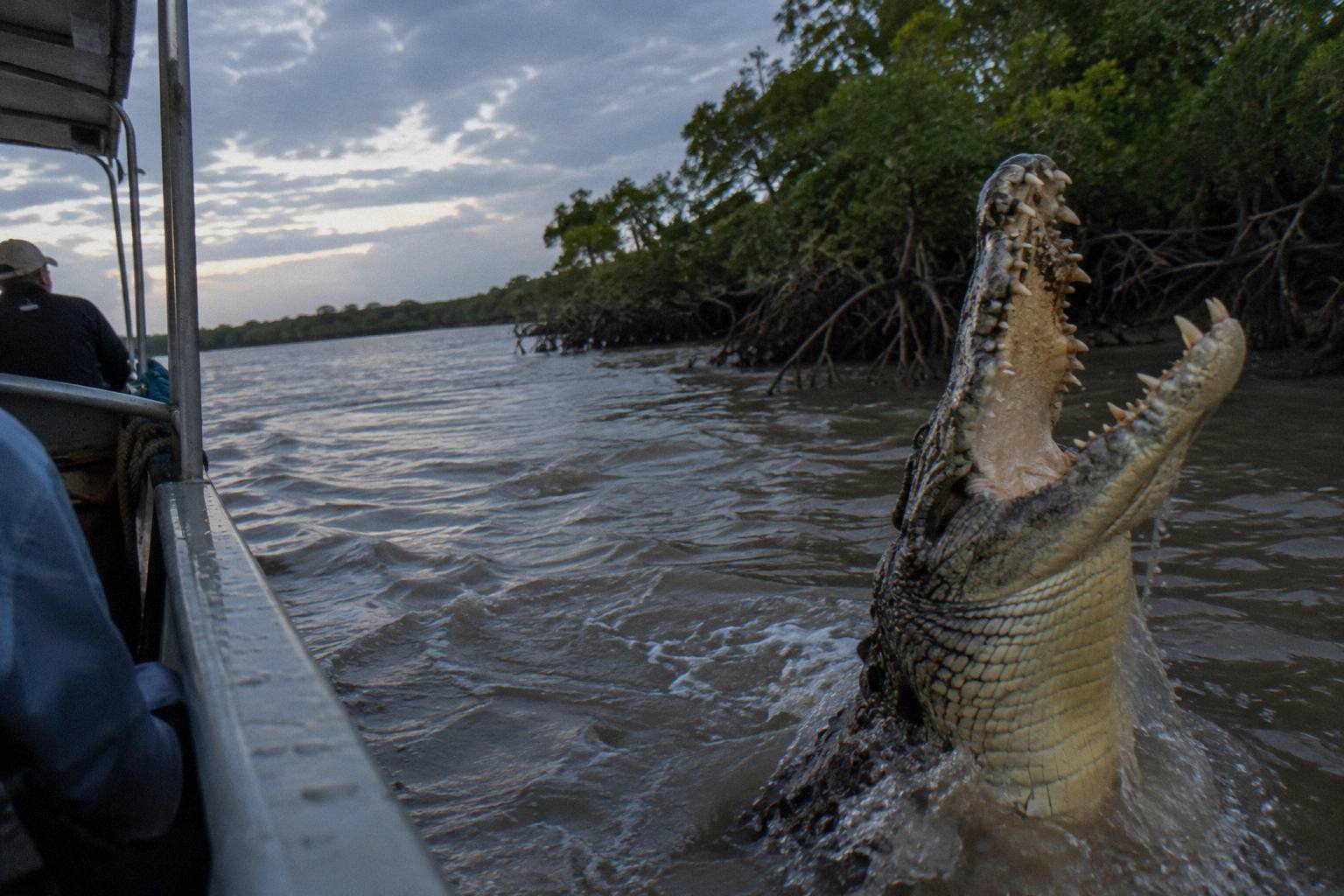
The reason no figure exists is structural rather than evasive. Crocodiles are wild animals, and the Original Jumping Crocodile Cruises operator says it plainly in its own FAQ: "We see crocodiles on almost every tour... behaviour can never be guaranteed." A crocodile that clears the water by a body length on Monday might barely lift its head above the surface on Tuesday. An operator that published a number would be promising a performance, and none of the three river operators does. This is also why you should treat any review that quotes a height with suspicion: the reviewer is describing one lunge on one morning, not a property of the river or the species.
What can be measured honestly is the animal itself. The NT Government's crocodile pages, the only source this site treats as authoritative for biology, describe the saltwater crocodile (Crocodylus porosus) as the largest living reptile, growing up to 6 m. Females mature at about 2.3 m at around 12 years, males at about 3.3 m at around 16 years. A 6.7 m animal was netted on the Mary River in 1974, and the biggest ever trapped was just over 5 m. Those are animal dimensions, not jump figures, and they are the closest honest proxy a reader can get to the question in the title.
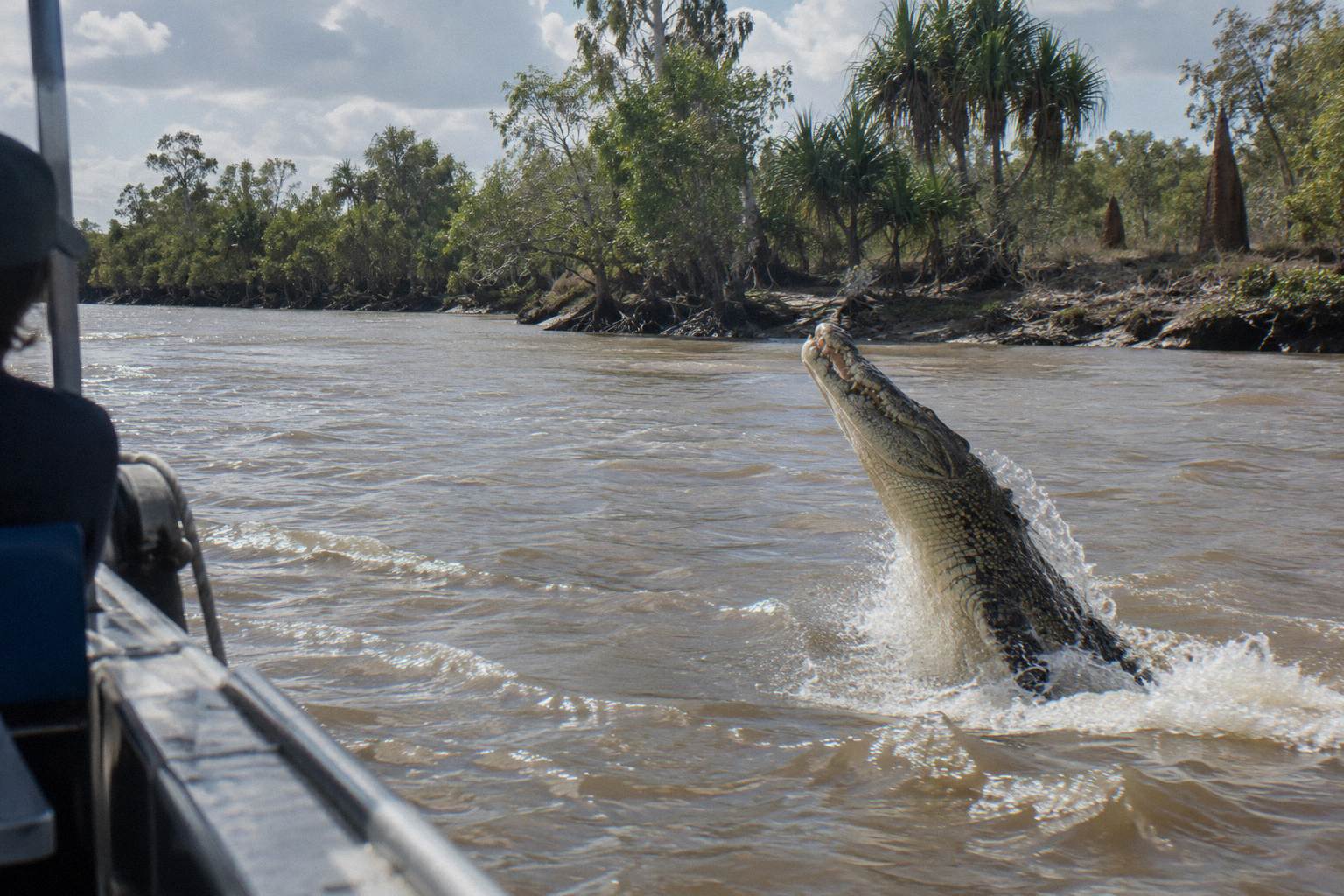
The practical reading is this: on a jumping cruise you are watching a reptile in the multi-metre range lift itself out of the water using its tail, close enough that one operator advises standard phone cameras are sufficient for the interactions. The scale, not a stat, is the spectacle.
Why Do Crocodiles Jump At All?
Crocodiles jump because cruise operators on the Adelaide River dangle bait above the water from the front of the boat, and the animals lunge vertically to snatch it. What makes the leap possible is the thrust from their muscular tails, which drives their bodies upward until they rise clear of the surface. Spectacular Jumping Crocodile Cruises says its crocodiles are offered a taste of buffalo meat, presented from a "jumper" position at the front of its boats. The Original Jumping Crocodile Cruises operator says its crocodiles are 100% wild and that its feeding is done under NT wildlife permits. The vertical lunge is a natural hunting motion, triggered here by bait, not a trick trained into the animals, and no source describes the crocodiles performing on cue.
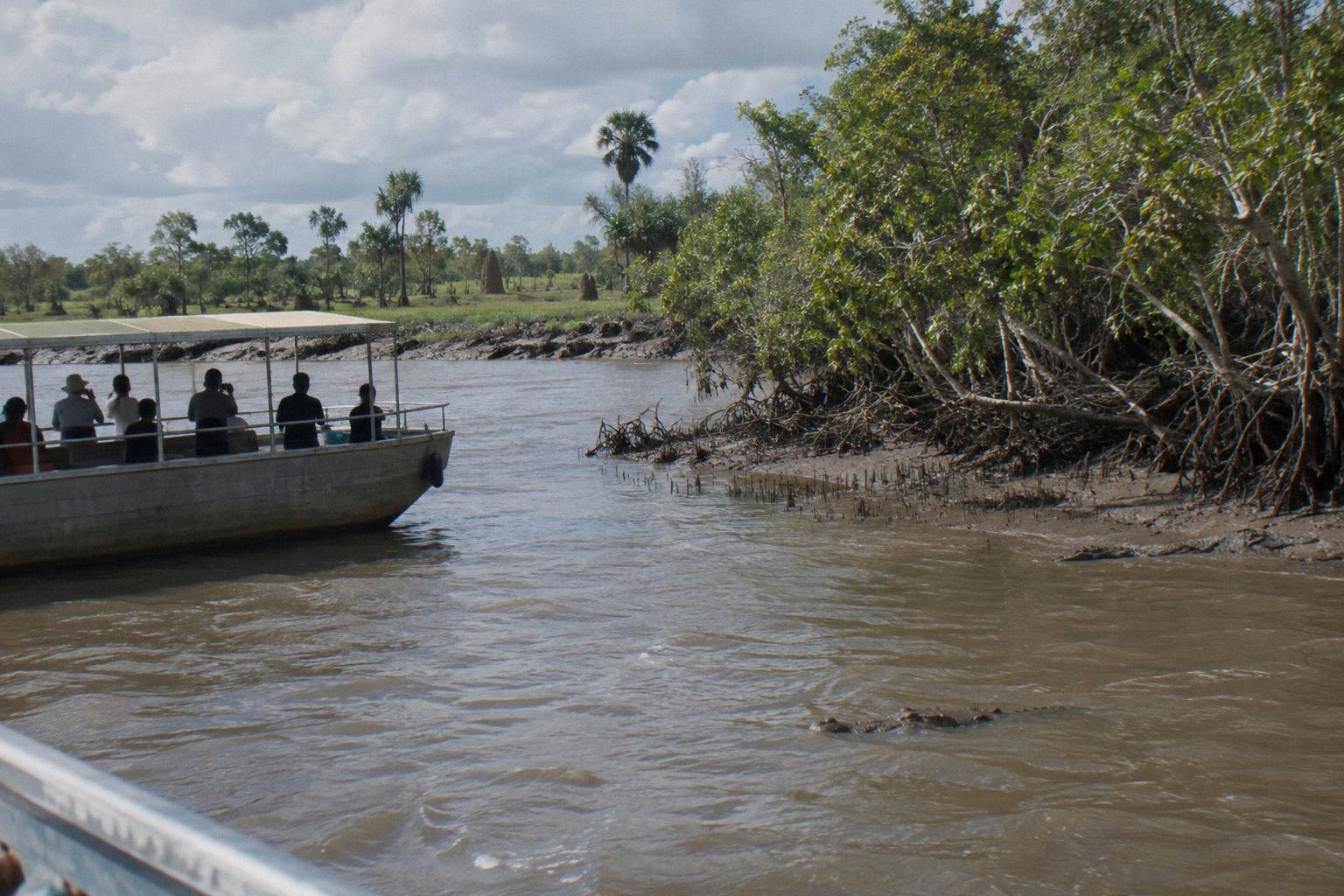
This is why the question "how far" has no answer even in principle. The bait hangs where the crew hangs it, the crocodile decides how much effort to spend, and the result varies animal to animal and day to day. Nobody measures it, and nobody official claims to. The honest version of the question is "how high does a crocodile need to jump for this to be worth my money," and the answer from what guests report is: far less than you are imagining before you go, because the animal is enormous and it is close. The surprise for most first-timers is not the height of the lunge but the sound of it, the water displacement, and how much of the animal you can see clearly.
The feeding itself is regulated rather than informal. The NT Government states that nobody may take or interfere with a crocodile without a permit. Spectacular says its staff hold Wildlife Permits from NT Parks and Wildlife, that its Animal Ethics Policy was developed with NT Parks and Wildlife, that detailed feeding logs are kept, and that there is no direct contact between guests and crocodiles. The NT Government's crocodile pages describe the permit framework for interfering with protected wildlife but do not describe the cruise scheme specifically, so this site reports what the operators themselves state about their permits.
Whether feeding is harmful is a question the sources do not settle, and this site will not speculate beyond them. What the operators state is the welfare architecture: permits, ethics policies, feeding logs, no contact. What the NT Government states is the biology and the legal protection. A reader who wants more on the mechanics can read the site's guide to how jumping crocodiles work; the rest of this page stays on what the jump looks like from the boat and what the animal can physically do.
What The NT Government Says About Size And Speed
Officially, from NT Government sources only, the saltwater crocodile grows up to 6 m, can stay underwater for up to an hour with a heart rate of 2 to 3 beats a minute, and for short bursts can move faster than a human can run on land. Those three facts frame what a jump actually is: a violent conversion of stored muscle energy into vertical motion by an animal built for ambush. The NT also notes the species was almost extinct in the 1970s and is now widespread and no longer considered threatened, with roughly 100,000 saltwater crocodiles in the NT wild in 2017, thought to be at or approaching pre-hunting levels.
| NT Government fact | Figure |
|---|---|
| Maximum length, saltwater crocodile | Up to 6 m |
| Female maturity | About 2.3 m, around 12 years |
| Male maturity | About 3.3 m, around 16 years |
| Time underwater, large crocodiles | Up to 1 hour |
| Heart rate while submerged | 2 to 3 beats a minute |
| Land speed | Faster than humans for short bursts |
| NT wild population, 2017 | About 100,000 |
| Nesting season | November to May, average about 50 eggs |
Two details in that table deserve unpacking. The submerged heart rate of 2 to 3 beats a minute is how a large crocodile can wait motionless under the surface for a full hour, and it explains the explosive quality of the lunge: the animal has been storing energy, not spending it. The land-speed fact matters because it corrects a common assumption. The danger is not a slow animal you can outwalk, and the NT Government's crocodile safety page classifies saltwater crocodiles as a serious threat to humans, noting that any body of water in the Top End may contain large and potentially dangerous crocodiles.
There is also a record-setting frame for the species. A 6.7 m saltwater crocodile was netted on the Mary River in 1974, and the biggest ever trapped was just over 5 m. The animals on the Adelaide River cruise are the same species, though no source names any individual cruise crocodile, gives its size, or rates its sighting odds, and this site prints none of that. No river-by-river population count for the Adelaide River exists in the sources either; if a page claims one, it is estimating.
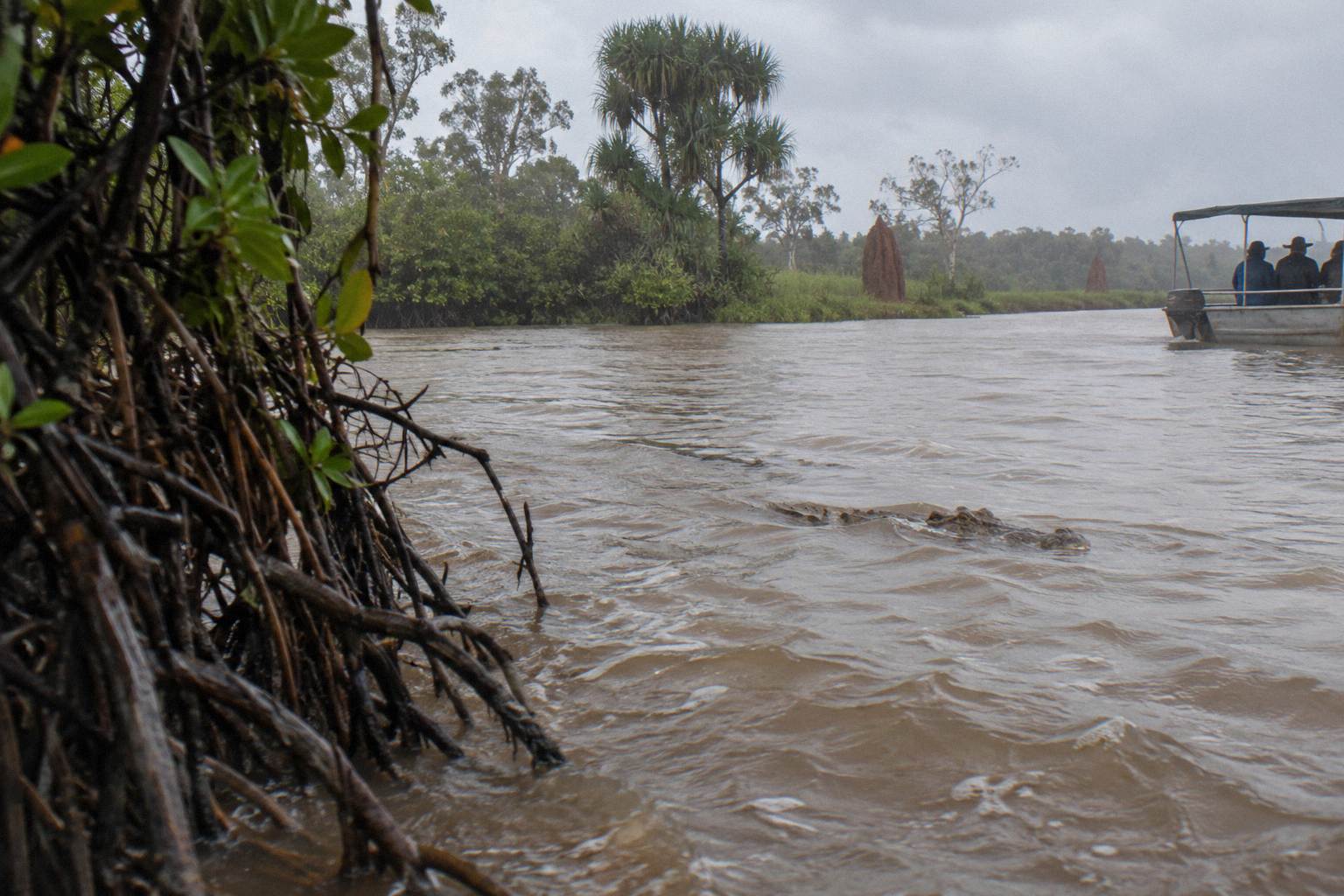
If you want the species background at more length, the guide to the crocodiles of the Adelaide River stays inside what the NT Government states. For the jump itself, the animal doing it is always the saltwater crocodile, not the freshwater crocodile (Crocodylus johnstoni), which also lives in the NT. The freshwater species appears on Spectacular's wildlife list, but it is not the one launching at the bait.
How Close Do The Crocodiles Get To The Boat?
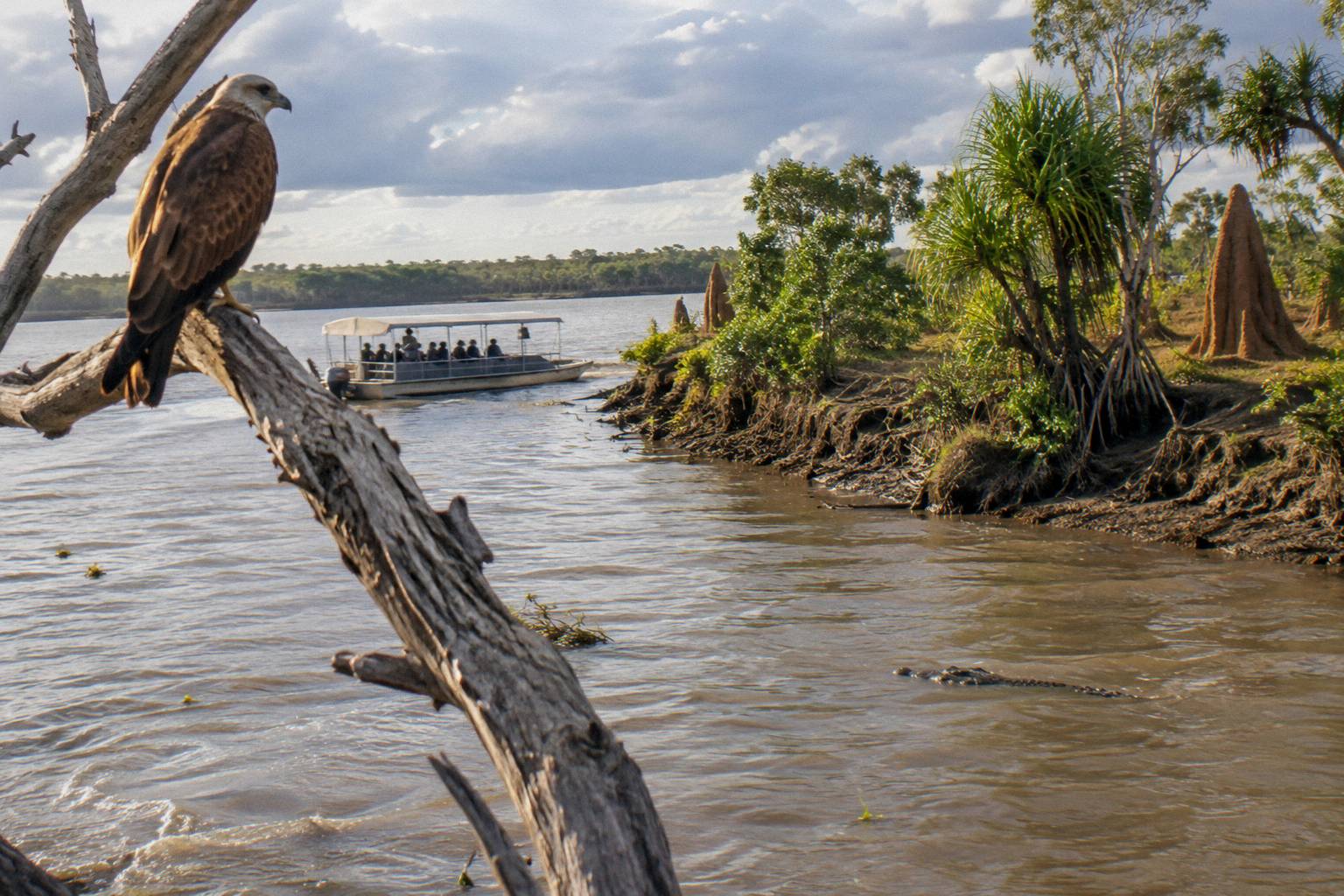
No operator publishes a how-close-to-the-boat figure either, so there is no verified distance for the animals' approach, but the boats are built so the crocodiles come right to the hull, and the operators describe decks, glass and seating arrangements rather than measurements. The Adelaide River Queen has an air-conditioned lower deck and an open-air upper deck with a shaded canopy, individual seating and croc-proof glass, per the operator. Spectacular runs two custom vessels, Croc-Cat1 (a multi-hull with stadium-style seating and the skipper at the rear) and the smaller Wildcat, which goes further down the river; which vessel runs depends on the numbers booked. The Pathfinder vessels are open-air and carry up to 38 passengers each, a figure stated for the Pathfinder only.
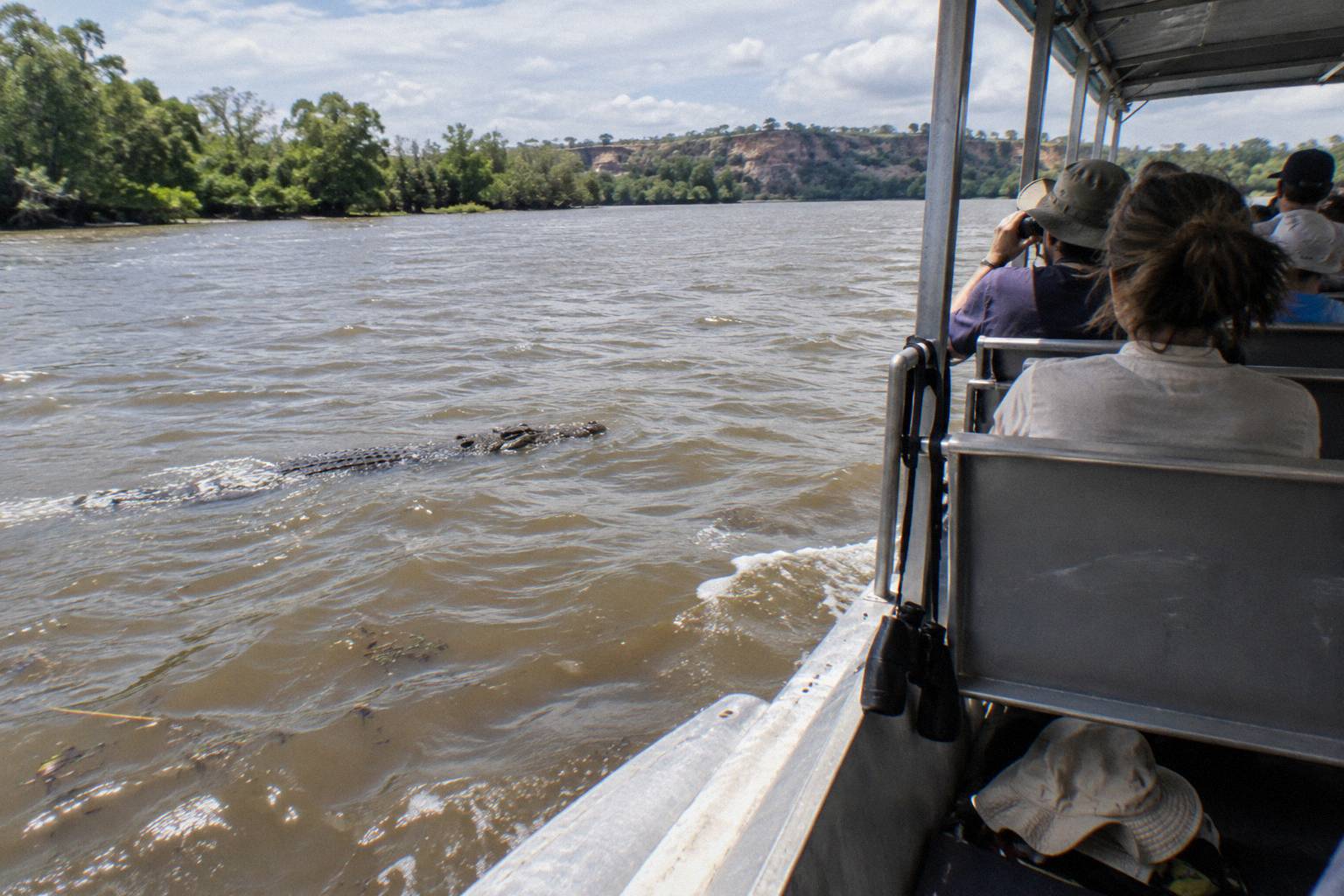
Proximity is the design principle of the whole experience. Adelaide River Cruises suggests a camera or a charged phone and says, in its own wording, that a zoom lens is useful for wildlife across the floodplain but standard phone cameras suit the crocodile interactions because of the proximity. That is an operator statement about gear, and it doubles as the closest honest answer this page can give to "how close": close enough that you do not need a long lens. This site will not convert that into a measurement, and neither should you trust a page that does.
Safety on the water is layered rather than guaranteed, and it is worth listing what each operator states. Spectacular offers no direct contact with the crocodiles. The Original/Queen operator has life jackets on board, does not allow swimming, does not allow food on the boat, and requires supervised children. Adelaide River Cruises opens every cruise with a safety briefing from the guides on crocodile behaviour and the rules. The NT Government's Be Crocwise advice reinforces the same logic: do not lean out of or dangle limbs over the side of a boat. Nobody, operator or government, calls a cruise "safe" as a promise, and neither does this site.
| What each side states about the water-side rules | Source |
|---|---|
| No direct contact with the crocodiles | Spectacular, operator-stated |
| Life jackets on board, no swimming, no food on the boat, supervised children | The Original/Queen operator |
| Safety briefing on crocodile behaviour and rules before boarding | Adelaide River Cruises |
| Do not lean out of or dangle limbs over the side of a boat | NT Government Be Crocwise advice |
| Any body of water in the Top End may contain large and potentially dangerous crocodiles | NT Government |
The pattern across all three operators and the government advice is the same: the risk is managed by keeping human bodies inside the vessel and behind rails or glass, not by keeping crocodiles at a measured distance. For a fuller walkthrough of the flow of a trip, from arrival to the hour on the water, the what to expect on a jumping crocodile cruise guide covers it in order.
Which Boat Gives The Best View Of The Jump?
No source supports a "best side of the boat" or a best-deck claim for the jump, and no operator claims its crocodiles jump higher or more often, so this section gives what is verifiable: how each operator's vessels are arranged around the bait position and what that means for sightlines. Spectacular's boats carry the bait position at the front, which the operator calls the "jumper", and the stadium-style seating on Croc-Cat1 is arranged around viewing rather than rows of seatbacks. The Adelaide River Queen splits the experience between enclosed air-conditioned comfort below and open air above. The Pathfinders are deliberately open, smaller, with up to 38 passengers each, though the operator does not claim better jumps from them.
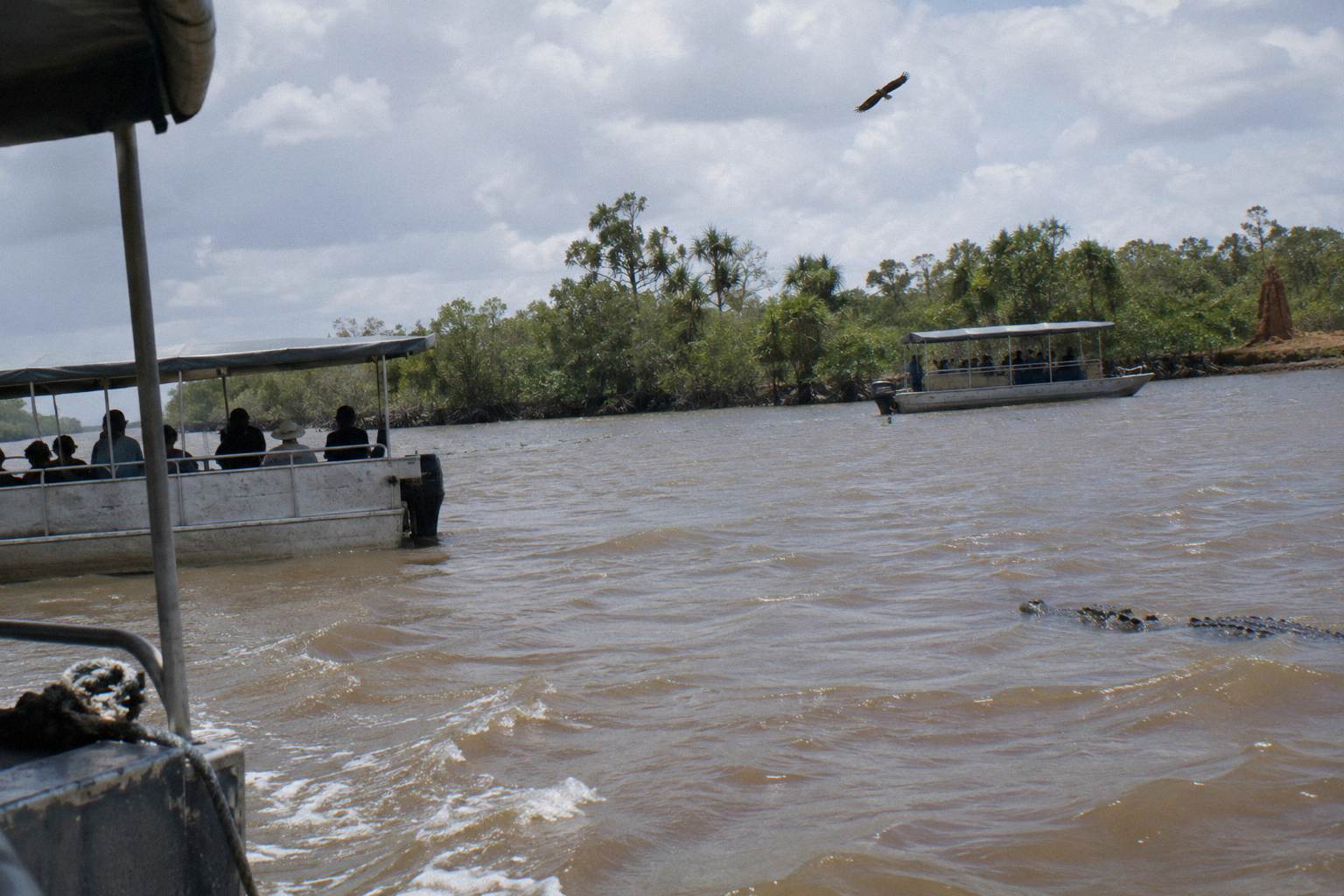
Choosing between the operators is therefore a comfort and format decision, not a jump-quality decision, because nothing in any source ranks the jumps themselves. That framing is worth repeating because marketing elsewhere implies the opposite. The honest variables are these: undercover versus open air, a larger multi-hull versus a 38-passenger open vessel, glass between you and the water versus rail, and which jetty suits your route along the Arnhem Highway. The site's guide to what separates the Adelaide River jumping crocodile cruise operators works through the differences operator by operator.
The geography is straightforward. Spectacular, run by the Indigenous-owned Arirrki Aboriginal Corporation, departs from Beatrice Hill Farm at Middle Point, reached past the Windows on the Wetlands Visitor Centre. The Adelaide River Queen and the Pathfinders leave from the Adelaide River Bridge at Wak Wak, where a giant crocodile statue stands in the car park. Adelaide River Cruises departs from Anzac Parade, Middle Point. Every cruise, at every operator, is about one hour on the water.
One practical note on timing, since the jetty you choose affects the day. Spectacular departs daily at 9am, 11am, 1pm and 3pm and is open year-round except Christmas Day. The Adelaide River Queen departs 1pm daily, with possible reduced wet-season departures to confirm when booking. Adelaide River Cruises' tour page lists 9am, 11am, 1pm and 3pm daily with operating months May to October. The operators publish no morning-versus-afternoon crocodile behaviour claims, so nobody can honestly sell you a "better" departure for jumping.
For a completely different angle on the same river, the Jumping Crocodile Cruise And Barramundi Fishing tour pairs the cruise with land-based barramundi fishing, Fogg Dam and hotel pickup over about 5 hours. It is a reminder that the jump is one act in a wetland full of them: Spectacular's own wildlife list includes white-bellied sea eagles, whistling kites, bull sharks, black flying-fox, the endangered speartooth shark and the critically endangered largetooth sawfish, and the operator says its access road often shows water buffalo, cattle and wading birds on the way in.
How Does The Jump Compare To What You See On Nature Documentaries?
The Adelaide River jump is the same vertical lunge you have seen in documentary footage, powered the same way by the tail, except the animal performs it an arm's length from the hull rather than through a telephoto lens, and no source claims the cruise version reaches any particular height or distance. Documentaries and cruises both show a saltwater crocodile driving itself upward until its head and forequarters clear the water. The difference is distance from the viewer. On the river, the question the sources answer is not how high but how near, and the answer is near enough that the operators warn against leaning out over the side.
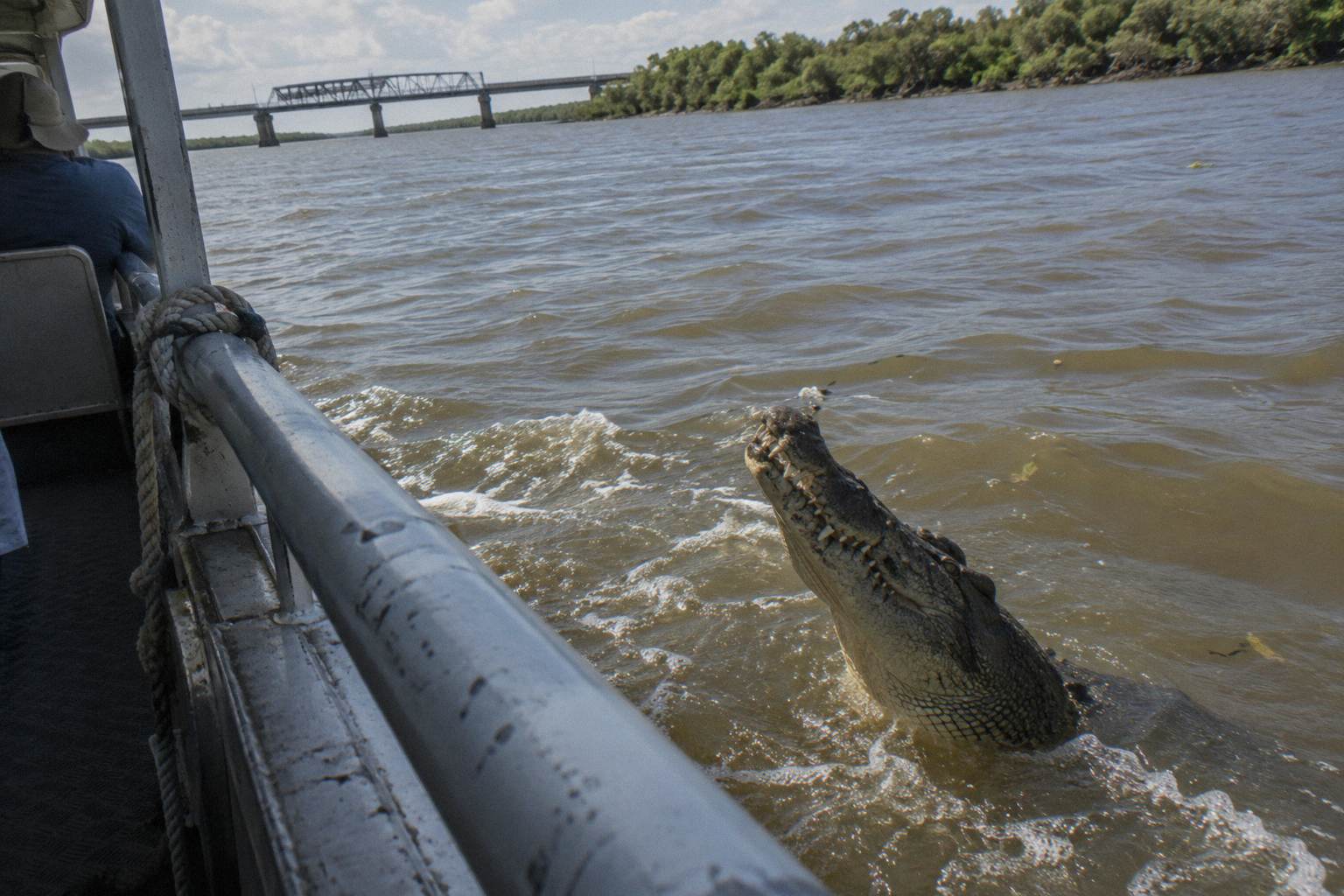
There is a conservation story behind the spectacle that documentaries often mention and that the NT Government confirms. Saltwater crocodiles were almost extinct in the 1970s after hunting, and both NT crocodile species are now protected by law. The population of roughly 100,000 in 2017 was thought to be at or approaching pre-hunting levels, and the NT states there are more saltwater crocodiles in the NT than in Queensland and Western Australia. Nests are built November to May and average about 50 eggs, which is why the wet months matter to the river's breeding population even though cruise schedules shift in them. The NT's crocodile conservation page carries the full protection and recovery detail.
| Cruise version of the jump | Documentary version |
|---|---|
| Bait dangled from the front of the boat | Natural hunting or staged feeding sequences |
| Animal an arm's length from the hull | Filmed from distance with long lenses |
| About one hour on the water | Edited highlights across days or weeks |
| Behaviour never guaranteed, per operators | The best takes, selected in the edit |
For photographers, the practical takeaway from the operators is simple: Spectacular encourages photography and lists a camera among what to bring, alongside water, sunscreen, a hat and sturdy footwear; Adelaide River Cruises says standard phone cameras suit the interactions because of the proximity while a zoom lens helps for wildlife across the floodplain. The photographing jumping crocodiles guide on this site goes deeper on gear and approach. If you are still weighing whether the experience justifies the drive from Darwin, the blog post on whether a jumping crocodile cruise is worth it works through the cost and value side, and the jumping crocodile cruise cost and value guide breaks the operator prices down line by line.
Visitors weighing the Adelaide River Crocodile Cruise against wildlife cruises elsewhere in northern Australia should know the baited vertical jump is specific to saltwater crocodile cruises in the Top End; the comparison with Daintree crocodile cruises covers the differences in boat style, river and operator.
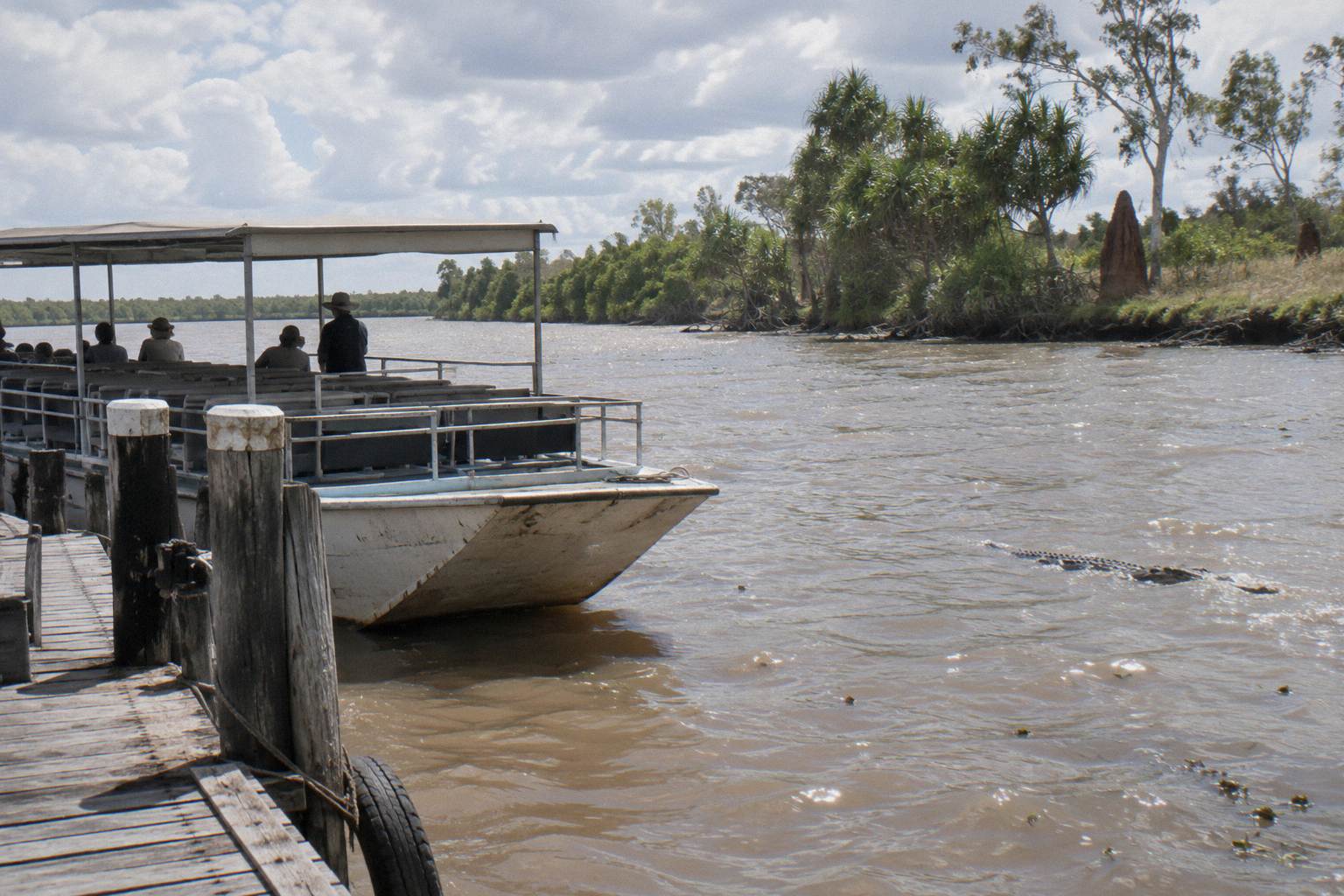
One last framing point, because this page's question attracts readers mid-research: the absence of a jump figure is not a gap in the sources that a better search would fill. It is the accurate description of a wild animal's variable behaviour. The three operators, the NT Government and this site all stop at the same honest boundary. What sits on the verified side of that boundary, the 6 m maximum size, the hour underwater, the land speed, the near-100,000 NT population, is more than enough to explain why the hour on the river lands the way it does.
Common Questions About How Far A Crocodile Can Jump
How Far Can A Crocodile Jump Out Of The Adelaide River?
No operator and no NT Government page publishes a jump height or distance for Adelaide River crocodiles, so there is no verified figure. The crocodiles are saltwater crocodiles, the largest living reptile, growing up to 6 m, and the jump is a vertical lunge that varies with each animal and each day.
How High Can A Saltwater Crocodile Jump?
No official source publishes a jump height, and this site will not invent one. What is verified is the animal's scale: up to 6 m long, capable of moving faster than a human on land for short bursts, and able to stay underwater up to an hour.
Why Do Crocodiles Jump On The Cruise?
The operators dangle bait above the water, and the crocodiles lunge vertically for it. Spectacular offers a taste of buffalo meat from a jumper position at the front of its boats, and the Original/Queen operator says its crocodiles are 100% wild and its feeding is done under NT wildlife permits.
Are The Crocodiles Trained To Jump?
No. The operators describe wild animals responding to bait, and the Original/Queen operator states behaviour can never be guaranteed. Spectacular keeps detailed feeding logs and holds Wildlife Permits from NT Parks and Wildlife.
How Close Do The Crocodiles Get To The Boat?
No operator publishes a distance either. Adelaide River Cruises says standard phone cameras suit the crocodile interactions because of the proximity, which is the closest honest indication of how near the animals come.
Is It Safe To Be That Close To A Jumping Crocodile?
Operators do not promise safety. Spectacular offers no direct contact with the crocodiles, the Original/Queen operator has life jackets on board with no swimming and no food on the boat, and the NT Government's Be Crocwise advice says never lean out of or dangle limbs over the side of a boat.