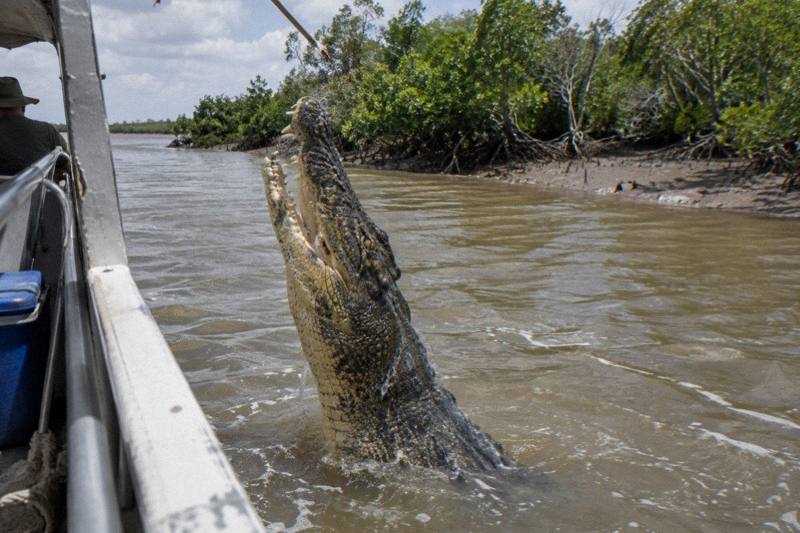
Do You Feed The Crocodiles On The Adelaide River Cruise?
What the river operators and the NT Government actually say about feeding crocodiles on the Adelaide River jumping cruises, from buffalo meat and wildlife permits to on-board rules.
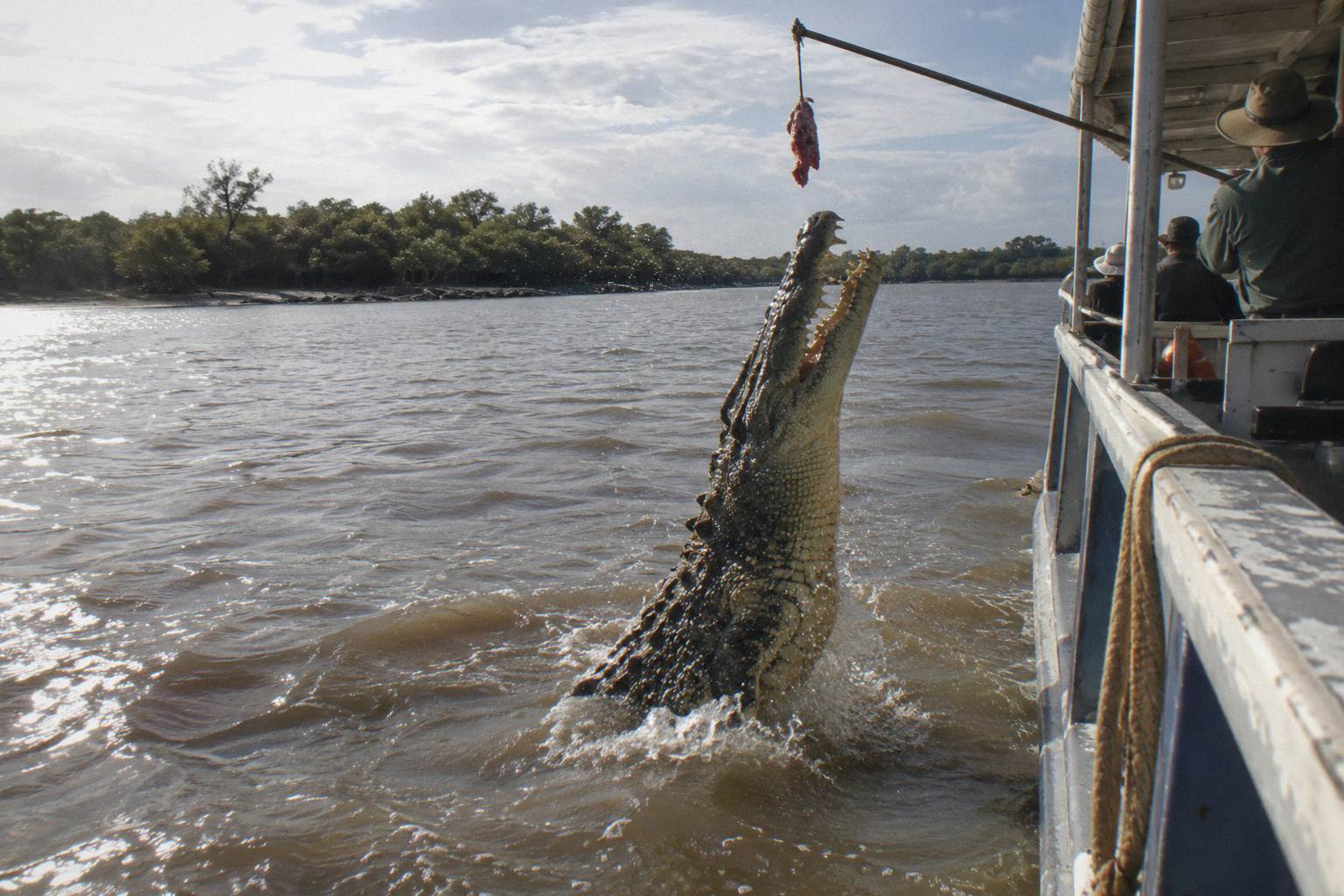
Yes, but only the crew do. On every Adelaide River jumping cruise it is the trained staff who offer food to the crocodiles, never the passengers. Spectacular Jumping Crocodile Cruises says its crocodiles are offered a taste of buffalo meat by staff holding Wildlife Permits from NT Parks and Wildlife; the Original/Queen operator says its crocodiles are 100% wild and its feeding is done under NT wildlife permits. Nobody on board feeds, touches or handles a crocodile themselves.
The question behind the question is usually an ethics one. People who ask it have often read a line somewhere about boats training crocodiles to associate humans with food, and they want to know whether buying a ticket makes them part of that. It is a fair question, and it deserves a straight answer built from what the operators themselves publish and what the Northern Territory Government says, rather than from forum arguments.
What the record actually shows is more specific than most people expect. Two of the three river operators publish feeding statements on their own pages. The third, Adelaide River Cruises, opens its one-hour experience with a safety briefing from its guides on crocodile behaviour and the rules, and its public FAQ carries the practical detail about cameras and proximity rather than a feeding policy statement. The NT Government page on crocodiles says nobody may take or interfere with a crocodile without a permit, and it does not describe the cruise permit scheme. This article walks through all of that in order, and only from those sources.
Why Do The Crocodiles Jump At All?
Crocodiles jump because the crew dangle food above the water, triggering the animal's own natural hunting lunge. These cruise operators work with saltwater crocodiles, Crocodylus porosus, the largest living reptile, capable of growing up to 6 m, and the food is held where the crocodile has to leave the water entirely to reach it.
Saltwater crocodiles hunt by explosive vertical strikes, and the cruise setup borrows that. Spectacular says its boats have a "jumper" at the front, the position from which the crew work, and that the crocodiles are offered a taste of buffalo meat. The emphasis in the operator's own wording is on "a taste", not a meal. The Original/Queen operator frames it the other way around: its crocodiles are 100% wild, it says, and its feeding is done under NT wildlife permits.
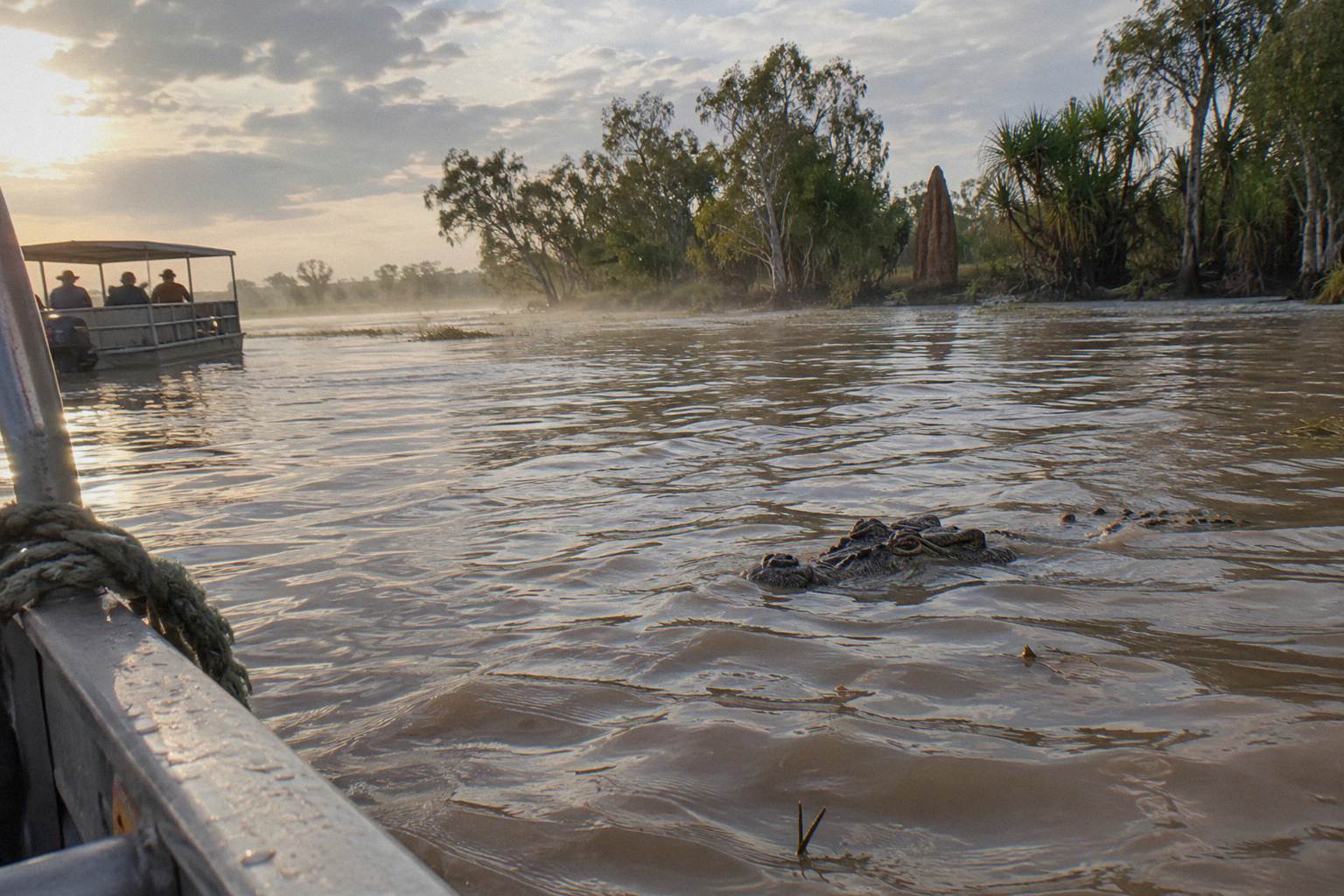
The distinction matters more than it first appears. These are not farm animals waiting at a dock for a feed. The NT Government records about 100,000 saltwater crocodiles in the NT wild in 2017, thought to be at or approaching pre-hunting levels, and no river-by-river population count for the Adelaide River exists in the sources. The animals that come to the boats are wild crocodiles that live and hunt in the river system, and the operators' own statements treat them that way. The Original/Queen operator puts it plainly: "We see crocodiles on almost every tour... behaviour can never be guaranteed."
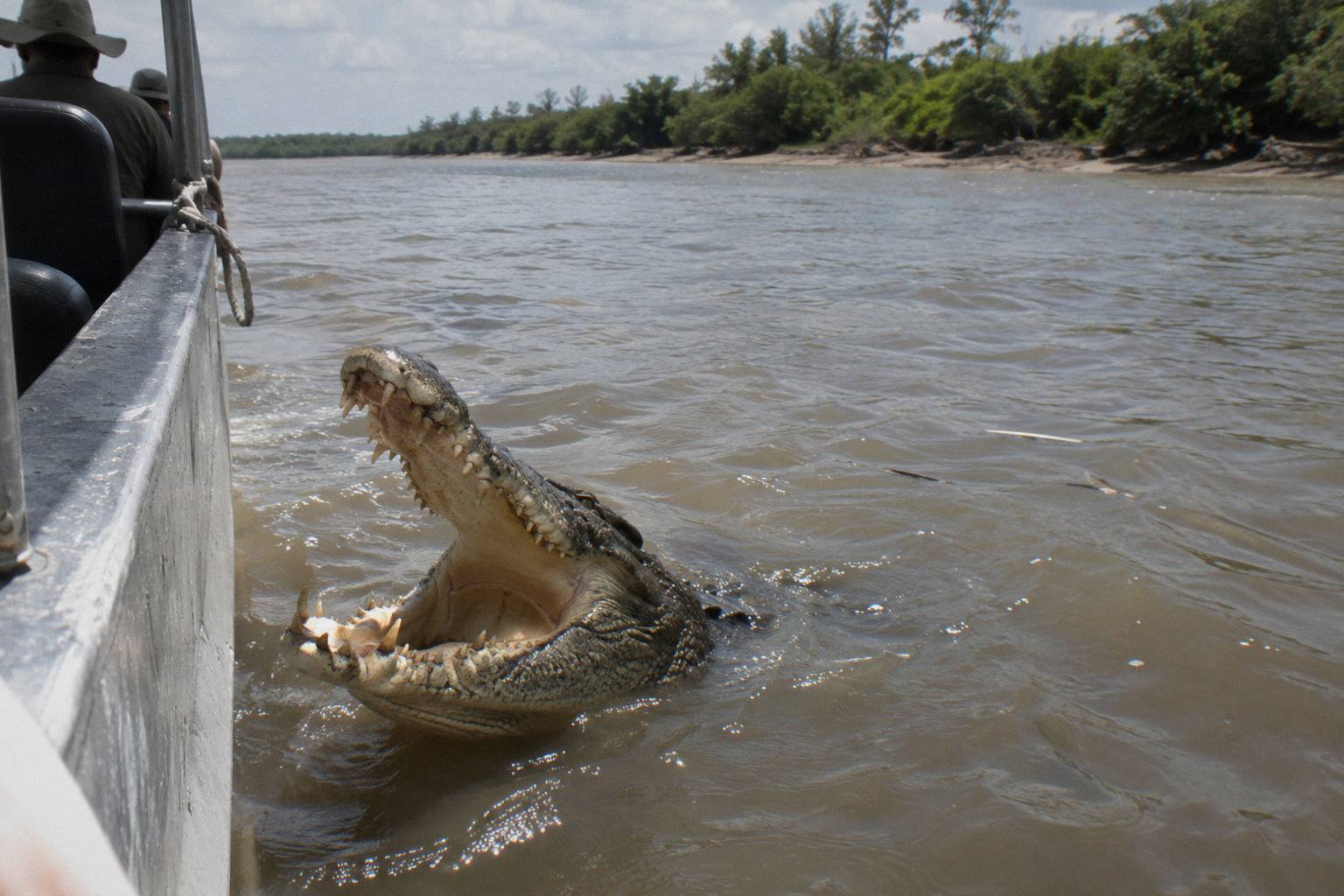
If you want the behaviour side of this in more depth, the site's guide to how the jumping crocodile display actually works covers the mechanics, and the companion post on why crocodiles jump out of the water on the cruise goes deeper on the animals themselves. The short version for this page: the jump is the crocodile's movement, the food is the crew's, and the two meet only at the end of a pole or jumper bar.
What The Operators Say About The Feeding?
Start with Spectacular, because its statement is the most detailed of any operator on the river. The operator publishes five distinct commitments: the buffalo-meat offer, the Wildlife Permits held by its staff from NT Parks and Wildlife, an Animal Ethics Policy developed with NT Parks and Wildlife, no direct contact between passengers and crocodiles, and detailed feeding logs. The logs detail is the one people usually miss. A feeding log is a record of what was offered, when and to which animals, and keeping one is an accountability measure, not a marketing line. The operator's cruises page sets this out directly.
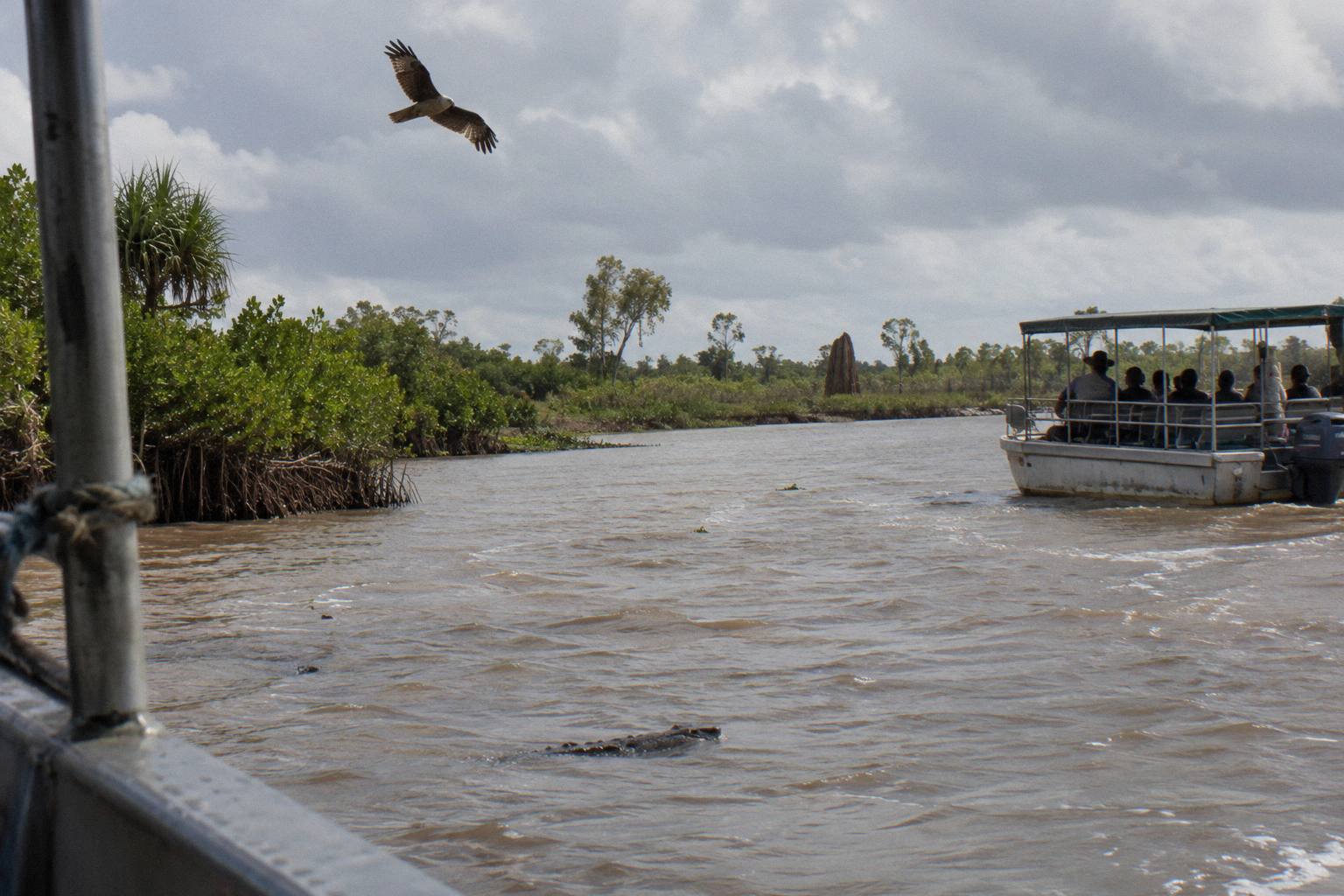
The Original/Queen operator, which runs both the Adelaide River Queen and the Pathfinder vessels, makes a shorter claim in two parts: the crocodiles are 100% wild, and the feeding is done under NT wildlife permits. That is a different emphasis, protection of the animal's wildness rather than a published ethics framework, and it is the operator's own wording. Its FAQ is where the statement sits.
Adelaide River Cruises, the third operator, does not publish a feeding policy statement in the sources. What it does publish is process: its one-hour jumping crocodile experience opens with a safety briefing from the guides on crocodile behaviour and the rules, which tells you where the operator draws the line before the boat leaves the jetty. Its FAQ carries the camera advice instead, suggesting a camera or a charged phone, noting a zoom lens is useful for wildlife across the floodplain and that standard phone cameras suit the crocodile interactions because of the proximity, in its own wording.
| Operator (vessel side) | What it feeds, per its own pages | Permits and policy stated | Passenger contact |
|---|---|---|---|
| Spectacular Jumping Crocodile Cruises | A taste of buffalo meat, offered by crew | Staff hold Wildlife Permits from NT Parks and Wildlife; Animal Ethics Policy developed with NT Parks and Wildlife; detailed feeding logs kept | No direct contact with the crocodiles |
| The Original / Adelaide River Queen Cruises | Feeding under NT wildlife permits, food offered by crew | NT wildlife permits; crocodiles described as 100% wild | No handling; no swimming; no food on the boat |
| Adelaide River Cruises | No feeding statement published in the sources | Experience opens with a guide's safety briefing on crocodile behaviour and the rules | Rules covered in the pre-cruise briefing |
Can You Feed A Crocodile Yourself On The Cruise?
No. On none of the three operators does a passenger feed, touch or handle a crocodile. Spectacular states there is no direct contact with the crocodiles; the Original/Queen operator bans food on the boat, bans swimming and requires supervised children; Adelaide River Cruises opens with a safety briefing covering crocodile behaviour and the rules. The feeding is crew work under permit, and the deck rules keep it that way.
This is worth stating plainly because the marketing imagery can blur it. Photographs of crocodiles lunging beside a boat look interactive, and some visitors arrive half expecting a hand-feeding session like a wildlife park encounter. What actually happens on the Adelaide River is closer to the opposite: the boats are designed so that passengers watch from behind rails or glass. Spectacular's Croc-Cat1 is a multi-hull with stadium-style seating and the skipper at the rear; the Adelaide River Queen has an air-conditioned lower deck and an open-air upper deck with individual seating and croc-proof glass, per the operator.
The NT Government's own safety advice runs the same direction. Its Be Crocwise guidance includes not leaning out of or dangling limbs over the side of a boat, and the NT page says saltwater crocodiles are a serious threat to humans. The operator rules and the government advice converge: stay inside the boat, keep children supervised, keep food off the vessel where the operator says so.
| Rule | Operator it comes from | Where it applies |
|---|---|---|
| No direct contact with the crocodiles | Spectacular | All its cruises, both vessels |
| No food on the boat | The Original / Adelaide River Queen Cruises | Adelaide River Queen and Pathfinder vessels |
| No swimming, life jackets on board | The Original / Adelaide River Queen Cruises | On the water |
| Children must be supervised | The Original / Adelaide River Queen Cruises | On the water |
| Safety briefing on crocodile behaviour and the rules before departure | Adelaide River Cruises | Before each cruise |
| Do not lean out of or dangle limbs over the side of a boat | NT Government Be Crocwise advice | Any Top End waterway, cruise boats included |
If the ethics question has settled the main doubt and you are moving to logistics, the natural next question is timing. The question of whether you need to book ahead is answered in its own post, but the headline is that two of the three operators say outright that their cruises sell out. The featured Adelaide River Cruises jumping crocodile experience is the related listing for this page; its operator strongly recommends booking in advance, especially June to August, and its FAQ gives a full refund if cancelled more than 24 hours before departure, non-refundable inside 24 hours unless the operator cancels for weather or operations. Read whichever booking page you use for its own terms. Check availability
Is Feeding Wild Crocodiles Harmful?
The honest answer is that neither the operators nor the NT Government publish a verdict either way, so this article will not invent one. What the sources do say is that both crocodile species are protected by law, nobody may take or interfere with a crocodile without a permit, and Spectacular's feeding runs under NT Parks and Wildlife permits with a developed ethics policy and logged feeding.
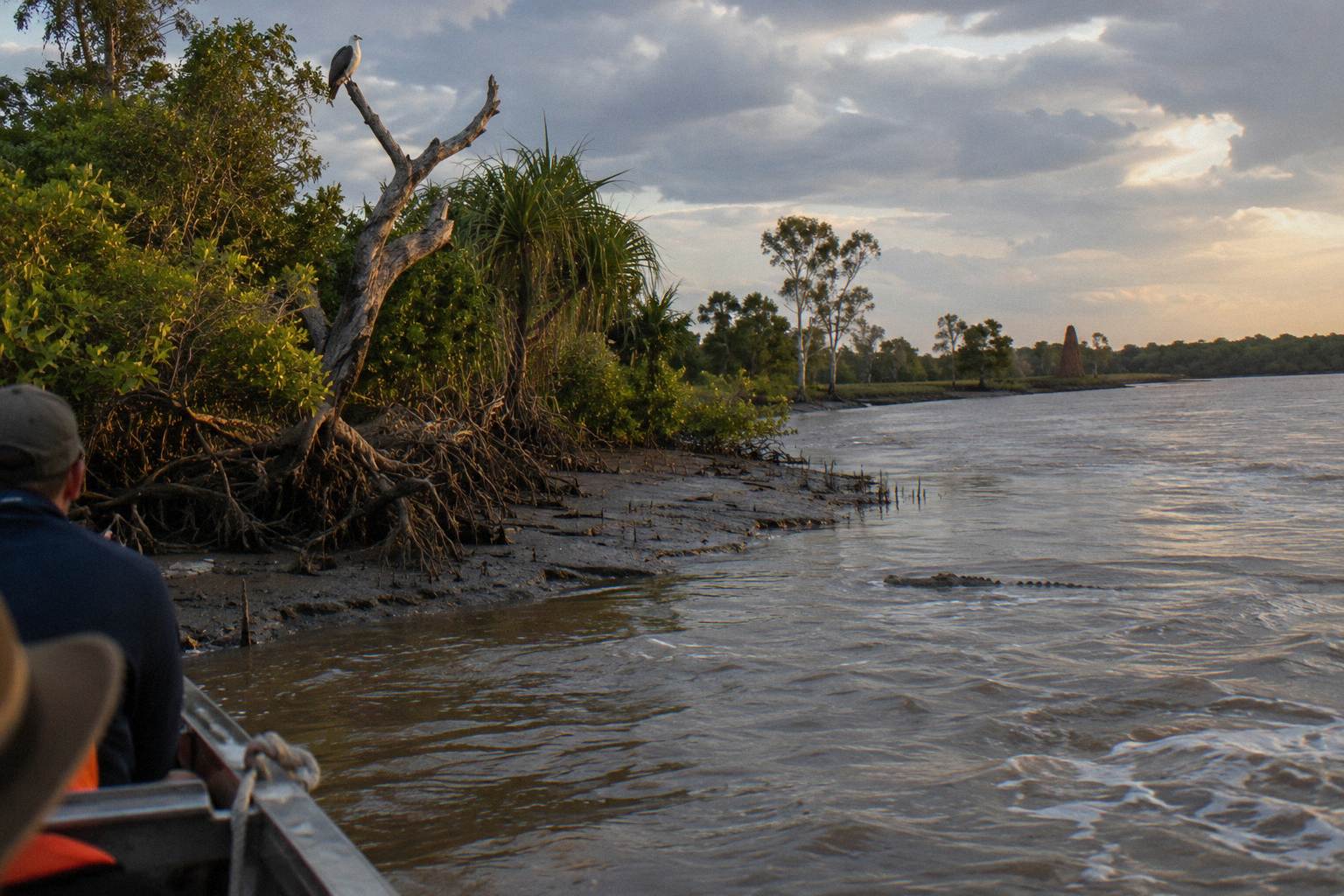
That is the honest boundary of the public record, and it is worth being precise about because so much of what circulates online about jumping cruises is opinion dressed as fact. The NT Government page on crocodile conservation records that the saltwater crocodile was almost extinct in the 1970s and is now widespread and no longer considered threatened. It also states that the NT has more saltwater crocodiles than Queensland and Western Australia, though not as a combined figure. What that page does not do is evaluate the cruise feeding scheme; the NT page says nobody may take or interfere with a crocodile without a permit and does not describe the cruise permit scheme at all.
So the decision framework available to a reader is this: the operators state they feed under NT permits, one publishes an ethics policy developed with the parks authority and feeding logs, the NT Government regulates interference with crocodiles by permit, and no source in the record makes an independent welfare finding either way. Readers who want a deeper biological background can start with the site's saltwater crocodile facts for cruise visitors, which stays inside the same NT Government sourcing.
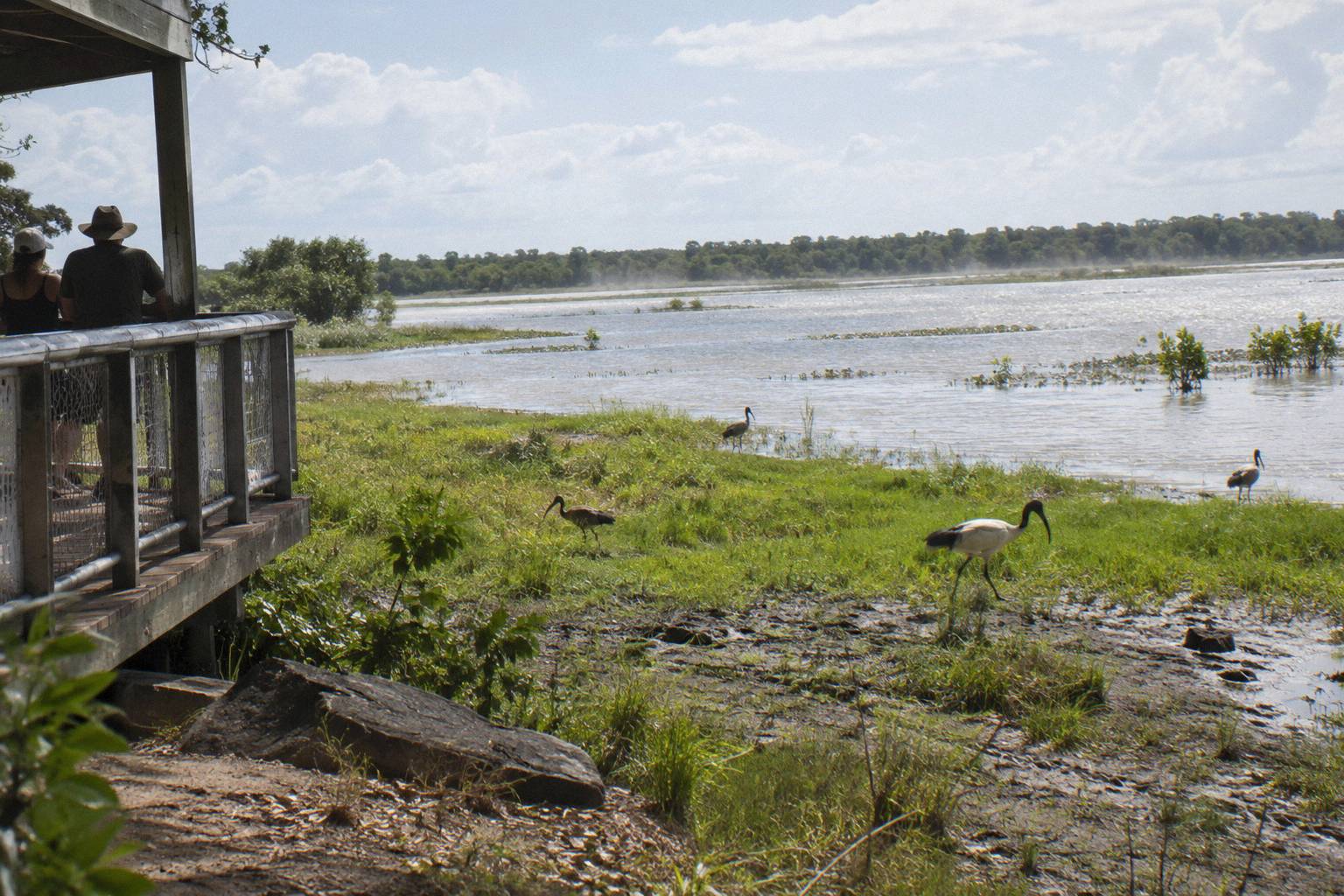
One more fact from the NT record belongs here because it reframes the scale. A 6.7 m saltwater crocodile was netted on the Mary River in 1974, and the biggest ever trapped was just over 5 m. Large crocodiles can stay underwater up to one hour with a heart rate of 2 to 3 beats a minute, and for short bursts can move faster than humans on land. These are the animals the crews work with, from the front of a boat, under permit, every day of the season.
Which Cruise Should You Pick If Feeding Policy Matters To You?
Pick Spectacular if you want a published ethics framework: it is the only river operator naming an Animal Ethics Policy, developed with NT Parks and Wildlife, backed by staff Wildlife Permits, detailed feeding logs, and no direct contact. Pick the Original/Queen operator if wild-stock assurance matters more, since it states its crocodiles are 100% wild and fed under NT wildlife permits; Adelaide River Cruises publishes a safety briefing process rather than a feeding statement.
Break that down practically. Spectacular, Indigenous-owned and operated by Arirrki Aboriginal Corporation, which says every ticket supports an Aboriginal community, is the operator for a reader whose ethics question is about accountability and process: published policy, permits named, logs kept. Its operator price is A$55 adult (15+), A$40 child (4 to 14), infants 3 and under free, with family rates of A$155 for two adults and two children and A$190 for two adults and three children, all excluding a small booking fee added at checkout. It departs daily at 9am, 11am, 1pm and 3pm and is open year-round except Christmas Day.
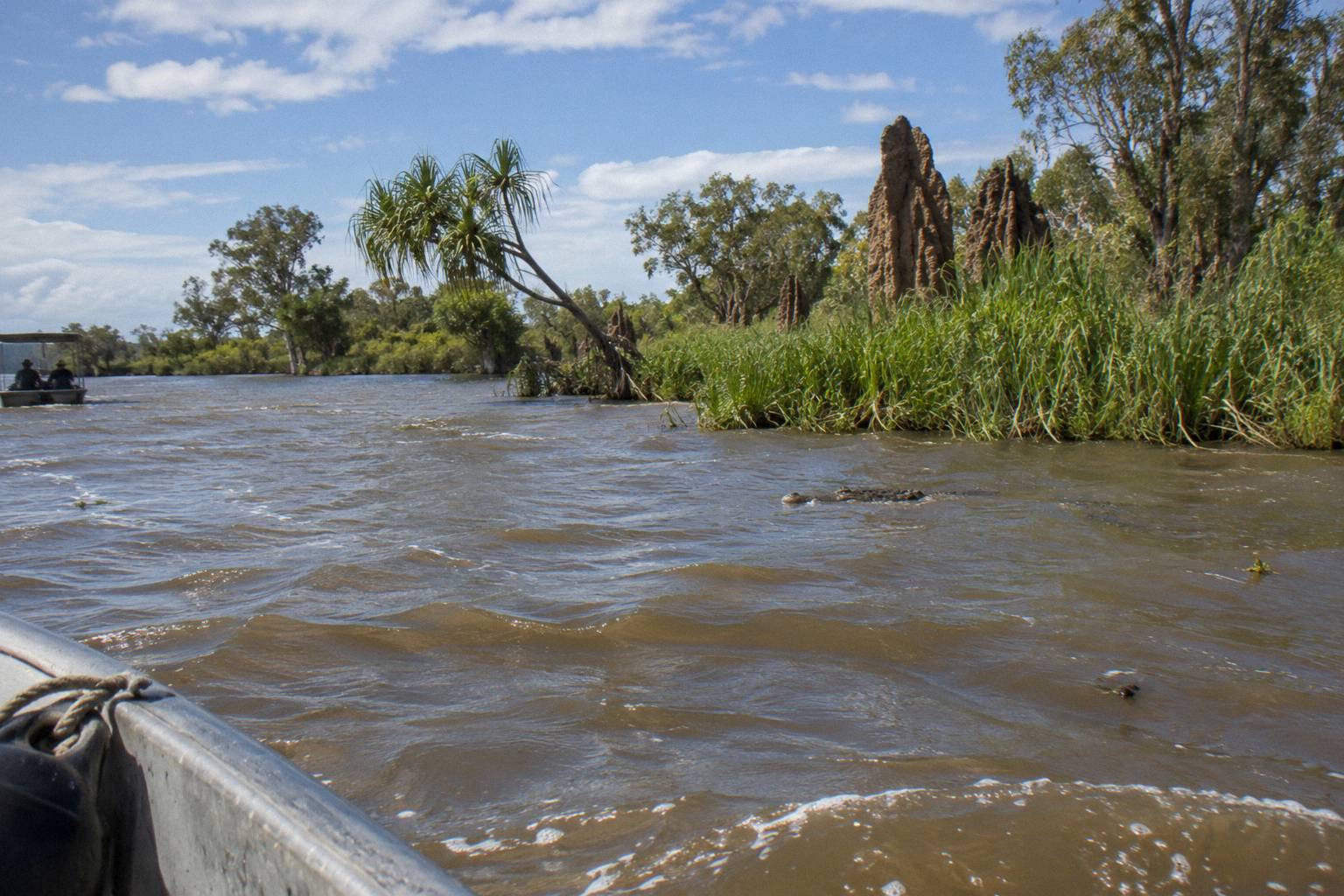
The Adelaide River Queen product from the same Original/Queen operator is the pick for the reader who responds to the 100% wild framing and wants a bigger vessel: the Queen has an air-conditioned lower deck and a shaded open-air upper deck with croc-proof glass. Its operator price is A$65 adult (14+), A$50 child (4 to 13), infants 3 and under free, with a 1pm daily departure. The Pathfinder vessels from the same operator are open-air, up to 38 passengers each, on a single A$75 fare for any passenger aged 1 and over; the operator also runs a kids promotion letting one child under 13 travel free per full-paying passenger for travel between 5 October 2026 and 31 March 2027 unless it ends earlier, with limited seats, so check the promotion applies before counting on it.
Adelaide River Cruises sits between them on price, A$58.50 adult (15+) and A$42.55 child (1 to 14) including taxes and fees per its own statement, with family rates at A$159.55 for 2+2, A$202.09 for 2+3 and A$244.64 for 2+4, and a concession rate of A$53.18 for pension card holders. Its tour page lists departures at 9am, 11am, 1pm and 3pm daily and operating months May to October. Its differentiator is the opening safety briefing on crocodile behaviour and the rules, which some readers read as a plus: the trip frames itself around the animals' behaviour from the first minute on the jetty.
Do The Day Tours From Darwin Use The Same Feeding Setup?
You mostly cannot tell from the listings, and this site will not guess. Only the Croc Bus states its cruise operator: Adelaide River Cruises, the one that opens with the safety briefing. The AAT Kings half-day names no cruise operator, and neither does any other Darwin day tour, so the feeding setup on the water is whatever operator each tour contracts that day.
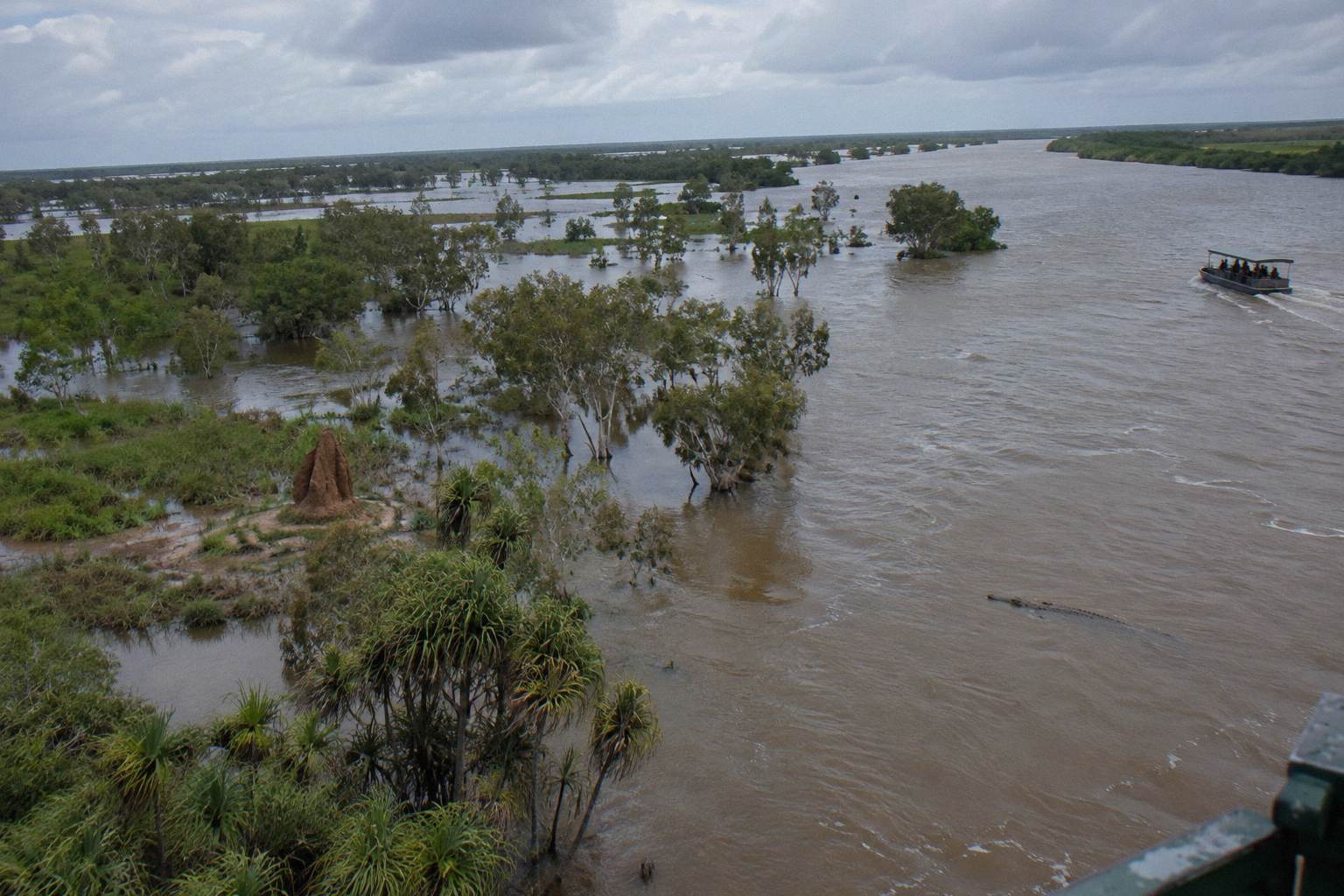
That is the honest answer, and it is more useful than a confident-sounding guess. If feeding policy is the thing deciding your booking, the cleanest control you have is to book a river cruise directly with the operator whose statement you have read, and treat any day tour as a transport-and-itinerary decision on top. The Croc Bus is the one day trip where the water component is named: return transport from Darwin, the jumping crocodile cruise with Adelaide River Cruises, Fogg Dam entry and a Humpty Doo stop, about 4 to 5 hours all up. No price or start time is stated for it; the booking page carries those.
The other day tours bundle different surroundings. The Wallaroo Tours NT option runs about 4 hours with lunch at the Humpty Doo Pub, Fogg Dam and Window on the Wetlands, with hotel transfers stated. Croc Country Safaris runs about 5 hours with Hooked on Barra entry. The Autopia Tours scenic trip runs about 4.5 hours with hotel pickup. The Litchfield full day stretches to about 11 hours, adding Wangi Falls, Florence Falls and Buley Rockhole. None of these prices is printed on this site; each booking page carries its own.
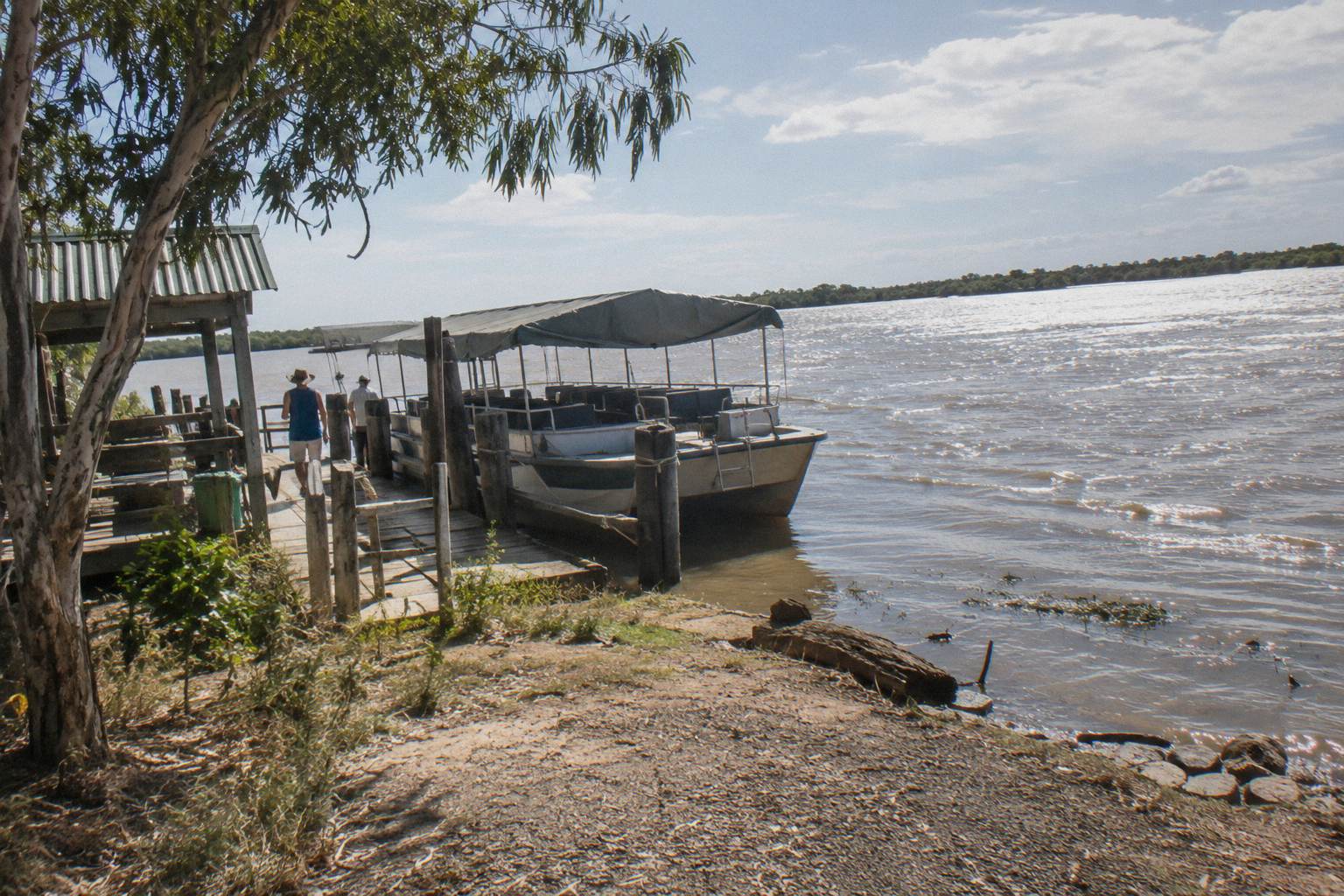
The question of whether jumping crocodile cruises are safe is covered in its own post, and it shares the same discipline: operator rules and NT Government advice, attributed, with no invented verdicts. For the on-water experience generally, the guide to what to expect on a jumping crocodile cruise walks the hour from check-in to jetty.
Common Questions About Feeding The Crocodiles
Common Questions About Feeding Crocodiles On The Cruise
Do You Feed The Crocodiles On The Adelaide River Cruise?
The crew do, the passengers do not. Spectacular says its crocodiles are offered a taste of buffalo meat by staff holding Wildlife Permits from NT Parks and Wildlife; the Original/Queen operator says its crocodiles are 100% wild and its feeding is done under NT wildlife permits. Adelaide River Cruises opens with a safety briefing on crocodile behaviour and the rules.
What Food Is Used To Make The Crocodiles Jump?
Spectacular states it offers the crocodiles a taste of buffalo meat. The Original/Queen operator states only that its feeding is done under NT wildlife permits and does not name the food in the sources. No operator publishes a quantity, a jump height or a jump distance.
Are The Crocodiles On The Cruise Wild Or Captive?
Wild. The Original/Queen operator says its crocodiles are 100% wild, and the NT Government records about 100,000 saltwater crocodiles in the NT wild in 2017, thought to be at or approaching pre-hunting levels. No river-by-river population count for the Adelaide River exists in the sources.
Is It Legal To Feed Crocodiles On A Cruise?
Both species are protected by law and you cannot take or interfere with a crocodile without a permit. The operators state their feeding is done under NT wildlife permits, and Spectacular adds that its Animal Ethics Policy was developed with NT Parks and Wildlife and that detailed feeding logs are kept. The NT page does not describe the cruise permit scheme itself.
Can Passengers Touch Or Feed The Crocodiles?
No. Spectacular states there is no direct contact with the crocodiles. The Original/Queen operator bans food on the boat, bans swimming and requires supervised children. Adelaide River Cruises covers the rules in its opening safety briefing, and the NT Government's Be Crocwise advice says not to lean out of or dangle limbs over the side of a boat.
The ethics question is a reasonable one to bring to a booking page, and the sources support a reasonable answer: permitted crew feeding, no passenger contact, wild animals, and a public record that is thinner than either defenders or critics of the cruises tend to assume. Adelaide River Crocodile Cruise keeps this site's comparisons anchored to operator pages and NT Government sources, and updates when they do.