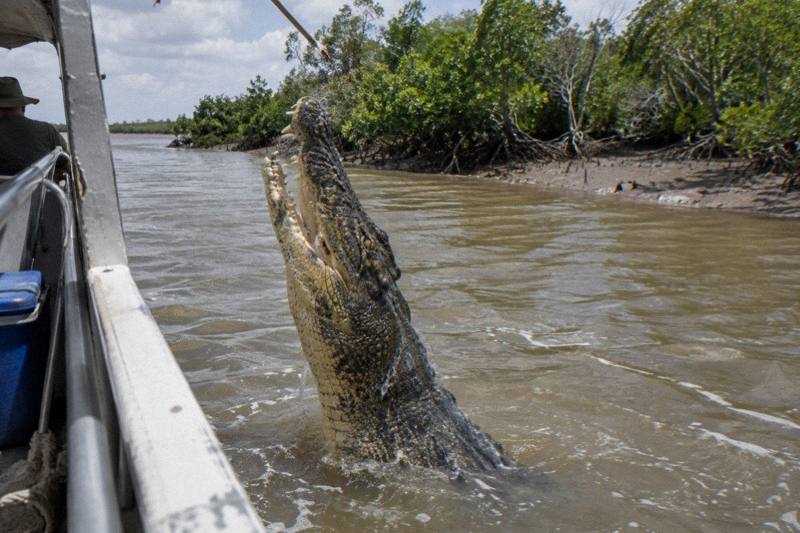
Are Jumping Crocodile Cruises Safe On The Adelaide River?
What the NT Government and the three river operators actually say about safety on jumping crocodile cruises: boats, rules, feeding, children, weather and a pre-boarding checklist.
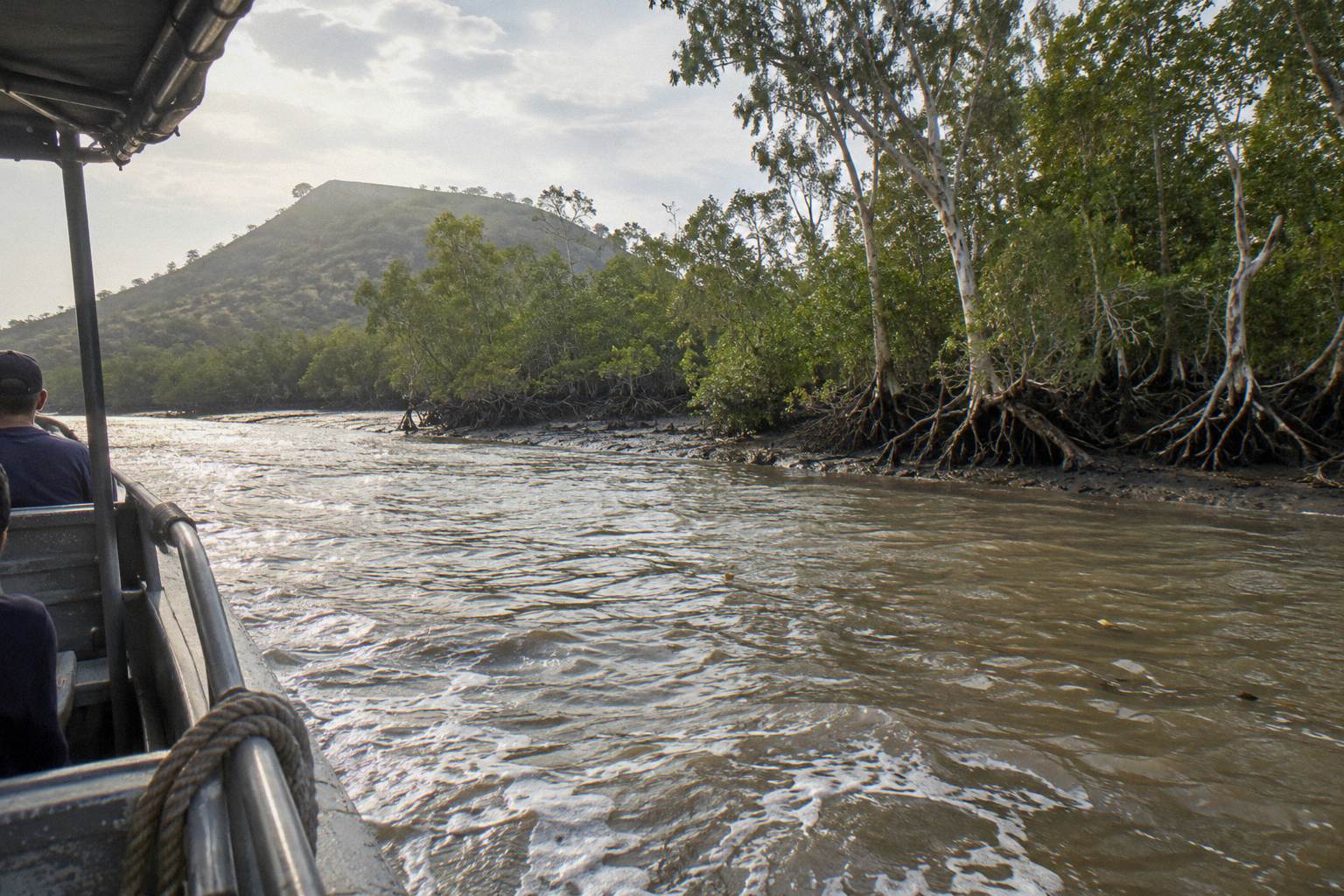
Are Jumping Crocodile Cruises Safe?
Jumping crocodile cruises are safe in a managed sense rather than a guaranteed one: no operator or government source calls them outright safe, the NT Government describes saltwater crocodiles as a serious threat to humans, and the tours run under NT wildlife permits with no direct contact, backed by operator rules that keep passengers inside the boat and the animals outside it.
That distinction matters, so it is worth spelling out before anything else. A jumping crocodile cruise puts a boat full of people on a river that the Northern Territory Government says may contain large and potentially dangerous crocodiles in any body of water in the Top End. Nobody on either side of that transaction pretends otherwise. What the cruise operators do instead is build the experience around separation: raised decks, rails, seated passengers, skippers who work the river daily, and feeding done under permit with poles or lines from the front of the vessel rather than anything a passenger holds.
The operator's own words are the most useful thing on the page. The Original Jumping Crocodile Cruises operator puts it plainly: "We see crocodiles on almost every tour... behaviour can never be guaranteed." That is the honest frame for everything that follows. Sightings are near-certain on this river; choreography is not. The crocodiles are wild animals that choose to approach the boats because they have learned the boats mean a taste of food, and the operators' permits and rules exist precisely because the animals stay wild.
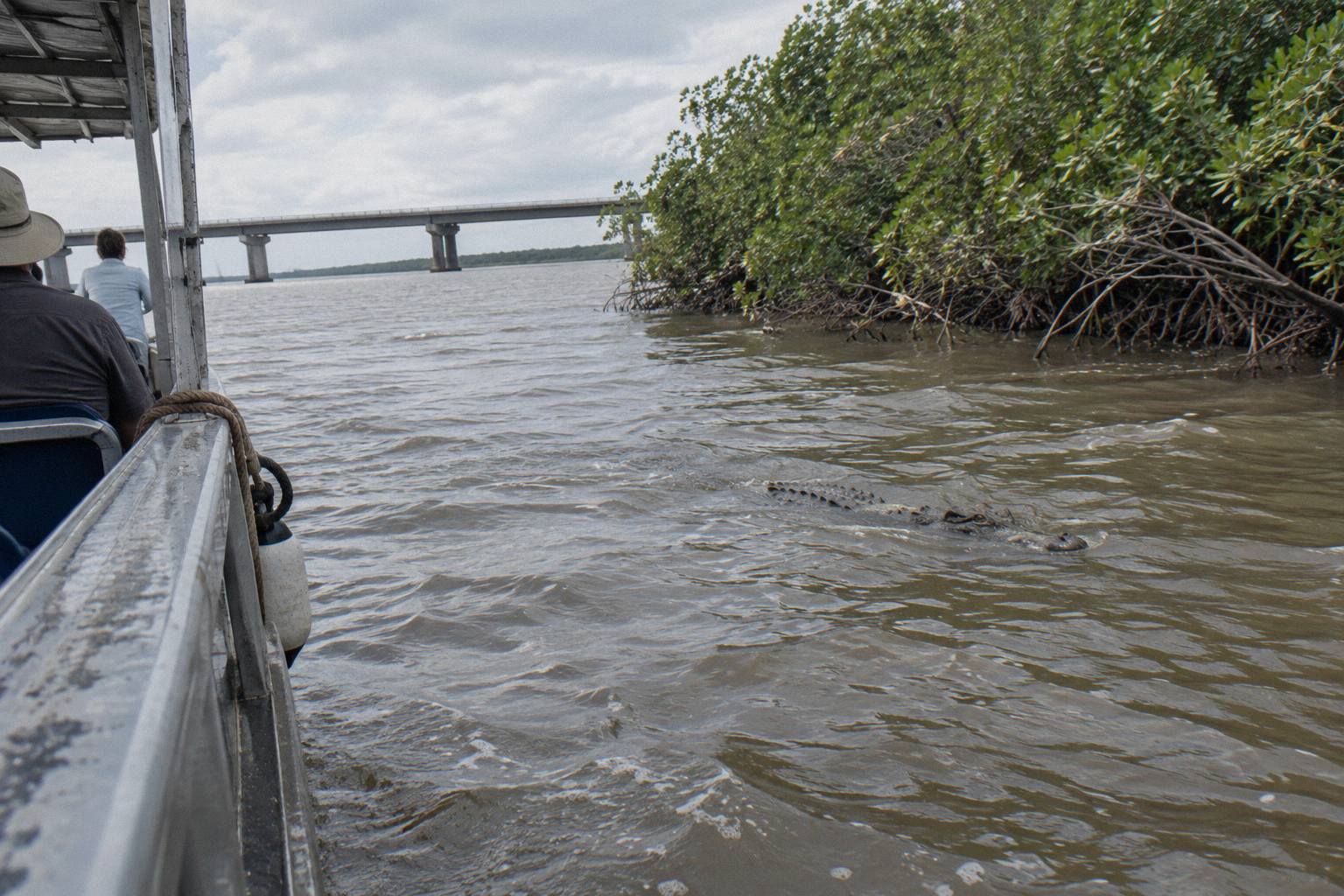
This site, Adelaide River Crocodile Cruise, exists to help you compare the three river operators and the Darwin day tours, and the safety question sits underneath every comparison. The short version of the decision content: all three river operators, Spectacular Jumping Crocodile Cruises, Adelaide River Queen Cruises trading as The Original Jumping Crocodile Cruises, and Adelaide River Cruises, run roughly one-hour cruises from their own jetties on the Adelaide River, and each publishes its own rules. The cruise-only operator prices run from A$55 adult with Spectacular to A$75 single fare on the Pathfinder, with Adelaide River Cruises at A$58.50 adult including taxes and fees.
What Does The NT Government Say About Crocodiles?
The NT Government is unambiguous: saltwater crocodiles are a serious threat to humans, and any body of water in the Top End may contain large, potentially dangerous crocodiles. Its Be Crocwise advice says to swim only where designated safe-swimming signs show, camp at least 50 m from water, stand at least 5 m back from the water's edge when fishing, and never lean out of or dangle limbs over the side of a boat.
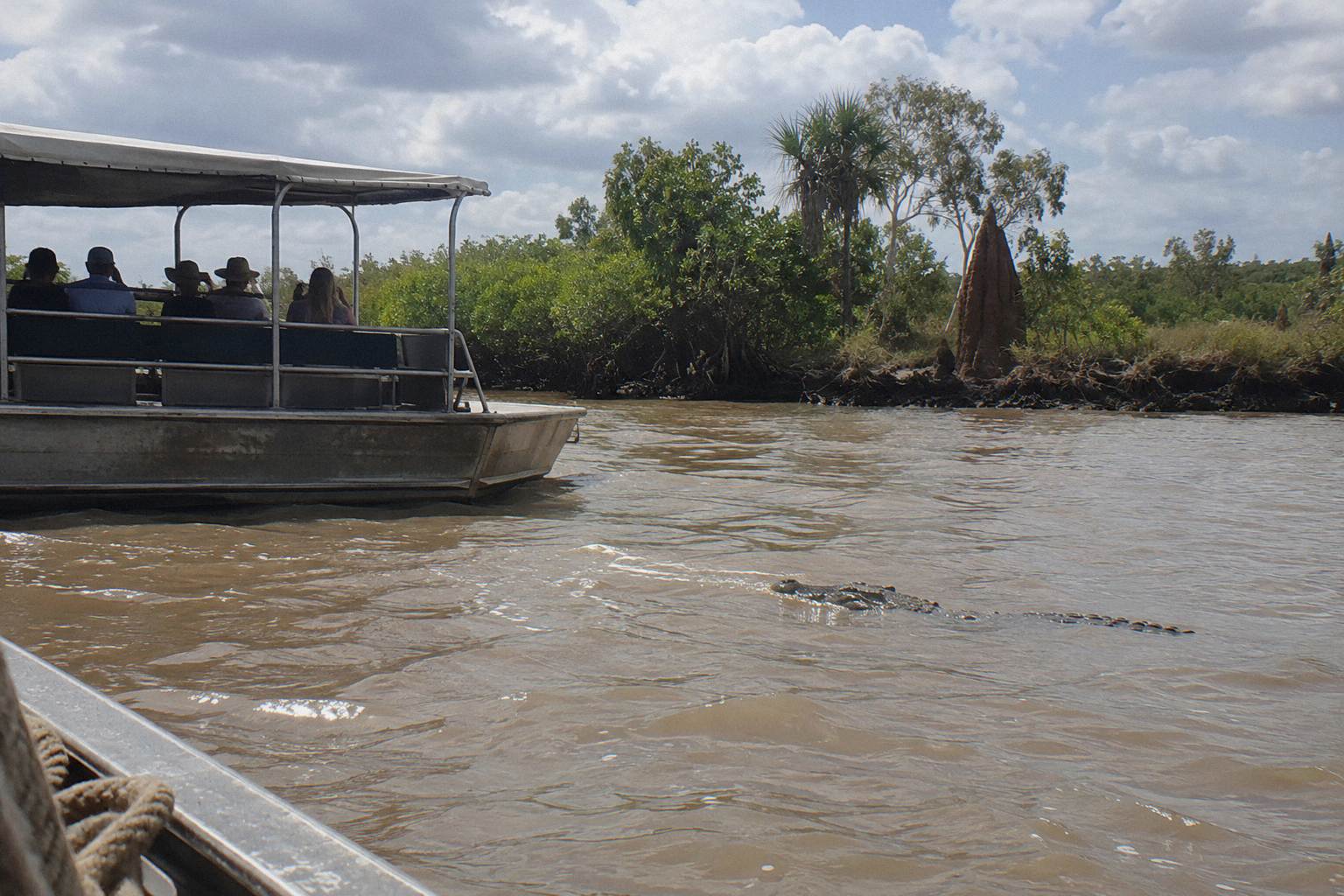
The government's crocodile pages also give the biological context that makes the caution rational rather than dramatic. The saltwater crocodile, Crocodylus porosus, is the largest living reptile and can grow up to 6 m. Females mature at about 2.3 m, at around 12 years, and males at about 3.3 m, at around 16 years. A large crocodile can stay underwater for up to an hour with a heart rate of 2 to 3 beats a minute, and for short bursts it can move faster than a human on land. None of that makes a cruise dangerous by itself, but it explains why every operator treats the animals with the respect the government's advice demands. You can read the government's species information on its official crocodile page.
There is a number worth knowing behind the caution. The NT Government estimated about 100,000 saltwater crocodiles in the Territory's wild in 2017, thought to be at or approaching pre-hunting levels, and notes there are more saltwater crocodiles in the NT than in Queensland or Western Australia. The species was almost extinct in the 1970s and is now widespread and no longer considered threatened. Both NT species are protected by law, and nobody may take or interfere with a crocodile without a permit. No river-by-river population count for the Adelaide River exists in these sources, so any specific figure you see quoted for this river is not coming from the government.
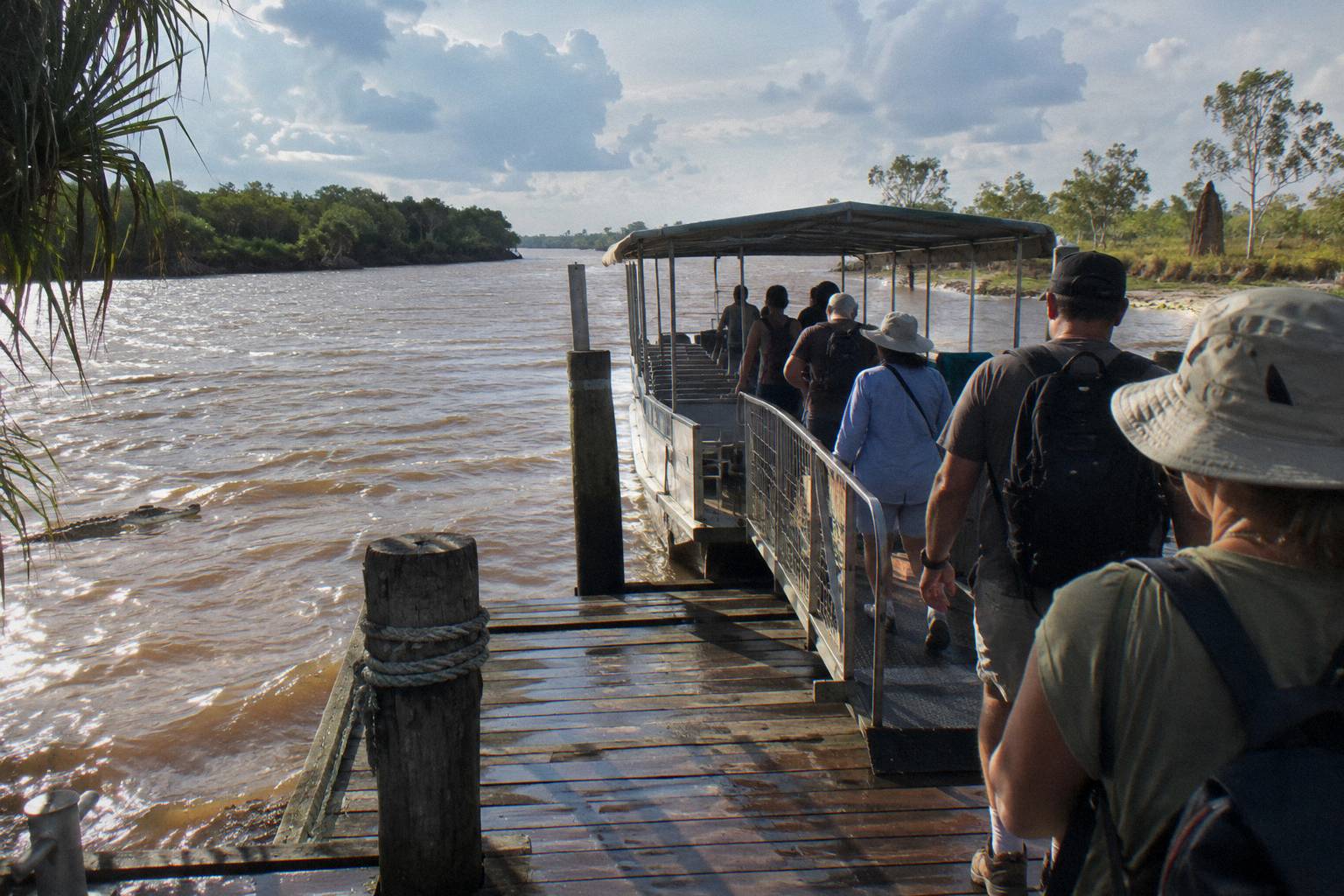
The practical reading for a cruise passenger is simple. Every rule the government publishes about behaviour near Top End water is a rule the cruise boats already enforce by structure: you are seated, behind rails or glass, with staff who feed the animals from the vessel rather than letting passengers do it. The government's advice is written for people on riverbanks, boats and camps generally, not for commercial cruise vessels, and the operators layer their own rules on top of it. If you follow the crew's instructions, which mostly amount to staying seated and keeping your arms inside, you are not the person the Be Crocwise advice is warning.
How Do The Boats Keep You Separated From The Crocodiles?
The design details come straight from the operators' own pages. Spectacular Jumping Crocodile Cruises, which is Indigenous-owned and operated by Arirrki Aboriginal Corporation, runs Croc-Cat1, a multi-hull with stadium-style seating, and Wildcat, a smaller vessel that travels further down the river; which boat runs depends on the numbers booked, and both are undercover. The operator's what to expect page describes the setup in its own words, including the free tea and coffee on arrival and the animal exhibits onshore. The Adelaide River Queen, run by Adelaide River Queen Cruises trading as The Original Jumping Crocodile Cruises, is the biggest of the river boats: a lower deck that is air-conditioned with croc-proof glass, per the operator, and an open-air upper deck under a shaded canopy with individual seating. If the idea of an open deck is what worries you, that glassed lower deck is the only fully enclosed passenger option on the river.
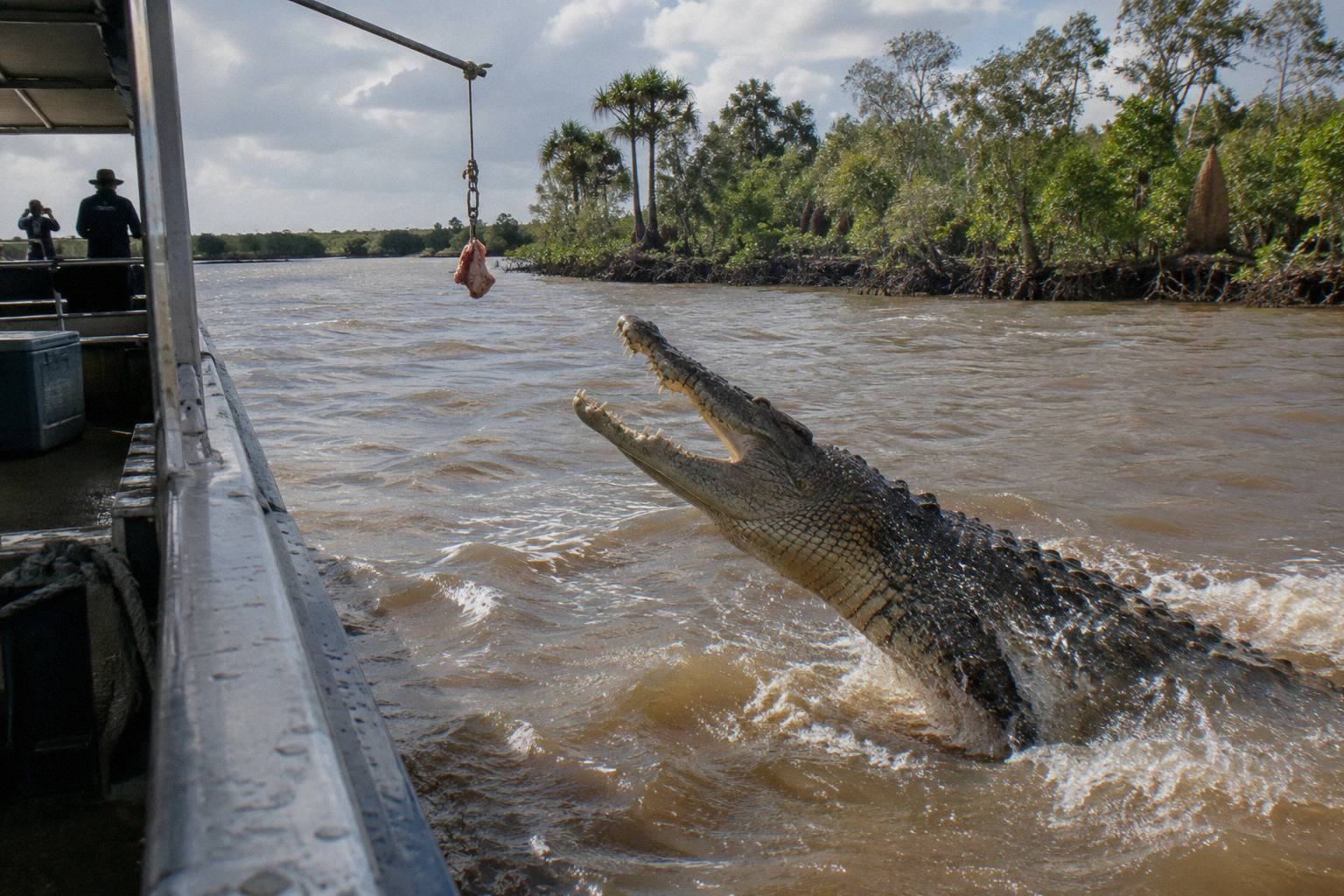
One thing no operator and no NT page publishes is a jump height, a jump distance or a how-close-to-the-boat figure. Anyone quoting a number for those is filling a gap the sources do not fill. What the sources do say is that the crocodiles approach the boats voluntarily, that the feeding happens from the front of the vessel by crew, and that there is no direct contact between passengers and animals at Spectacular, with equivalent no-contact setups described by the others. The Original/Queen operator's boats carry life jackets on board, ban swimming, ban food on the boat and require supervised children. Adelaide River Cruises opens every cruise with a safety briefing from its guides covering crocodile behaviour and the rules, then takes passengers out for about an hour on the water.
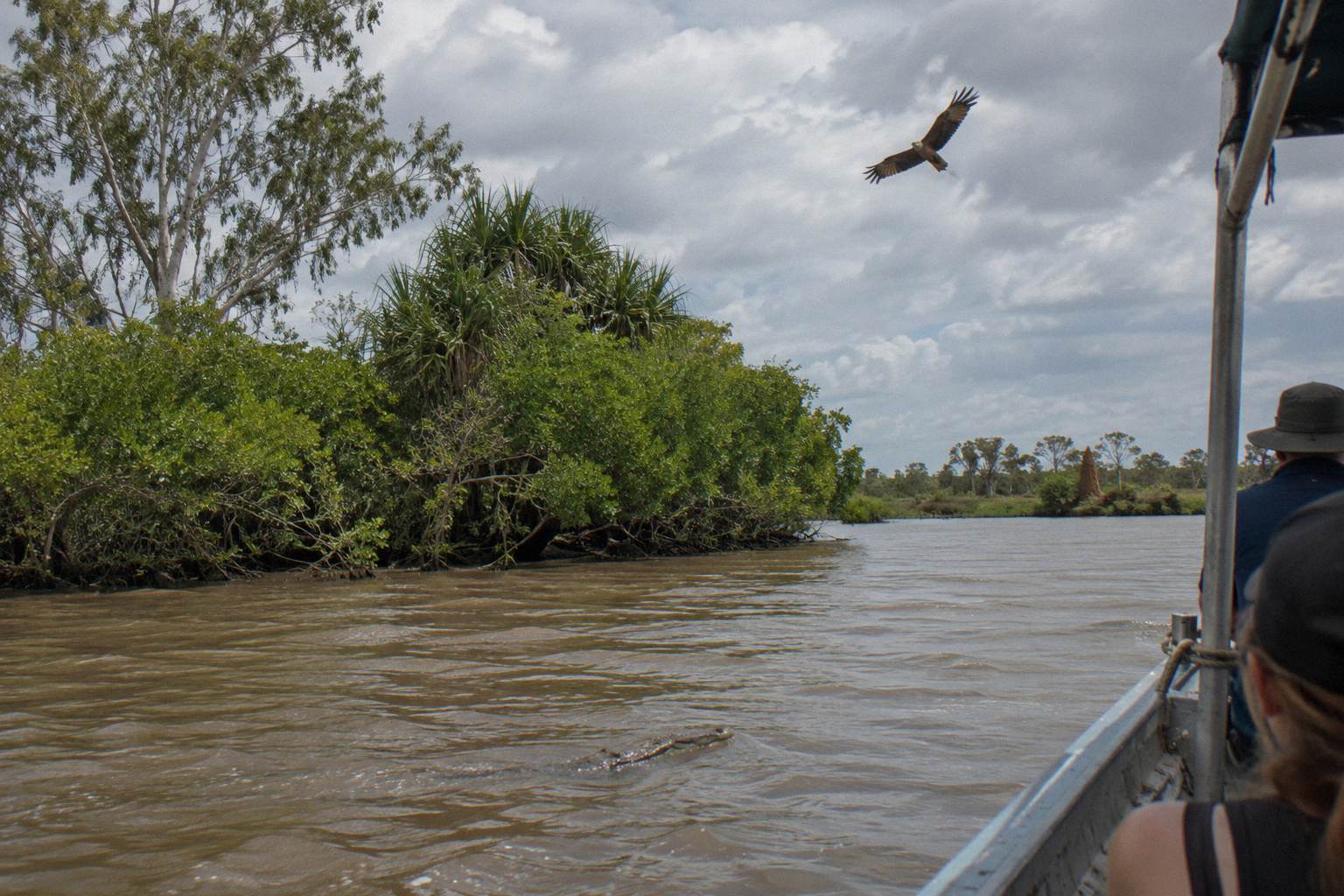
The seating question follows naturally, and there is a whole page on this site about which side of the boat is best on a jumping crocodile cruise. The short honest answer from the sources: no operator claims a best side, a best seat or a seat advantage, because the crocodiles are wild and move where they choose. What you can control is the vessel and deck type, and that is a real decision. If you want cover, Spectacular's boats are undercover and the Queen's lower deck is enclosed. If you want the most open, closest-to-the-air experience, the Pathfinder is open-air with up to 38 passengers. None of these choices changes the safety rules, only the comfort and the view.
| Operator | Vessels | Passenger setup stated by the operator | Safety features stated |
|---|---|---|---|
| Spectacular Jumping Crocodile Cruises | Croc-Cat1 and Wildcat, both undercover | Stadium-style seating, skipper at the rear, feeding from the front | No direct contact with crocodiles, NT Parks and Wildlife wildlife permits, feeding logs kept |
| Adelaide River Queen Cruises (The Original) | Adelaide River Queen and Pathfinder vessels | Lower deck air-conditioned with croc-proof glass, open-air upper deck with shaded canopy, individual seating; Pathfinder open-air, up to 38 passengers | Life jackets on board, no swimming, no food on the boat, supervised children, feeding under NT wildlife permits |
| Adelaide River Cruises | Boat type and capacity not stated | One-hour experience opening with a guide's safety briefing | Safety briefing on crocodile behaviour and the rules before boarding |
The Adelaide River Cruises Jumping Crocodile Experience is the cruise this site features, partly because its safety approach is the most explicitly staged: the guides brief passengers on crocodile behaviour and the rules before anyone steps on the boat, which answers the anxiety question directly for hesitant bookers.
Do The Boats Feed The Crocodiles, And Does That Change Anything?
Feeding is how the jump happens, and it operates under NT wildlife permits rather than as a free-for-all. Spectacular says its crocodiles are offered a taste of buffalo meat by staff holding Wildlife Permits from NT Parks and Wildlife, under an Animal Ethics Policy developed with NT Parks and Wildlife, with detailed feeding logs kept and no direct contact. The Original/Queen operator says its crocodiles are 100% wild and its feeding is done under NT wildlife permits.
What the sources do not say is just as important. No operator page and no NT page claims the feeding is harmless, and none claims it is harmful; this article will not add a claim the sources do not make. What the sources establish is regulatory: both species are protected by law, nobody may take or interfere with a crocodile without a permit, and the cruise operators state that their feeding runs under those permits. The NT page does not describe the cruise permit scheme in detail, so the detail stops there. A reader who wants the deeper mechanics can read how jumping crocodiles work on this site.
The jump itself is the animals' behaviour, not the boat's. The crocodiles approach because experience has taught them the boats sometimes mean food, and they lunge vertically to reach it when the crew offer a taste from the front of the vessel. Spectacular's boats have a "jumper" at the front, its wording, and the crew control the food. Passengers hold nothing, touch nothing and are asked for nothing except to stay seated and keep limbs inside. The Original/Queen operator bans food on its boats altogether, which removes the scenario of a passenger attracting an animal independently of the crew.
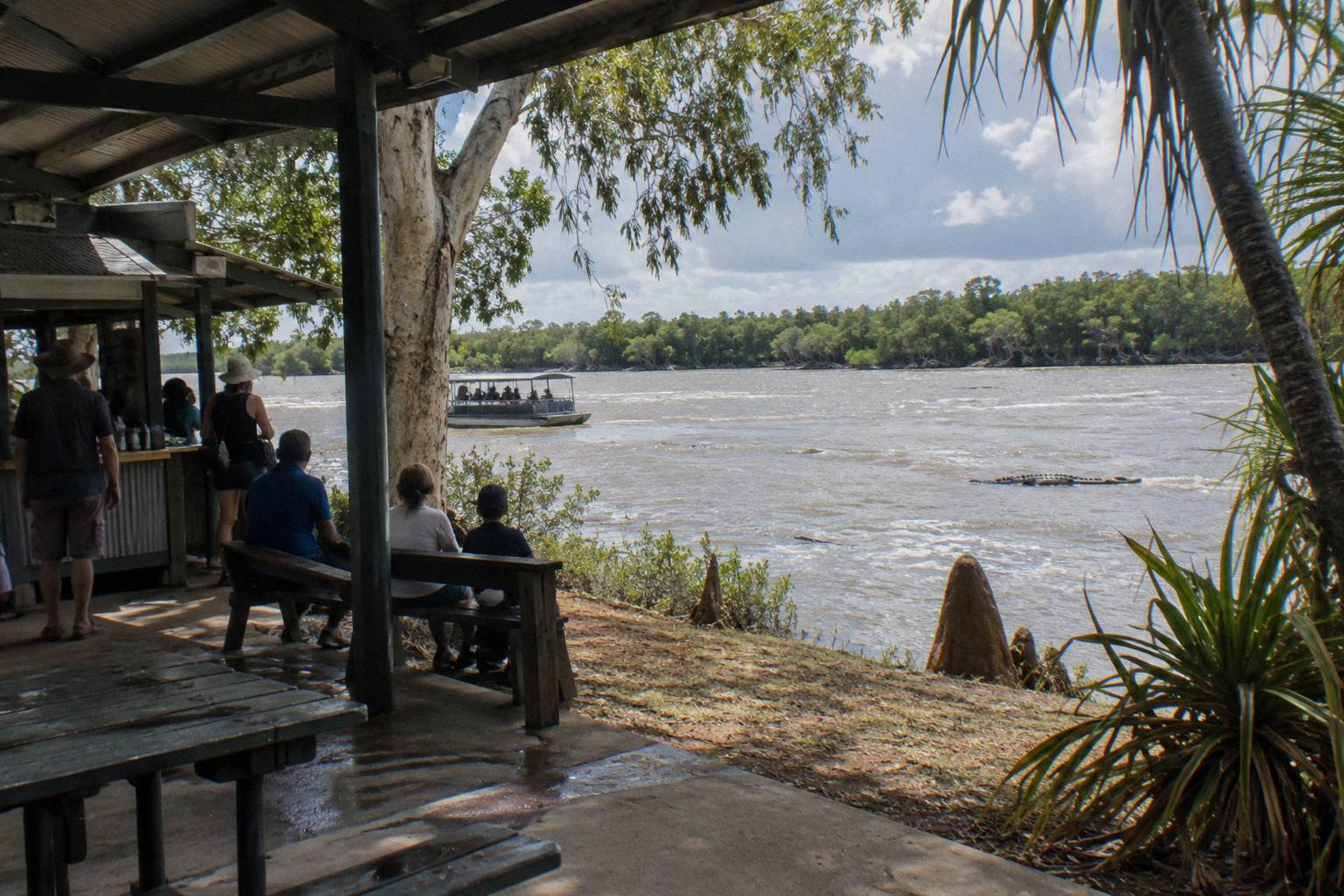
For a hesitant booker, the useful framing is this: everything about the interaction is designed so that the only humans in contact with the food are trained crew, operating under permits, with logs kept at Spectacular's operation. The animals stay wild, which is the operator's own word choice, and wild is why the jumps are genuine rather than trained. The same wildness is why behaviour can never be guaranteed, the operator's own caveat. You accept a display you cannot script in exchange for one that is not a performance, and the permits and ethics policy sit between you and the animal the whole time.
Are Jumping Crocodile Cruises Safe For Children?
All three river operators take children, and each states its own age rules. Spectacular is family-friendly for all ages with a child price for 4 to 14 and infants 3 and under free. Adelaide River Queen charges child 4 to 13, requires supervised children and counts infants in the ticket total. Adelaide River Cruises takes all ages, charges child 1 to 14 and lets infants 12 months and under travel free on a lap.
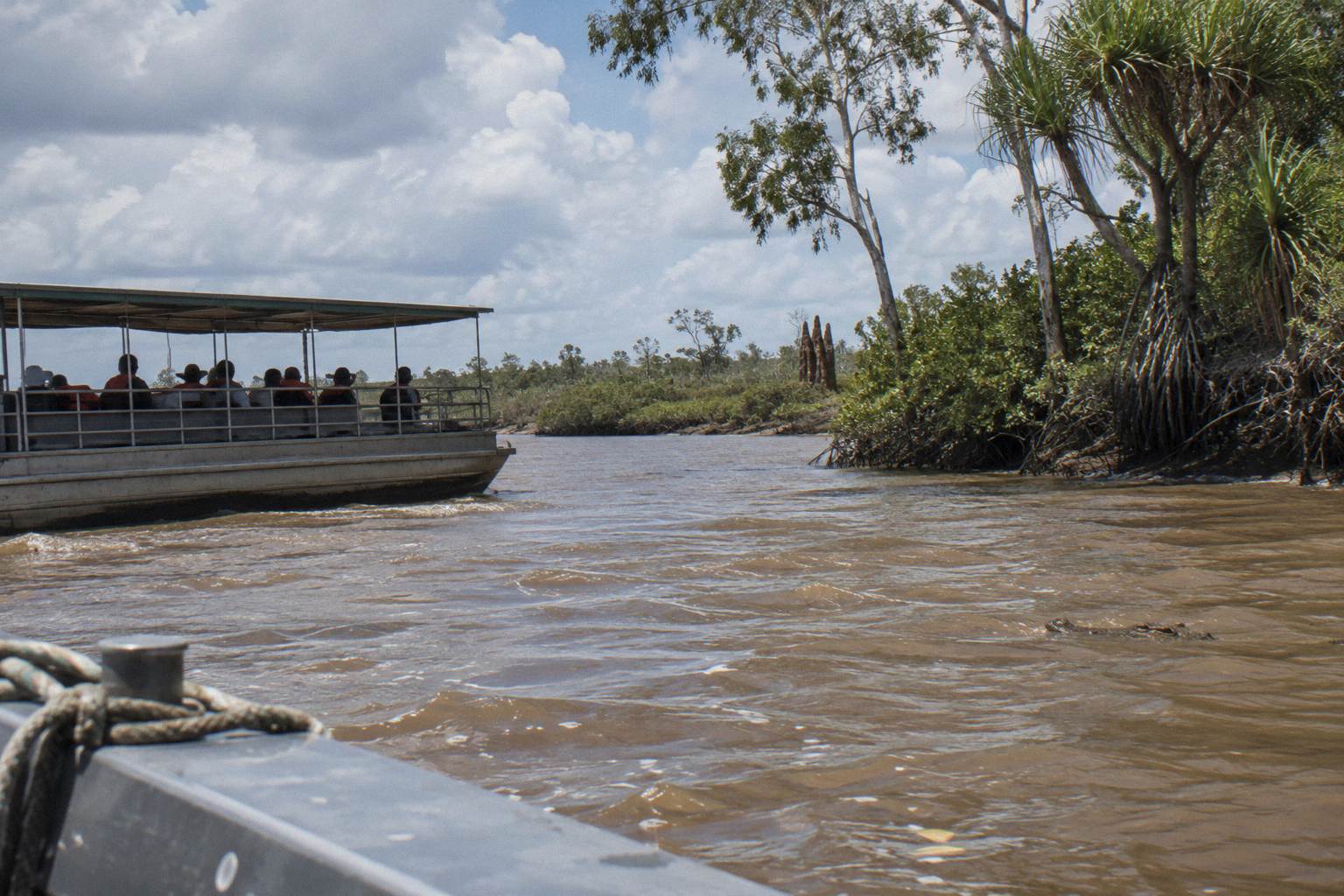
The supervision requirements are where the safety substance sits. The Original/Queen operator states children must be supervised, life jackets are on board, and pets are not allowed on the boats. Spectacular's setup leans onshore as much as on the water: a pavilion, a kiosk with hot food, animal exhibits, toilets onshore and a gift shop mean families arrive early, check in and wait in a controlled space rather than at an open bank. The NT Government's Be Crocwise advice is the backdrop for the whole family conversation: children on a cruise are inside a vessel with rails and crew, which is a very different proposition from children near an unpatrolled Top End waterhole, where the government's advice is to assume the water is unsafe.
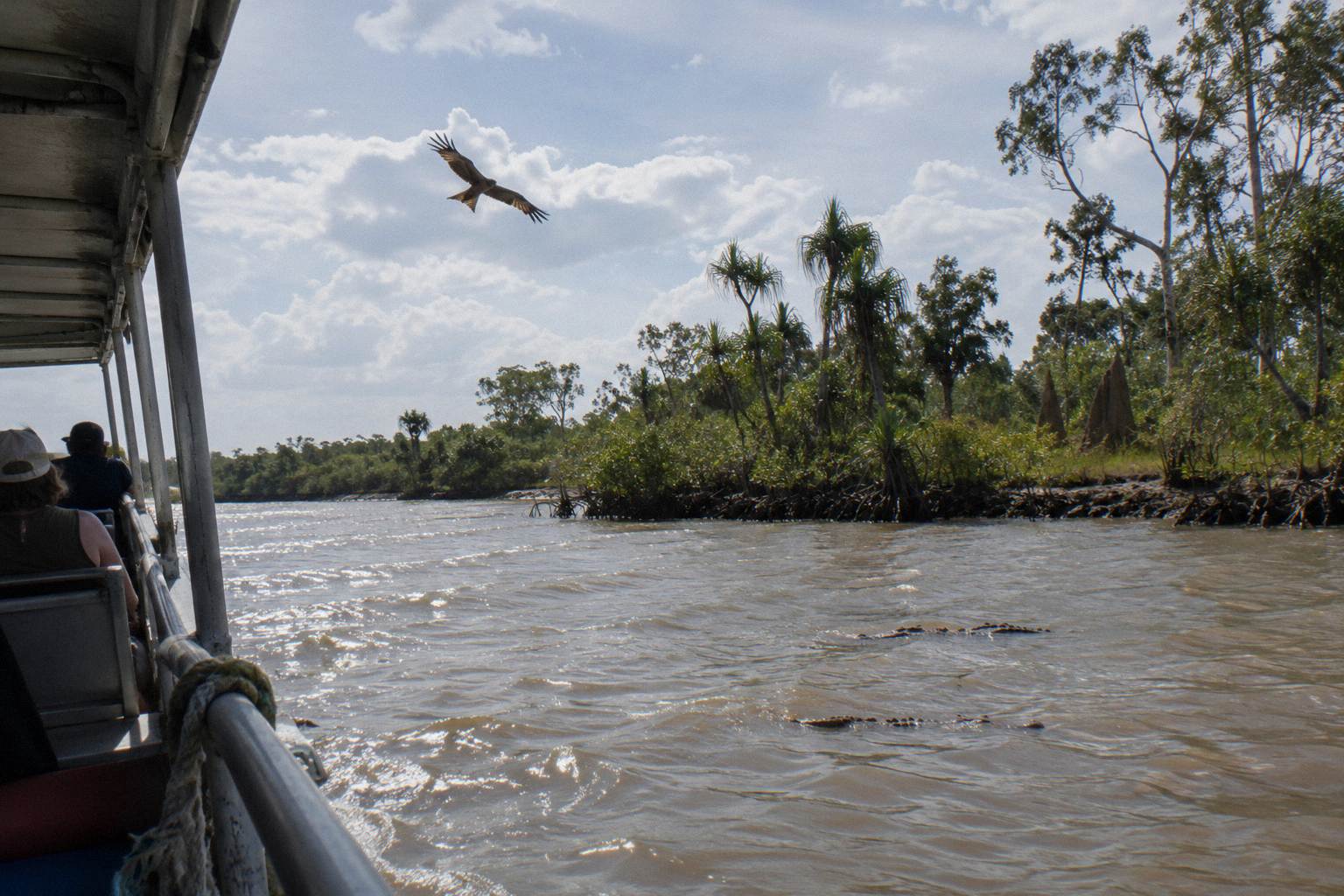
Parents deciding between the operators should also weigh the age bands against their own kids' ages, because the bands genuinely differ. A 2-year-old is free with Spectacular, free with the Queen, free on a lap with Adelaide River Cruises, and paying a full A$75 fare on the Pathfinder, which charges a single fare for anyone aged 1 and over. That last one also runs the operator's kids promotion, letting one child under 13 travel free per full-paying passenger for travel between 5 October 2026 and 31 March 2027 unless it ends earlier, with limited seats, so check that it applies before counting on it. There is a fuller treatment on this site at taking the jumping crocodile cruise with kids.
| Operator | Child age band | Infant policy stated by the operator | Supervision stated |
|---|---|---|---|
| Spectacular Jumping Crocodile Cruises | 4 to 14 | 3 and under free | Family-friendly for all ages, operator-stated |
| Adelaide River Queen (The Original) | 4 to 13 | 3 and under free, counted in the ticket total | Children must be supervised |
| Adelaide River Queen Pathfinder | No child fare; 1 and over pays the single fare | Under 1 free | Same operator rules; kids promotion applies to under 13s, check availability |
| Adelaide River Cruises | 1 to 14 | 12 months and under free on a lap | Safety briefing covers rules for all passengers |
Is A Self-Drive Cruise Safer Than A Darwin Day Tour?
Neither option changes what happens on the water: the cruise itself is about an hour with the same operator rules either way. What changes is the drive. A day tour puts you on a coach or minibus with a driver, while self-driving means an hour or so on the Arnhem Highway to reach the jetties. The operators' safety statements cover the river portion only, so the road decision is about your own comfort driving in the Top End.
The geography is straightforward from the operators' own directions pages. Spectacular's jetty sits on Beatrice Hill Farm at 2915 Arnhem Road, Middle Point, just under an hour from Darwin, reached via the Windows on the Wetlands Visitor Centre and about 2 km of well-maintained unsealed access road that the operator says hire cars handle fine. The Adelaide River Queen and Pathfinder leave from 3220A Arnhem Highway, Wak Wak, at the Adelaide River Bridge, on sealed road all the way, with the drive from Darwin given as 50 to 60 minutes by the operator. Adelaide River Cruises sits at Anzac Parade, Middle Point, about an hour or a little more from Darwin. Free parking exists at all three. If the driving question is the hold-up, the site's comparison of self-drive or a tour to the jumping crocodile cruise works through it in full.
The day tours bundle the cruise with stops such as Fogg Dam, Window on the Wetlands, a Humpty Doo Pub lunch, or Litchfield National Park, and run from about 4 hours to a full day depending on the itinerary. Which cruise operator a day tour uses is stated only for the Croc Bus, which cruises with Adelaide River Cruises, and the AAT Kings half-day; no other tour names its cruise operator. Hotel pickup is stated for several of them. None of this changes the river safety picture, but it does mean a tour passenger spends less time making decisions on a highway and more time being delivered, which for some nervous travellers is itself the comfort.
What About Weather, The Wet Season And Cancellations?
Cruises generally run whenever it is safe to do so, since rain in Darwin or Humpty Doo does not mean rain on the river, and crocodiles stay active year-round, though wet-season departures may be reduced. Cancellation policies vary: Spectacular reschedules or refunds as appropriate, while Adelaide River Cruises gives a full refund only if you cancel more than 24 hours ahead, unless the operator cancels for weather or operations.
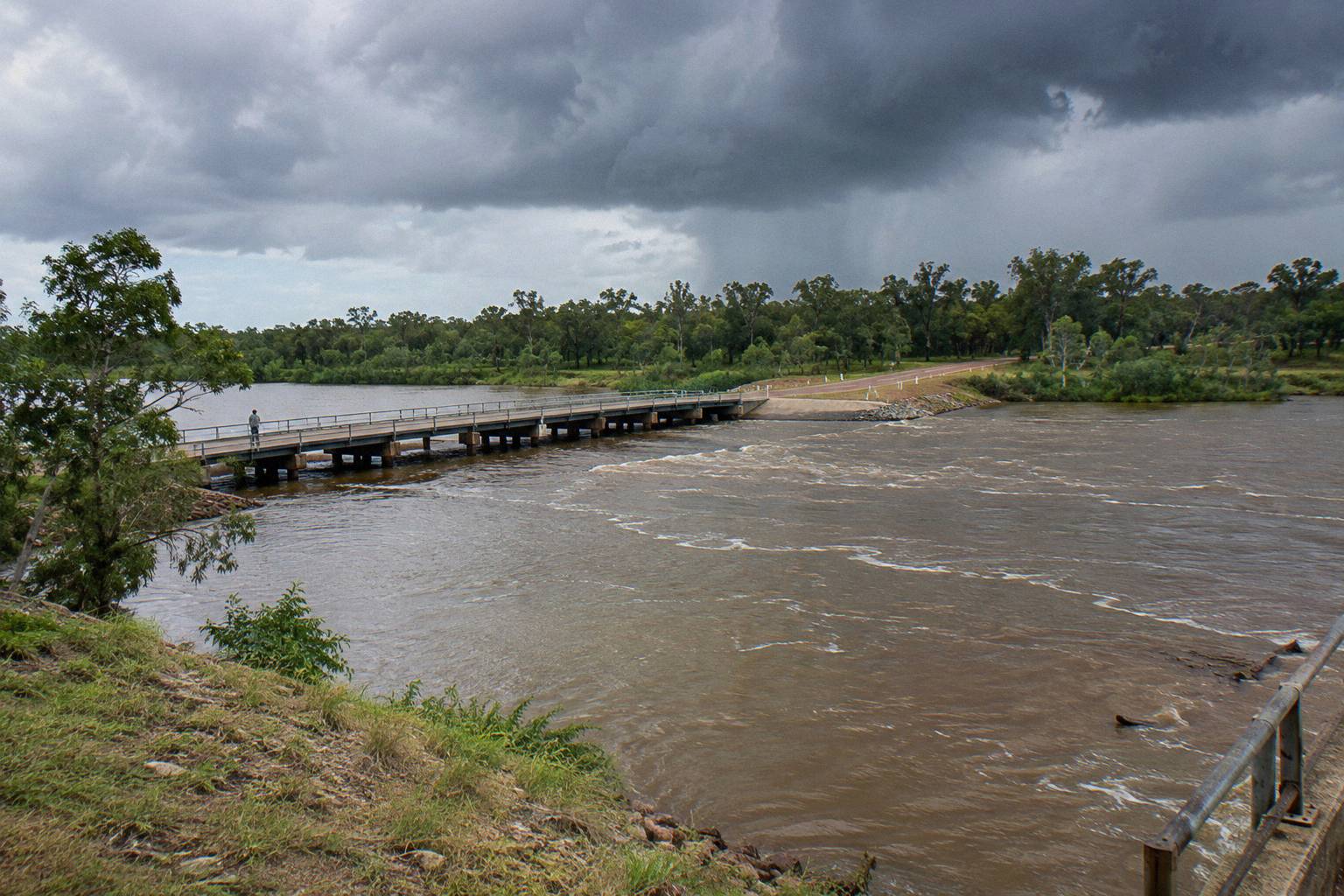
The seasonal picture is one where the operators' statements diverge a little. Spectacular says it is open year-round except Christmas Day, with departures daily at 9am, 11am, 1pm and 3pm and no minimum numbers. Adelaide River Cruises' tour page lists the same four daily departure times and operating months of May to October, though the page carries wording from an earlier season, so treat the operator's tour page as the source. The Original/Queen operator's FAQ names the Dry Season as May to October, says the Dry gives the most comfortable conditions and notes its cruise times changed for the wet season, telling guests to book online or call to confirm. One genuinely interesting operator statement: Spectacular says crocodiles often show a tactile response to rain, which means a wet deck is not automatically a lost cruise.
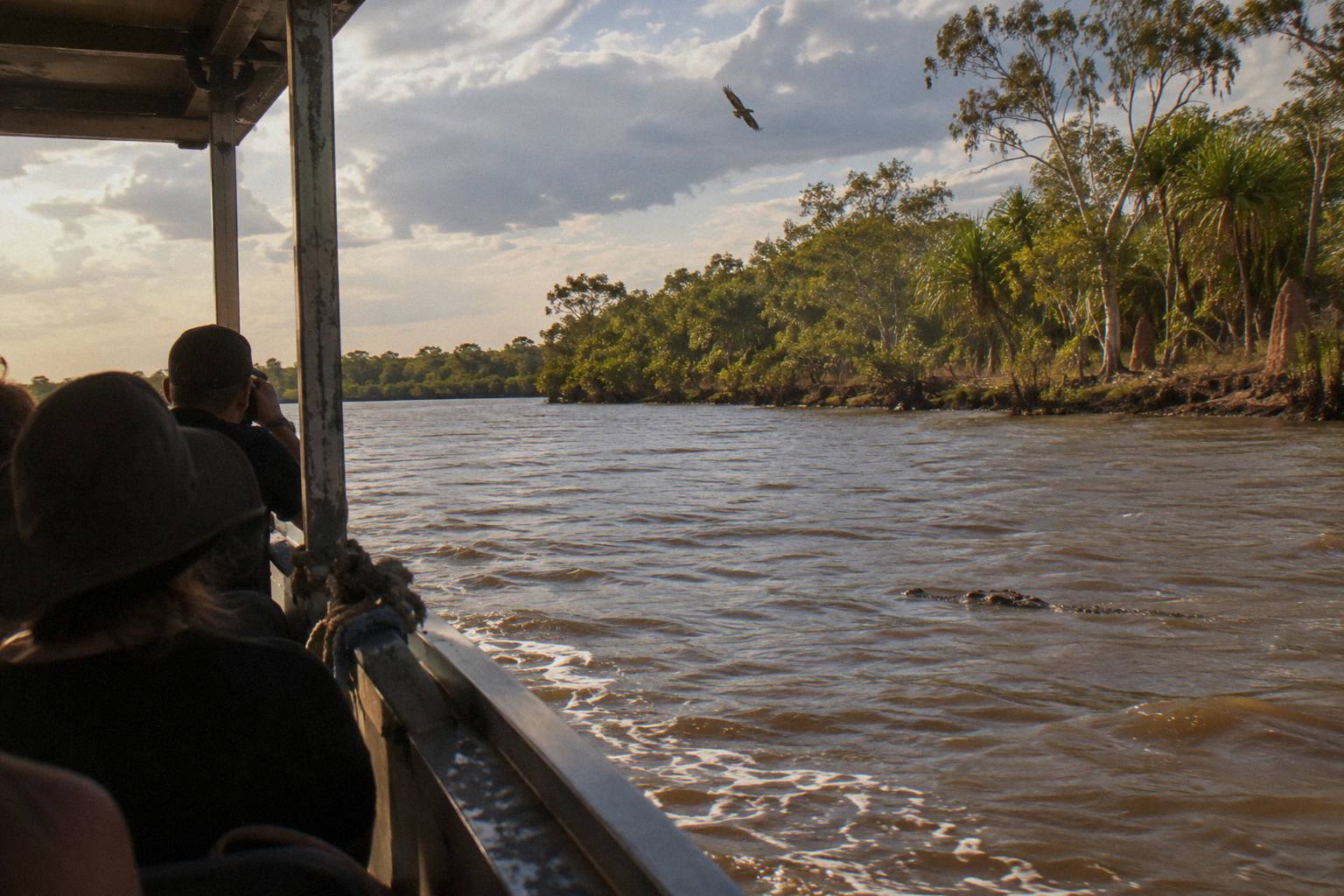
On rain and risk, the operators are consistent that weather calls belong to them. Spectacular's position is that a cancelled or postponed cruise is rescheduled or refunded as appropriate, and the other two handle changes subject to availability, with the Adelaide River Cruises FAQ spelling out the 24-hour refund boundary. The operators publish no morning-versus-afternoon crocodile behaviour claims, so any advice you read promising better animals at 9am than 1pm is not coming from them. What the sources do support: book ahead in the Dry Season, especially June to August, because Adelaide River Cruises says tours sell out and walk-ins are not guaranteed, and the Original/Queen operator says school holidays and long weekends often sell out earlier. Whichever booking page you use shows its own terms; read them before paying, since Spectacular's public pages print no cancellation terms at all.
What Should You Actually Do Before And During The Cruise?
Arrive early: at least 15 minutes ahead for Spectacular and Adelaide River Cruises, and at least 30 minutes ahead for the Adelaide River Queen and Pathfinder, because late arrivals may forfeit their tickets, and bring water, sunscreen, a hat and a camera. Once on the water, stay seated, keep limbs inside the boat, supervise children, and never lean out over the side, which is the NT Government's Be Crocwise rule for any boat.
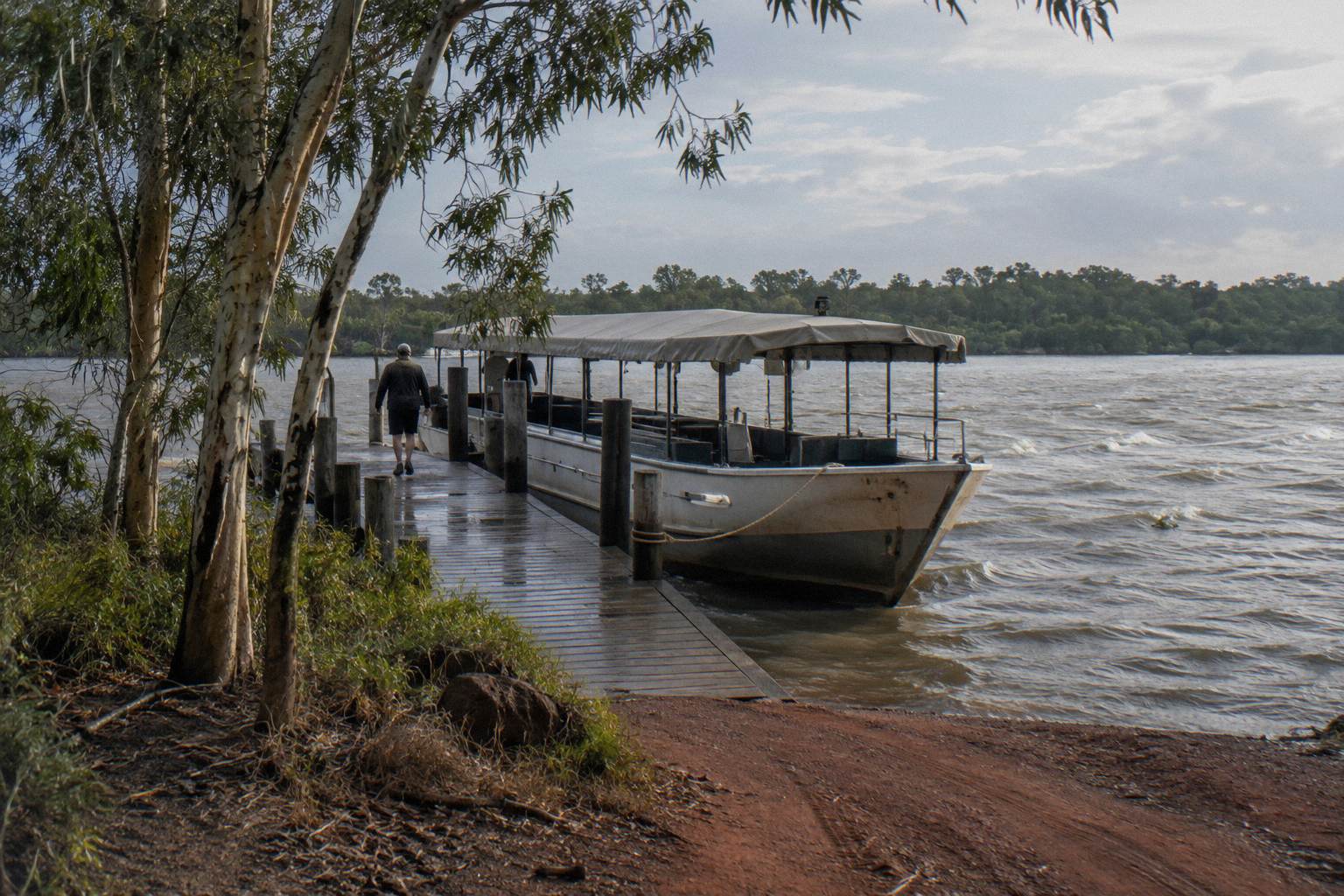
Arrival times matter more than they sound. The Queen and Pathfinder check-in window exists partly because boarding a larger vessel with stairs and decks takes longer, and the operator states late arrivals may forfeit tickets, which is a financial risk worth planning around rather than a safety one. On the facilities side, toilets are onshore at the operators that state it, and Spectacular has no toilet on the boat, so the pre-boarding routine is genuinely part of the cruise. Spectacular's list of what to bring, water, sunscreen, a hat, a camera, comfortable clothing and sturdy footwear, is sensible for an hour under a Top End sun even under cover.
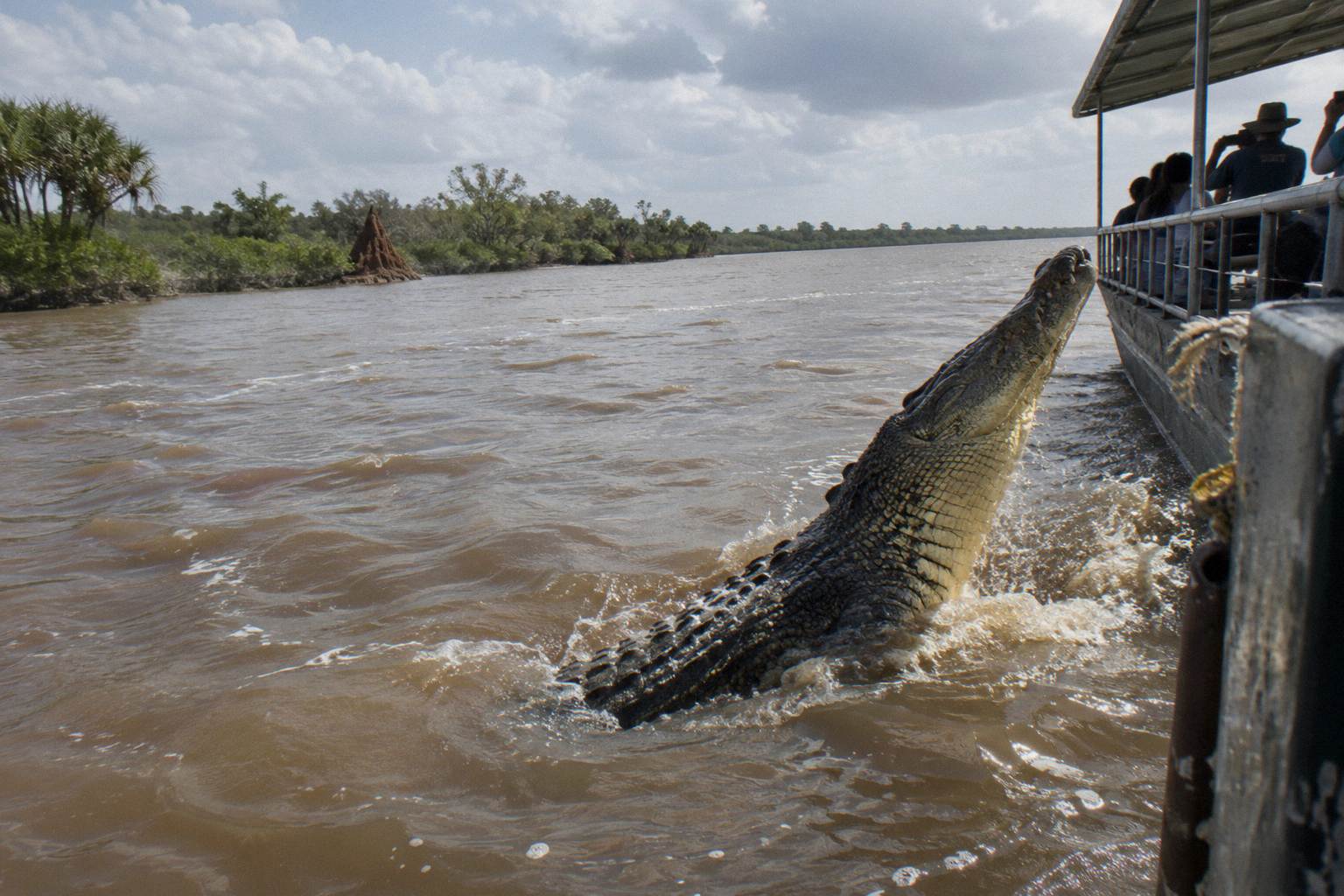
Photography deserves a line because it is the one activity that tempts people toward the edge. Adelaide River Cruises suggests a camera or a charged phone, and says a zoom lens is useful for wildlife across the floodplain while standard phone cameras suit the crocodile interactions because of the proximity, its own wording. The temptation when a crocodile surfaces beside the rail is to lean out for a better angle, and that is exactly the behaviour the NT Government's advice and every operator's rules prohibit. The photos taken from a seated position, phone held inside the rail line, are the ones that comply with everything the sources say. There is a fuller guide to photographing jumping crocodiles elsewhere on this site if the camera question is the real reason you are here.
| Stage | What the operators and NT Government state |
|---|---|
| Before you book | Read the booking page's own terms; Spectacular's public pages print no cancellation terms; Adelaide River Cruises refunds in full more than 24 hours out |
| Getting there | Arrive 15 minutes early for Spectacular and Adelaide River Cruises, 30 minutes for the Queen and Pathfinder; late arrivals may forfeit tickets |
| Onshore | Toilets are onshore; Spectacular has no toilet on the boat; bring water, sunscreen, a hat, a camera, sturdy footwear |
| Boarding | Listen to the safety briefing; Adelaide River Cruises opens with one on crocodile behaviour and the rules |
| On the water | Stay seated, keep limbs inside, never lean out or dangle limbs over the side, supervise children, no swimming, no food on the boat where stated |
Pulling it together: the question in the title has an honest answer built from attributed statements rather than reassurance. The NT Government says saltwater crocodiles are a serious threat to humans anywhere in Top End water, and the cruises respond to that reality with permitted feeding, no-contact rules, enclosed or railed vessels, briefings and supervision. The operators themselves say behaviour can never be guaranteed, and no source publishes a jump height, a jump distance or a how-close figure. If you are comfortable following crew instructions for an hour on a river that belongs to the animals, the structure of these cruises is designed around exactly that bargain.
Common Questions About Jumping Crocodile Cruise Safety
Are Jumping Crocodile Cruises Safe?
Not in a flat guaranteed sense, and no operator claims that. The NT Government calls saltwater crocodiles a serious threat to humans, while the operators run permitted, no-contact cruises with rails, enclosed or covered decks, briefings and supervision. The operators' own words: crocodiles are seen on almost every tour, but behaviour can never be guaranteed.
How Close Do The Crocodiles Get To The Boat?
No operator and no NT Government page publishes a how-close-to-the-boat figure, a jump height or a jump distance. The crocodiles approach the vessels voluntarily because the crew offer a taste of food from the front of the boat under NT wildlife permits, with no direct contact between passengers and animals.
Are The Cruises Safe For Children?
All three river operators take children and state their own rules. Children must be supervised on the Adelaide River Queen, life jackets are on board that operator's boats, Spectacular describes itself as family-friendly for all ages, and Adelaide River Cruises takes all ages and opens with a safety briefing covering crocodile behaviour and the rules.
Do You Feed The Crocodiles Yourself On The Cruise?
No. Spectacular says feeding is done by staff holding Wildlife Permits from NT Parks and Wildlife under an Animal Ethics Policy developed with the same body, with detailed feeding logs kept and no direct contact. The Original/Queen operator says its crocodiles are 100% wild and its feeding runs under NT wildlife permits. Passengers never hold food.
What Happens If The Weather Turns Bad?
Spectacular says it operates as long as it is safe, that rain in Darwin or Humpty Doo does not mean rain on the river, and that a cancelled or postponed cruise is rescheduled or refunded as appropriate. Adelaide River Cruises' FAQ gives a full refund if cancelled more than 24 hours ahead, non-refundable inside that window unless the operator cancels for weather or operations.
Can The Cruise Boat Hit Or Touch A Crocodile?
The sources do not describe vessel-wildlife collisions in either direction, so nothing can be stated about that. What is stated is separation: croc-proof glass on the Adelaide River Queen's lower deck, feeding from the front by crew, and the NT Government's Be Crocwise rule against leaning out or dangling limbs over the side of any boat, which the cruise rules echo.