Which Side Of The Boat Is Best On A Jumping Crocodile Cruise?
No operator on the Adelaide River claims a best side of the boat. Here is what each vessel's layout actually offers, and how to pick a boat on stated facts.
It is the question half the passengers ask in the car park, sometimes before they ask where the toilets are: which side of the boat is best on a jumping crocodile cruise? The impulse is reasonable. On a whale watch you want the rail where the pod surfaces, and on a game drive the window seat matters. A jumping crocodile cruise feels like it should work the same way, so people hunt for a hack.
The short version: there is no published best side. None of the three operators on the Adelaide River, and no Northern Territory Government source, states that port beats starboard or that one rail sees more action. There is also no published jump height, jump distance or how-close-to-the-boat figure anywhere in the operators' material. What the operators do publish is detail about their vessels, and that is where a real decision lives. This page sets out what each boat and deck actually offers, so you can choose by layout and cover rather than by a side nobody claims.
No operator on the Adelaide River claims a best side of the boat, and no official source does either. Nothing in any operator's published material names a jump height, a jump distance or a how-close figure, so any website handing you a "sit on the left" tip is filling the gap with invention. What you can genuinely choose is the vessel, the deck and the cover, and the three operators describe those in real detail.
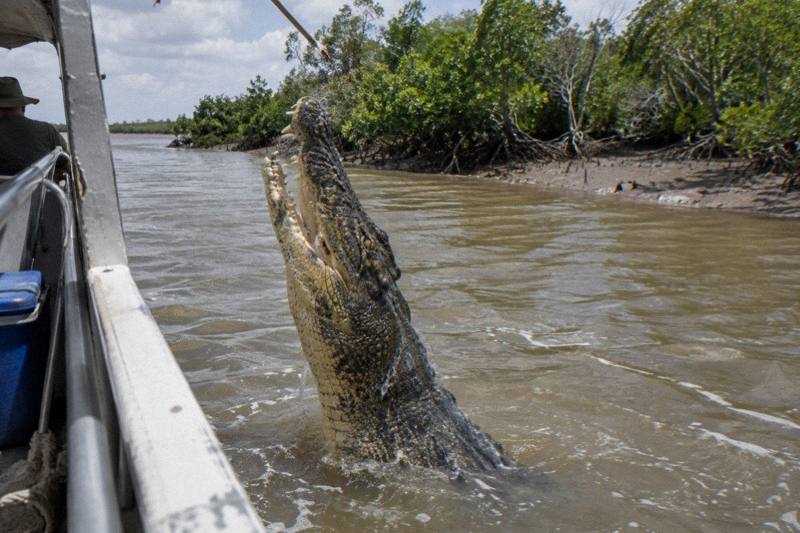
That is the answer in one line, but the reasoning deserves a few more. The crocodiles on these cruises are wild animals working a river bank, and the boats move along it. The crew position the vessel in relation to where an animal is, not the other way around, so the geometry of any given jump depends on the crocodile, the bank and the skipper's judgement in that moment. The Original and Queen operator puts it plainly: "We see crocodiles on almost every tour... behaviour can never be guaranteed." A side that was reliably better would be a behaviour guarantee by another name.
The boats are also built to break the side-to-side problem rather than exploit it. Spectacular's larger vessel has stadium-style seating, which means rows raised toward the rear so passengers can see over the heads in front, and the jumper, the spot where meat is offered, sits at the front rather than on either flank. On a boat like that, the question stops being left versus right and becomes front versus back, standing versus seated, shaded versus open. Those are things you can plan for.
What follows is a deck-by-deck rundown of what each operator actually runs, drawn from the operators' own pages, plus the practical choices that do move the needle: which vessel suits a camera, which suits a wheelchair, which suits a toddler, and what to ask when you book.
Why Nobody Can Promise You The Good Rail
A best side would be a prediction about wild animals, and the operators refuse to make one. The Original and Queen operator states outright that crocodiles are seen on almost every tour but behaviour can never be guaranteed, and the Northern Territory Government, which regulates the wildlife involved, publishes no seating guidance at all. Any claim about a lucky side is the writer's invention, not the operator's.
Think about what a "best side" claim would actually require. It would need the crocodiles to favour one bank consistently, the skippers to approach from the same angle every time, and the jump to happen at a fixed distance from the hull. None of that holds. The animals are wild, the river changes with the season, and each skipper reads the water in front of them. The operators hold wildlife permits and keep the experience inside rules set with NT Parks and Wildlife, and inside those rules nothing fixes a viewing angle.
There is a second, quieter reason the question dissolves: the cruises are short and the boats are small. Every river cruise runs about one hour on the water. On a vessel carrying a few dozen passengers at most, with crocodiles approaching the front of the boat where the meat is offered, the difference between seats is measured in metres, and often in whether you are standing at the rail or seated behind it. The action tends to converge on the boat rather than pass it by on one flank.
So the productive version of the question is not "which side" but "which boat". The three operators run noticeably different vessels, and the differences, undercover versus open-air, deck versus cabin, stadium seating versus individual seats, affect your view more than any rail choice could. The rest of this page works through them. For a broader walkthrough of the experience itself, the guide to what to expect on a jumping crocodile cruise covers the flow of a departure from check-in to docking.
The Three Operators And Their Boats, Deck By Deck
Three operators run the jumping cruises, each from its own jetty: Spectacular Jumping Crocodile Cruises with the Croc-Cat1 and the smaller Wildcat, Adelaide River Queen Cruises with the Adelaide River Queen and the Pathfinder vessels, and Adelaide River Cruises, whose boat type and capacity are not stated. The vessels differ in seating, cover and deck layout far more than any seat differs within them.
Spectacular, an Indigenous-owned operator run by Arirrki Aboriginal Corporation, which says every ticket supports an Aboriginal community, runs two custom vessels. Croc-Cat1 is a multi-hull with stadium-style seating and the skipper at the rear; the Wildcat is smaller and goes further down the river. Which vessel runs on a given departure depends on the numbers booked, so you cannot reserve one of them by name. Both are described as undercover. The operator's own cruise page carries the current descriptions.
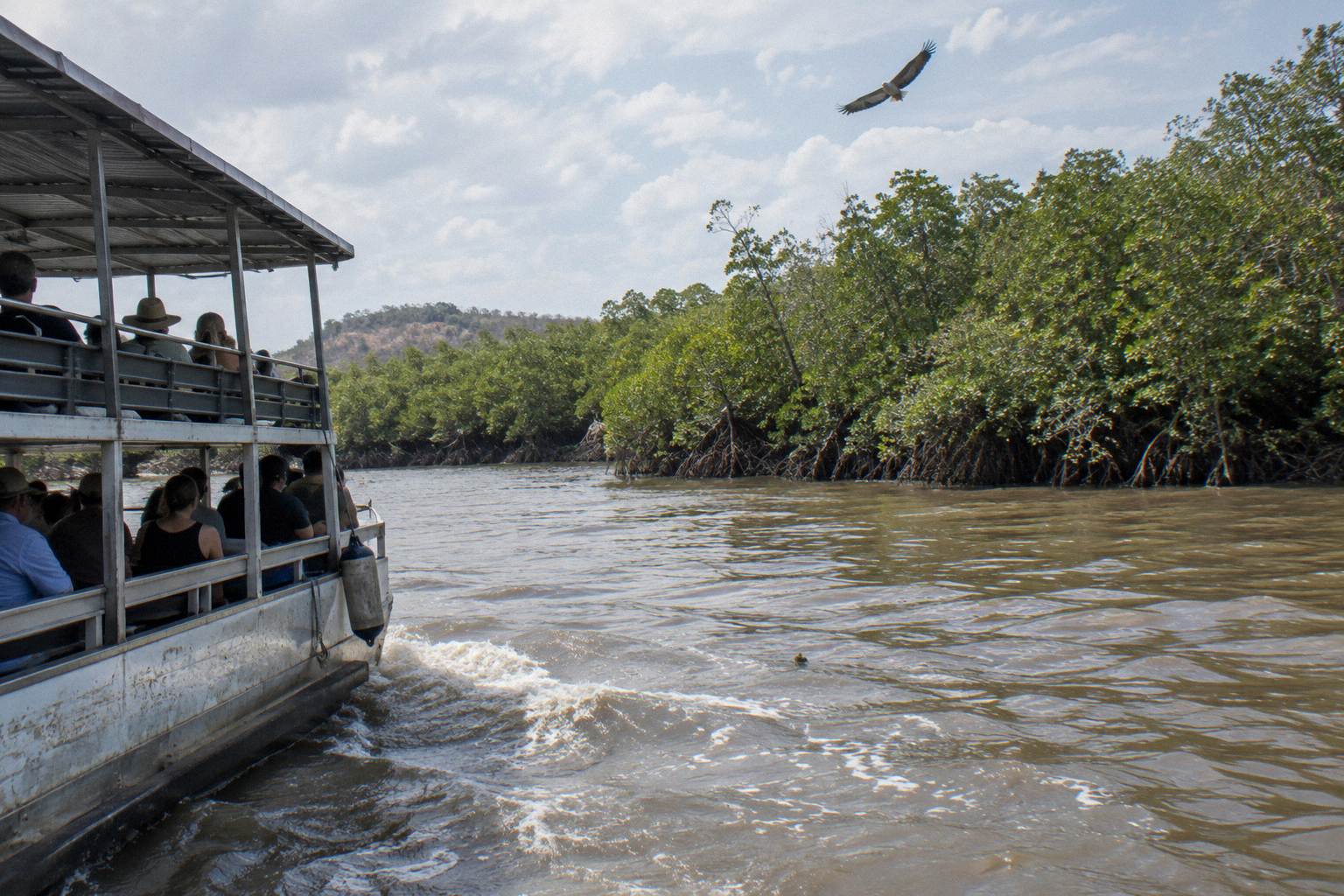
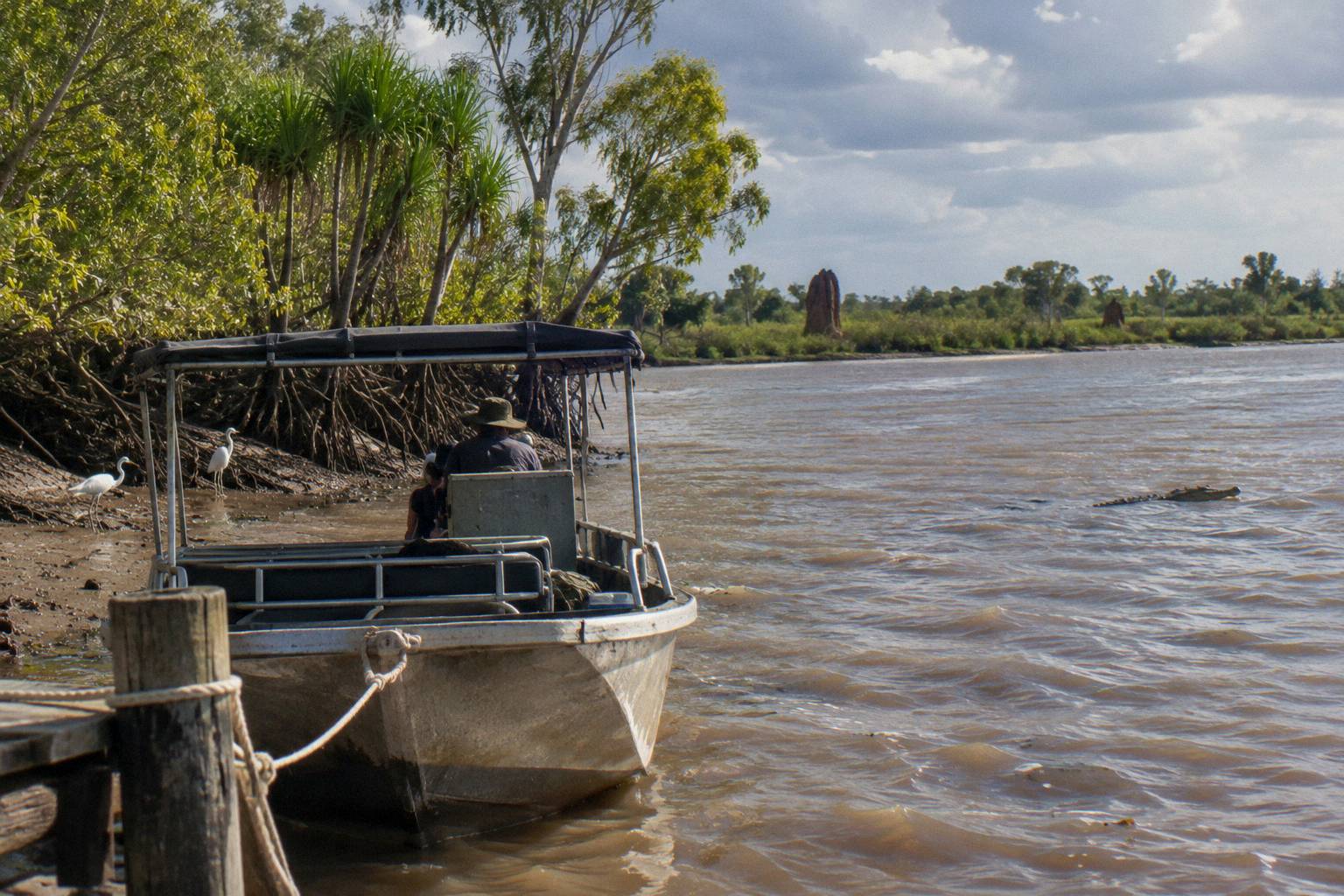
The Adelaide River Queen, run by Adelaide River Queen Cruises, which also trades as The Original Jumping Crocodile Cruises, is a two-deck proposition: an air-conditioned lower deck, and an open-air upper deck under a shaded canopy with individual seating and croc-proof glass, per the operator. The Pathfinders, the same operator's other vessels, are open-air and take up to 38 passengers each, a figure stated for the Pathfinder only. That is a genuine choice of comfort level: cabin cool, canopy shaded, or fully open to the river air.
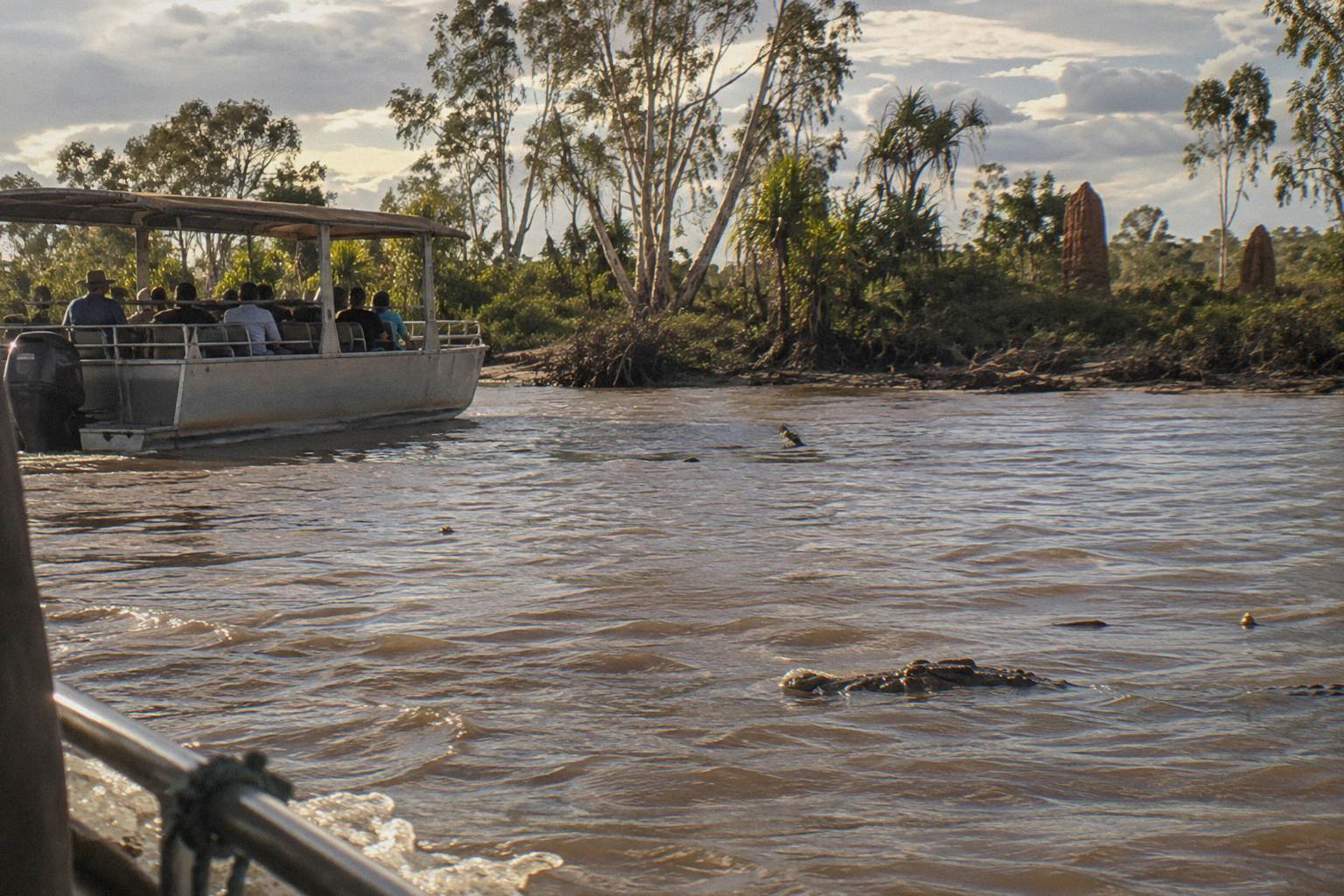
Adelaide River Cruises runs a one-hour jumping crocodile experience that opens with a safety briefing from the guides on crocodile behaviour and the rules. Its boat type and capacity are not stated, and the operator's own pages give two different capacity numbers, so nothing is printed here. The practical takeaway is that the vessel is unknown until you arrive, and the constant is the briefing and the hour on the water, not the layout.
| Operator | Vessels | Seating and cover stated by the operator | Deck choice |
|---|---|---|---|
| Spectacular Jumping Crocodile Cruises | Croc-Cat1 (multi-hull), Wildcat (smaller, further down the river) | Stadium-style seating on Croc-Cat1, skipper at the rear, undercover; jumper at the front | No deck choice; vessel depends on numbers booked |
| Adelaide River Queen Cruises | Adelaide River Queen, Pathfinder vessels | Lower deck air-conditioned, open-air upper deck with shaded canopy, individual seating, croc-proof glass; Pathfinders open-air, up to 38 passengers | Cabin, shaded upper deck, or open-air |
| Adelaide River Cruises | Not stated | Safety briefing opens the cruise; boat type and capacity not stated | Not stated |
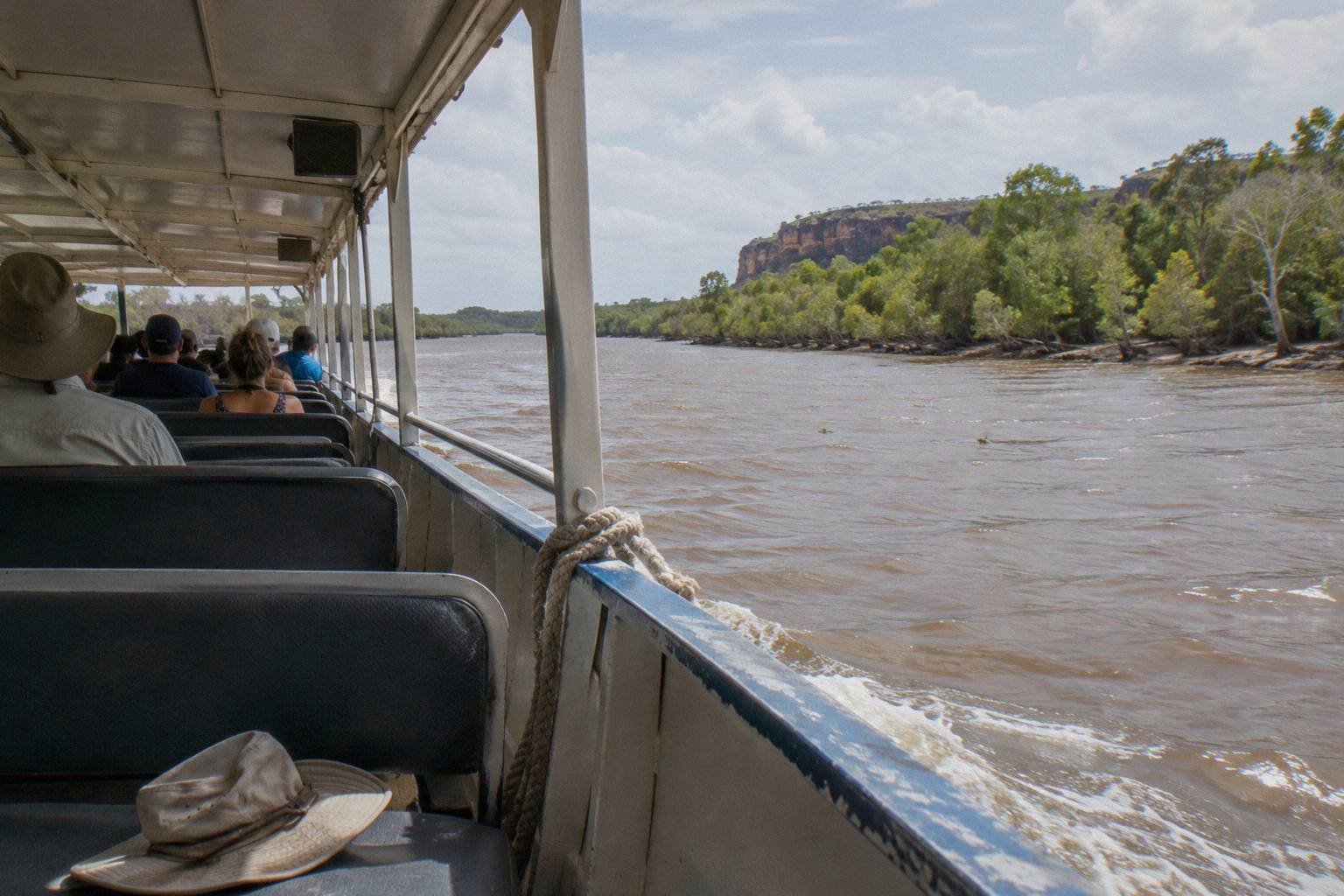
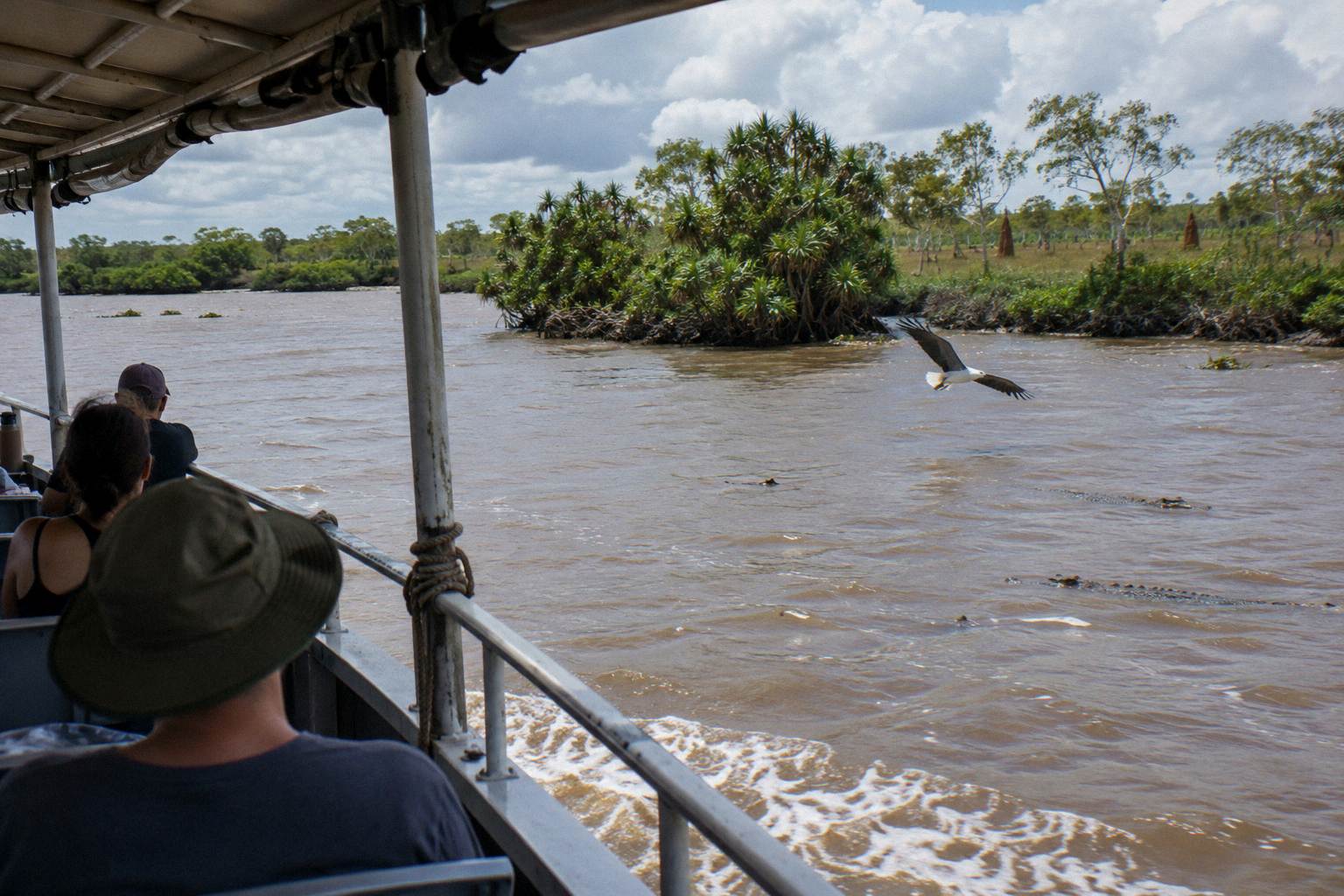
The stadium seating on Croc-Cat1 is worth pausing on, because it is the closest thing the river offers to a seat hack. Raised rows mean the view over other passengers' heads exists from most seats, and the skipper at the rear drives the boat so the action at the front, where the jumper is, is visible ahead rather than to one side. On the Queen, the choice is climatic: the air-conditioned lower deck suits the hottest part of the day, while the upper deck trades cool air for open sightlines and canopy shade. On an open-air Pathfinder every seat is exposed to the same breeze and the same sun, which is either the appeal or the dealbreaker.
None of this is hidden information. The operators describe their vessels on their own sites, and the Queen's page sets out the two decks in the operator's words. Reading the vessel page before you book does more for your photographs than any left-or-right folklore.
Where The Crocodiles Actually Come From
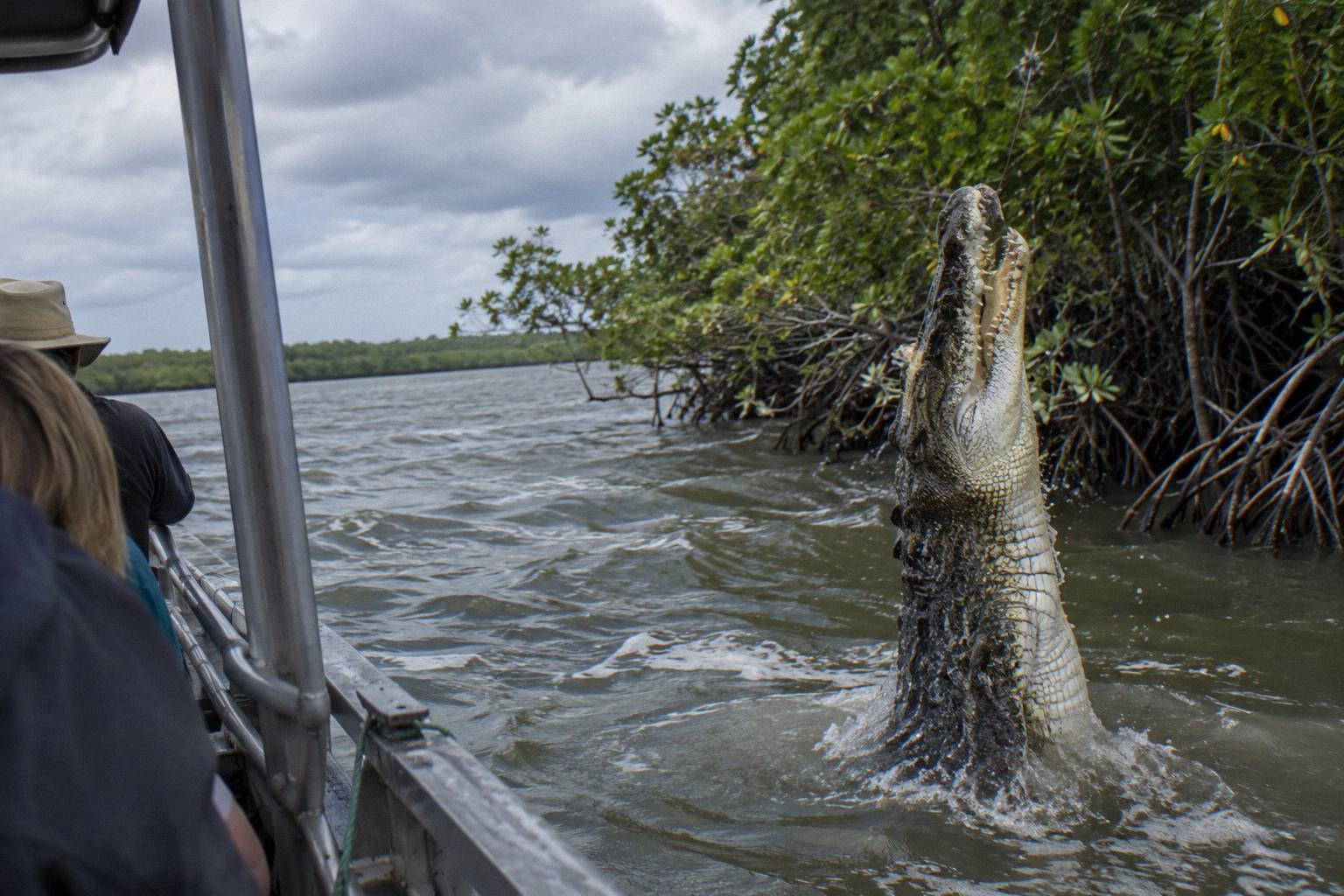
The crocodiles approach the boat, drawn by food offered from the front, rather than the boat passing them on one side. Spectacular says its crocodiles are offered a taste of buffalo meat and its boats have a jumper at the front; the Original and Queen operator says its crocodiles are 100% wild and feeding is done under NT wildlife permits. The viewing geometry follows the bow, not a rail.
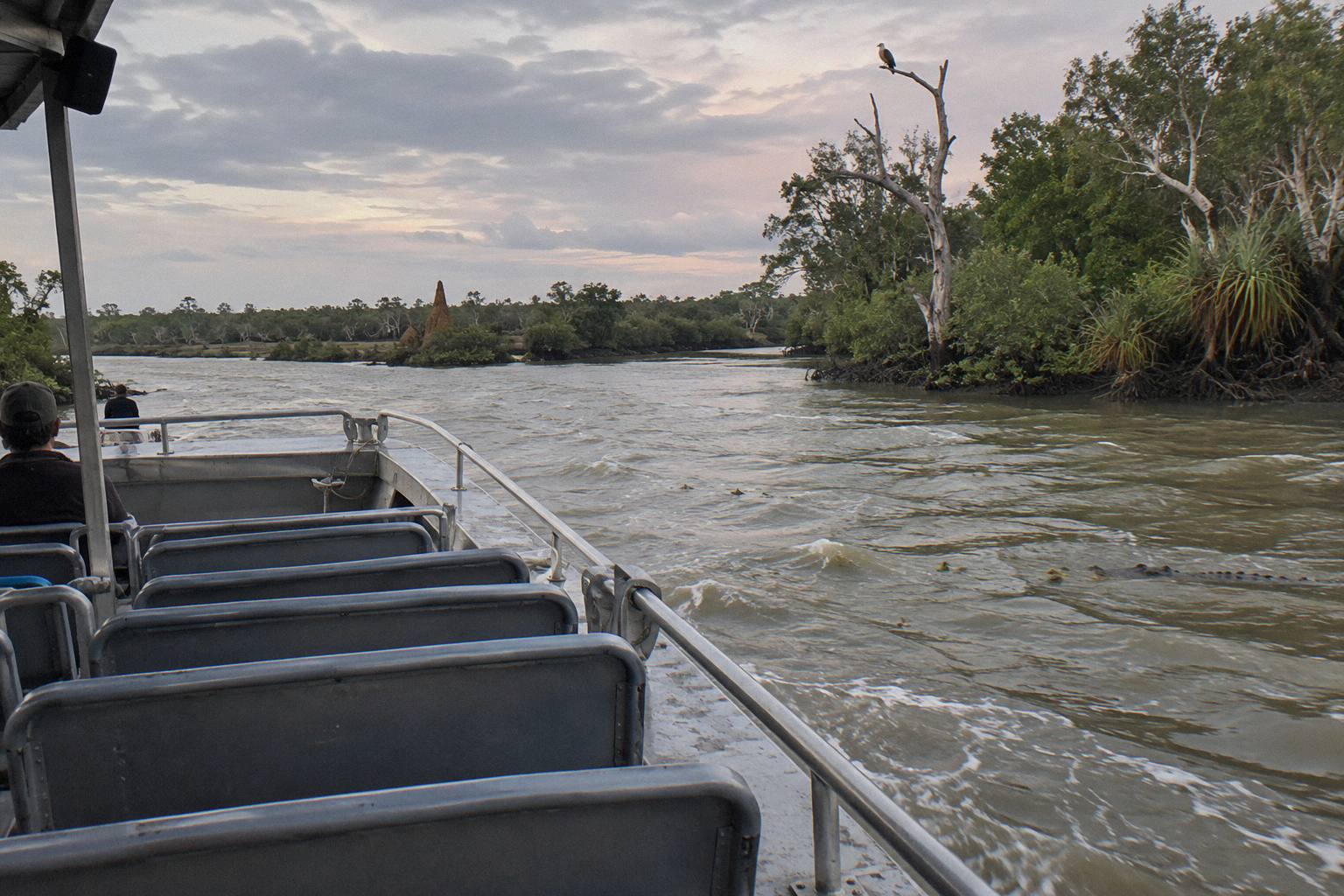
This is the mechanical heart of the matter. The saltwater crocodiles these cruises work with, Crocodylus porosus, the largest living reptile, capable of growing up to 6 metres according to the NT Government's crocodile pages, are enticed to rise by meat presented from the vessel. On Spectacular's boats that happens at the jumper at the front. When an animal rises, it rises where the meat is, which is in front of the boat, visible from both sides and from the raised rear of a stadium-seated vessel.
The permit framing matters too. The NT Government states that nobody may take or interfere with a crocodile without a permit, and does not describe the cruise permit scheme beyond that. Spectacular says its staff hold Wildlife Permits from NT Parks and Wildlife, that its Animal Ethics Policy was developed with NT Parks and Wildlife, that there is no direct contact with the crocodiles, and that detailed feeding logs are kept. The Original and Queen operator says its feeding is done under NT wildlife permits. That is the whole published record, and it says nothing about harm, heights or sides.
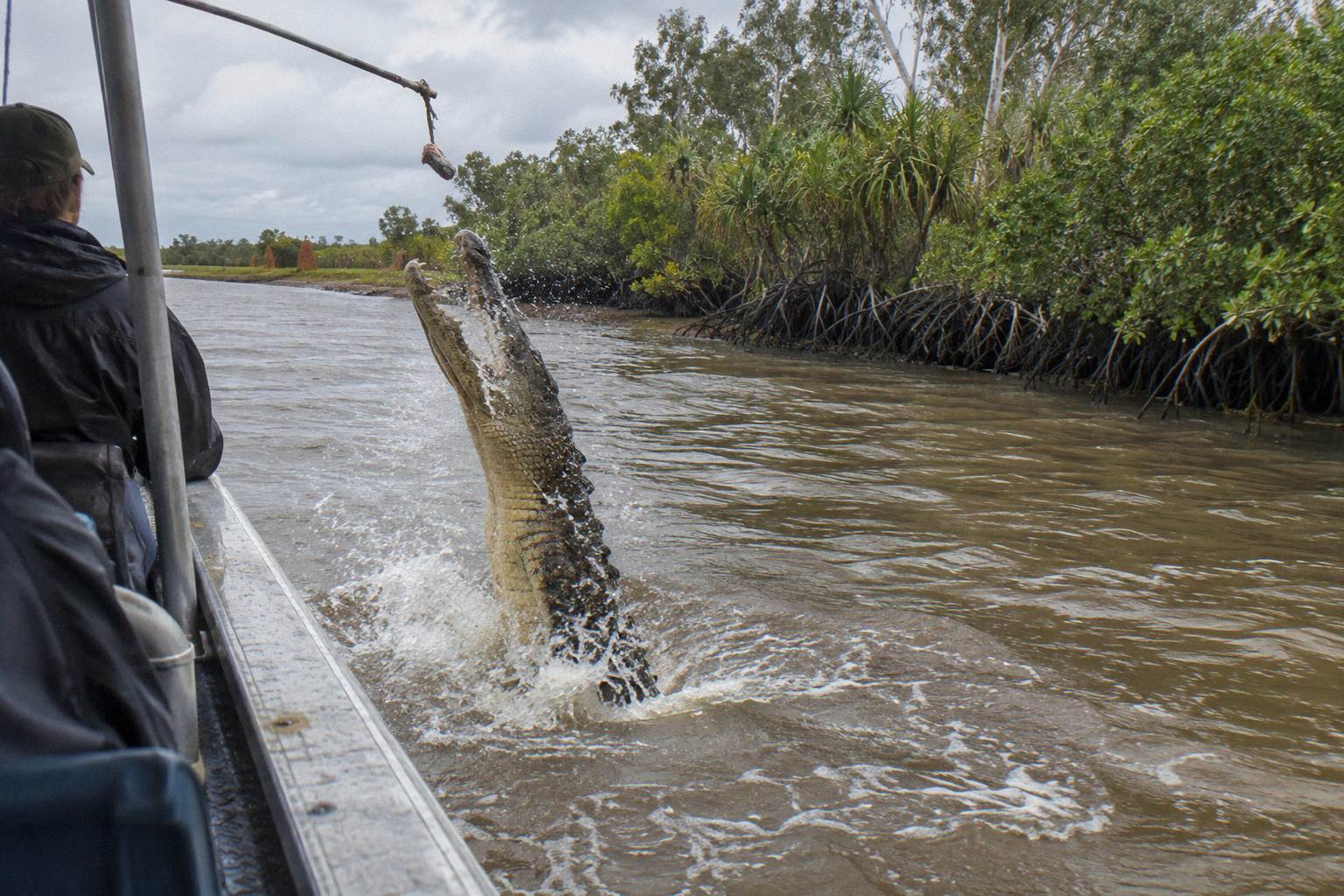
It also means the crocodiles are not trained performers on a schedule. The Original and Queen operator's line about seeing crocodiles on almost every tour, with behaviour never guaranteed, is the honest ceiling of what can be promised. The operators publish no morning-versus-afternoon crocodile behaviour claims either, so a departure time is not a seating strategy. What a departure time does change is the light, the heat and your own comfort, which is covered further down this page.
Choosing A Boat On Stated Facts
Pick by cover, deck and vessel, because those are published and real: undercover stadium seating on Spectacular's boats, cabin or canopy on the Queen, open air on the Pathfinder, and a safety-briefed hour with Adelaide River Cruises. Prices and times differ between the three and never cross over, so compare each operator's own figures rather than looking for a seating edge.
Start with the sun and the rain. The only cover facts the operators state are that Spectacular's vessels are undercover and that the Pathfinder is open-air. In the Top End that is a bigger fork than any seat: an open boat gives you unfiltered air and unobstructed vertical sightlines, which is exactly what a jump rewards, while an undercover boat protects the hour from a shower. Spectacular adds that rain in Darwin or Humpty Doo does not mean rain on the river, and that crocodiles often show a tactile response to rain, so an open-air boat in unsettled weather is not automatically a loss.
Then think about who is travelling with you. Spectacular describes itself as family-friendly for all ages, with a child price from 4 to 14 and infants 3 and under free. The Queen's operator requires supervised children, with a child price from 4 to 13. The Pathfinder charges a single fare for anyone aged 1 and over, with no separate child price, though the operator runs a kids promotion, one child under 13 travelling free per full-paying passenger for travel between 5 October 2026 and 31 March 2027 unless it ends earlier, with limited seats, so check the promotion applies. A deck with croc-proof glass and individual seating reads differently with a four-year-old than an open rail does.
Finally, weigh the deck against the weather and the camera. If you want the floodplain and its birds, a zoom lens earns its weight; if you want the crocodile interactions, Adelaide River Cruises says standard phone cameras suit them because of the proximity, its own wording, worth trusting on a boat where the animal comes to the front. The Spectacular cruise, with its stadium seating and front jumper, is the layout most often recommended for first-time visitors weighing exactly this trade-off.
Spectacular departs daily at 9am, 11am, 1pm and 3pm and is open year-round except Christmas Day, with no minimum numbers. Its operator's price is A$55 for adults 15 and over and A$40 for children 4 to 14, with infants 3 and under free, excluding a small booking fee added at checkout. Those are the operator's own figures and can change. A family of 2 adults and 2 children is A$155, rising to A$190 for 2 adults and 3 children, which makes the undercover stadium layout one of the cheaper ways to put four people in front of a rising crocodile.
Cameras, Cover And Comfort On Each Layout
Bring water, sunscreen, a hat and a camera, says Spectacular, along with comfortable clothing and sturdy footwear; photography is encouraged on its tours, which run in English. The layout you choose shapes the photography more than the seat: open decks give clean vertical angles, canopies give shade with some framing cost, and cabins give cool air through glass.
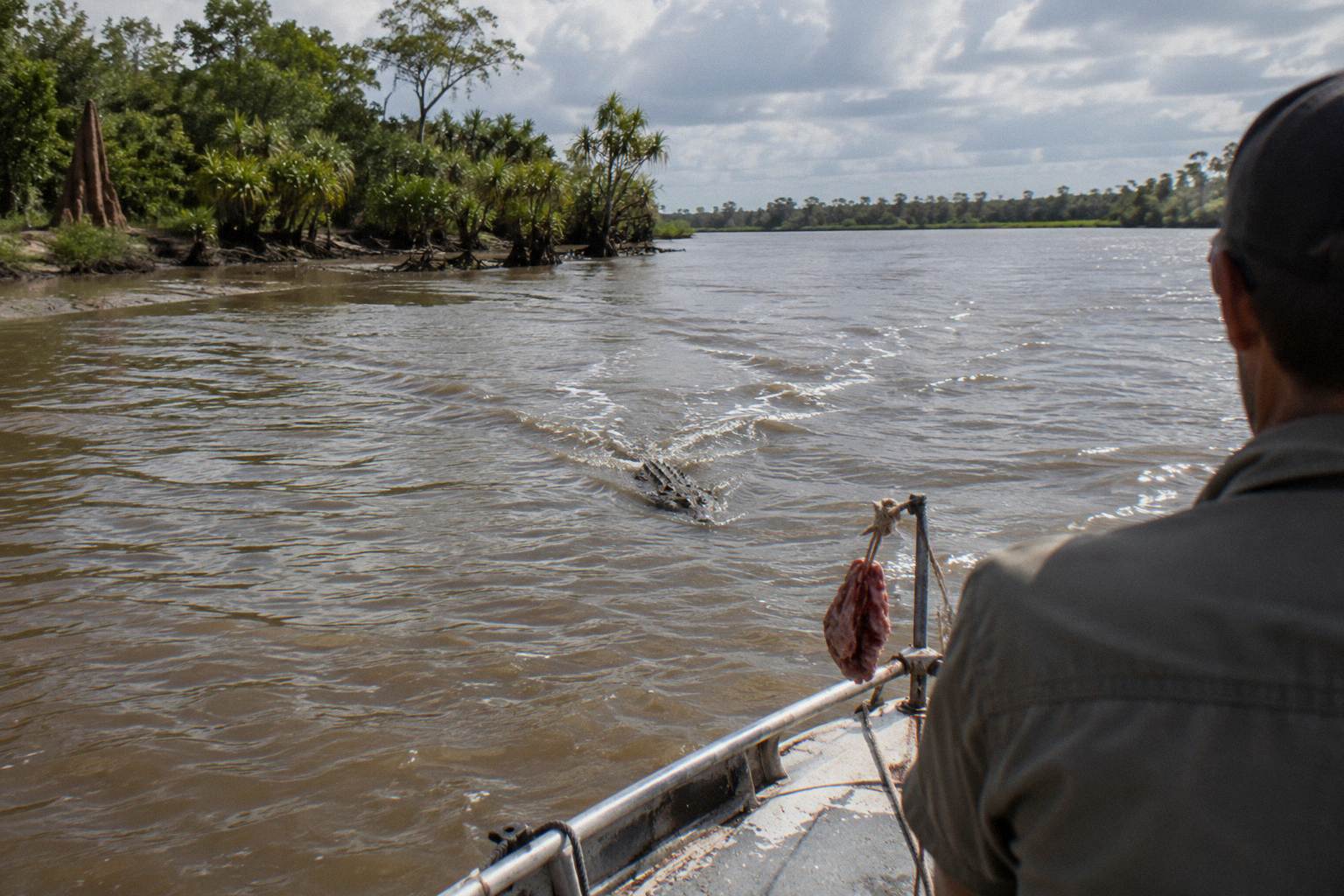
The photography logic follows directly from the deck descriptions. A crocodile rising beside the bow is a vertical subject, and the less structure between your lens and the sky above the waterline, the cleaner the shot. An open-air Pathfinder or the Queen's upper deck, open-air under a shaded canopy with individual seating, gives you that. Spectacular's undercover boats trade a little framing for protection from sun and rain, and the stadium seating helps you shoot over heads from further back. Adelaide River Cruises suggests a camera or a charged phone, and says a zoom lens is useful for wildlife across the floodplain while standard phone cameras suit the crocodile interactions because of the proximity.
Comfort is the other axis. Spectacular has free tea and coffee on arrival, a kiosk with hot food and snacks, a pavilion with a 270-degree view, a gift shop, animal exhibits and onshore toilets, so the wait before departure is part of the outing. The Queen's operator has the licensed Stumpy Tail Coffee Stop, open 8am to 4pm daily in cruise season, plus a gift shop, toilets for checked-in passengers, a playground and shaded seating, the playground doing real work if you arrive with children and time to spare. Adelaide River Cruises has no cafe on site, per its FAQ, so plan food around that.
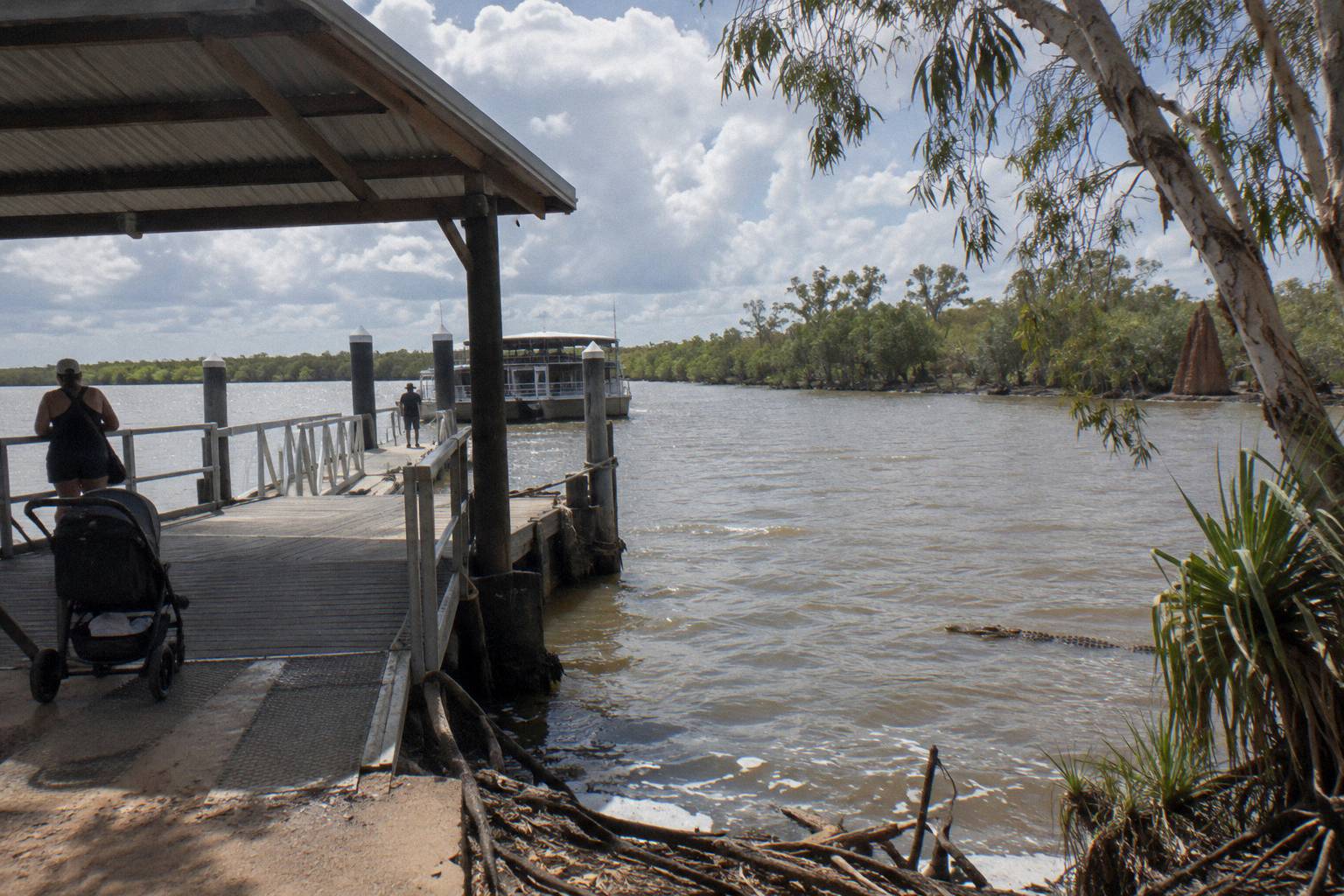
Arrival times differ by operator and are worth the same attention as the deck. Arrive at least 15 minutes before departure for Spectacular and for Adelaide River Cruises, and at least 30 minutes for the Adelaide River Queen and the Pathfinder, where late arrivals may forfeit tickets. Arriving early is, in practice, the closest thing to a seat choice that exists: early boarders pick where to stand or sit within the layout they have chosen, and on a stadium-seated or open boat, position within the vessel is yours to take. The differences stack up like this:
| What you want | Layout that suits it | Why, on stated facts |
|---|---|---|
| Clean vertical photos | Open-air Pathfinder, or the Queen's open-air upper deck | Least structure between lens and waterline; Pathfinder stated open-air, upper deck open-air under a canopy |
| Shade and shelter while watching | Spectacular's undercover vessels, or the Queen's canopy deck | Undercover stated by Spectacular; shaded canopy on the Queen's upper deck |
| Cool air in the heat | The Queen's lower deck | Air-conditioned lower deck stated by the operator |
| A view over other heads | Croc-Cat1's stadium-style seating | Raised rows stated; jumper at the front |
| Somewhere to wait comfortably | Spectacular's pavilion, or the Queen's coffee stop and playground | 270-degree-view pavilion; licensed coffee stop and playground stated |
| The simplest camera plan | Adelaide River Cruises' proximity interactions | Operator says standard phone cameras suit the interactions, zoom for the floodplain |
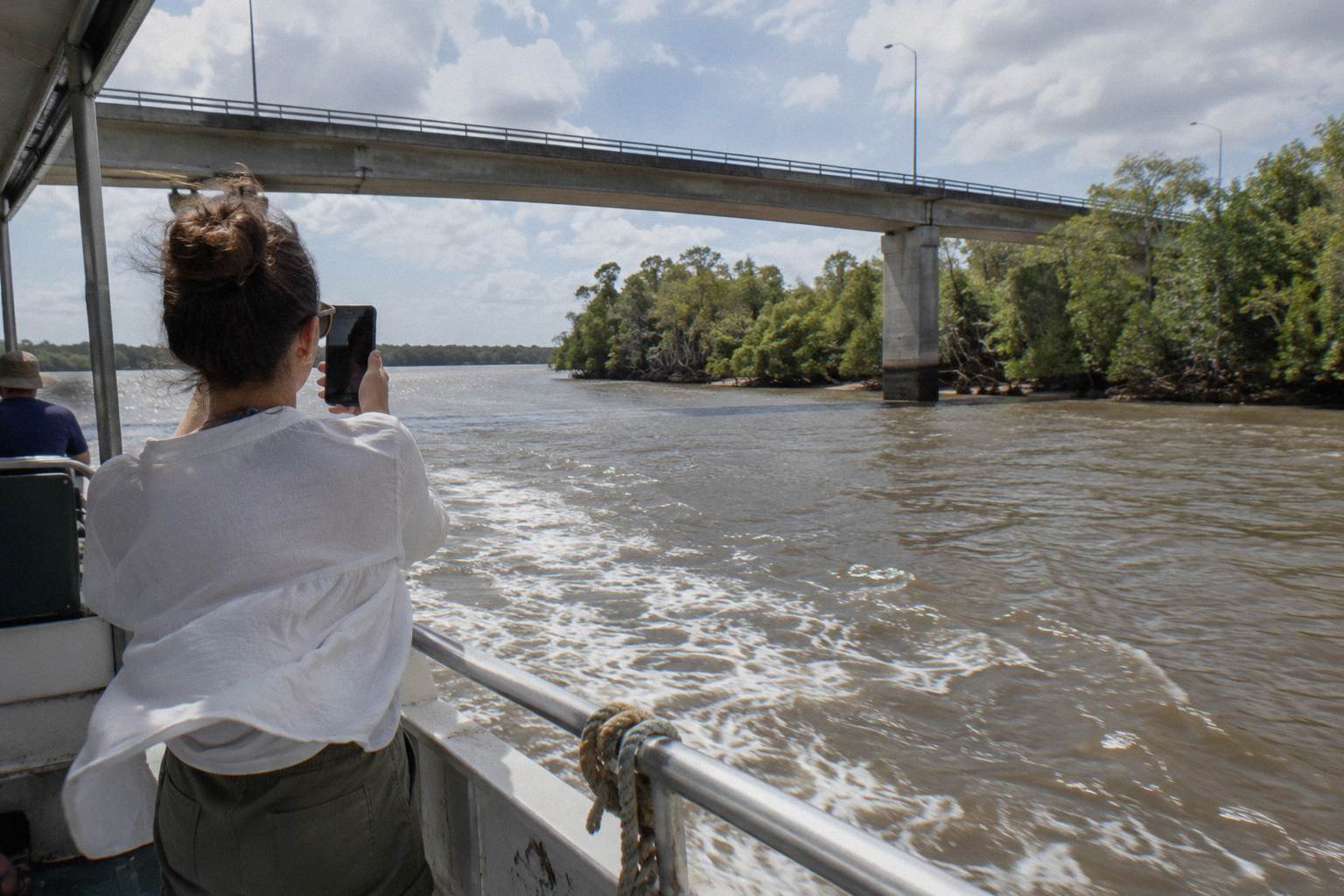
One caution belongs here rather than buried in a safety page: the NT Government's Be Crocwise advice includes not leaning out of or dangling limbs over the side of a boat. The photo you want is not worth the arm you lean. Spectacular states there is no direct contact with the crocodiles, the Queen's operator has life jackets on board, no swimming and no food on the boat, and Adelaide River Cruises opens with a safety briefing. Stay inside the operator's rules and the layout does the rest.
Accessibility And Boarding Shape The Real Choice
For many travellers the deck is settled by access, not view: Spectacular is a QTA-accredited accessible facility with accessible toilets and parking, but boarding needs about 10 metres of walkway plus three stairs and wheelchair users must transfer onto the vessel; the Adelaide River Queen is accessible for manual wheelchairs and prams with assistance; the Pathfinders are not wheelchair accessible.
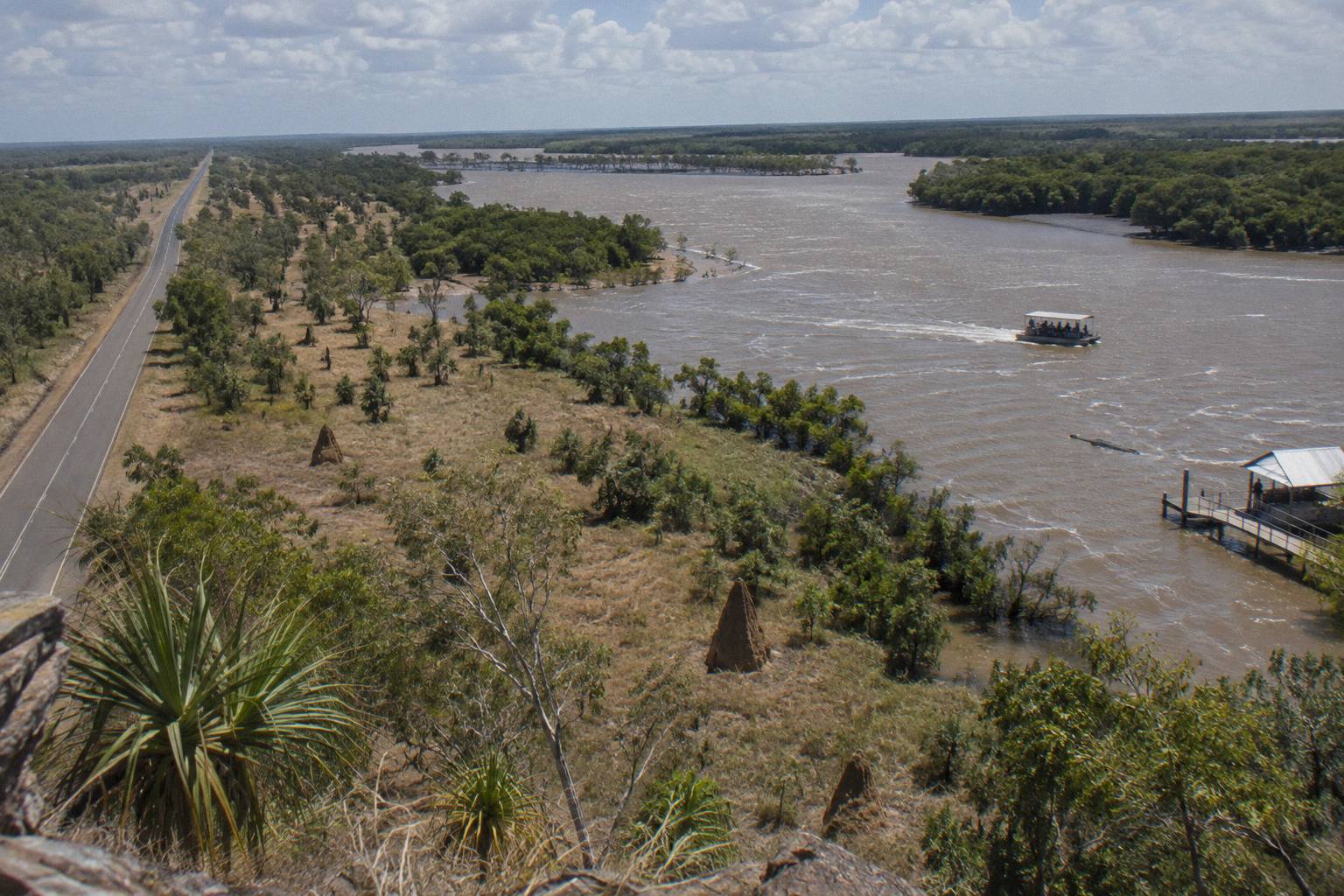
These are operator-stated facts and they decide seat choice outright for some families. At Spectacular, prams and walking frames may not go on board and are left at the jetty, assistance animals are assessed individually and generally not permitted on vessels, the Companion Card is accepted, pets can wait in a shaded pavilion, and the upstairs kiosk is not wheelchair accessible. The Adelaide River Queen's manual-wheelchair and pram access with assistance makes it the layout that keeps the most people on the water rather than on the shore. The Pathfinders suit mobility-impaired passengers but not wheelchairs, and prams can be left onshore. Adelaide River Cruises states nothing on accessibility, so ask before booking if access matters to your group.
Toilets are onshore at the operators that state it, and Spectacular has no toilet on the boat, which is worth knowing on a one-hour cruise with children: plan the boarding-time walk to the facilities into your arrival margin. The 30-minute arrival window at the Queen and Pathfinder, versus 15 minutes at the other two, partly exists for exactly this kind of settling in. If access or boarding is your deciding factor, the deeper detail is in the site's guide to cruise accessibility on the river.
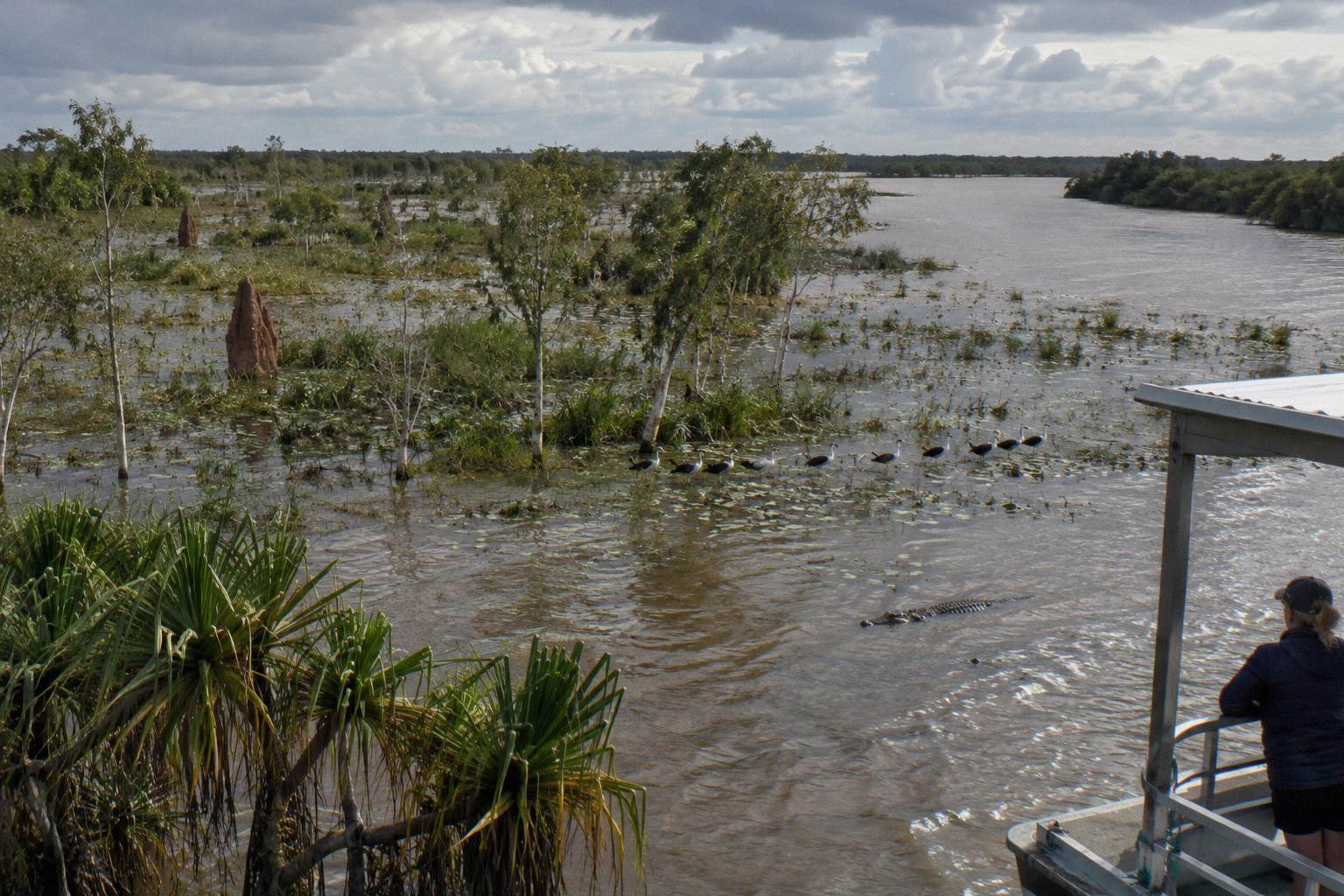
The Queen's own layout, and what each of its decks means in practice, is covered in the site's profile of the Adelaide River Queen boat. Reading the operator's vessel description against your own group's needs does more than any rail-side folklore could.
The Adelaide River Queen departs 1pm daily, with wet-season departures possibly reduced, so confirm when booking. The operator's price is A$65 for adults 14 and over and A$50 for children 4 to 13, infants 3 and under free though they need a ticket count. Those are the operator's own figures and can change. Its operator recommends booking several days ahead in the Dry Season, May to October, and says school holidays and long weekends often sell out earlier.
What To Ask When You Book
Ask the operator, or check the listing, three things: which vessel or deck applies to your departure, what the arrival time and cancellation terms are, and what the total price for your group works out to. Adelaide River Cruises' FAQ gives a full refund if cancelled more than 24 hours before departure; the other operators print no cancellation terms publicly, and the booking confirmation carries the terms, so read them.
The vessel question is the honest substitute for the side question. When you book Spectacular, you are booking a covered cruise on one of two boats, decided by numbers; when you book the Queen, you can often choose between the cabin deck and the canopy deck; when you book the Pathfinder, you are choosing open air and up to 38 passengers. Asking which applies, or simply arriving early enough to take your position, converts an unanswerable question into a practical one.
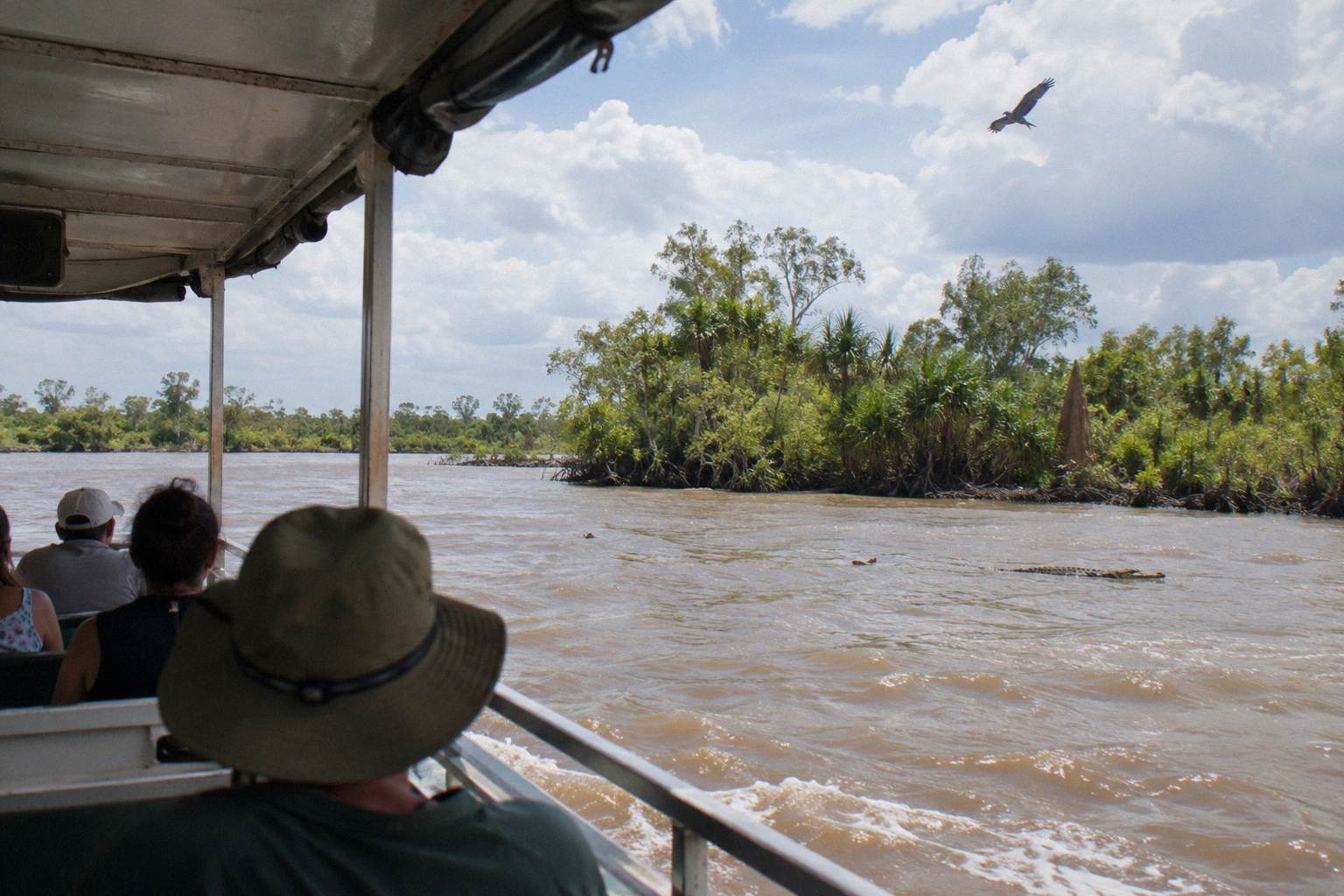
Timing and cancellation are the second pair. Adelaide River Cruises strongly recommends booking in advance, especially June to August, says tours sell out and walk-ins are not guaranteed, and its FAQ gives the 24-hour refund boundary, non-refundable inside it unless the operator cancels for weather or operations, in which case refund or reschedule. Spectacular says plainly "we do sell out", with no minimum numbers, and prints no cancellation terms on its public pages. Whichever booking page you use shows its own terms, so read them there rather than trusting a summary, including this one, as a promise.
Price is the third. Never compare a cruise-only price with a day-tour price, because the day tours bundle transport and stops. On the river itself, the operators' own figures are A$55 adult at Spectacular, A$65 adult on the Queen, A$75 single fare on the Pathfinder for anyone aged 1 and over, and A$58.50 adult at Adelaide River Cruises, its figures stated including taxes and fees, with a concession rate of A$53.18 for pension-card holders. Day tours from Darwin carry their prices on the booking page, and this site prints none of them. The featured Adelaide River Cruises experience is one such river option: Check availability, and read the terms on the live listing before you commit.
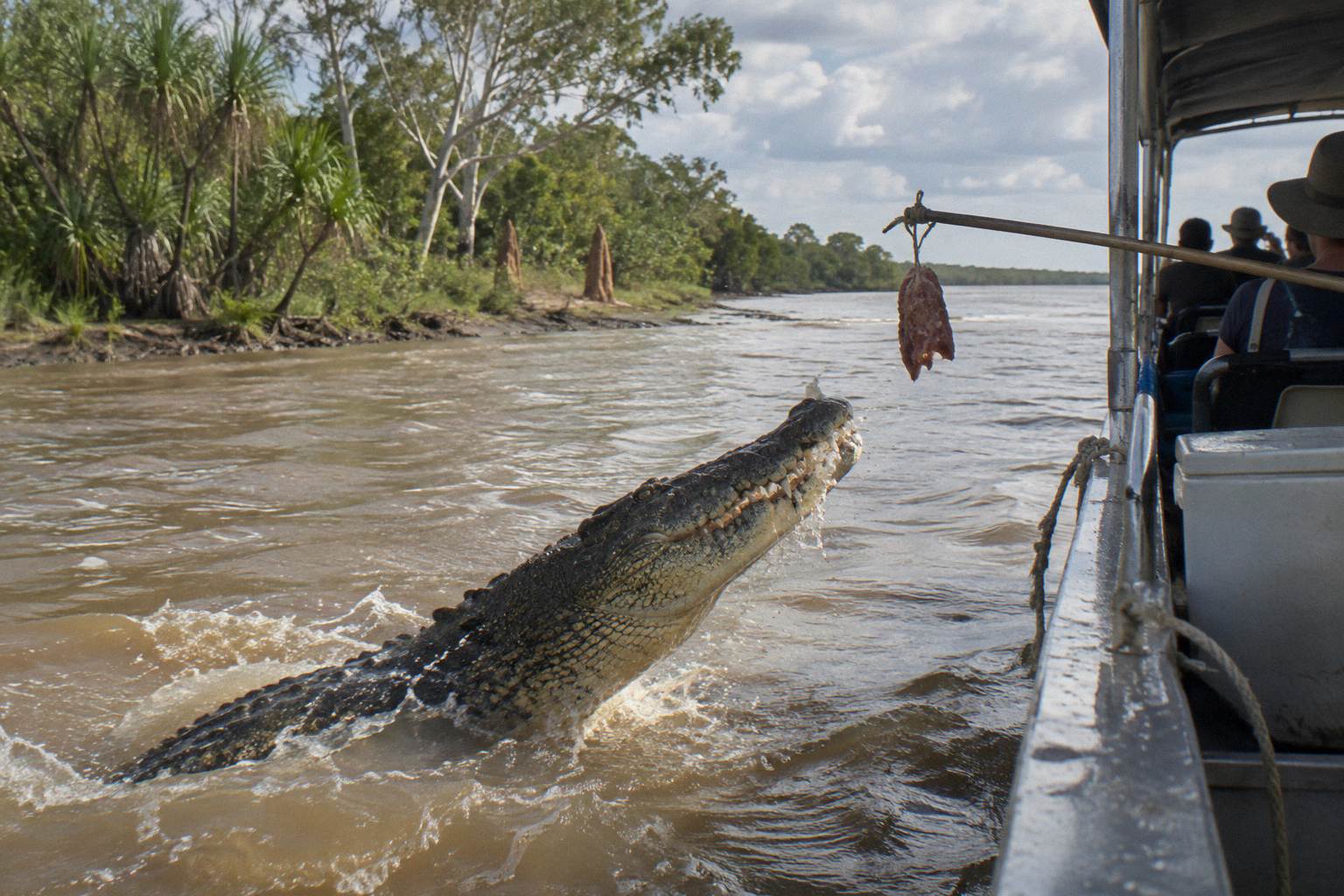
How This Site Answers It
The method behind this page is simple: report what the operators and the Northern Territory Government actually publish, and refuse to invent the rest. That is why the site, Adelaide River Crocodile Cruise, names no best side, prints no jump height or distance, and puts no capacity figure where the operator gives two. The same evidence-first approach runs through the guides and blog posts linked below.
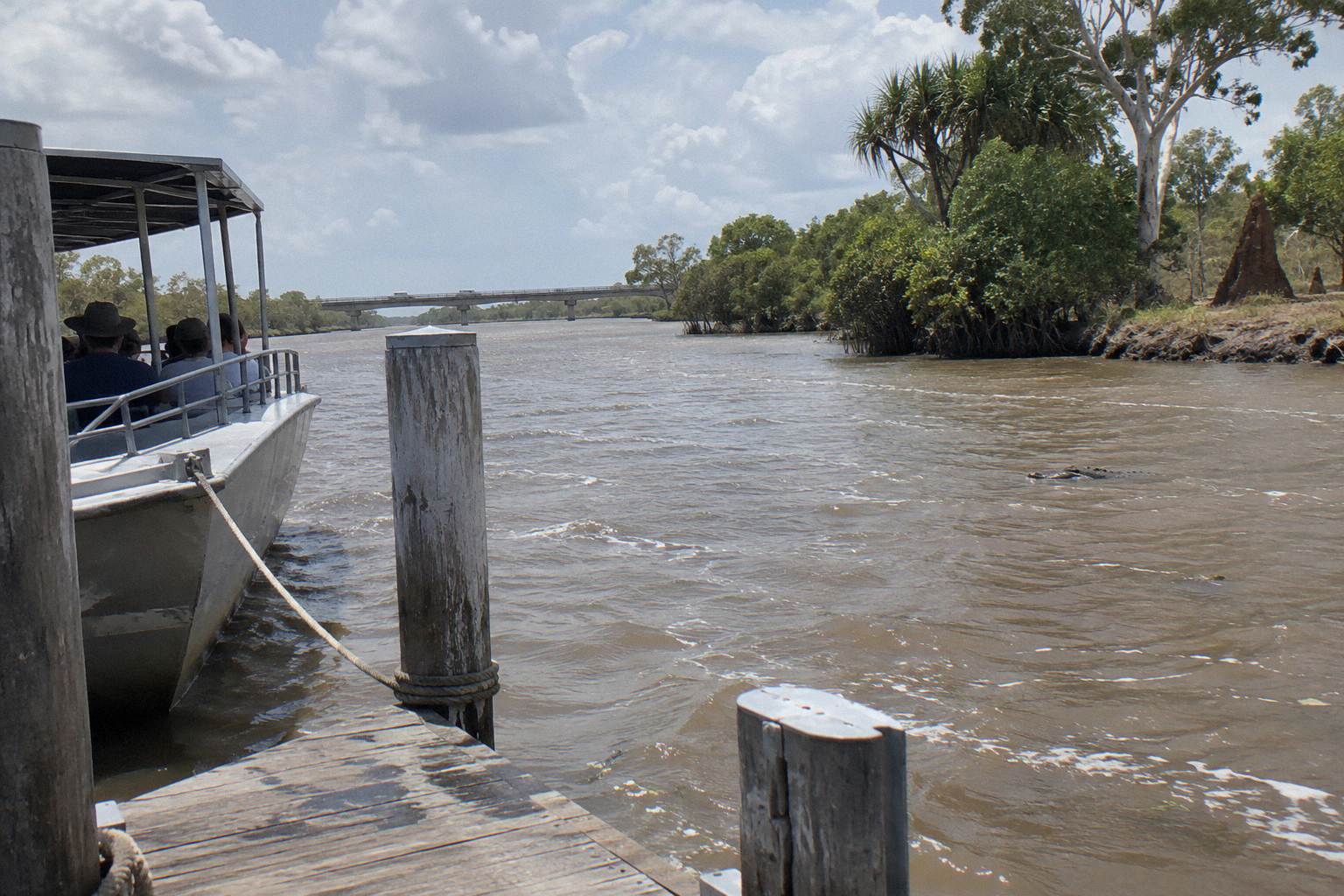
The through-line of this page is that the question, asked so often, has a boring answer and an interesting one. The boring answer: there is no best side, and nobody with authority says otherwise. The interesting answer: the Adelaide River operators run four distinct vessel experiences between them, a covered stadium-seated multi-hull, a smaller boat that goes further down the river, a two-deck paddle-style river boat with a cabin and a canopy, and an open-air small vessel, and choosing among those is a real decision with real consequences for your photos, your comfort and who in your family can board.
This site, Adelaide River Crocodile Cruise, exists to answer exactly these questions with the operators' own published facts rather than invented tips. The same approach runs through the guide to where the cruise boats depart on the Arnhem Highway, which matters because the three operators leave from three different jetties, and the wrong address costs you more viewing time than the wrong seat ever will. It also runs through the blog piece on how close the crocodiles get to the boat, the natural companion to this one.
So arrive early, ask which vessel your departure uses, dress for the deck you chose, keep your limbs inside the boat as the NT Government's Be Crocwise advice directs, and let the crocodile decide the angle. It was going to anyway.
Common Questions About Boat Seating On A Jumping Crocodile Cruise
Which Side Of The Boat Is Best On A Jumping Crocodile Cruise?
No operator on the Adelaide River, and no Northern Territory Government source, states that one side of the boat is better than the other. Nothing published names a jump height, a jump distance or a how-close-to-the-boat figure either. The real choice is between vessels and decks, which the operators do describe in detail.
Do The Boats Have A Front Or Back Advantage?
Spectacular's boats have a jumper at the front, where meat is offered, and its Croc-Cat1 uses stadium-style seating with the skipper at the rear, so the action tends to happen ahead of the passengers where most seats can see it. The crocodiles approach the boat rather than passing it on one flank.
Can I Choose Which Vessel My Cruise Uses?
Not by name at Spectacular, which says whether the Croc-Cat1 or the smaller Wildcat runs depends on the numbers booked. At the Adelaide River Queen operator you can weigh the air-conditioned lower deck against the open-air upper deck, and the open-air Pathfinder is a separate product with up to 38 passengers per vessel.
Which Layout Is Best For Photographs?
Open-air decks give the cleanest vertical angles for a rising crocodile, while undercover boats trade some framing for sun and rain protection. Adelaide River Cruises says a zoom lens is useful for wildlife across the floodplain and that standard phone cameras suit the crocodile interactions because of the proximity.
Does The Departure Time Affect Which Seat Is Best?
The operators publish no morning-versus-afternoon crocodile behaviour claims, so no departure time is a seating strategy. Departure times change light, heat and comfort instead, and arrival margins differ: at least 15 minutes early for Spectacular and Adelaide River Cruises, at least 30 minutes for the Adelaide River Queen and Pathfinder.
Is One Deck Better For Children Or Wheelchair Users?
Access decides it: the Adelaide River Queen is accessible for manual wheelchairs and prams with assistance, the Pathfinders are not wheelchair accessible, and Spectacular requires about 10 metres of walkway plus three stairs to board, with wheelchair users transferring onto the vessel. Children must be supervised at the Queen's operator, and Spectacular describes itself as family-friendly for all ages.