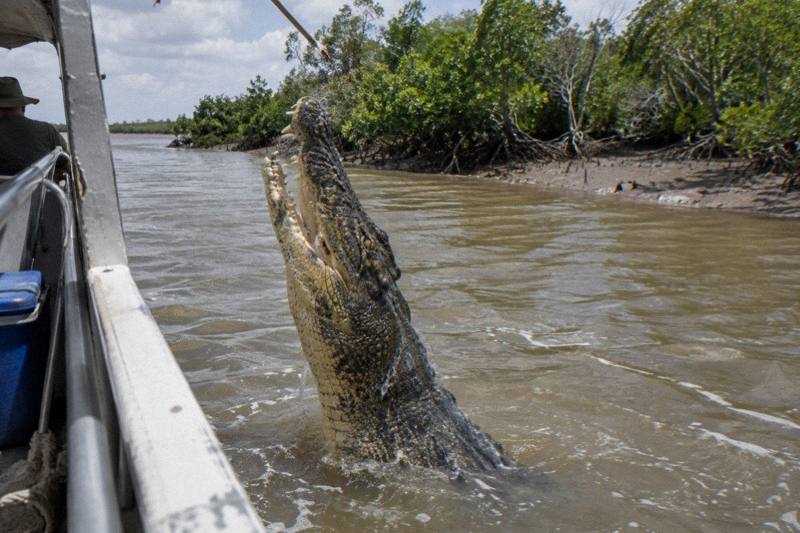
The Adelaide River Floodplain And Mangroves From The Boat
The Adelaide River crocodile cruises run across a working floodplain, not a theme-park waterway. This page sets out, from operator and NT Government sources only, what that landscape actually is, where each boat leaves from, and what the sources do and do not say about the mangroves.
Short answer
The Adelaide River crocodile cruises cross a broad Top End floodplain, about an hour from Darwin by road, with all three operators departing from separate jetties on or near the Arnhem Highway. No published source gives mangrove-species or floodplain-ecology detail for this river, so this page sticks to what the operators and the NT Government actually state.
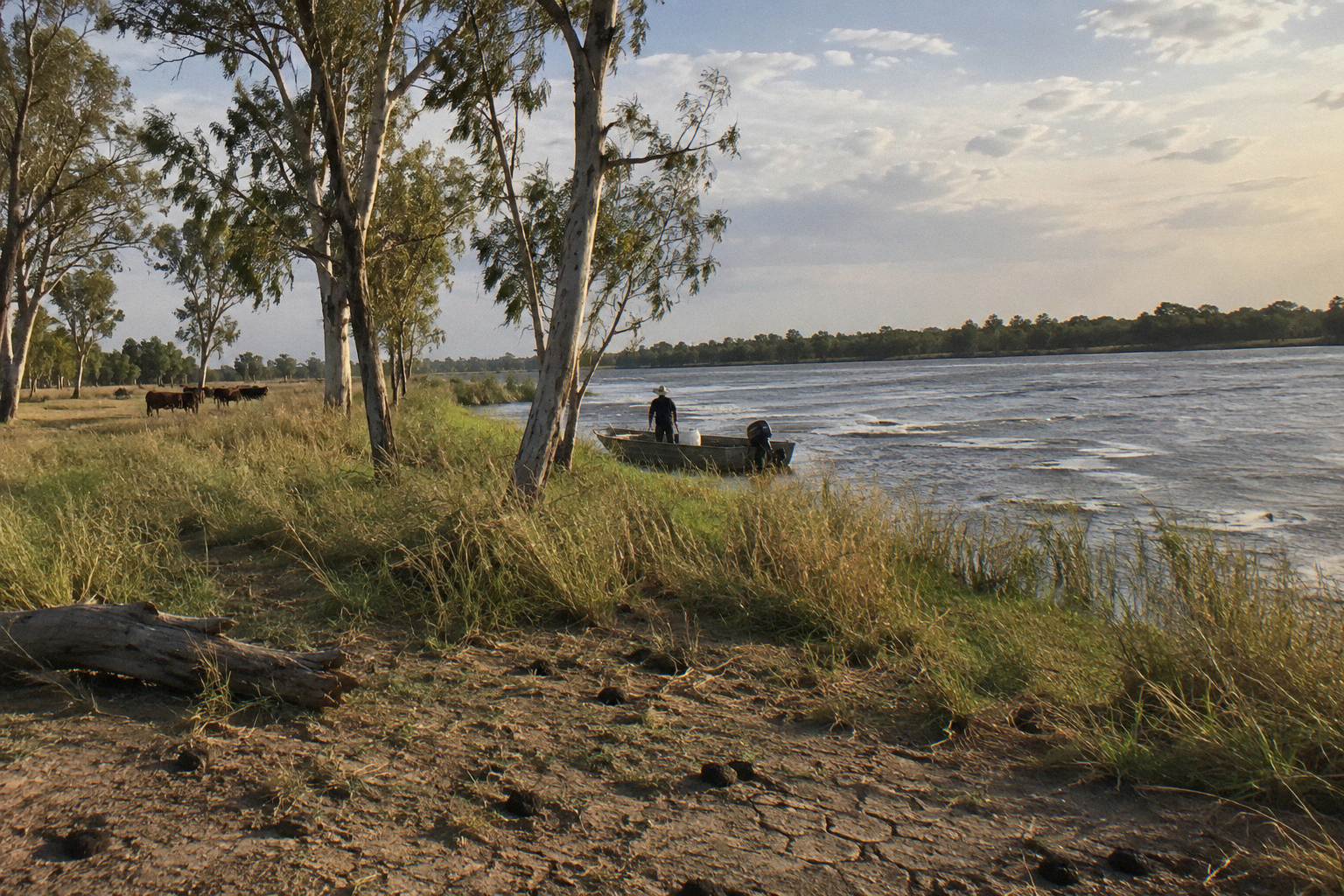
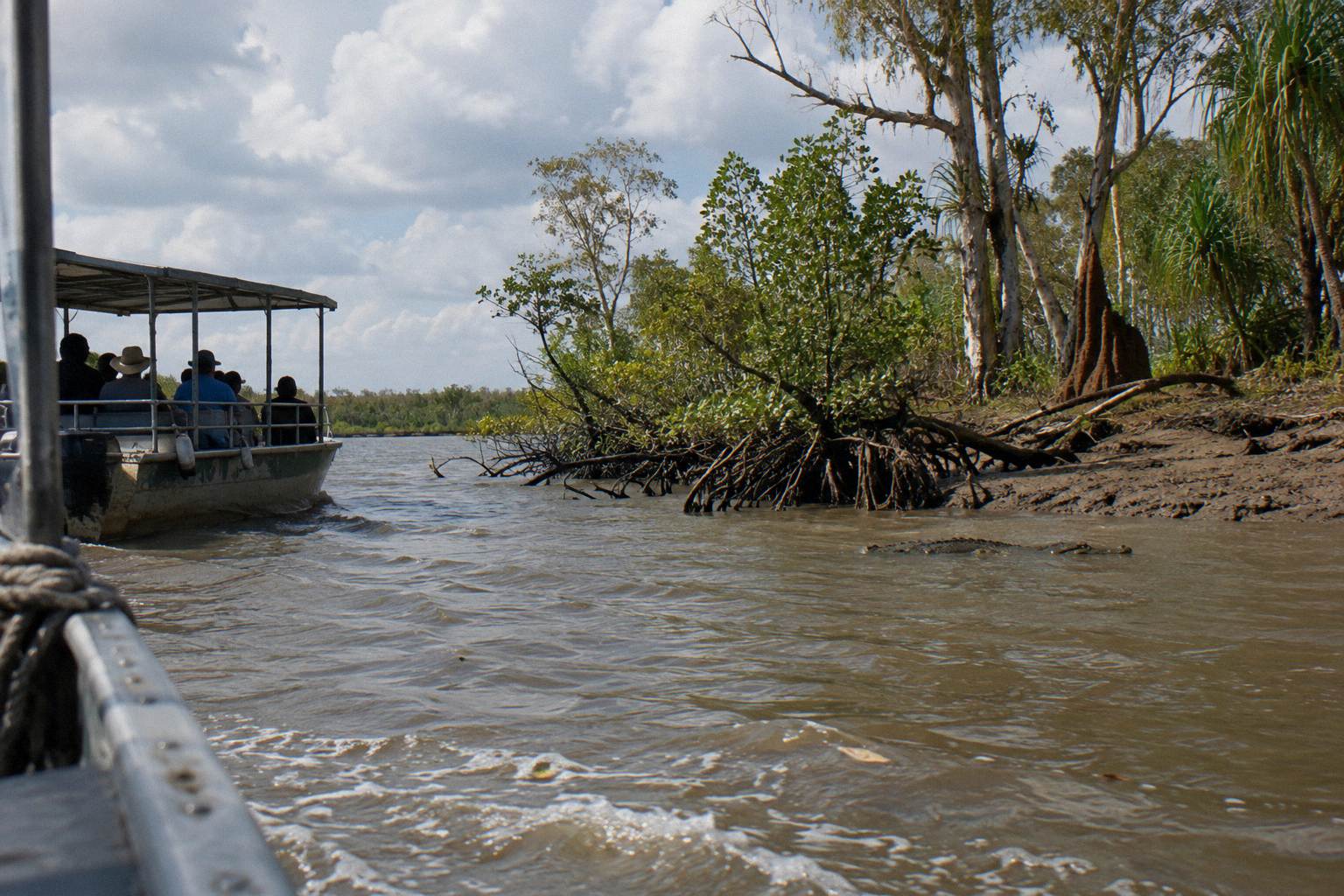
The Adelaide River does not behave like a postcard river. For most of the year much of it is a slow, tidal channel threading through flat country that floods and drains with the seasons, and the jumping crocodile cruises work right through the middle of that landscape. Every cruise on this river is about one hour on the water, and in that hour the boat, the floodplain and the treeline do most of the visual work while the crocodiles do the rest.
One point of honesty before anything else, because this page is about the landscape rather than the crocodiles themselves. The verified sources behind this site, which are the three cruise operators' own pages and the Northern Territory Government's crocodile pages, contain no mangrove-species guide, no floodplain-ecology study and no water-level or tide data for the Adelaide River. There is no published material on mangrove zones, no plant list, no seasonal flooding calendar. So this page does what the evidence allows: it describes the floodplain views the operators themselves describe, names the wildlife one operator lists, and gives you the practical decision content, jetties, drives, times and boats, that turns curiosity about the landscape into a booking.
What Is The Adelaide River Floodplain?
The Adelaide River floodplain is the flat, seasonally waterlogged country that spreads out on either side of the river's tidal channel in the Top End of the Northern Territory, roughly an hour's drive from Darwin on the Arnhem Highway. The cruise boats cross this country, and the operators describe their settings in exactly those terms.
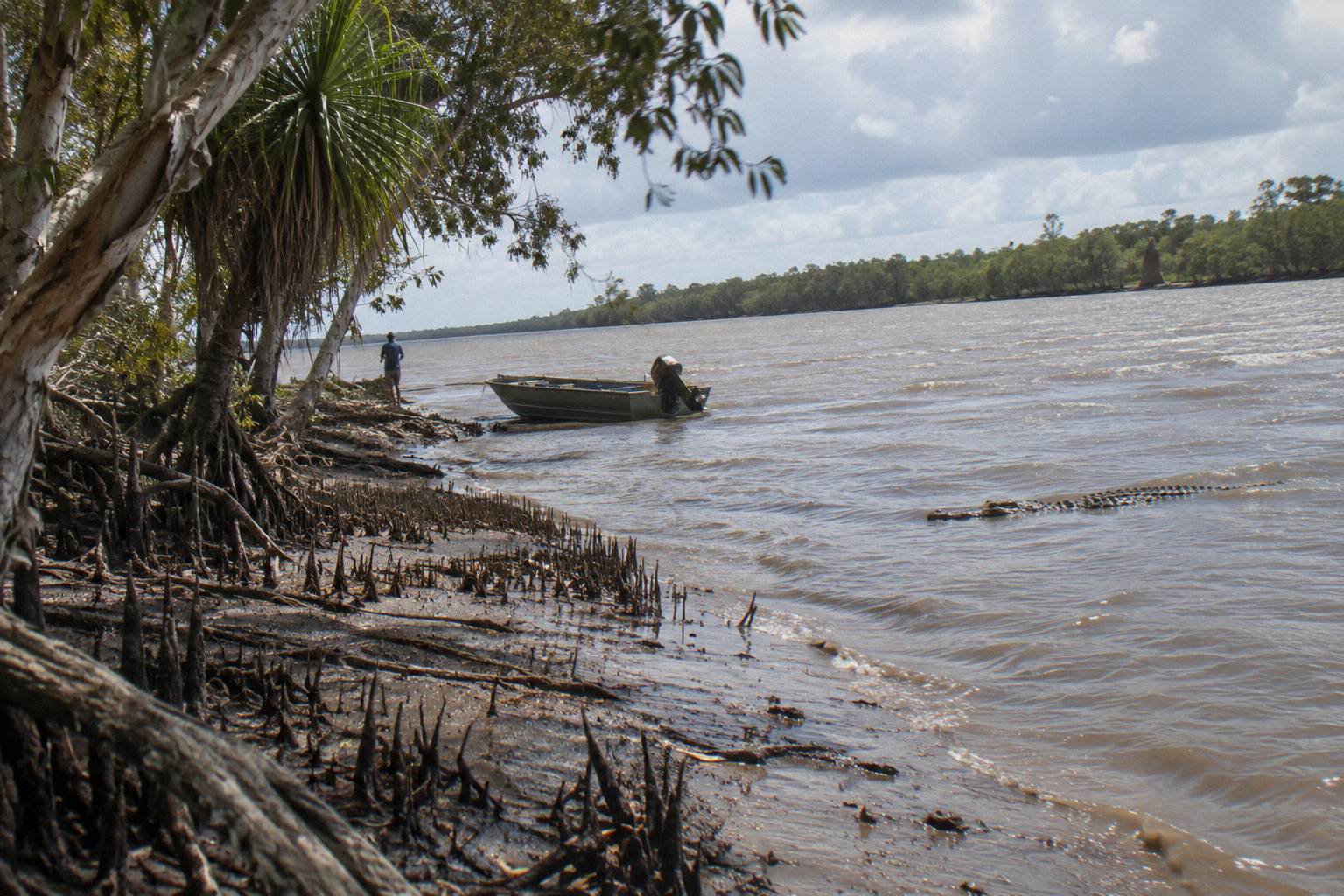
That is the honest shape of the thing. A floodplain in this region is low ground that adjoins a river and is subject to flooding in the wet months, and the Adelaide River's is wide, grassy and studded with paperbarks and mangrove fringe along the channel itself. But the caution above applies here too: none of the operators' pages, and none of the NT Government pages this site draws on, publish an ecology description of this specific floodplain. There is no official plant list, no habitat map, no seasonal water extent figure. What the sources give instead is scenery in passing: Spectacular says its about 2 km of well-maintained unsealed access road often shows water buffalo, cattle and wading birds, which tells you the surrounding country is open grazing land and wetland edge rather than dense forest. Adelaide River Cruises says a zoom lens is useful for wildlife across the floodplain, which tells you the views are long and open.
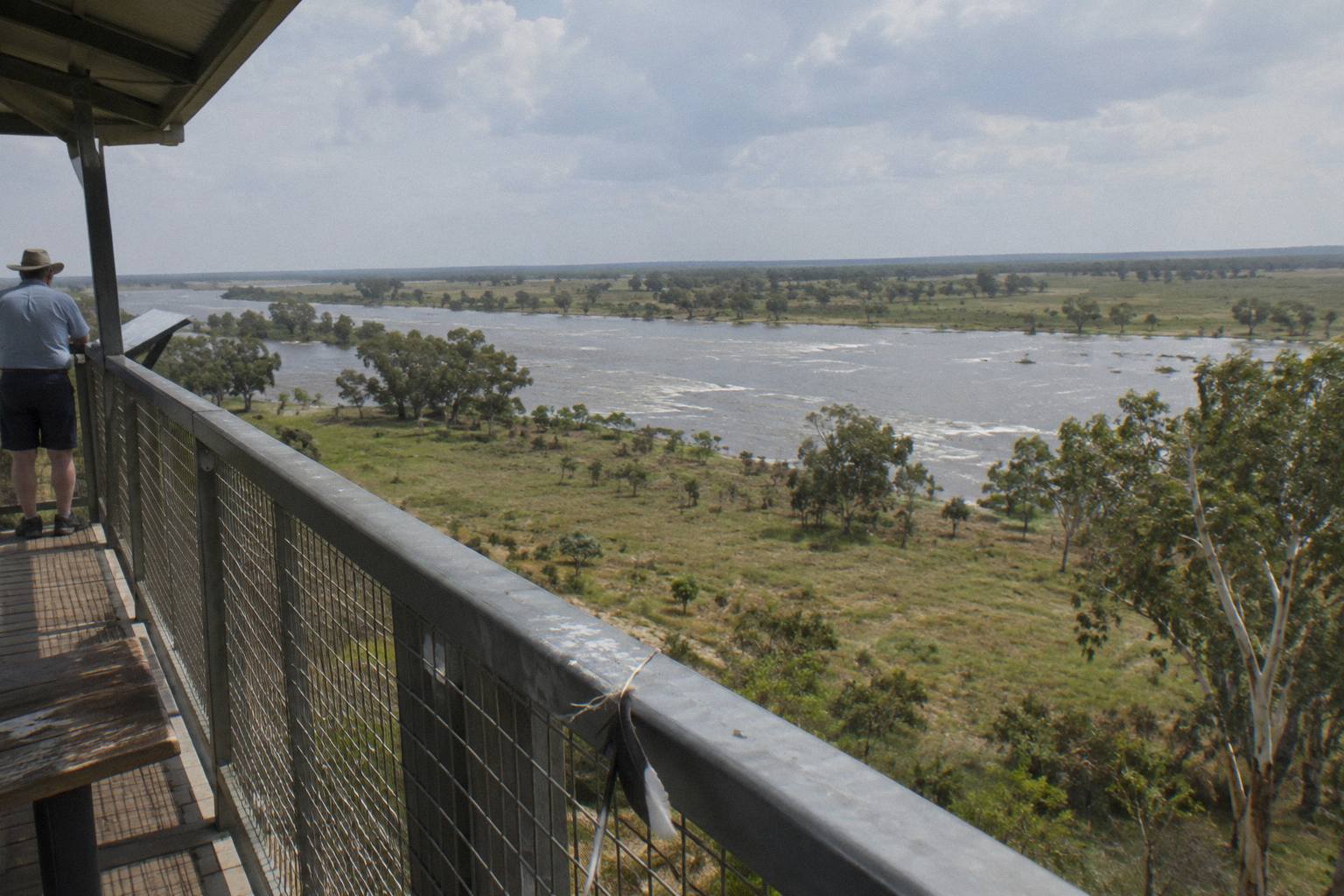
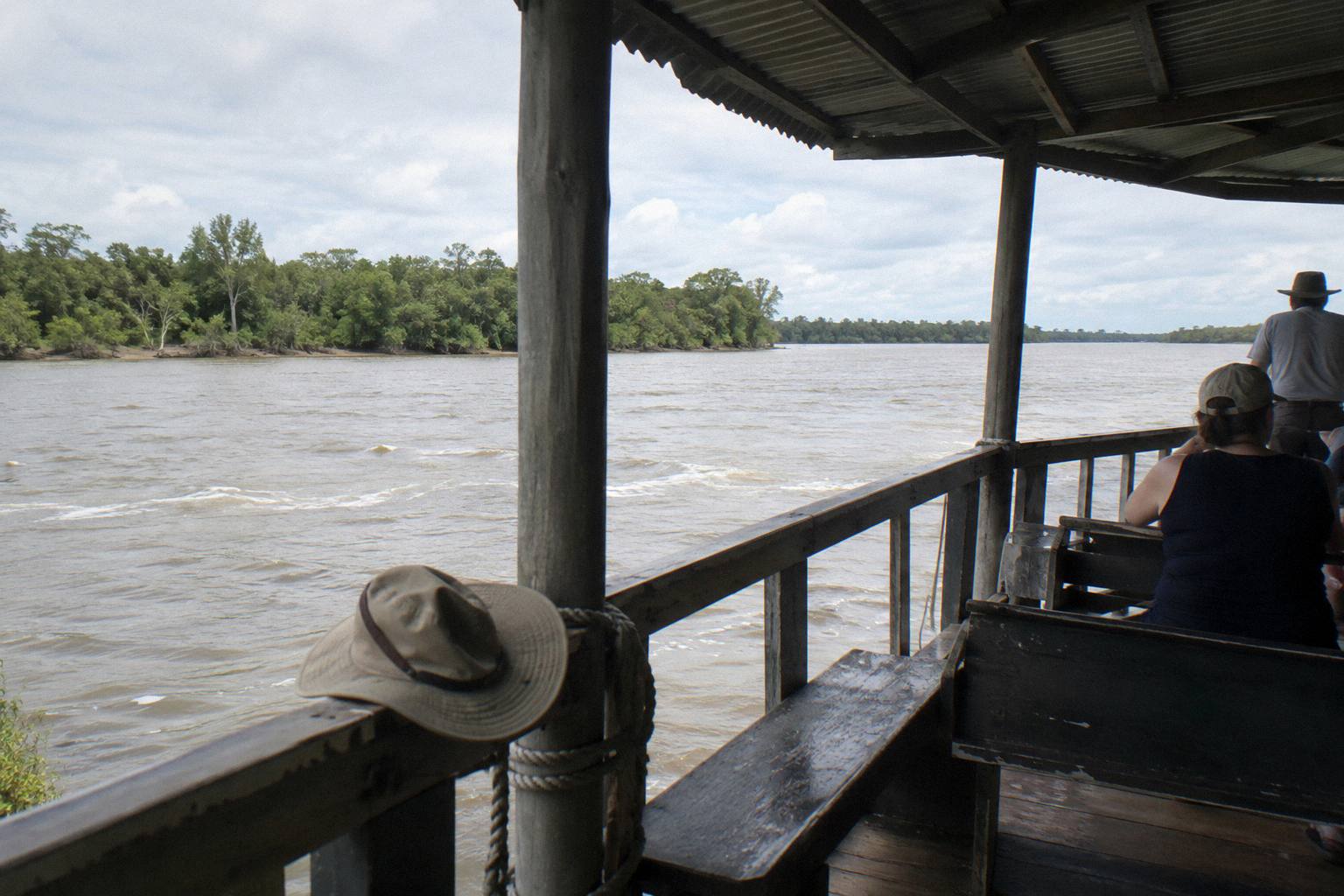
The Windows on the Wetlands Visitor Centre, which you pass on the way to Spectacular's jetty, sits on the edge of this same country, and its name is the clearest signal of what you are driving through: wetland. The land is so flat that from the deck of a cruise boat the horizon reads as a single unbroken line of grass, water and distant trees, with the mangrove fringe along the riverbank close enough to pick out individual forms. The operators make no scientific claims about any of this, and neither will this page. If you want the crocodile side of the river rather than the landscape side, the Adelaide River Crocodile Cruise pages on this site cover the tours themselves in detail, including a guide to the crocodiles of the Adelaide River.
For a sense of how the landscape and the tour fit together, three contrasting options are worth comparing side by side before anything else.
Where Each Cruise Boat Departs On The Floodplain
The locations matter more than you might expect, because they put you in different corners of the same floodplain. Spectacular's jetty is reached via the Windows on the Wetlands Visitor Centre and about 2 km of well-maintained unsealed access road, and the operator says hire cars are fine on it; that access road is where the buffalo, cattle and wading birds often appear, per the operator. The Adelaide River Queen and Pathfinder jetty is the easiest to find of the three: sealed road all the way, no park pass needed, 100 m to the right of the highway, and a giant crocodile statue standing in the car park, which is about as subtle a landmark as the Top End offers. Adelaide River Cruises sits at Anzac Parade, Middle Point, and the operator's own pages give slightly different Darwin drive times, so the only safe wording is about an hour or a little more.
Drive times, operator-stated, and no kilometre figures are printed anywhere on this site because the operators' own numbers conflict:
| Operator / jetty | Address | Drive from Darwin | Road type |
|---|---|---|---|
| Spectacular | Beatrice Hill Farm, 2915 Arnhem Road, Middle Point | Just under 1 hour (operator) | Sealed, then about 2 km unsealed access road |
| Adelaide River Queen and Pathfinder | 3220A Arnhem Highway, Wak Wak | 50 to 60 minutes (operator) | Sealed all the way |
| Adelaide River Cruises | Anzac Parade, Middle Point | About an hour or a little more | Operator does not detail the surface |
The Original and Queen operator also notes that its site sits on the Arnhem Highway at the Adelaide River Bridge en route to Kakadu National Park, and gives the drive from the centre of Litchfield National Park as 100 to 110 minutes; Spectacular gives just under 2 hours from Jabiru. That positions the floodplain as a genuine waypoint between Kakadu and Darwin, which is exactly how most self-drivers use it. If you are weighing the drive itself, the site's Darwin to Adelaide River guide covers the route decision, and where the cruise boats depart on the Arnhem Highway goes deeper on the three jetties.
Which Boat Gives You The Floodplain View
The floodplain view from each of these is a different experience. On the Adelaide River Queen, the upper deck is the open-air one with individual seating and a shaded canopy, while the lower deck is air-conditioned behind croc-proof glass; a photographer who wants the landscape unfiltered picks the upper deck, a family wilting in the build-up picks the lower. The Pathfinders are the purists' option: open-air, smaller, no glass between you and the air coming off the floodplain. Spectacular's boats are undercover, which the operator lists as a feature, and which vessel runs, Croc-Cat1 or Wildcat, depends on the numbers booked; the operator notes Wildcat goes further down the river. No operator publishes a "best side of the boat", and this site will not invent one.
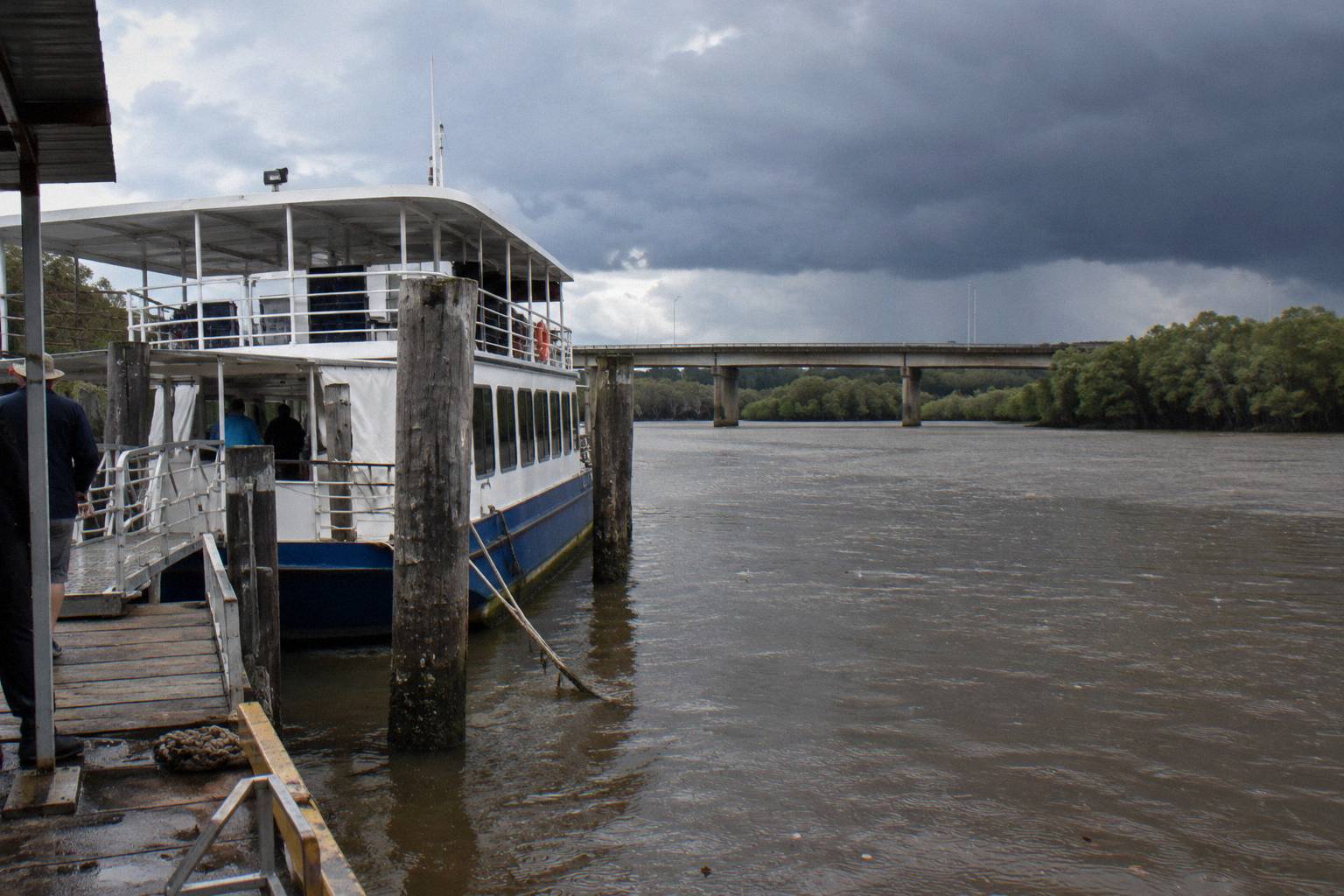
Every river cruise runs about one hour on the water regardless of operator. Spectacular departs daily at 9am, 11am, 1pm and 3pm and is open year-round except Christmas Day; the Adelaide River Queen departs 1pm daily, with the operator noting wet-season departures may be reduced and should be confirmed when booking; Adelaide River Cruises' tour page lists 9am, 11am, 1pm and 3pm daily with operating months May to October. The Pathfinder is available daily with no times printed anywhere, so check the booking page. Arrival rules differ too: at least 15 minutes early for Spectacular and Adelaide River Cruises, at least 30 minutes for the Adelaide River Queen and Pathfinder, and the Queen operator warns late arrivals may forfeit tickets. The jumping crocodile cruise times guide collects all of this in one place.
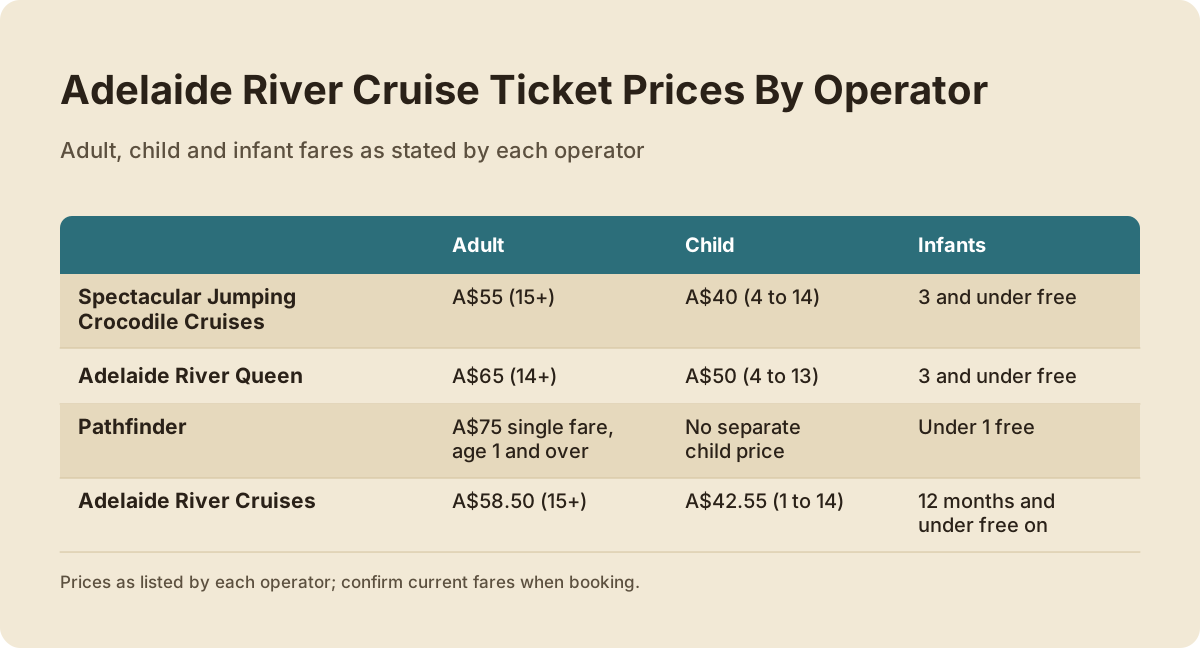
Prices, operator-stated and subject to change, are the operator's own published figures; no booking-platform price is printed on this site:
| Operator | Adult | Child | Infants | Family rates |
|---|---|---|---|---|
| Spectacular | A$55 (15+) | A$40 (4 to 14) | 3 and under free | Family of 4 A$155; family of 5 A$190, excluding a small booking fee |
| Adelaide River Queen | A$65 (14+) | A$50 (4 to 13) | 3 and under free | Not stated |
| Pathfinder | A$75 single fare, age 1 and over | No separate child price | Under 1 free | Kids promotion: one child under 13 free per full-paying passenger for travel 5 Oct 2026 to 31 Mar 2027 unless it ends earlier, limited seats, check it applies |
| Adelaide River Cruises | A$58.50 (15+) | A$42.55 (1 to 14) | 12 months and under free on a lap | 2+2 A$159.55; 2+3 A$202.09; 2+4 A$244.64, stated including taxes and fees |
The Adelaide River Cruises Jumping Crocodile Experience is this site's featured river cruise for the floodplain run, with the operator's departure list at 9am, 11am, 1pm and 3pm daily and a safety briefing opening each trip. If the open-air format appeals instead, the Pathfinder's single-fare structure and open vessels sit at the other end of the style spectrum.
The Wildlife Of The Floodplain Water And Sky
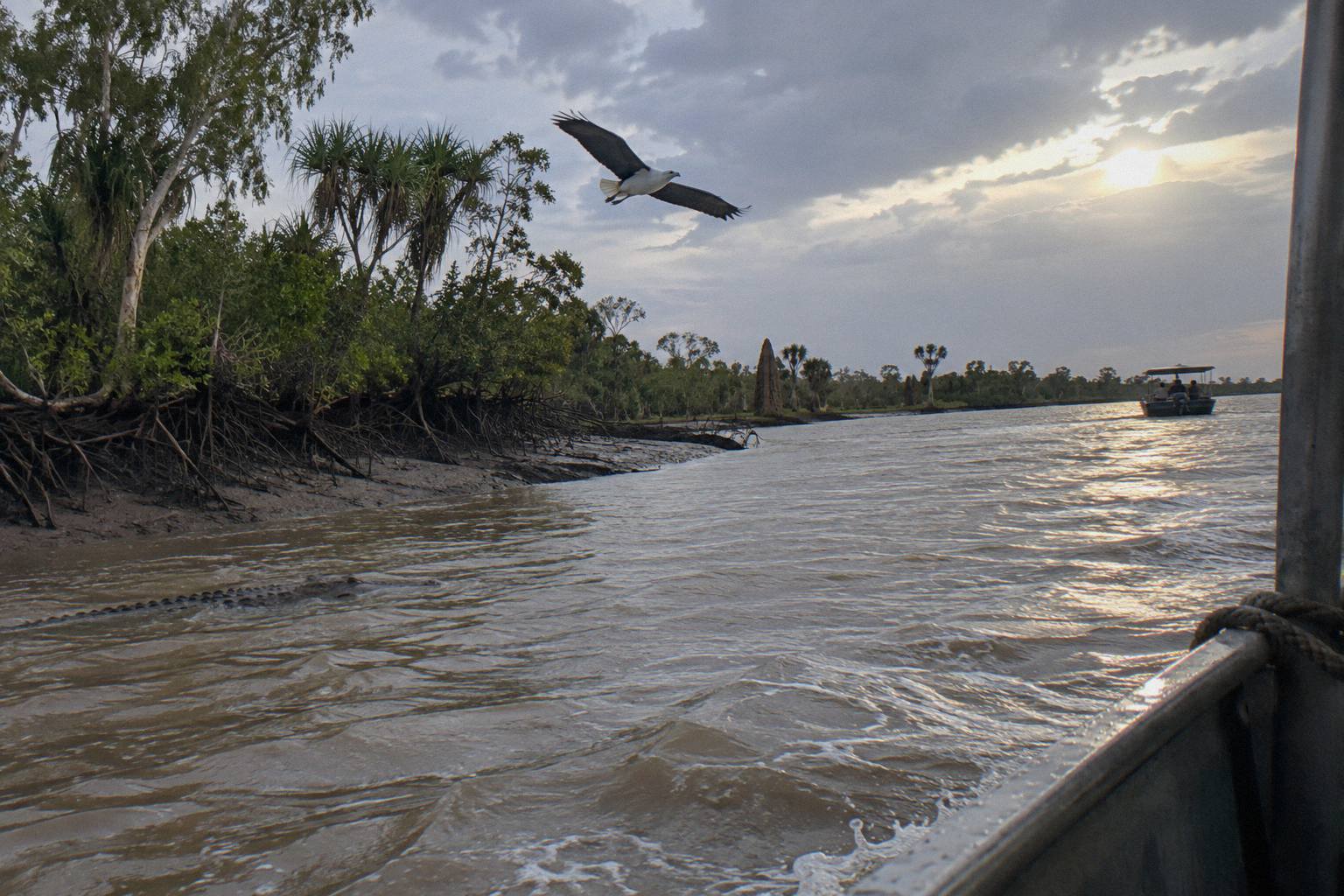
That list deserves a second read, because most of it is not what a crocodile-cruise advertisement sells. Bull sharks and two rare elasmobranchs, the speartooth shark and the largetooth sawfish, are river animals, and their presence is the operator's claim about what swims past the hull in the same water the crocodiles occupy. Freshwater crocodiles, Crocodylus johnstoni, also appear on the list alongside the saltwater crocodiles the cruises are named for; the NT Government confirms the Territory has exactly these two species. The raptors, sea eagles and whistling kites, are the birds you are most likely to notice working the floodplain air, and the black flying-fox is the dusk element. This page states the list once and plainly: the sources contain no bird counts, no seasonal bird calendar, no jabiru detail and no mangrove wildlife breakdown beyond it, and no sighting can be promised.
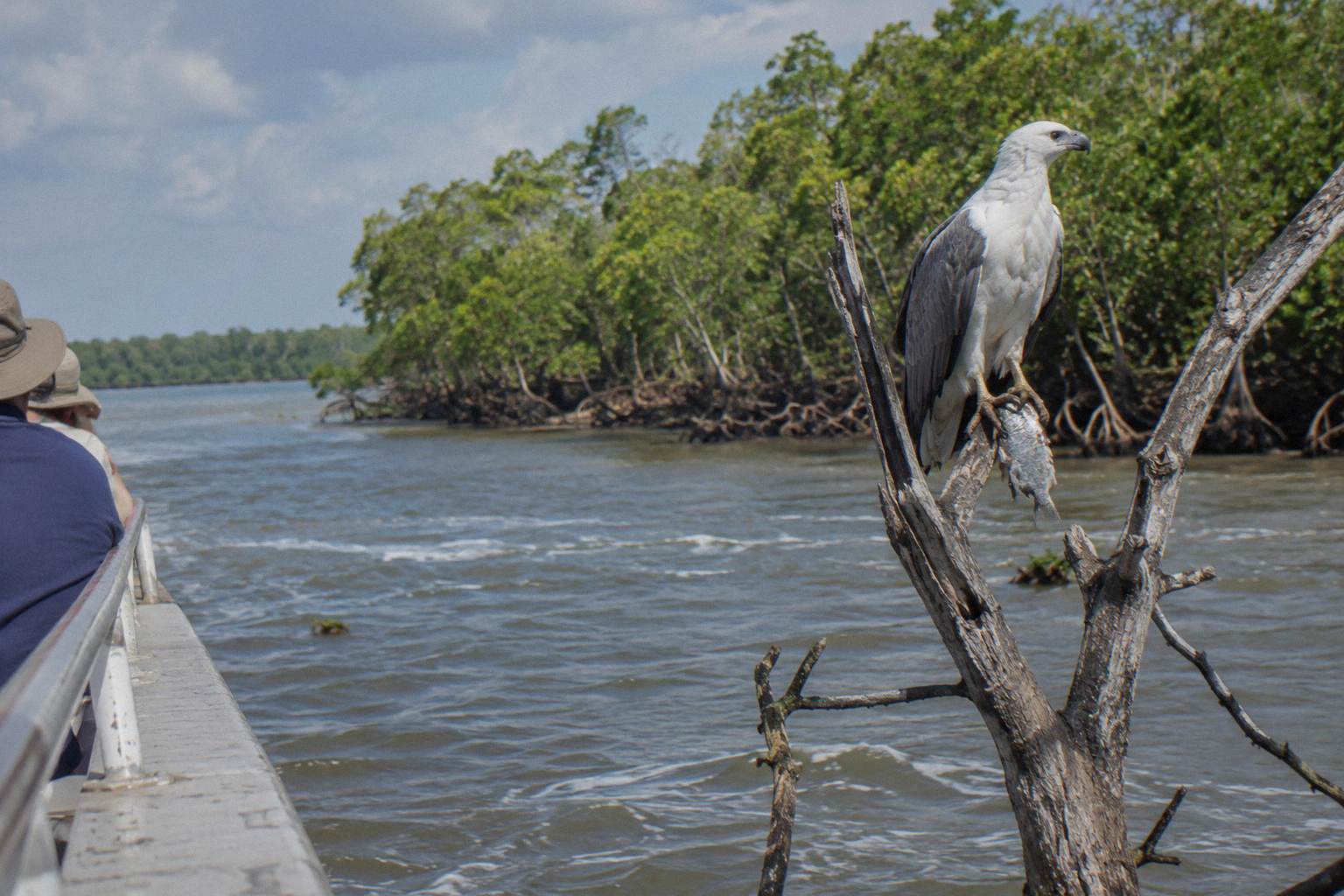
On photography, Adelaide River Cruises' own FAQ is unusually specific: a zoom lens is useful for wildlife across the floodplain, while standard phone cameras suit the crocodile interactions because of the proximity, in the operator's wording. That is a genuine landscape-versus-action distinction. The floodplain rewards reach, the crocodiles reward readiness. Spectacular encourages photography outright and says tours run in English; the photographing jumping crocodiles guide works through the gear decision in full. Spectacular's pages describing what to expect, including the wildlife list, are the operator's own: what to expect on a Spectacular cruise.
If the floodplain wildlife is the draw rather than the crocodiles alone, one operator pairs the river with a second wetland stop on the same outing.
That half-day combines the jumping crocodile cruise with Fogg Dam and Hooked on Barra entry, run by Croc Country Safaris, about 5 hours in total. Its price, start time and pickup points are not stated; the booking page carries them.
Saltwater Crocodiles On The Floodplain
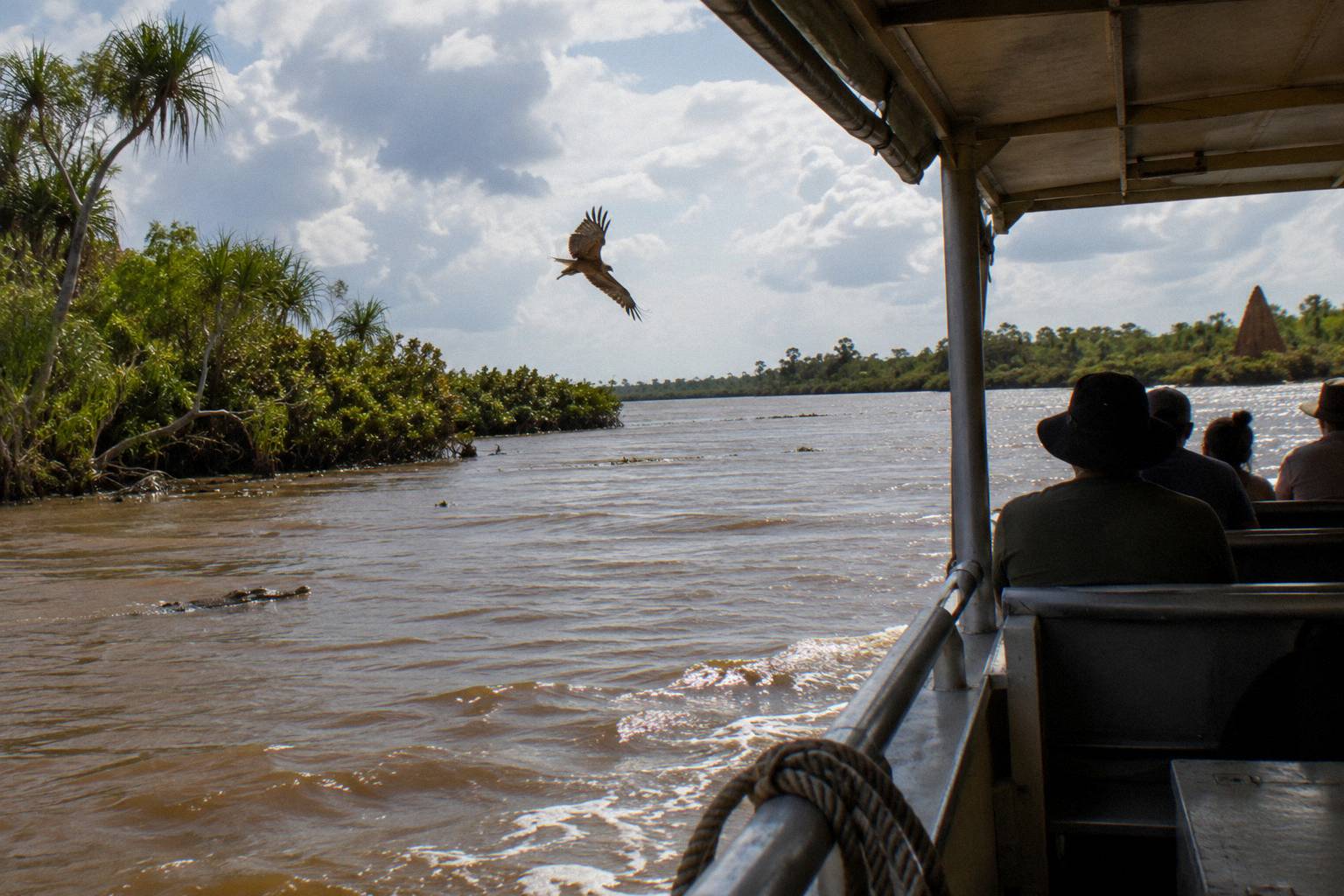
The jumping-cruise crocodiles are saltwater crocodiles, Crocodylus porosus, the largest living reptile, growing up to 6 m per the NT Government, which also counts about 100,000 saltwater crocodiles in the NT wild in 2017, thought to be at or approaching pre-hunting levels. No river-by-river population count for the Adelaide River exists in the sources, so no number can be given for this river.
The NT Government's crocodile facts are the only crocodile numbers this site prints. Beyond the headline figures: females mature at about 2.3 m, around 12 years, males at about 3.3 m, around 16 years. Large crocodiles can stay underwater up to one hour with a heart rate of 2 to 3 beats a minute, and for short bursts can move faster than humans on land. Nests are built November to May and average about 50 eggs. A 6.7 m saltwater crocodile was netted on the Mary River in 1974, and the biggest ever trapped was just over 5 m. Both species are protected by law, and you cannot take or interfere with a crocodile without a permit; the saltwater crocodile was almost extinct in the 1970s and is now widespread and no longer considered threatened. The NT Government's own pages carry this in full: NT Government crocodile facts and crocodile conservation in the NT.
On the jump itself, honesty again: no operator and no NT page publishes a jump height, a jump distance or a how-close-to-the-boat figure, and this site prints none. What the operators do say is this: Spectacular offers the crocodiles a taste of buffalo meat, its staff hold Wildlife Permits from NT Parks and Wildlife, its Animal Ethics Policy was developed with NT Parks and Wildlife, there is no direct contact with the crocodiles, detailed feeding logs are kept, and its boats have a jumper at the front. The Original and Queen operator says its crocodiles are 100% wild and its feeding is done under NT wildlife permits. On behaviour, that operator's own line is the only safe one: "We see crocodiles on almost every tour... behaviour can never be guaranteed."
Getting There And Driving Through The Floodplain Country
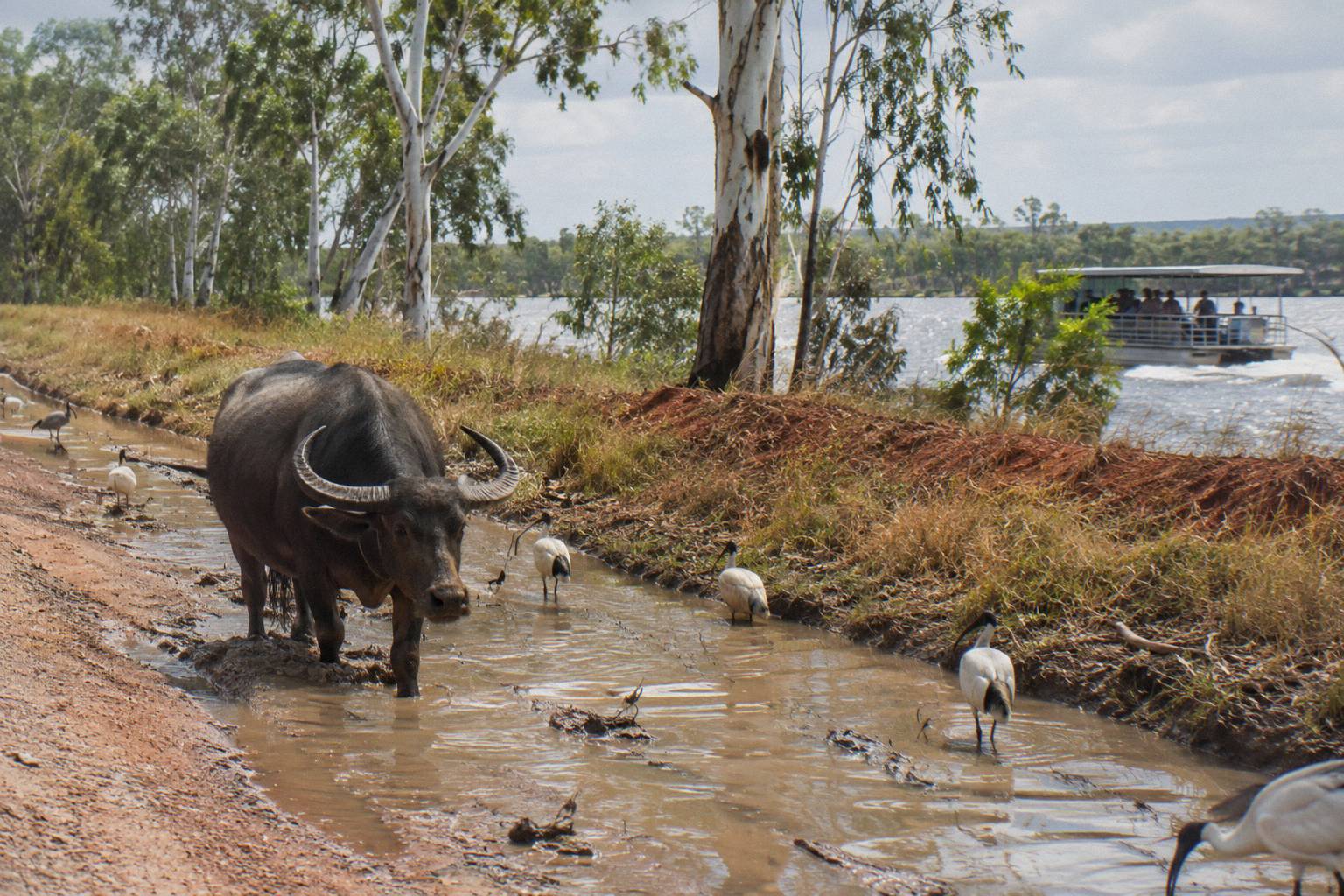
Driving yourself is straightforward at all three jetties: free parking for cars, caravans and coaches at Spectacular, sealed-road access with no park pass needed at the Adelaide River Bridge jetty, and about an hour or a little more from Darwin to Adelaide River Cruises at Middle Point. Spectacular also notes its access road often shows water buffalo, cattle and wading birds, so the floodplain viewing starts before you board.
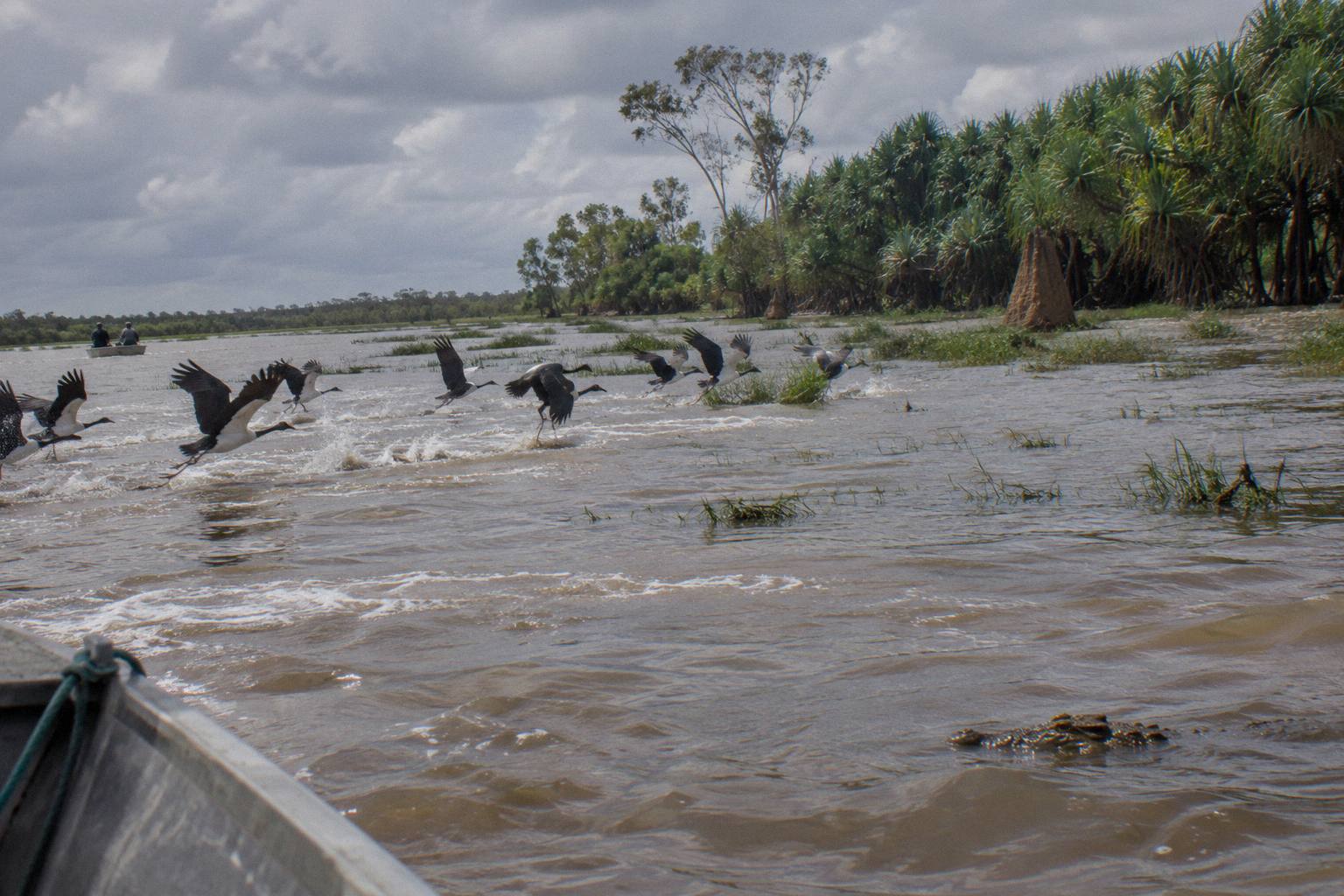
That last point is the quiet bonus of the Spectacular approach. The 2 km of unsealed road in from the Windows on the Wetlands Visitor Centre is, per the operator, a wildlife corridor of sorts, and the operator's advice that hire cars handle it fine removes the usual rental-agreement worry. At the Queen and Pathfinder jetty, the giant crocodile statue in the car park makes an easy meeting point for groups travelling in two cars, and the sealed access means caravans are a non-issue. The site's self-drive or tour comparison works through the full decision if you are undecided.
If you would rather not drive, the day-tour roster from Darwin is large, and every one of them runs you across the same floodplain country on the way. Two of the ten name their cruise operator: The Croc Bus From Darwin To The Jumping Crocodile Cruise uses Adelaide River Cruises, and the Adelaide River Half-Day Jumping Crocs Cruise is by AAT Kings. None of the day tours has a printed price, start time or pickup point on this site; each booking page carries its own.
| Day tour from Darwin | Duration | Cruise operator named? | Key inclusions beyond the cruise |
|---|---|---|---|
| The Croc Bus | About 4 to 5 hours | Yes, Adelaide River Cruises | Return transport, Fogg Dam entry, Humpty Doo stop |
| Jumping Crocodile Adventure Cruise With Lunch (Wallaroo Tours NT) | About 4 hours | No | Lunch at the Humpty Doo Pub, Fogg Dam, Window on the Wetlands, hotel transfers |
| Jumping Crocodile Cruise And Fogg Dam (Croc Country Safaris) | About 5 hours | No | Fogg Dam, Hooked on Barra entry |
| Adelaide River Half-Day Jumping Crocs Cruise (AAT Kings) | About 5 hours | Tour by AAT Kings | Window on the Wetlands, Fogg Dam, coach transport |
| Jumping Crocodile River Cruise With Shuttle Bus (Wildlife Tours Australia) | About 4 hours | No | Darwin transfer, 1 hour cruise, minibus |
| Half-Day Scenic Trip (Autopia Tours) | About 4.5 hours | No | 1 hour cruise, hotel pickup |
| Jumping Crocodile Cruise And Barramundi Fishing | About 5 hours | No | Hotel pickup, Fogg Dam, land-based barramundi fishing |
| Litchfield Park Tour And Jumping Crocodile Cruise (Litchfield Escapes) | Full day | No | Wangi Falls, Florence Falls, Buley Rockhole |
The lone Litchfield full day is the landscape-connoisseur pick: it slots the floodplain cruise into a day of about 11 hours that also takes in the waterfalls of Litchfield Park, with lunch and snacks along the way. For readers weighing that combination specifically, Litchfield and the jumping crocodile cruise is the dedicated page.
The Best Season For Floodplain Views
Spectacular operates year-round except Christmas Day and says rain in Darwin or Humpty Doo does not mean rain on the river; Adelaide River Cruises lists operating months May to October only; the Original and Queen operator calls crocodiles active year-round, names the Dry Season as May to October, and says wet-season departures may be reduced. No operator publishes morning-versus-afternoon behaviour claims or any temperature, rainfall or crocodile-activity figures.
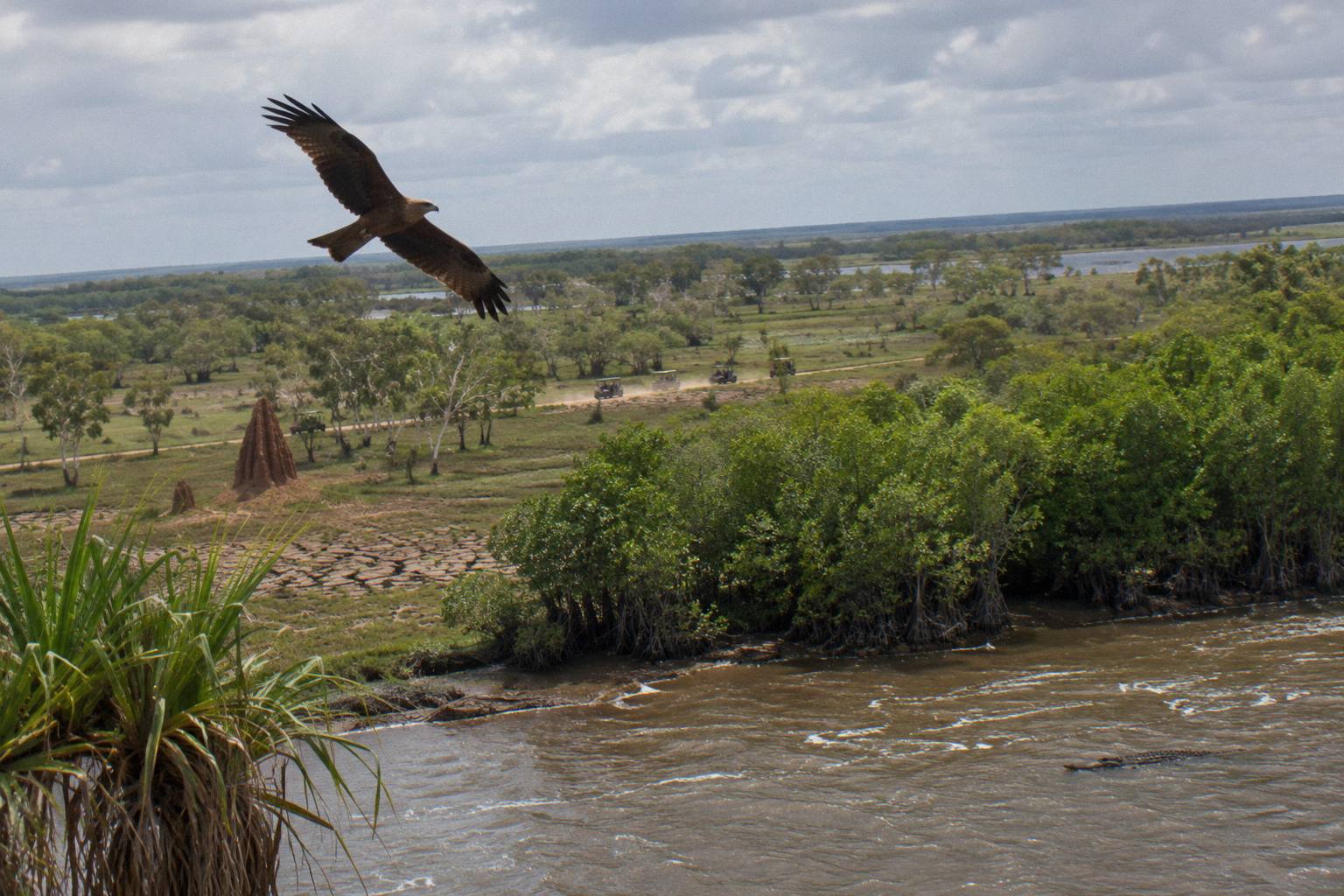
So the seasonal decision is simpler than it looks from the outside. If you are travelling between May and October, the Dry Season by the Queen operator's FAQ definition, all three operators are running and the Queen operator calls those months the most comfortable conditions. Outside May to October, Spectacular is the year-round option, and the Queen operator's website banner currently says its cruise times changed for the wet season, telling guests to book online or call to confirm. The wet-season trade-off is stated plainly by Spectacular: it operates as long as it is safe, a cancelled or postponed cruise is rescheduled or refunded as appropriate, and it adds that crocodiles often show a tactile response to rain. The site's wet season versus dry season guide lays out the whole comparison.
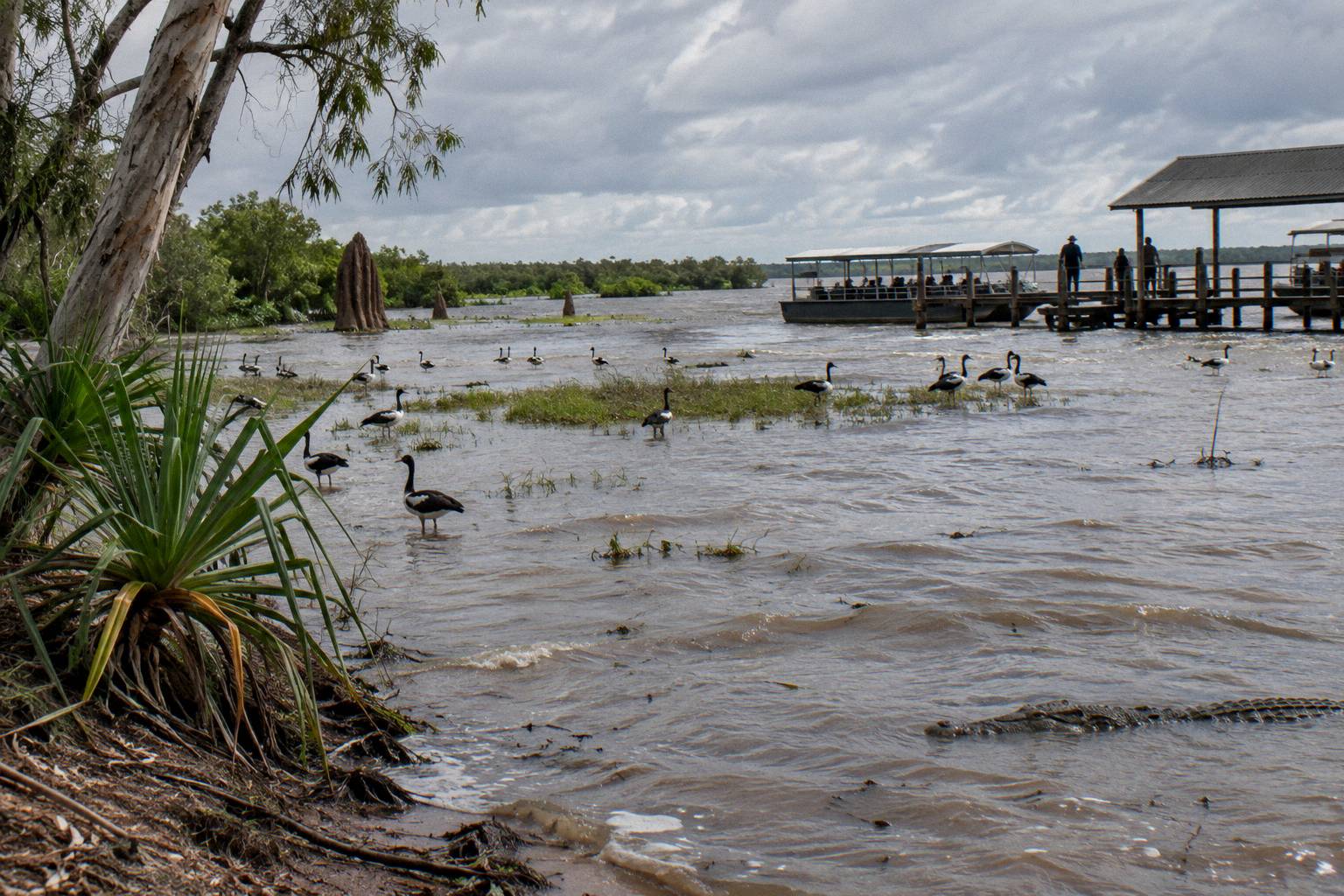
On timing within a day, nothing can be honestly claimed. The operators publish no data on whether crocodiles jump better at 9am or 3pm, and neither will this page. The practical timing facts are the departure lists already given and the arrival windows: 15 minutes minimum for Spectacular and Adelaide River Cruises, 30 minutes for the Queen and Pathfinder, with late arrivals at the Queen operator possibly forfeiting tickets. Book ahead regardless of season; Spectacular says plainly "we do sell out", the Queen operator recommends several days' notice in the Dry Season and warns school holidays and long weekends sell out earlier, and Adelaide River Cruises says walk-ins are not guaranteed and strongly recommends advance booking, especially June to August.
What To Bring And What Is On The Bank
Spectacular's onshore facilities are the most extensive: free tea and coffee on arrival, a kiosk with hot food and snacks, a pavilion with a 270-degree view, a gift shop, animal exhibits and toilets; the Queen operator has the licensed Stumpy Tail Coffee Stop, open 8am to 4pm daily in cruise season, plus a gift shop, playground and shaded seating; Adelaide River Cruises has no cafe on site, per its own FAQ. Toilets are onshore, not on the boats.
The packing list is Spectacular's, and it doubles as a floodplain-specific list: water, sunscreen, a hat and a camera, comfortable clothing and sturdy footwear. That last item matters more on the open-air boats and on Spectacular's unsealed access road than the cruise-brochure tone suggests. The pavilion with a 270-degree view at Spectacular is worth knowing about if someone in your group would rather watch the floodplain from shore than from the water; the operator's getting-here page carries the facilities and directions in its own words, Spectacular's getting here page. Adelaide River Cruises' own tour page, including its suggestion of a camera or a charged phone and its no-cafe note, is likewise primary: the Adelaide River Cruises tour page.
Safety on the water is short and firm. The NT Government's position is that any body of water in the Top End may contain large and potentially dangerous crocodiles, and its Be Crocwise advice includes not leaning out of or dangling limbs over the side of a boat. The operators layer their own rules on top: Spectacular offers no direct contact with the crocodiles; the Queen operator runs life jackets on board, no swimming, no food on the boat and supervised children; Adelaide River Cruises opens every trip with a safety briefing on crocodile behaviour and the rules. The question of whether these cruises are safe gets the same treatment everywhere on this site: attribute, never guarantee.
Booking terms differ by operator and are worth reading before you pay. Adelaide River Cruises' FAQ gives a full refund if cancelled more than 24 hours before departure, non-refundable inside 24 hours unless the operator cancels for weather or operations, in which case refund or reschedule. The Queen operator prints no cancellation terms on its site and says the booking confirmation carries them. Spectacular's public pages print no cancellation terms. Whichever booking page you use shows its own terms; read them.
Common Questions About The Adelaide River Floodplain
Is The Adelaide River Floodplain Worth Seeing From A Cruise Boat?
The operators' own descriptions suggest yes: every cruise runs about an hour across a wide, open Top End floodplain with mangrove fringe along the channel, and Spectacular's wildlife list includes sea eagles, whistling kites, bull sharks and the rare speartooth shark and largetooth sawfish. No sighting can be promised, and the crocodiles' behaviour, in the Queen operator's words, can never be guaranteed.
Are There Mangroves Along The Adelaide River?
The cruise operators describe mangrove fringe along the riverbank in general terms, but no operator page and no NT Government page in this site's sources publishes a mangrove-species list, an ecology description or mangrove coverage figures for the Adelaide River. This page therefore states the scope plainly and prints no mangrove detail beyond what the operators themselves say.
How Far Is The Adelaide River Floodplain From Darwin?
By the operators' own figures: just under 1 hour on the Arnhem Highway to Spectacular's jetty, 50 to 60 minutes to the Adelaide River Queen and Pathfinder jetty at the Adelaide River Bridge, and about an hour or a little more to Adelaide River Cruises at Middle Point. No kilometre figures are printed because the operators' own numbers conflict.
What Wildlife Can You See On The Floodplain Besides Crocodiles?
Spectacular's own list covers white-bellied sea eagles, whistling kites, freshwater crocodiles, bull sharks, black flying-fox, the endangered speartooth shark and the critically endangered largetooth sawfish, and the operator says its access road often shows water buffalo, cattle and wading birds. No other operator publishes a comparable list, and no bird counts or seasonal bird claims exist in the sources.
Which Cruise Boat Is Best For Floodplain Views?
The boats differ, not the river. Spectacular runs two undercover vessels, Croc-Cat1 with stadium-style seating and the smaller Wildcat, which goes further down the river; the Adelaide River Queen has an open-air, canopy-shaded upper deck and an air-conditioned lower deck; the Pathfinders are open-air with up to 38 passengers each. No operator publishes a best side of the boat, and none is claimed here.
When Is The Best Time Of Year To Cruise The Floodplain?
All three operators run through the Dry Season, May to October by the Queen operator's FAQ definition, and the Queen operator calls those the most comfortable conditions. Outside May to October, Spectacular operates year-round except Christmas Day, while Adelaide River Cruises lists May to October only and the Queen operator says wet-season departures may be reduced. No operator publishes temperature, rainfall or crocodile-activity figures.
The floodplain is the reason the crocodiles are here, and the cruise is the only practical way to stand in the middle of it. Pick the boat that suits your weather tolerance and your camera, read the booking terms on whichever page you pay through, and arrive inside the operator's window. The landscape does the rest.