Where Is The Big Jumping Crocodile Located?
The search for one big crocodile leads to three jetties on the Adelaide River, a giant croc statue in a car park, and about an hour's drive from Darwin. Here is where everything actually is.
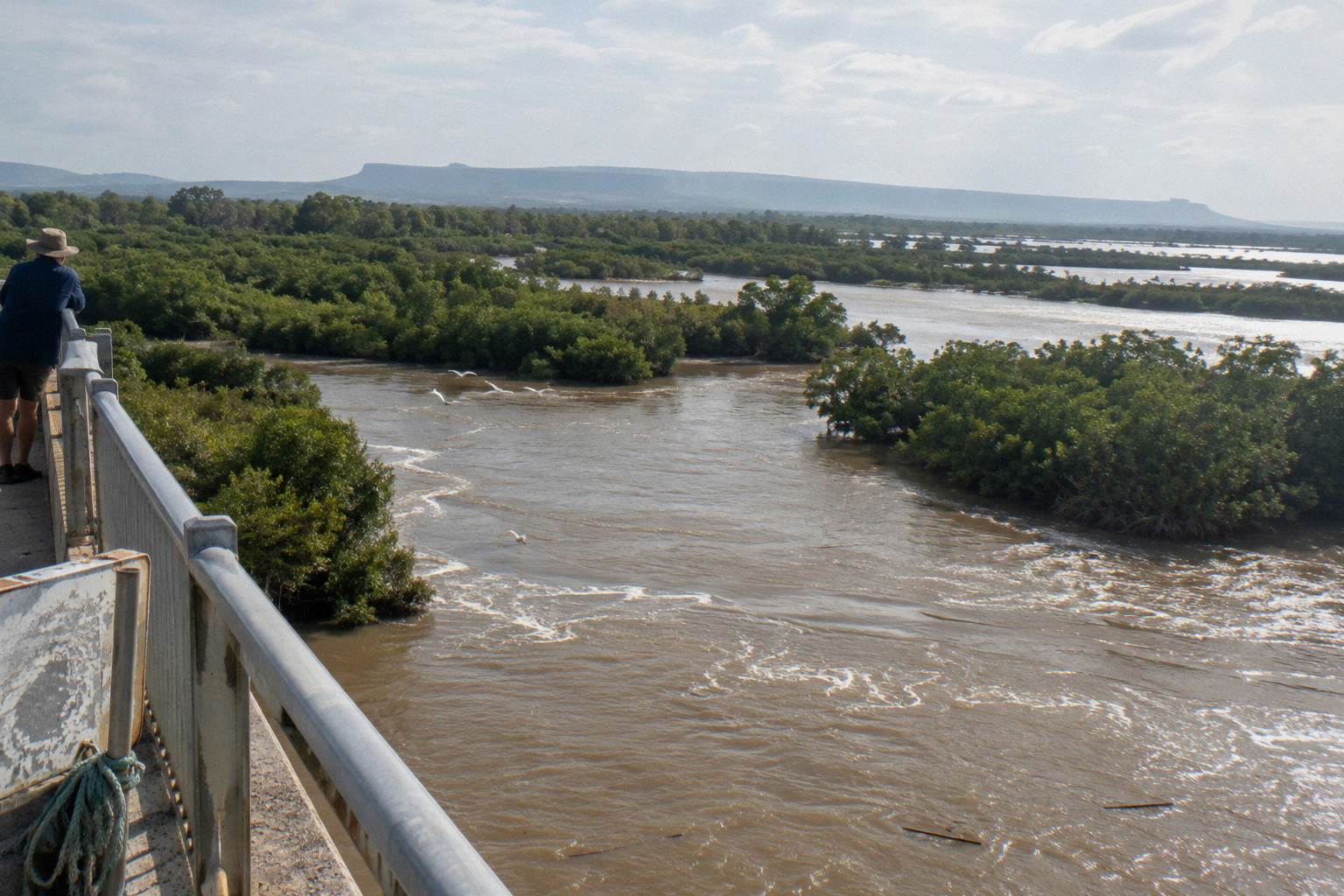
The question has a twist in it: no individual crocodile is pinned to any spot on the Adelaide River, and neither the operators nor the Northern Territory Government publish a name, a size or a home address for any of them. What does have a location is the experience itself. Three cruise operators run jumping crocodile cruises from three separate jetties on the Arnhem Highway, roughly an hour out of Darwin.
The crocodiles those cruises work with are wild saltwater crocodiles, Crocodylus porosus, spread along the river and its floodplain rather than parked at a viewing point. The NT Government, the only source worth trusting on the animals themselves, describes the saltwater crocodile as the largest living reptile, one that can grow up to 6 m, and it records about 100,000 of them living in the Northern Territory wild in 2017, thought to be at or approaching pre-hunting levels. None of that population is assigned to a street address.
So if you typed the question into a search box hoping for a pin on a map, the pin belongs to the jetties, not the animal. This site, Adelaide River Crocodile Cruise, exists to sort exactly that kind of confusion out, and the rest of this page does it section by section: where each operator leaves from, what the giant crocodile statue at the Adelaide River Bridge actually is, how far the drive is from Darwin, and how the boats find crocodiles that move around.
One thing worth clearing up immediately, because every second visitor asks: the operators and the NT Government publish no jump height, no jump distance and no how-close-to-the-boat figure. Nobody with a permit to speak on the matter has put a number on the jump. What the operators do describe is their boats, their decks and their feeding practices, all covered further down.
Which Three Jetties Do The Jumping Crocodile Cruises Leave From?
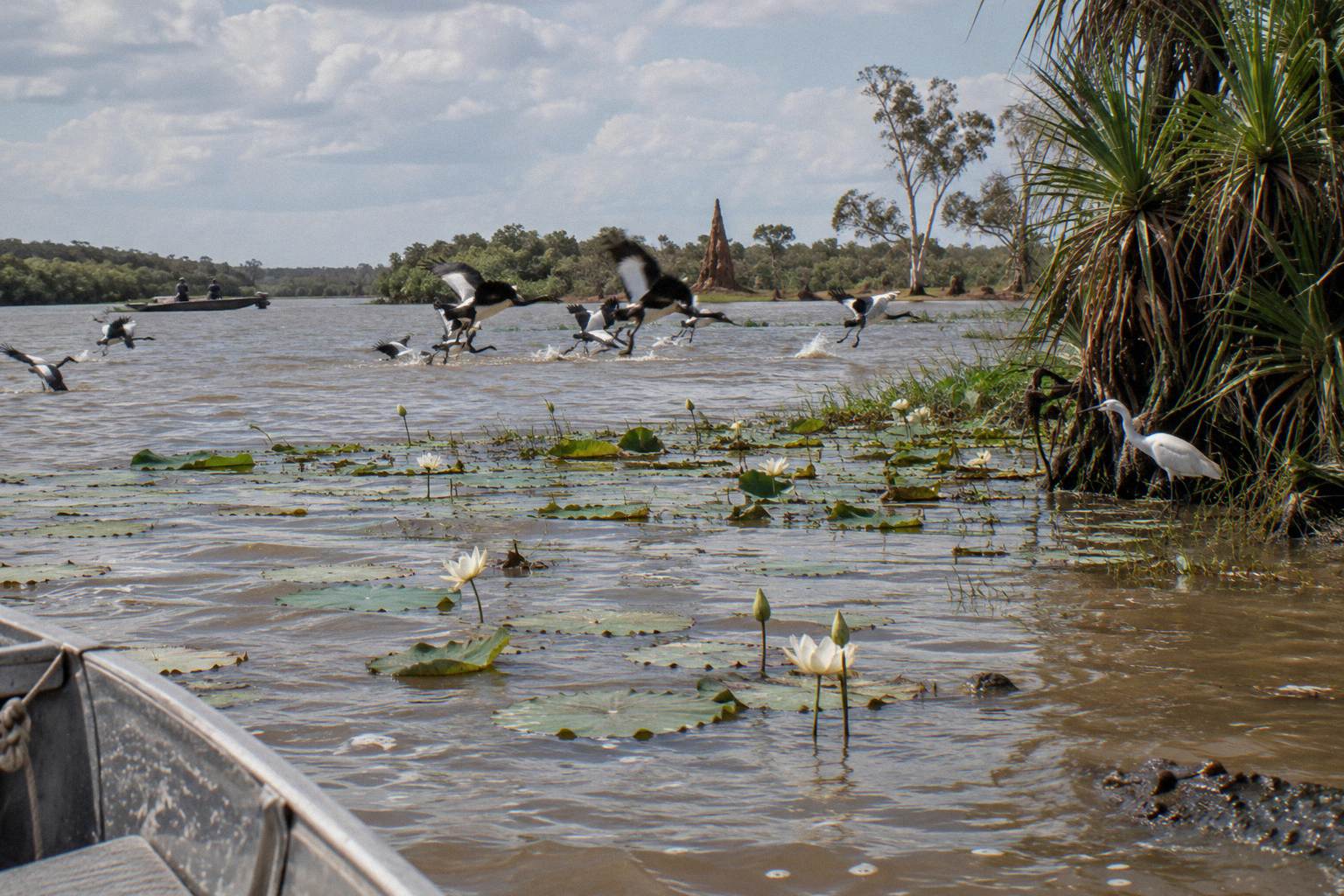
Three river operators run jumping crocodile cruises on the Adelaide River, each from its own jetty: Spectacular Jumping Crocodile Cruises on Beatrice Hill Farm at 2915 Arnhem Road, Middle Point; the Adelaide River Queen and Pathfinder vessels from 3220A Arnhem Highway, Wak Wak, at the Adelaide River Bridge; and Adelaide River Cruises from Anzac Parade, Middle Point. All three are on the Arnhem Highway corridor and all three have free parking.
The three businesses are separate, and their prices, departure times, age bands, arrival windows and seasons never cross over, so it pays to know which jetty you are aiming at before you set out. A plain comparison:
| Operator | Jetty address | Vessels | Onshore facilities |
|---|---|---|---|
| Spectacular Jumping Crocodile Cruises | Beatrice Hill Farm, 2915 Arnhem Road, Middle Point | Croc-Cat1 (multi-hull, stadium-style seating) and Wildcat (smaller, goes further down the river) | Free tea and coffee on arrival, kiosk, pavilion with a 270-degree view, gift shop, animal exhibits, toilets |
| Adelaide River Queen Cruises / The Original Jumping Crocodile Cruises | 3220A Arnhem Highway, Wak Wak, at the Adelaide River Bridge | Adelaide River Queen (air-conditioned lower deck, open-air upper deck) and Pathfinder vessels (open-air, up to 38 passengers each, stated for the Pathfinder only) | Stumpy Tail Coffee Stop (licensed), gift shop, toilets for checked-in passengers, playground, shaded seating |
| Adelaide River Cruises | Anzac Parade, Middle Point | Not stated by the operator | No cafe on site, per its FAQ |
Spectacular is Indigenous-owned and operated by Arirrki Aboriginal Corporation, which says every ticket supports an Aboriginal community, and its jetty is reached via the Windows on the Wetlands Visitor Centre and about 2 km of well-maintained unsealed access road, a road the operator says hire cars handle fine. The operator also notes the access road often shows water buffalo, cattle and wading birds, which is a decent warm-up act for the river itself. Parking there covers cars, caravans and coaches.
The Adelaide River Bridge site is the easiest of the three to spot from the highway, for a reason covered in the next section, and the road is sealed the whole way with no park pass needed. Adelaide River Cruises sits back at Anzac Parade, Middle Point. Each operator's own directions page carries the details: Spectacular's getting-here page, the Original's find-us page and Adelaide River Cruises' getting-here page.
If you are weighing the operators rather than just locating them, the page on what separates the Adelaide River cruise operators breaks down the differences in boats, decks and style, and the guide to the cruises departing the Arnhem Highway covers the departure points in planning terms.
What Is The Giant Crocodile Statue At The Adelaide River Bridge?
A giant crocodile statue stands in the car park of the Adelaide River Queen and Pathfinder site at 3220A Arnhem Highway, Wak Wak, about 100 m to the right of the highway at the Adelaide River Bridge. It is a landmark, not an animal: a statue you can photograph at any hour, and the most reliable crocodile-shaped thing on the whole river to point a camera at.
This is worth stating plainly because the question gets asked the other way around. Travellers see the statue in photos, sometimes captioned loosely, and arrive believing a famous giant crocodile lives at that spot. The operators' own material never claims that. What their material does say is that the site sits conveniently on the Arnhem Highway at the Adelaide River Bridge, en route to Kakadu National Park, with the statue serving as the landmark that tells you the car park is the right one.
The practical value of the statue is real. The Arnhem Highway carries you past wetland, farmland and scrub that all looks similar after an hour, and the operators' direction notes reduce to a simple instruction: cross the bridge, take the first right, look for the oversized crocodile. Free parking, sealed access and the licensed Stumpy Tail Coffee Stop, open 8am to 4pm daily in cruise season, sit alongside it.
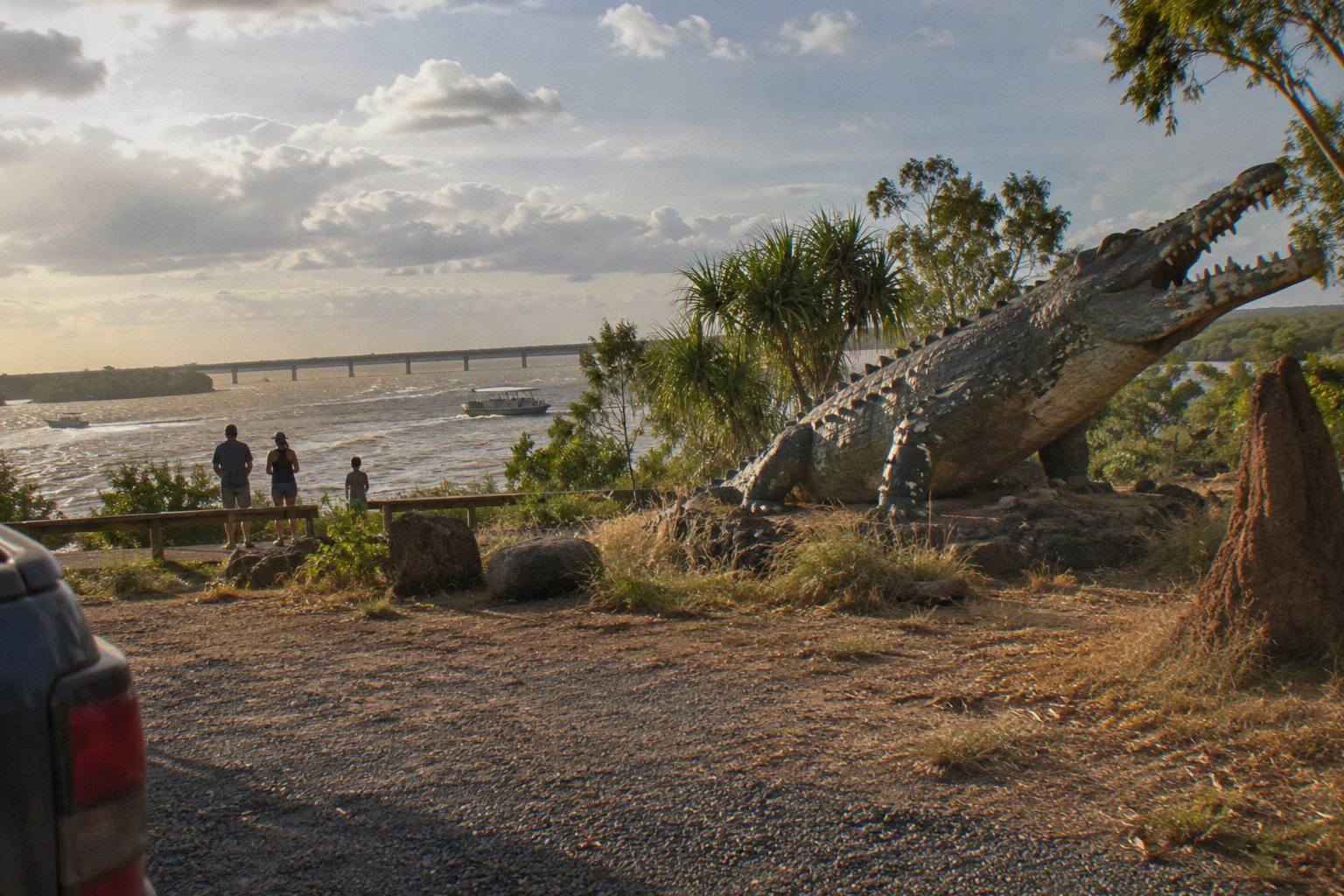
The live crocodiles, meanwhile, stay where live crocodiles stay: in the river. The NT Government's position is that any body of water in the Top End may contain large and potentially dangerous crocodiles, and its crocodile safety guidance treats every waterway that way, the Adelaide River included. So the statue is the only crocodile at that address you can walk up to.
How Far Is The Big Crocodile Country From Darwin?
By the operators' own drive times, the Adelaide River Bridge site is 50 to 60 minutes from Darwin, Spectacular's jetty is just under 1 hour from Darwin, and Adelaide River Cruises is about an hour or a little more from Darwin. Spectacular also gives just under 2 hours from Jabiru, and the Bridge operator gives 100 to 110 minutes from the centre of Litchfield National Park.
No kilometre figures appear here, and that is deliberate: the operators' own km figures conflict with each other, so the honest numbers are their stated drive times. All three routes run out the Arnhem Highway from Darwin, which means all three jetties sit within a short stretch of each other around Middle Point and Wak Wak, and it is entirely possible to drive past one operator's sign on the way to another's. Checking which jetty your booking names, before you leave Darwin, saves the most common wrong-turn on this road.
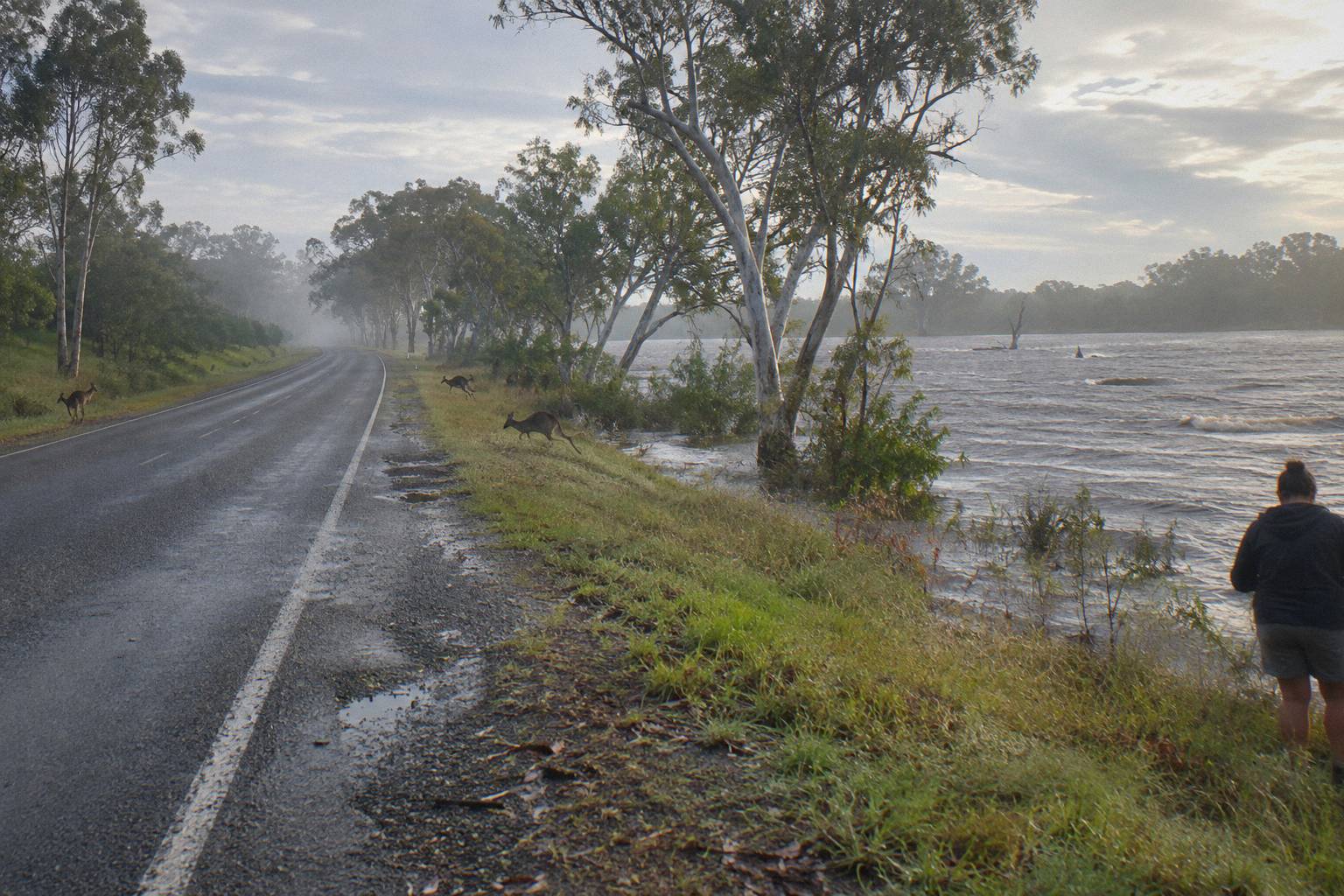
The drive itself is part of the appeal. Spectacular's access road alone often shows water buffalo, cattle and wading birds, and the Windows on the Wetlands Visitor Centre sits on the approach to its jetty. If you would rather not drive at all, there is a separate family of day tours from Darwin that bundles the cruise with transport and stops such as Fogg Dam and the Humpty Doo Pub, and the guide on self-drive versus a tour to the cruise works through that trade-off.
For the river-only cruise that leaves from Anzac Parade, the Adelaide River Cruises Jumping Crocodile Experience runs about an hour on the water, departing from the jetty at Middle Point, with a departure time the operator's tour page lists at 9am, 11am, 1pm and 3pm daily. Check availability if that is the jetty that suits your route, alongside the full tour page with details.
Do The Crocodiles Stay In One Spot On The River?
No. The crocodiles on the jumping cruises are wild animals that move along the river and its floodplain, and no operator or government page assigns a location, a name or a size to any individual. The Original operator calls its crocodiles 100% wild, and its own words are that it sees crocodiles on almost every tour but that behaviour can never be guaranteed.
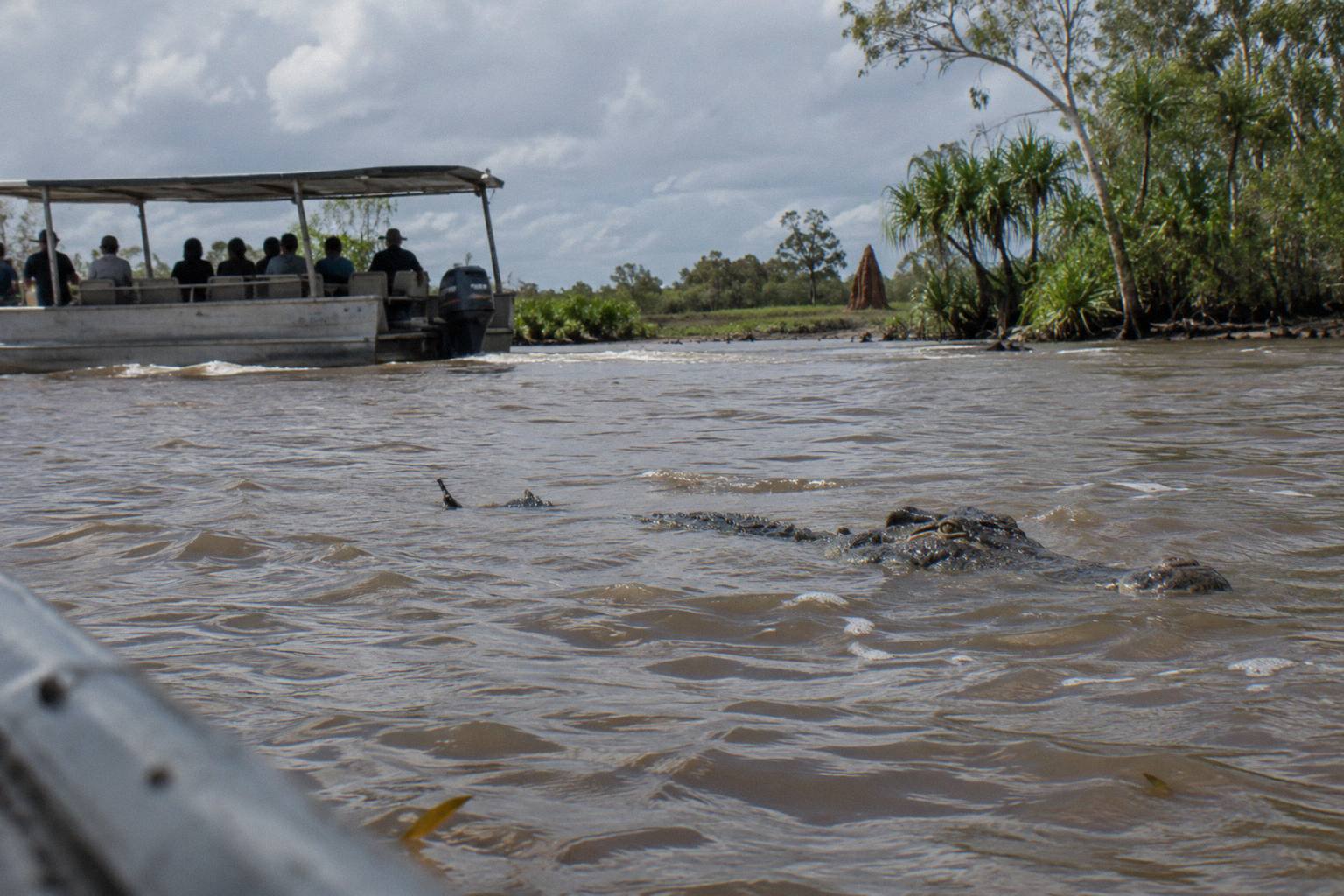
That last clause does a lot of honest work. It is the difference between a wildlife cruise and a zoo exhibit, and it explains why nobody can sell you a seat at a specific big crocodile's address. What the operators can do is work the same stretch of river often enough, under NT wildlife permits, that the local crocodiles have learned to associate the boats' approach with a taste of food. Spectacular says its crocodiles are offered buffalo meat, that its staff hold Wildlife Permits from NT Parks and Wildlife, that its Animal Ethics Policy was developed with NT Parks and Wildlife, and that detailed feeding logs are kept. The Original operator says its feeding is done under NT wildlife permits. The NT Government's own position is that nobody may take or interfere with a crocodile without a permit.
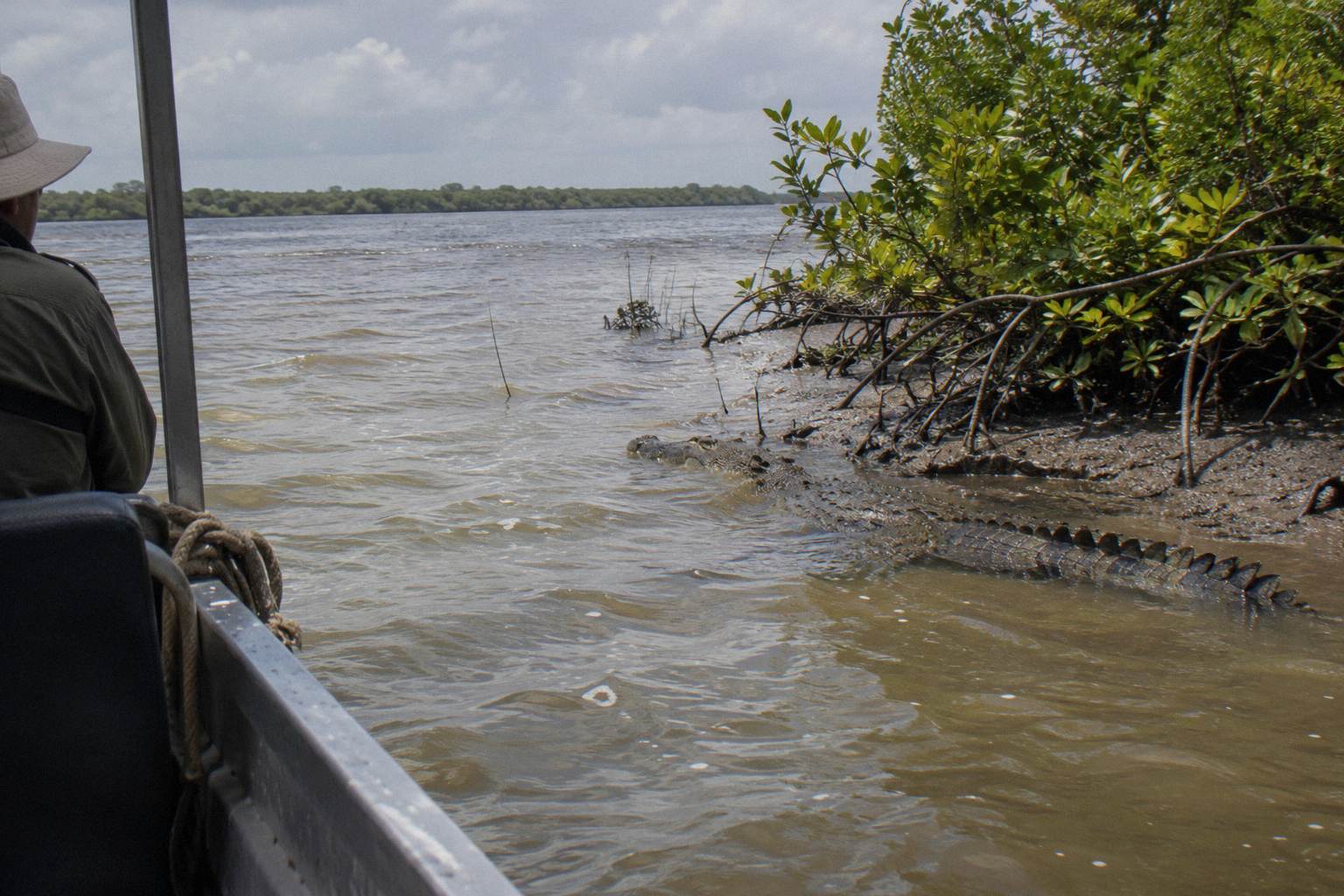
The size question deserves the same honesty as the location question. The biggest crocodile in the NT Government's records was a 6.7 m saltwater crocodile netted on the Mary River in 1974, and the biggest ever trapped was just over 5 m. No equivalent figure exists for any Adelaide River animal in any source this site trusts. When a review or a caption claims a particular crocodile is five metres long, that number came from nowhere official.
For the biology that is actually on the record, the NT Government notes females mature at about 2.3 m at around 12 years, males at about 3.3 m at around 16 years, and large crocodiles can stay underwater for up to an hour with a heart rate of 2 to 3 beats a minute. The deeper background sits in the guide to saltwater crocodile facts for cruise visitors.
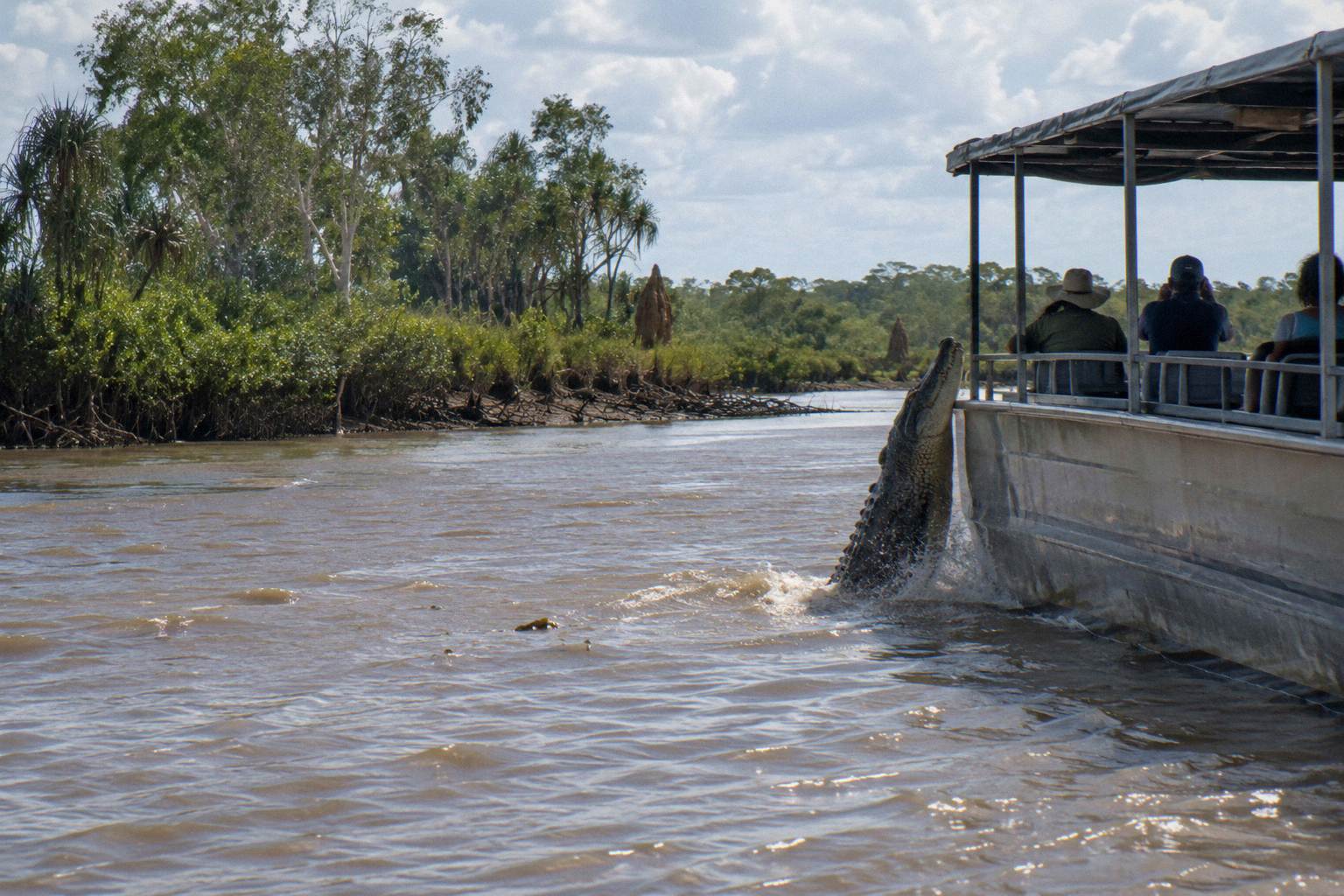
How Do You Actually Get Close To A Big Crocodile Here?
The only structured way to get close is on one of the cruises, from one of the three jetties, on a boat designed for the purpose. Spectacular's vessels are undercover with a feeding jumper at the front; the Adelaide River Queen has a croc-proof glass lower deck and an open-air upper deck; Adelaide River Cruises opens with a safety briefing on crocodile behaviour and the rules before the boat leaves.
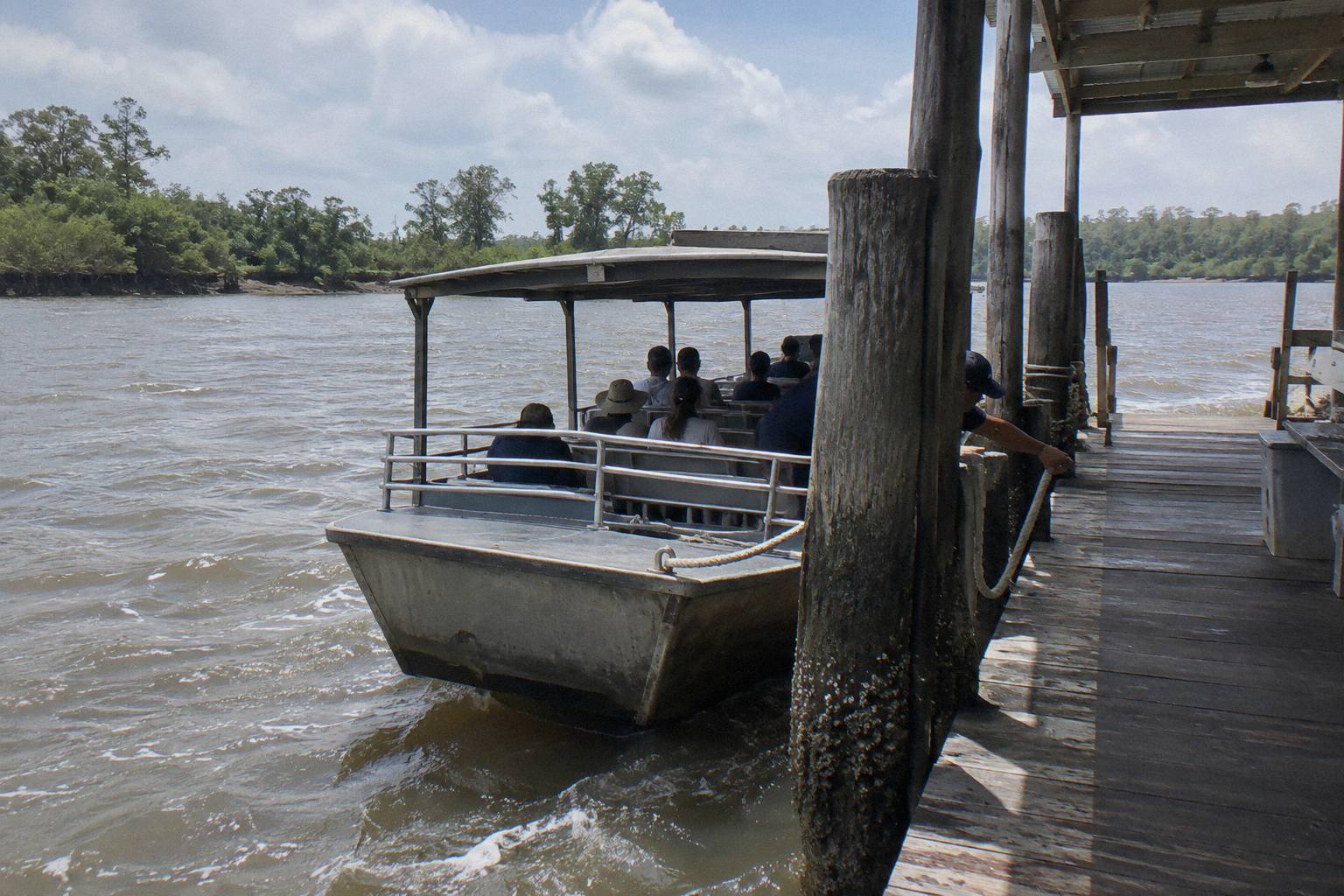
The boats differ more than the photos suggest. Spectacular's Croc-Cat1 is a multi-hull with stadium-style seating and the skipper at the rear, and its smaller Wildcat goes further down the river; which vessel runs depends on the numbers booked. The Adelaide River Queen, the namesake boat of the Bridge site, has an air-conditioned lower deck with individual seating behind croc-proof glass, per the operator, and an open-air upper deck under a shaded canopy. The Pathfinders are open-air vessels carrying up to 38 passengers each, a figure stated for the Pathfinder only. Adelaide River Cruises states no boat type or capacity.
Getting close, in this context, still means staying on the right side of the rules. The NT Government's Be Crocwise advice includes not leaning out of or dangling limbs over the side of a boat, standing at least 5 m back from the water's edge when fishing, and camping at least 50 m from the water. The operators layer their own rules on top: no swimming and no food on the boats at the Original site, supervised children, no direct contact with the crocodiles at Spectacular.
Photography is where the proximity pays off. Adelaide River Cruises suggests a camera or a charged phone, and its own wording is that a zoom lens is useful for wildlife across the floodplain while standard phone cameras suit the crocodile interactions because of the proximity. The guide on photographing jumping crocodiles builds on exactly that distinction.
The Queen's 1pm daily departure makes it the afternoon option at the Bridge site, and the operator recommends arriving at least 30 minutes ahead, with late arrivals possibly forfeiting tickets. Wet-season departures may be reduced, and the operator's website banner currently tells guests to book online or call to confirm times, so the live listing is the source of truth on the day.
Where Does The Big Crocodile Question Come From?
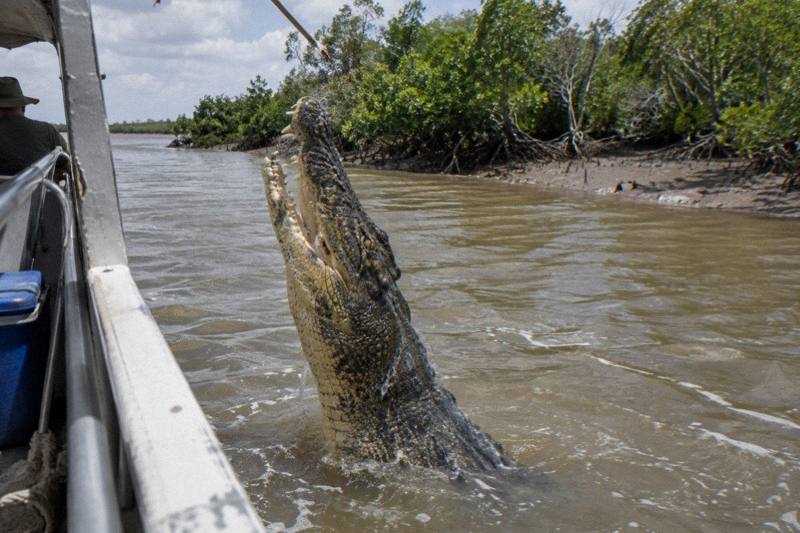
Mostly from a photograph. The jumping crocodile image, a large animal fully clear of the water beside a boat, is one of the Northern Territory's most-shared pictures, and searchers naturally assume a specific famous animal must sit behind it. The statue at the Bridge car park reinforces the hunch. Neither the photo nor the statue points to an individual crocodile with an address.
The river supports the reputation without needing a celebrity animal. The NT page records that there are more saltwater crocodiles in the NT than in Queensland and Western Australia, and no river-by-river population count for the Adelaide River exists in the sources at all. Nests are built November to May with an average of about 50 eggs, the species was almost extinct in the 1970s and is now widespread and no longer considered threatened, and the recovery is the reason the cruises have a cast of animals to work with at all.
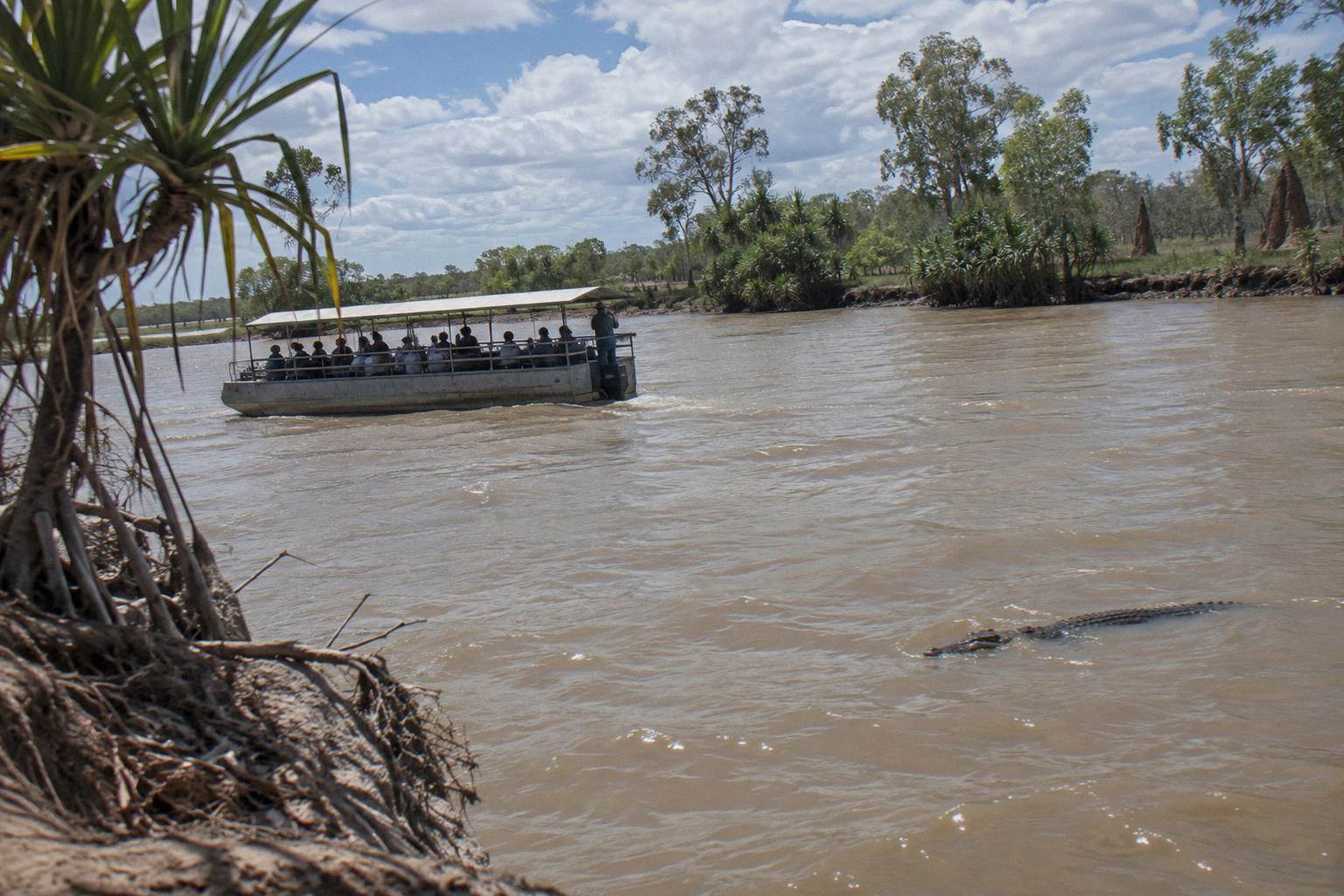
The blog post on whether the Adelaide River is the most crocodile-infested in Australia takes that population question head on, and the story of why crocodiles jump out of the water on the cruise explains the behaviour behind the famous photographs. Between them they cover what the searchers are usually really asking.
Can You Visit The Big Crocodile Spot On A Day Tour From Darwin?
Yes, a dozen day tours from Darwin fold the jumping crocodile cruise into a loop with transport included. The Croc Bus runs about 4 to 5 hours with return transport, a cruise with Adelaide River Cruises, Fogg Dam entry and a Humpty Doo stop, while Croc Country Safaris' Jumping Crocodile Cruise And Fogg Dam tour runs about 5 hours with Hooked on Barra entry, though no operator publishes a price, start time or pickup point.
Those gaps are worth flagging because they trip people up. The day-tour details that matter on the day, price above all, sit on the booking page rather than in any listing blurb, and pickup points are not printed anywhere. What is printed is the shape of each day, and the shapes differ enough to matter:
| Day tour from Darwin | Duration | What the inclusions cover |
|---|---|---|
| The Croc Bus From Darwin To The Jumping Crocodile Cruise | About 4 to 5 hours | Return transport, cruise with Adelaide River Cruises, Fogg Dam entry, Humpty Doo stop |
| Jumping Crocodile Adventure Cruise With Lunch (Wallaroo Tours NT) | About 4 hours | Lunch at the Humpty Doo Pub, cruise, Fogg Dam, Window on the Wetlands, hotel transfers |
| Jumping Crocodile Cruise And Fogg Dam (Croc Country Safaris) | About 5 hours | Cruise, Fogg Dam, Hooked on Barra entry |
Which cruise operator a day tour uses is stated only for the Croc Bus, which pairs with Adelaide River Cruises, so if the jetty matters to you, the river-only cruises are where you choose it directly. For the fuller picture of combining the river with the park, the guide to Litchfield and the jumping crocodile cruise and the one on Kakadu and the jumping crocodile cruise map out both directions from Darwin.
Booking ahead matters more on the river cruises than most visitors expect. Spectacular says plainly that its cruises do sell out, and Adelaide River Cruises says walk-ins are not guaranteed and strongly recommends booking in advance, especially June to August. Its FAQ gives a full refund if you cancel more than 24 hours before departure, non-refundable inside 24 hours unless the operator cancels for weather or operations, in which case a refund or reschedule applies. Whatever page you book through carries its own terms, and reading them before you pay is the move.
Common Questions About The Big Jumping Crocodile
Where Is The Big Jumping Crocodile Located?
There is no single located animal. The jumping crocodiles on the Adelaide River are wild and unassigned to any address; what has addresses are the three cruise jetties on the Arnhem Highway: Beatrice Hill Farm at Middle Point, the Adelaide River Bridge site at Wak Wak, and Anzac Parade at Middle Point.
Is The Giant Crocodile At The Adelaide River Bridge Real?
It is a statue in the car park of the Adelaide River Queen and Pathfinder site, about 100 m to the right of the highway at the bridge. It is a landmark, not an animal, and the live crocodiles remain in the river.
How Far Is The Jumping Crocodile Cruise From Darwin?
By the operators' own drive times, 50 to 60 minutes to the Bridge site, just under an hour to Spectacular's jetty, and about an hour or a little more to Adelaide River Cruises at Anzac Parade.
How Big Are The Crocodiles On The Adelaide River?
No individual animal on the river has a published size. The NT Government says saltwater crocodiles can grow up to 6 m, and its record holder was a 6.7 m animal netted on the Mary River in 1974.
Do The Crocodiles Appear On Every Cruise?
The Original operator's own words are that it sees crocodiles on almost every tour but that behaviour can never be guaranteed. No operator promises a sighting.