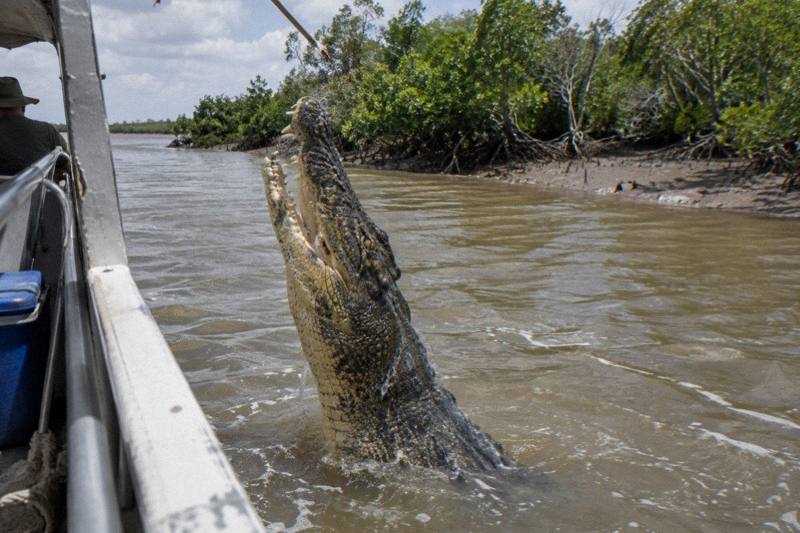
Are There Wild Crocodiles Near Darwin?
Yes, wild saltwater crocodiles live in waters all around Darwin. Here is what the NT Government says about where they are, the Be Crocwise rules, and the safe, structured way to see them.
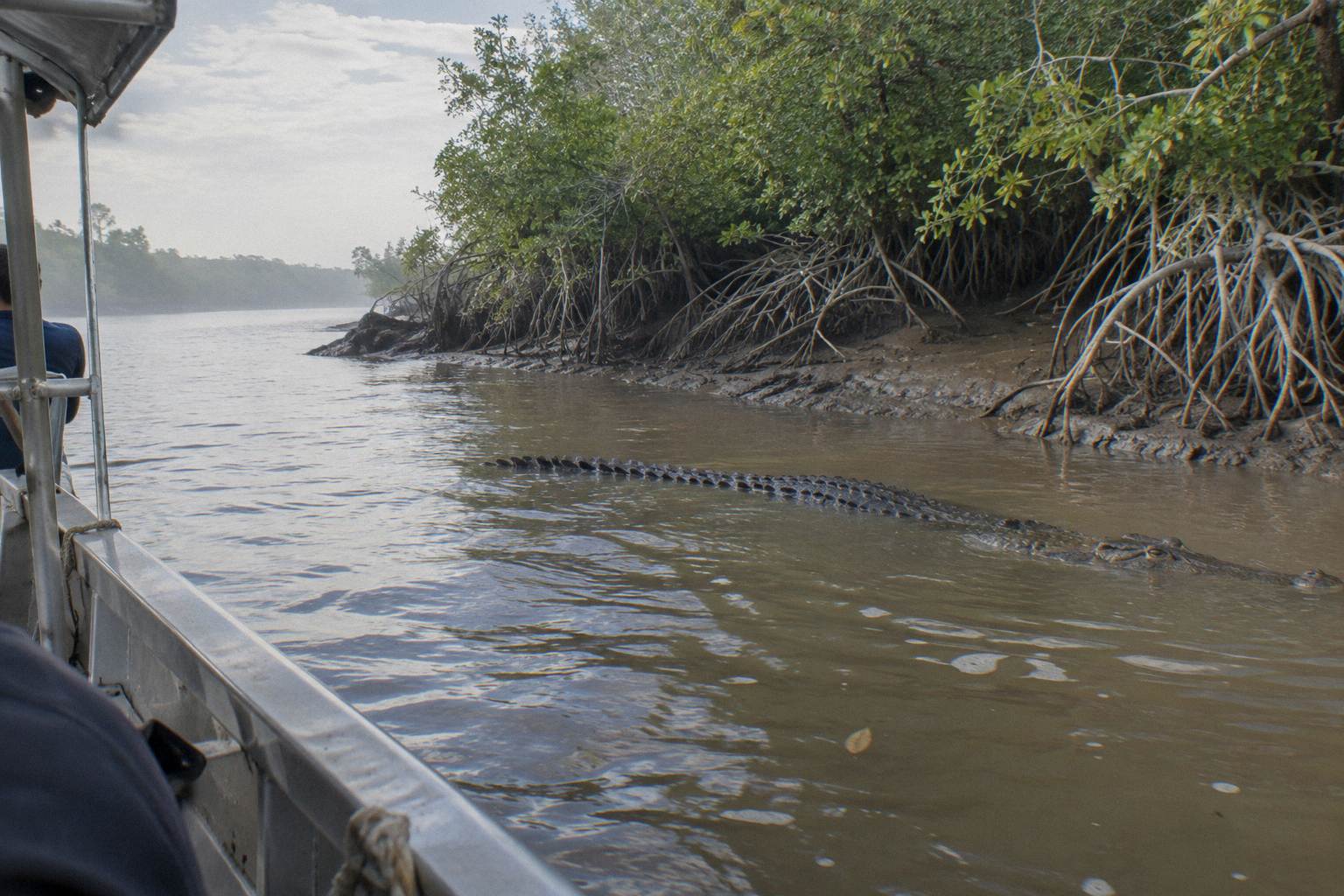
Yes. Wild crocodiles live in the waters in and around Darwin, and the NT Government's position is blunt about it: any body of water in the Top End may contain large and potentially dangerous crocodiles. The species you would meet is the saltwater crocodile, Crocodylus porosus, the largest living reptile, and it is widespread across the Northern Territory after recovering from near extinction in the 1970s.
That single sentence answers the question, but it deserves unpacking, because the way the Northern Territory talks about crocodiles is different from almost anywhere else in Australia. There is no map of "crocodile-free" creeks, no list of safe swimming holes outside designated areas, and no season when the advice switches off. The government's framing assumes the animal could be there, and puts the burden of proof on the water, not on the visitor.
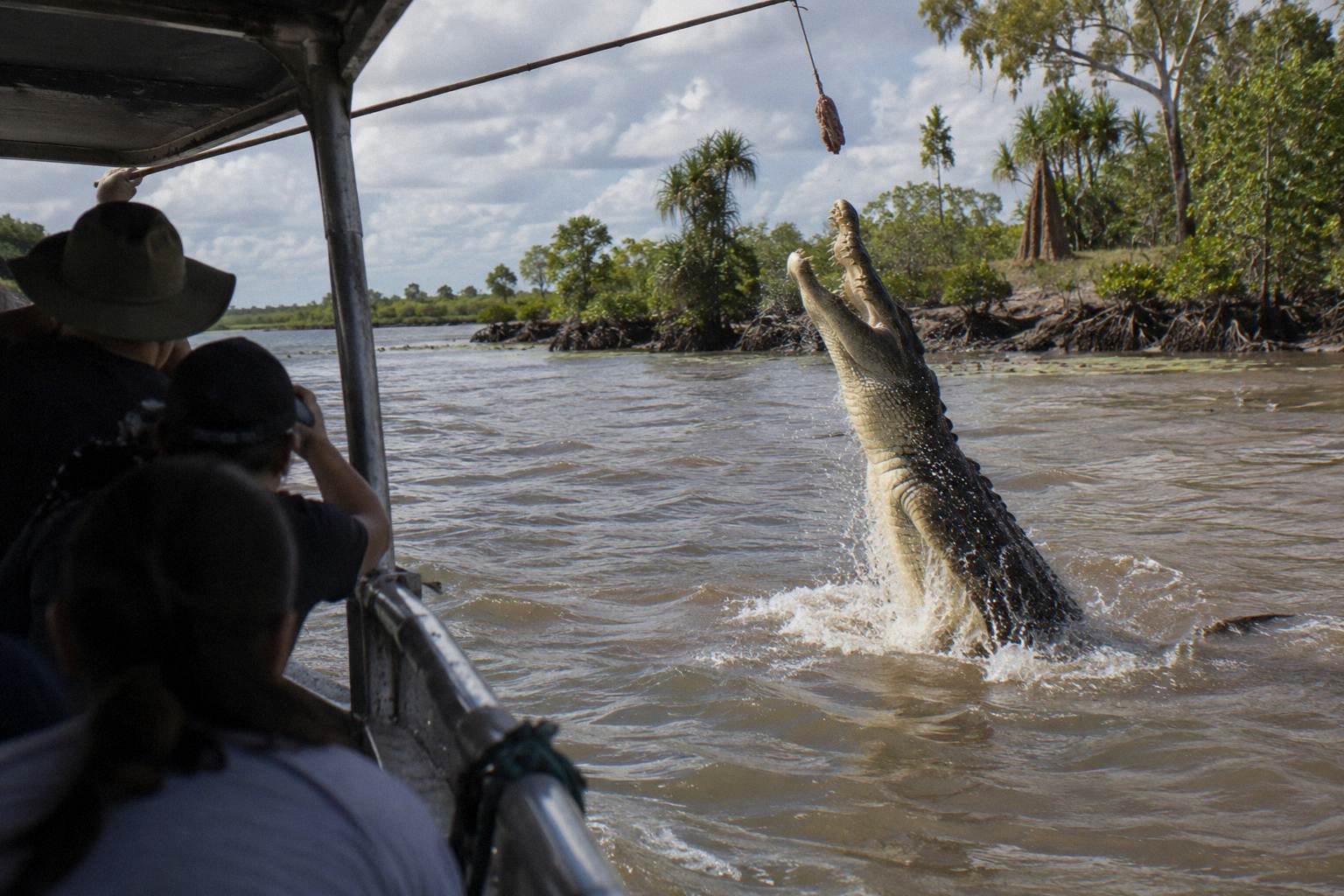
Two species live in the NT: the saltwater crocodile and the freshwater crocodile, Crocodylus johnstoni. The animals people travel to see on the Adelaide River, the ones that launch themselves out of the water on the jumping cruises, are saltwater crocodiles. Despite the name, they are not confined to the sea. They occupy rivers, billabongs, swamps, estuaries and creek systems across the Top End, which is exactly why the government's advice covers any body of water rather than a handful of named danger zones.
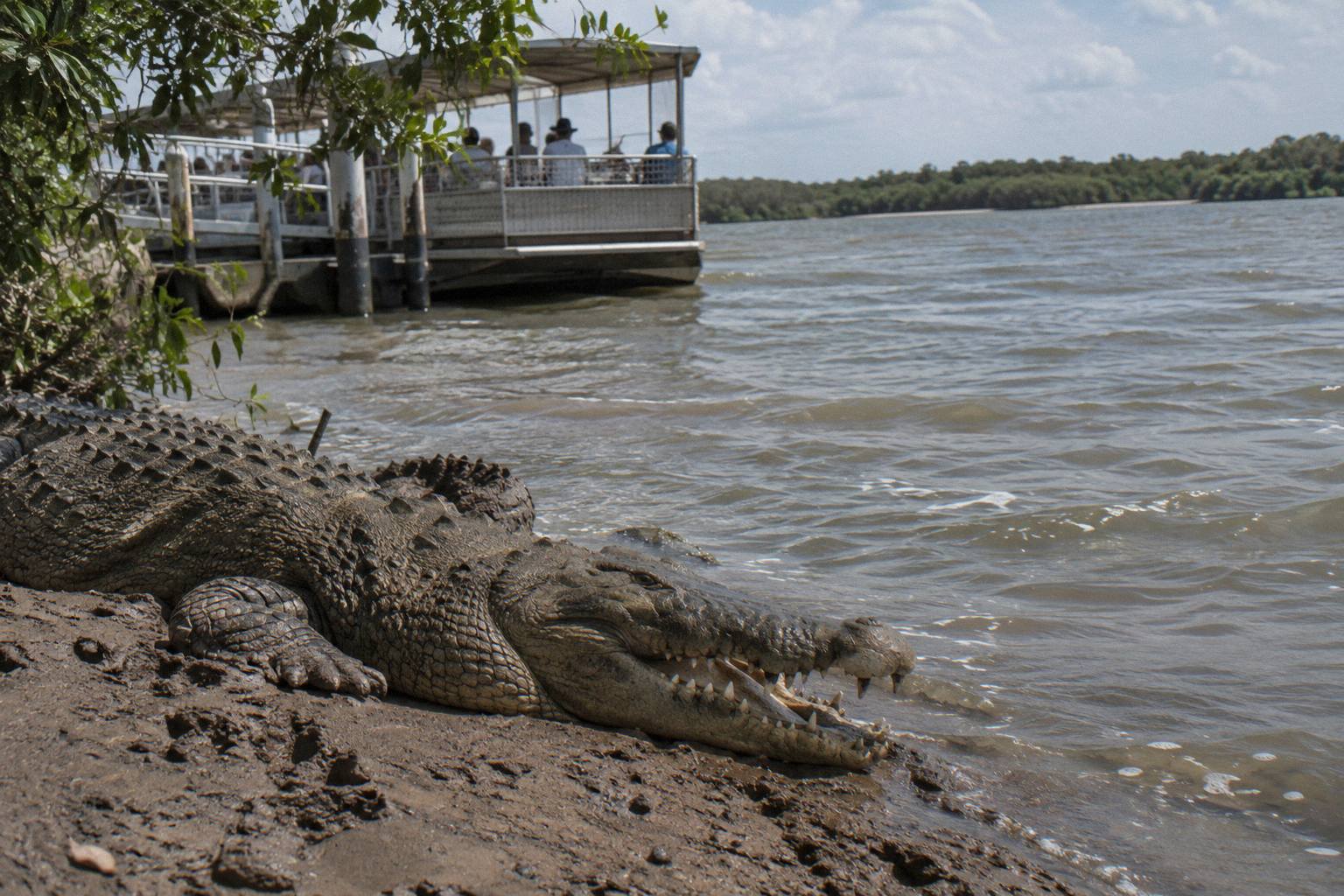
The recovery itself is one of the region's genuine wildlife stories. Saltwater crocodiles were almost extinct in the 1970s after decades of hunting; today the NT Government's crocodile page describes them as widespread and no longer considered threatened. Around 100,000 saltwater crocodiles lived in the NT wild in 2017, a population thought to be at or approaching pre-hunting levels, and the NT page notes there are more saltwater crocodiles in the NT than in Queensland and Western Australia.
For a visitor, that reality cuts two ways. It means the crocodiles near Darwin are wild animals living wild lives, not park exhibits, and it means there is a legitimate, well-run way to see them at close range: the jumping crocodile cruises on the Adelaide River, about an hour out of the city, where operators work under NT wildlife permits. If you are asking this question because you want to see one, the cruise is the answer, and the sections below cover how.
How Big And How Fast Are The Crocodiles Living Around Darwin?
An adult saltwater crocodile can grow up to 6 m, making it the largest living reptile on earth. Females mature at about 2.3 m, at around 12 years, and males at about 3.3 m, at around 16 years. Large crocodiles can stay underwater for up to an hour with a heart rate of 2 to 3 beats a minute, and for short bursts they can move faster than a human on land.
Those are NT Government figures, not tour-operator marketing, and they explain why the safety advice around Darwin is written the way it is. An animal that can sit submerged for an hour, in murky water, close to invisible, is not something you spot and then avoid. The government's whole approach, assuming any water is unsafe unless signed otherwise, exists because of exactly these capabilities.
Scale has a history here too. A 6.7 m saltwater crocodile was netted on the Mary River in 1974, and the biggest ever trapped was just over 5 m. No comparable river-by-river population count for the Adelaide River exists in the official sources, so anyone quoting you a precise number of crocodiles in any specific river near Darwin is going beyond what is published. What is published is the territory-wide picture, and it is enough.
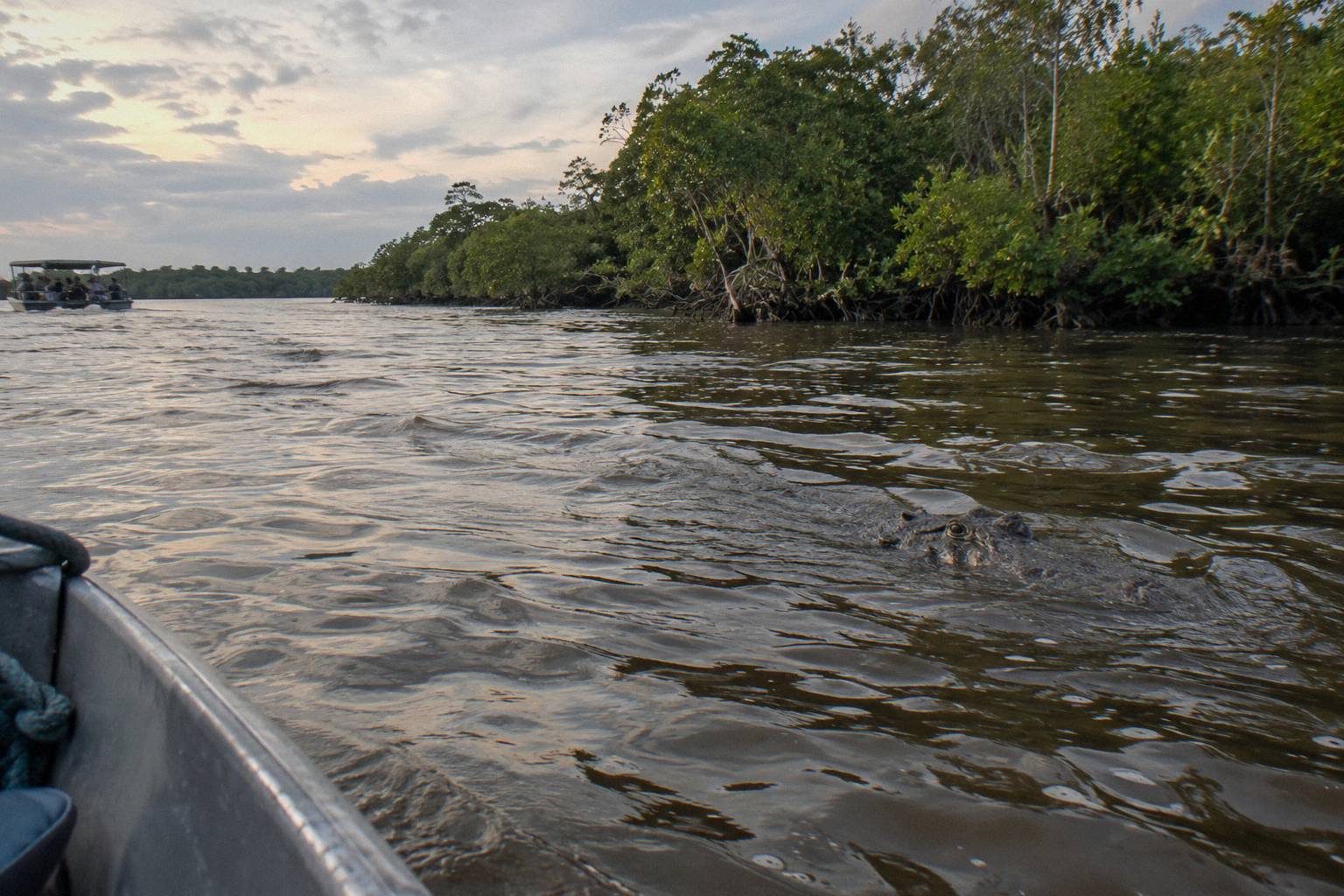
Breeding adds another layer. Nests are built between November and May, averaging about 50 eggs, which means the warmer months around Darwin are also the nesting months, with protective adults near nests. Both species are protected by law, and you cannot take or interfere with a crocodile without a permit. That legal protection is part of why the population rebounded so strongly, and why the animals around Darwin today are genuinely wild rather than managed stock.
For context on what you would actually see from a boat, the cruise operators are careful about their own claims. No operator and no NT page publishes a jump height, a jump distance or a how-close-to-the-boat figure, so this site does not print one either. What the operators do say is that the crocodiles on the river are wild, that feeding happens under NT wildlife permits, and that behaviour can never be guaranteed. The Original/Queen operator's own wording is typical: "We see crocodiles on almost every tour... behaviour can never be guaranteed."
Are Wild Crocodiles Dangerous To People Near Darwin?
The NT Government treats them as a serious threat: its crocodile-safety page says saltwater crocodiles are a serious threat to humans, and that any body of water in the Top End may contain large and potentially dangerous crocodiles. The danger is managed by following the Be Crocwise rules, not by picking and choosing which waterways look safe.
It is worth being precise about what that does and does not mean. It does not mean Darwin is unsafe to visit, or that the tens of thousands of people who live there live in fear. It means the territory has a settled, matter-of-fact relationship with a large predator in its waters, expressed through a short list of rules that everyone, locals and visitors alike, is expected to know.
The NT Government's Be Crocwise advice comes down to four habits. Swim only where designated safe-swimming signs show, and assume water is unsafe everywhere else. Camp at least 50 m back from the water. Stand at least 5 m back from the water's edge when fishing. And never lean out of, or dangle limbs over, the side of a boat. None of these requires gear or training; they require remembering that the water belongs to the animal.
| Be Crocwise rule | What it means in practice |
|---|---|
| Swim only at designated safe-swimming signs | If there is no sign, treat the water as crocodile habitat |
| Camp at least 50 m from water | Keeps sleeping people away from the water's edge at night |
| Stand at least 5 m back when fishing | Applies at every creek, river and billabong in the Top End |
| Do not lean out of or dangle limbs over a boat | Applies to boats of every kind, including smaller vessels |
The boat rule is the one that surprises people on fishing trips, and it connects directly to how the cruise operators run their vessels. On the jumping crocodile cruises, the animals come to the boat on the operator's terms: Spectacular states there is no direct contact with the crocodiles; the Original/Queen operator has life jackets on board, does not allow swimming, does not allow food on the boat, and requires supervised children; Adelaide River Cruises opens every cruise with a safety briefing from the guides on crocodile behaviour and the rules. This site will not tell you a cruise "is safe" as a guarantee, because no honest source does, but the operators' rules line up with the government's, which is the structure you want.
The predatory numbers explain the rules. A crocodile that can hold its breath for an hour, move faster than a human over short distances on land, and reach 6 m in length does not need to chase anyone. It needs one moment of carelessness at a water's edge. The Be Crocwise habits exist to remove those moments.
Where Can You See Wild Crocodiles Safely From Darwin?
The structured way to see wild crocodiles from Darwin is a jumping crocodile cruise on the Adelaide River, reached in about an hour or a little more by road, where three licensed operators run roughly one-hour cruises with feeding under NT wildlife permits. The drive out on the Arnhem Highway is sealed for most of the way, with free parking at every operator.
This is the practical answer to the question this page opened with. Once you accept that crocodiles are in the waters around Darwin, the choice is between never going near the water and going near it under supervision. The cruise industry on the Adelaide River is the supervised option, and it has been built specifically around the fact of wild animals.
The river operators each run from their own jetty, and their details never cross over, so it pays to check which one you are booking. Spectacular Jumping Crocodile Cruises departs from Beatrice Hill Farm on Arnhem Road, Middle Point, just under an hour from Darwin, reached via the Windows on the Wetlands Visitor Centre and about 2 km of well-maintained unsealed access road that the operator says is fine for hire cars. Its jetty is on a working farm with water buffalo, cattle and wading birds often visible on the access road.
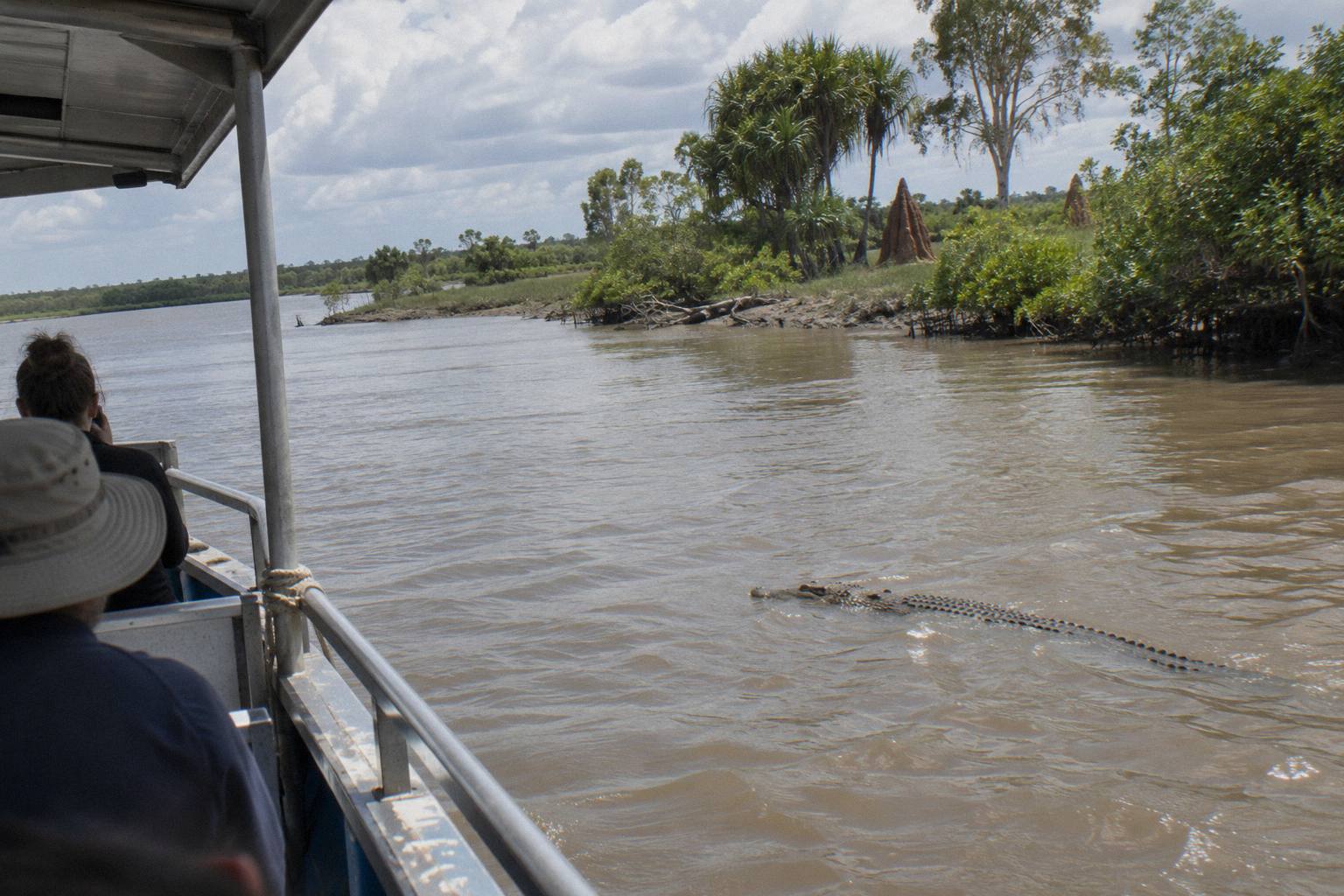
The Adelaide River Queen and the Pathfinder vessels leave from 3220A Arnhem Highway, Wak Wak, at the Adelaide River Bridge, with a giant crocodile statue standing in the car park as the landmark; the operator gives the drive from Darwin as 50 to 60 minutes, and from the centre of Litchfield National Park as 100 to 110 minutes. Adelaide River Cruises is at Anzac Parade, Middle Point, about an hour or a little more from Darwin. This site prints no kilometre figures, because the operators' own numbers conflict, but the drive times above are each operator's own.
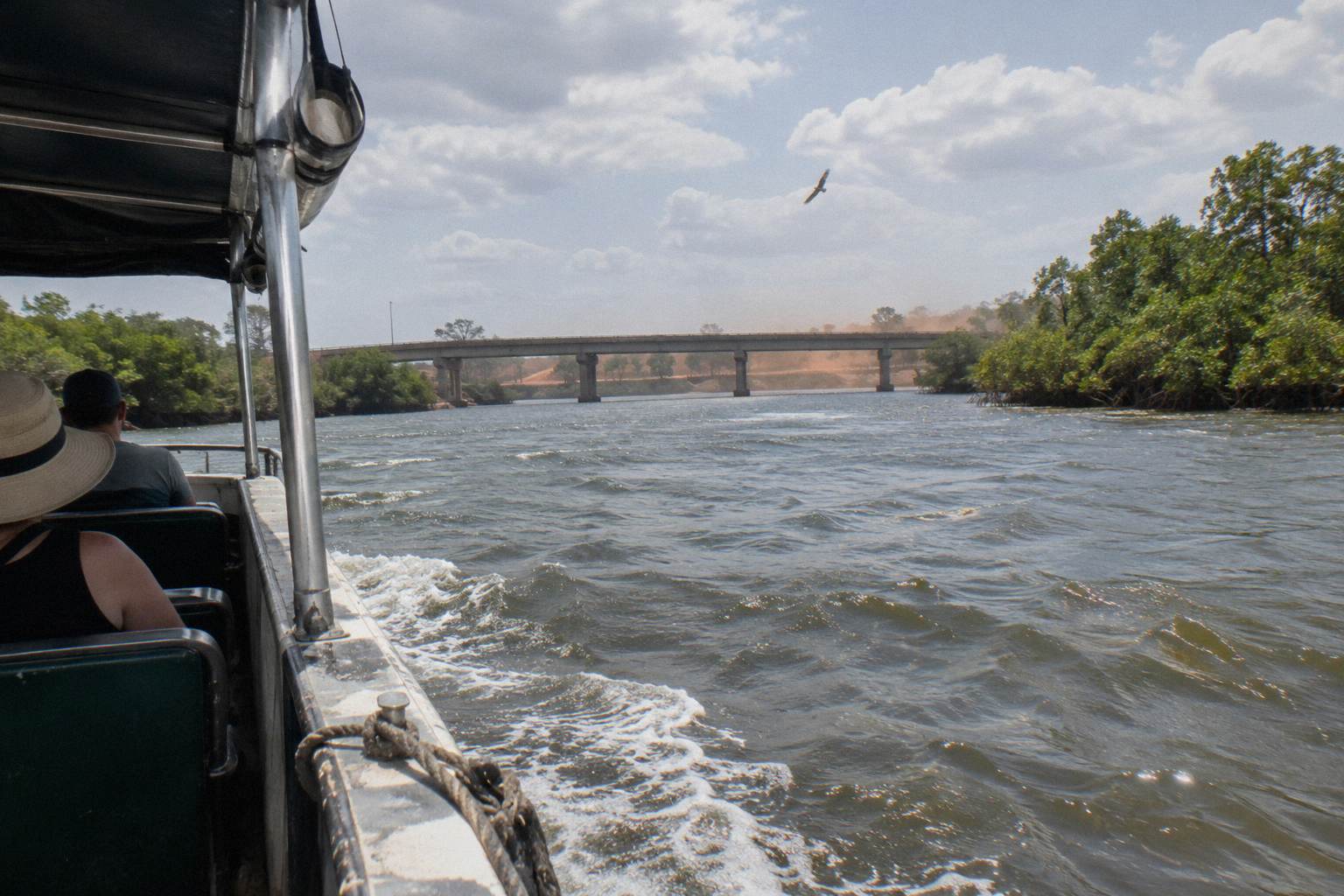
On the water, the experience is about an hour at every operator. Spectacular departs daily at 9am, 11am, 1pm and 3pm and is open year-round except Christmas Day, with free tea and coffee on arrival and a kiosk, pavilion, gift shop and animal exhibits onshore. The Adelaide River Queen departs at 1pm daily, though wet-season departures may be reduced. Adelaide River Cruises' tour page lists departures at 9am, 11am, 1pm and 3pm daily with operating months May to October. The Pathfinder is available daily with no times printed, so confirm before travelling.
If you would rather not drive at all, Darwin-based day tours bundle the cruise with transport and other Top End stops, which is where Adelaide River Crocodile Cruise points most visitors without a car. The Croc Bus From Darwin To The Jumping Crocodile Cruise runs about 4 to 5 hours including return transport, a jumping crocodile cruise with Adelaide River Cruises, Fogg Dam entry and a Humpty Doo stop; the price sits on the live listing rather than on this page. The AAT Kings half-day runs about 5 hours with coach transport, the cruise, Window on the Wetlands and Fogg Dam. Pickup points are not published for these tours, so read the listing carefully before booking.
Do You Need To Be Lucky To See A Crocodile On The Cruise?
No operator promises a sighting, but the Original/Queen operator states it sees crocodiles on almost every tour, while adding that behaviour can never be guaranteed. The crocodiles are wild, the operators feed under NT wildlife permits, and no published source gives a sighting rate, so honest expectation-setting is: very likely, never promised.
The distinction matters because it is the difference between wild-animal tourism and a zoo. The operators on the Adelaide River are explicit that their crocodiles are 100% wild in the Original/Queen operator's words, and that feeding is done under NT wildlife permits. Spectacular says its crocodiles are offered a taste of buffalo meat, that its staff hold Wildlife Permits from NT Parks and Wildlife, that its Animal Ethics Policy was developed with NT Parks and Wildlife, and that detailed feeding logs are kept. There is no direct contact with the animals.
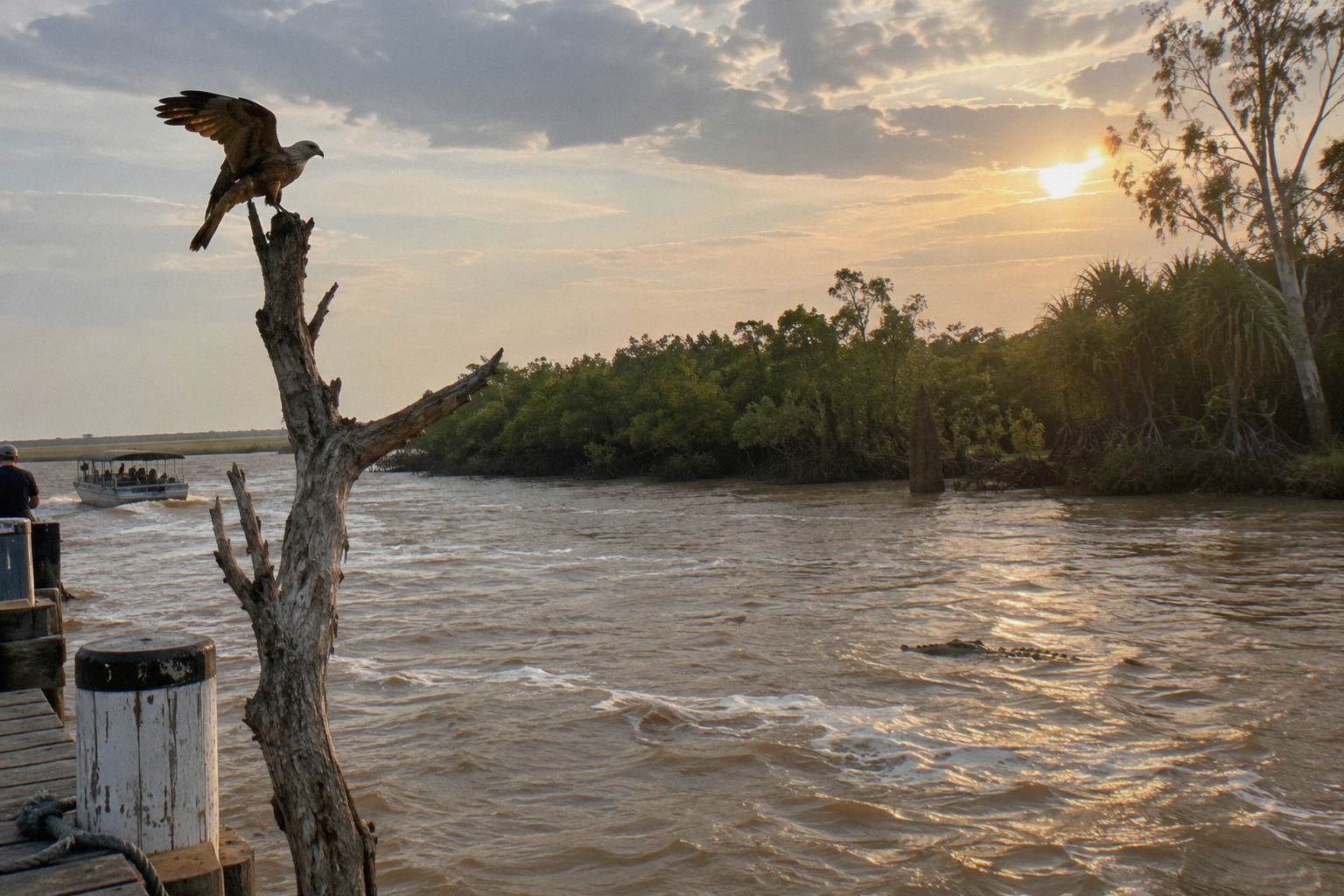
Beyond the crocodiles, the river carries other wildlife, though only one operator publishes a list. Spectacular's own list includes white-bellied sea eagles, whistling kites, freshwater crocodiles, bull sharks, black flying-fox, the endangered speartooth shark and the critically endangered largetooth sawfish, in the operator's wording. No other operator publishes a comparable wildlife list, and no source gives bird counts or seasonal bird claims, so this site prints none. Never bank on any particular sighting, crocodile or otherwise.
Timing questions follow naturally, and the honest answer is that the operators publish no morning-versus-afternoon crocodile behaviour claims, so neither does this site. What is published is seasonal. Spectacular operates as long as it is safe, notes that rain in Darwin or Humpty Doo does not mean rain on the river, and even adds that crocodiles often show a tactile response to rain. The Original/Queen operator says crocodiles are active year-round and the Dry Season, May to October, gives the most comfortable conditions. Readers weighing the trade-offs can dig into the wet season versus dry season comparison for the full picture.
Booking is the other practical point. Spectacular says plainly "we do sell out". The Original/Queen operator recommends booking several days ahead in the Dry Season and warns that school holidays and long weekends often sell out earlier. Adelaide River Cruises strongly recommends booking in advance, especially June to August, and its FAQ gives a full refund if you cancel more than 24 hours before departure, with no refund inside 24 hours unless the operator cancels. Whichever booking page you use, read its own terms before you pay.
Which Trip Suits You: Cruise-Only Or A Darwin Day Tour?
Cruise-only tickets suit travellers with a car: they cost from the operator's own A$55 adult fare, run about an hour, and depart from the river jetties. Day tours from Darwin suit travellers without a car or wanting more inclusions, running about 4 to 6 hours with transport, the cruise and stops such as Fogg Dam, with prices only on the live listings.
The cheapest way onto the water is a cruise-only ticket, and the operators' own prices are close enough that the boat and the departure times matter more than the fare. The table below sets out what each river operator publishes, using each operator's own figures, which can change. Never compare a cruise-only price with a day-tour price; they are different products.
| Operator | Adult price (operator's own) | Child basis | Departures | Arrival |
|---|---|---|---|---|
| Spectacular Jumping Crocodile Cruises | A$55 (15+), excludes a small booking fee at checkout | A$40 (4 to 14), infants 3 and under free | 9am, 11am, 1pm, 3pm daily | At least 15 minutes early |
| Adelaide River Queen | A$65 (14+) | A$50 (4 to 13), infants 3 and under free | 1pm daily | At least 30 minutes early |
| Pathfinder | A$75 single fare, age 1 and over | No child fare; infants under 1 free | Available daily, no times printed | At least 30 minutes early |
| Adelaide River Cruises | A$58.50 (15+), stated including taxes and fees | A$42.55 (1 to 14), infants 12 months and under free on a lap | Tour page lists 9am, 11am, 1pm, 3pm daily | At least 15 minutes early |
Spectacular also publishes family fares, A$155 for two adults and two children and A$190 for two adults and three children, and Adelaide River Cruises lists family fares from A$159.55 for 2 adults and 2 children, plus a concession rate of A$53.18 for pension card holders. The Pathfinder runs an operator's kids promotion under which one child under 13 travels free per full-paying passenger for travel between 5 October 2026 and 31 March 2027 unless it ends earlier, with limited seats; check with the operator that it applies to your date before counting on it.
Day tours are the no-car answer, and the roster from Darwin is broad. The Croc Bus covers the cruise with Adelaide River Cruises plus Fogg Dam and a Humpty Doo stop in about 4 to 5 hours. Wallaroo Tours NT runs a 4-hour trip with lunch at the Humpty Doo Pub, Fogg Dam, Window on the Wetlands and hotel transfers. Croc Country Safaris adds Hooked on Barra entry over about 5 hours. Autopia Tours runs about 4.5 hours with hotel pickup, and there are longer combinations pairing the cruise with barramundi fishing or Litchfield National Park over a full day. For the full field, see the guide to jumping crocodile cruises from Darwin, and for the boat-by-boat differences, the operator comparison breakdown.
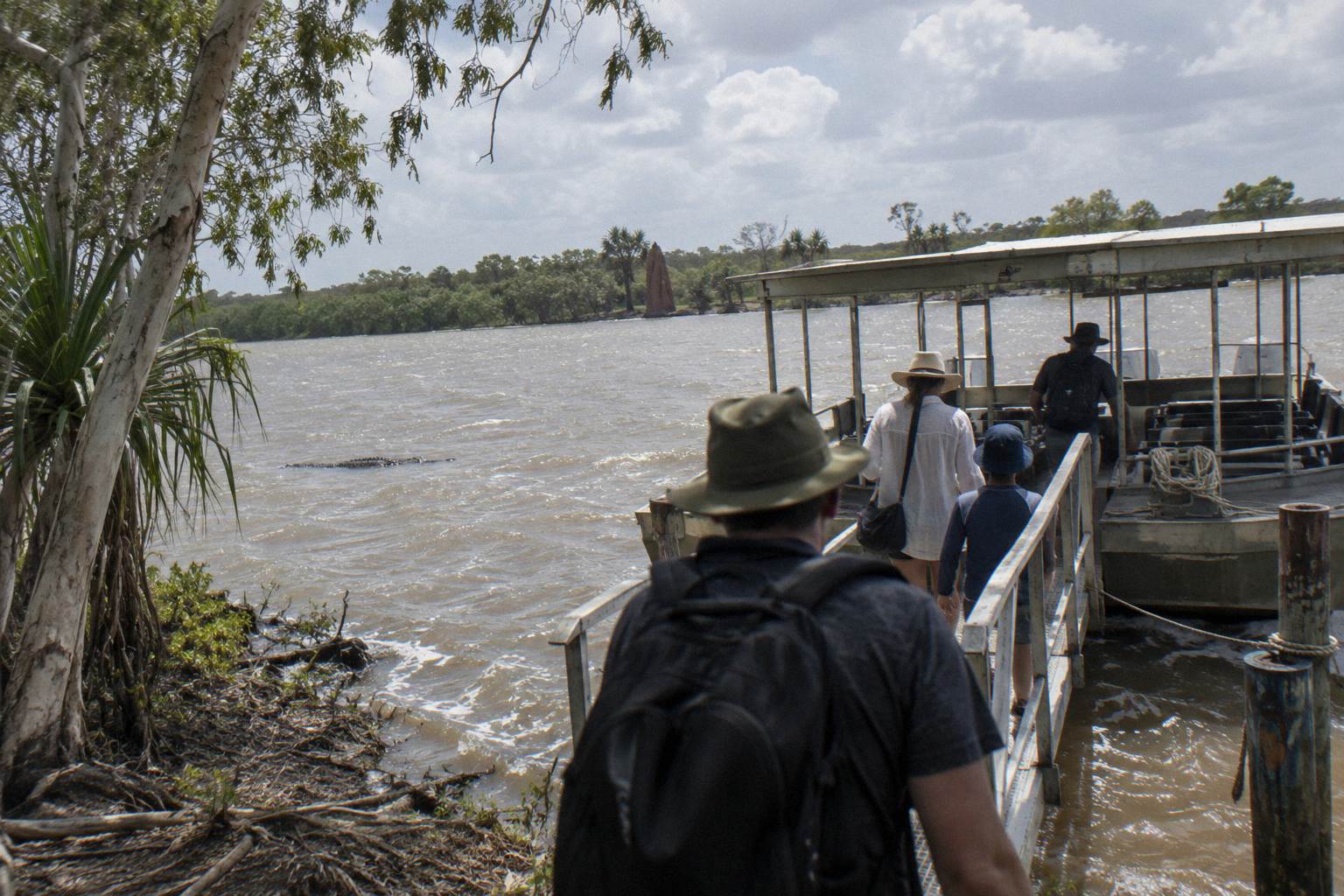
For most first-time visitors asking this page's question, the calculus is simple. If you have a car and a tight schedule, book a cruise-only seat on whichever departure time suits, arrive early, and bring a camera. If you do not have a car, or you want the day filled, take a tour with hotel pickup and let someone else handle the Arnhem Highway.
What Should You Remember Before Going Near The Water?
Treat every unsupervised Top End waterway as crocodile habitat, follow the four Be Crocwise rules, and see crocodiles only from a licensed cruise boat or another designated land-based setting. Book ahead in the Dry Season, arrive at least 15 to 30 minutes early depending on the operator, and read your booking page's cancellation terms before you pay.
Everything on this page compresses into a short checklist, and it is worth writing it out plainly because it is genuinely all you need. The wild crocodiles near Darwin are real, numerous, protected by law, and best seen from the water under permit, on a boat with rails and rules, rather than from a bank. The government's advice fills one small table, and the cruise operators' rules fill a safety briefing at the start of every departure.
Bring the practical items the operators suggest: water, sunscreen, a hat and a camera. Adelaide River Cruises says a zoom lens is useful for wildlife across the floodplain, while standard phone cameras suit the crocodile interactions themselves because of the proximity, in its own wording. Photography is encouraged at Spectacular, and tours run in English. Toilets are onshore, not on the boats, so plan around that with children.
The last word belongs to expectation. You are going to see a wild animal that can grow to 6 m, hold its breath for an hour, and out-sprint a human over short distances, choosing to rise out of the water beside a boat because a licensed operator has, over years, taught the river's crocodiles that the boat means a taste of buffalo meat. No operator guarantees the behaviour. Almost every tour sees crocodiles. That combination, high likelihood and no promise, is exactly what wild should mean, and it is the honest version of the experience this site exists to explain.
Common Questions About Wild Crocodiles Near Darwin
Are There Wild Crocodiles Near Darwin?
Yes. The NT Government says any body of water in the Top End may contain large and potentially dangerous crocodiles, and the saltwater crocodile population, around 100,000 in the NT wild in 2017, is widespread after recovering from near extinction in the 1970s.
Are Saltwater Crocodiles Dangerous To Humans?
The NT Government's crocodile-safety page describes saltwater crocodiles as a serious threat to humans. The danger is managed through the Be Crocwise rules: swim only where designated safe-swimming signs show, camp at least 50 m from water, stand at least 5 m back when fishing, and never lean out over the side of a boat.
How Big Do The Crocodiles Around Darwin Get?
The saltwater crocodile is the largest living reptile and can grow up to 6 m, according to the NT Government. Females mature at about 2.3 m at around 12 years, and males at about 3.3 m at around 16 years. A 6.7 m animal was netted on the Mary River in 1974.
Are The Crocodiles On The Jumping Cruises Wild?
Yes. The Original/Queen operator states its crocodiles are 100% wild and that feeding is done under NT wildlife permits. Spectacular says its staff hold Wildlife Permits from NT Parks and Wildlife and that there is no direct contact with the animals.
Do The Cruises Guarantee You Will See A Crocodile?
No operator guarantees a sighting. The Original/Queen operator says it sees crocodiles on almost every tour but that behaviour can never be guaranteed. No operator or NT source publishes a sighting rate, so honest expectation is very likely but never promised.
Can You See Wild Crocodiles Near Darwin Without A Car?
Yes, through Darwin-based day tours that include transport and the cruise. The Croc Bus runs about 4 to 5 hours with return transport, a jumping crocodile cruise with Adelaide River Cruises, Fogg Dam entry and a Humpty Doo stop. Several other operators run similar half-day trips with hotel pickup.